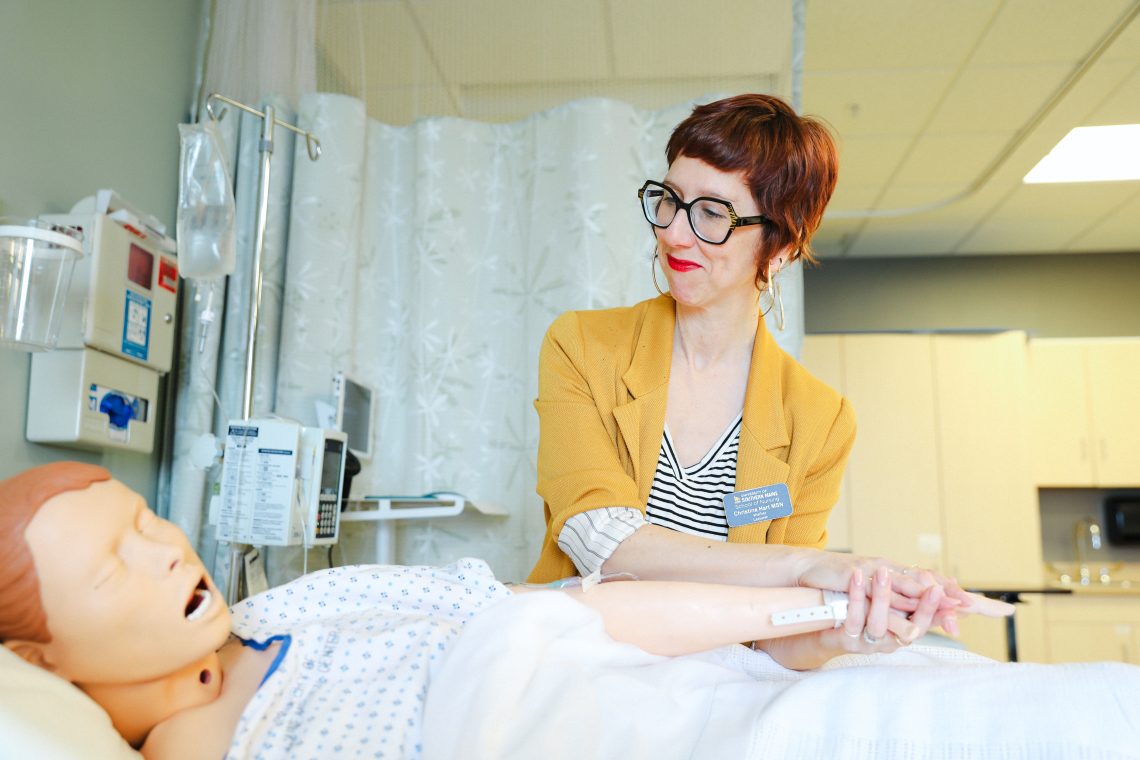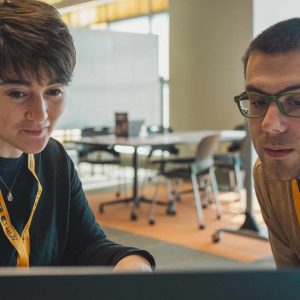
The first time Christina Hart walked into Masterton Hall in 2002, she was a traditional nursing student trying to figure out if she belonged. Twenty-three years later, she’s back in the same building — but this time, she’s the one holding office hours, fielding questions, and watching students wrestle with the same doubts she once had.
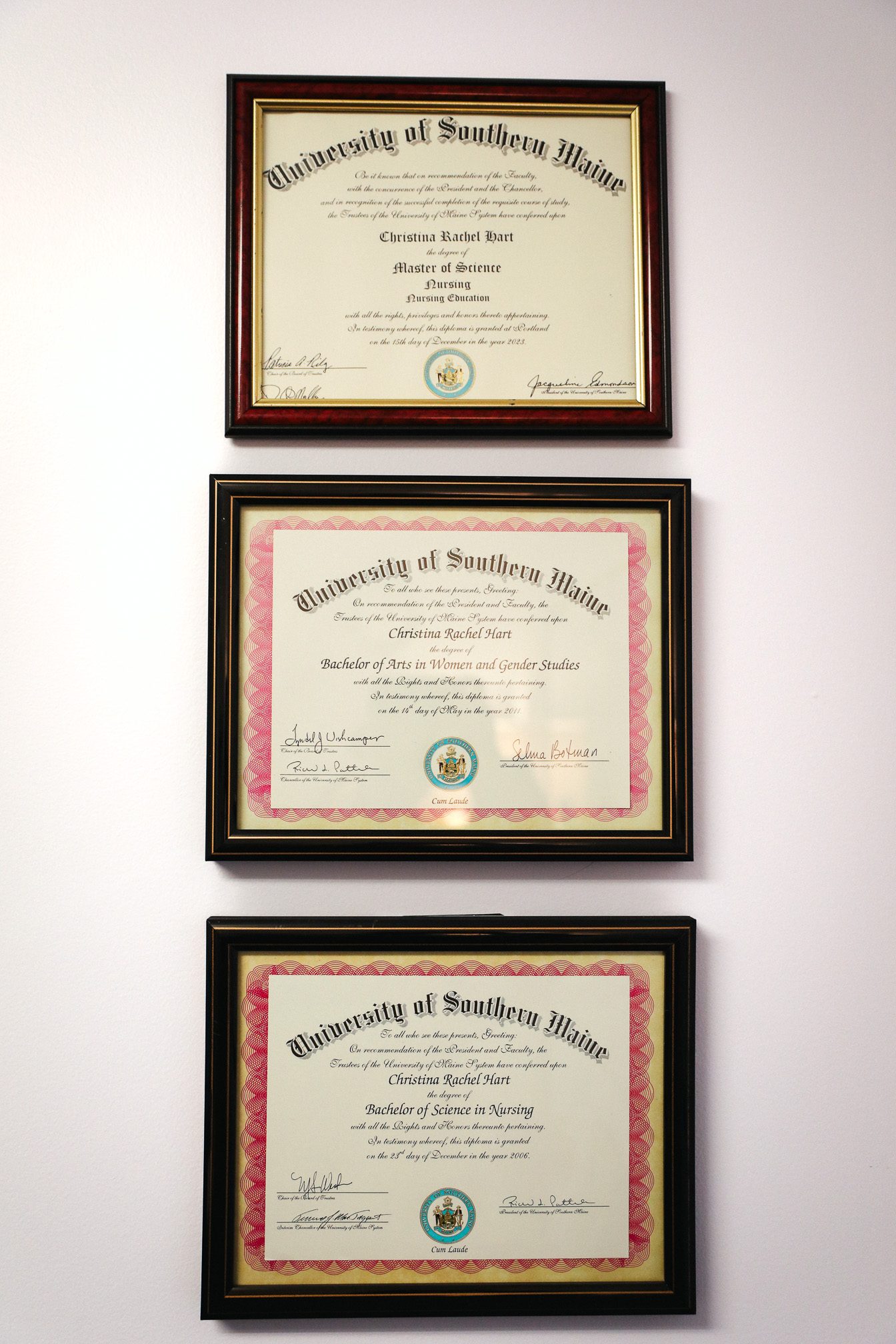
Hart earned her BSN from the University of Southern Maine in 2006, but she didn’t stop there. She came back for a second bachelor’s degree in Women and Gender Studies in 2011, and then returned again in 2023 for a master’s in nursing education, after spending nearly two decades at Maine Medical Center. Now, she’s preparing students for the realities she spent two decades navigating.
The minor that kept Hart from dropping out
A native Mainer, Hart came to USM straight out of high school, drawn to nursing by her interest in anatomy and physiology. But once classes started, she wasn’t sure she belonged. She loved the science — the mechanics of the body, how systems worked together — but something felt off.
When her advisor mentioned a Women and Gender Studies class as an option for a required credit, Hart was surprised and intrigued. One class soon turned into a minor.
“It was a really good outlet,” Hart said. “The ability to kind of shift gears between those two academic tracks made nursing school really successful for me.”
The space to pursue both disciplines proved to be more than just a scheduling convenience; it was what kept her going. Where nursing demanded precision and technical skill, her minor in Women and Gender Studies gave her room to think, question, and create. Together, they made the work feel sustainable.
It was also an early lesson in the kind of nurse, and eventually educator, she would become: one who values both science and humanity, and who knows there’s more than one way to belong.
That balance helped her find her footing on campus, but it wasn’t until she stepped outside of it entirely that everything started to click.
Stepping out of her comfort zone and into the work
Toward the end of her undergraduate studies, Hart took a chance: She signed up for a USM partnership trip to the Dominican Republic, where nursing students worked alongside local clinics to provide care and health education. She’d never been on a plane — in fact, she’d never traveled farther than Pennsylvania.
In the Dominican Republic, the work was immediate and unfamiliar. The clinic was busy and loud, nothing like the controlled environments where she’d learned her skills. Still, she stepped in and embraced it.
“You never know when you’re going to need to step up,” she said. “And I think that’s really the crux of what nursing is.”
It was on this trip that Hart cemented her love for nursing and the confidence to pursue it. The lessons she learned — staying calm, thinking on her feet, and stepping up when it mattered — guided her through her career and now shape how she teaches and inspires her students.
Lessons from 18 years at the bedside
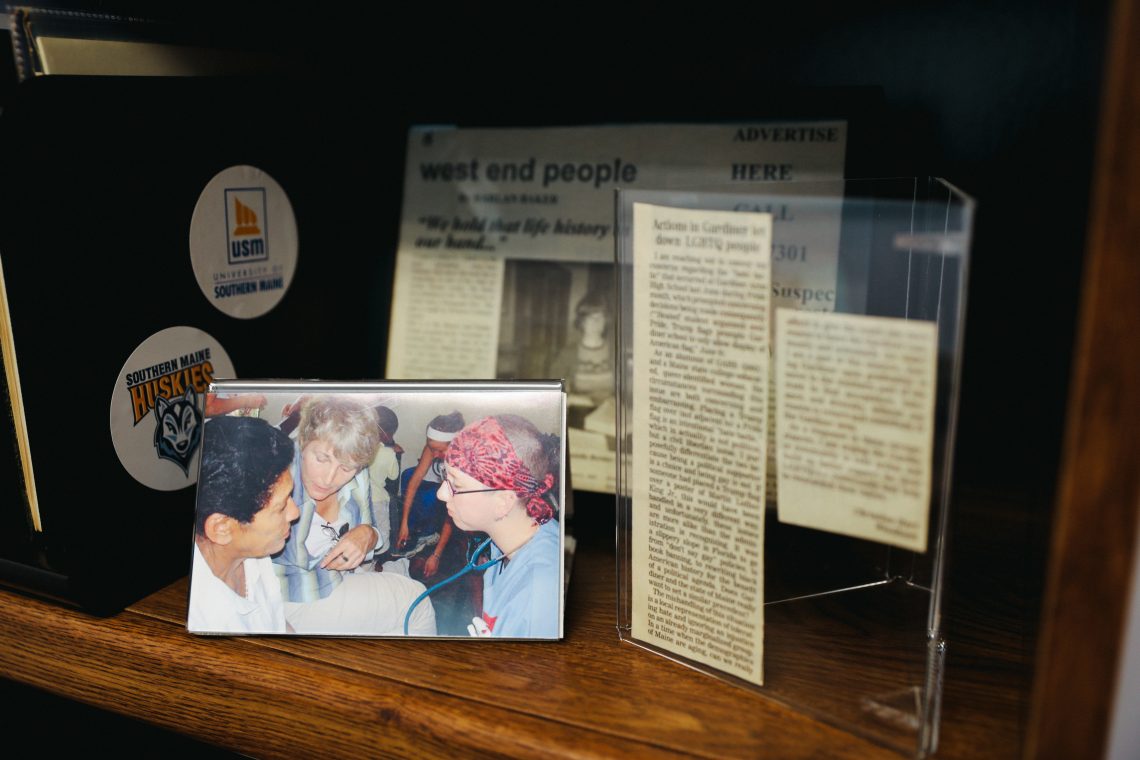
Hart graduated in 2006, landed a job at Maine Medical Center before she even took her boards, and settled into life on an acute medical-surgical unit. She worked nights for much of her 18-year tenure there. Constantly navigating the intensity and variety of hospital life, from burns and wound care to patient education, no two days there were the same.
Some of her favorite moments were the ones that let her teach. She remembers helping a visually impaired patient manage her wound care and dressings, or helping an elderly couple adjust to life with a colostomy. And when resources were limited, she and her colleagues got creative — once fashioning tourniquets into makeshift suspenders so their patient could walk the halls comfortably.
“I think it’s an honor to know so much and then empower patients to be able to take care of themselves. I’m trying to bring that same sentiment to the classroom.”
It was during these 18 years, in the demands of high-stakes clinical work and teaching moments at the bedside, that Hart realized she wanted to share her experience in a new way: by becoming an educator herself.
An accelerated nursing program designed for working nurses
That realization became the starting point for her next step. Already familiar with USM, Hart decided to return. This time she enrolled in the online accelerated master’s program to pursue a degree in nursing education.
At first, she wasn’t convinced the online format would offer the same experience as a traditional classroom.
“However, it was designed beautifully,” Hart said. “The seven-week courses were actually manageable, and though it moved at an accelerated pace, I learned a ton.”
The structure made it possible to keep working at Maine Medical Center while taking classes. Balancing night and weekend shifts with coursework wasn’t easy, but it allowed her to apply what she was learning in real time.
It also clarified what had been growing quietly for years: She was ready to teach.
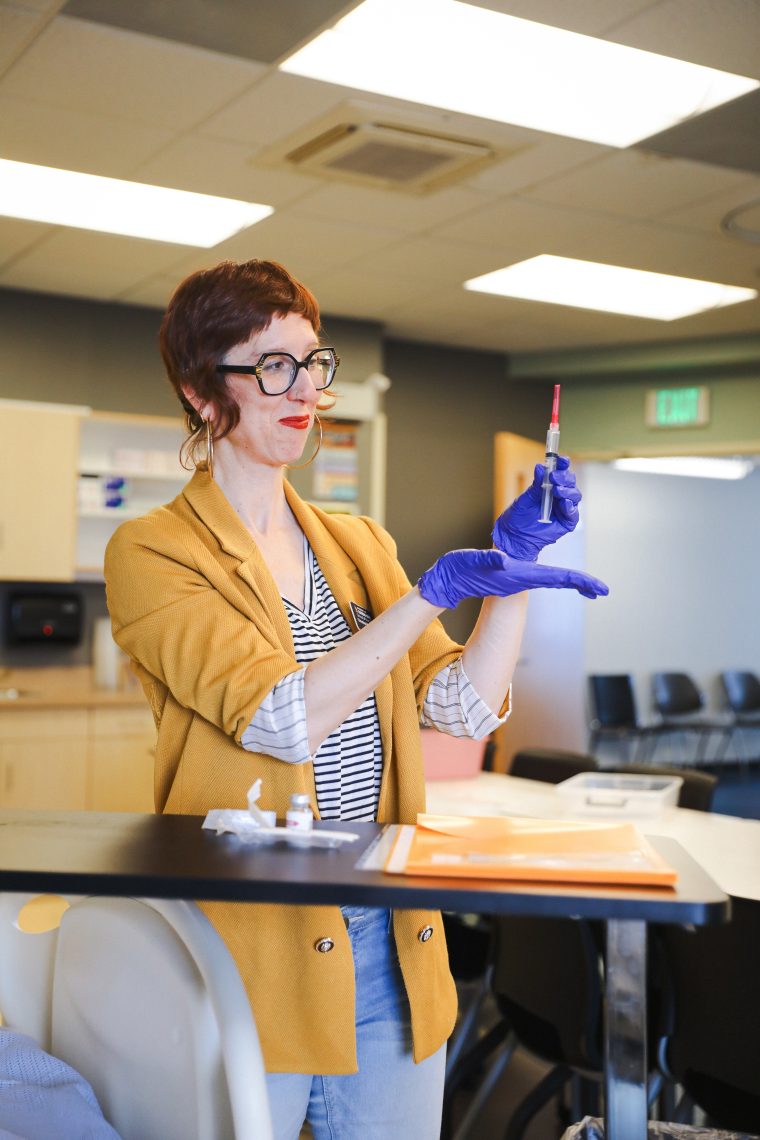
Trading night shifts for office hours: Hart’s commitment to teaching
In July 2025, Hart stepped away from the bedside for good. She’d been teaching part-time at USM while still working weekends at Maine Medical Center, but eventually, she made the leap to full-time faculty.
The shift was more than a change in schedule. Gone were the night shifts, weekend work, mandatory holiday shifts, and constant chaos of the hospital — replaced by a new rhythm and an entirely different set of skills to master.
“I was impatient with myself at first,” Hart said. “It takes years to feel like you really know what you’re doing as a teacher.”
Mentors reminded her that learning how to teach, and learning how to teach well, is its own evolving process.
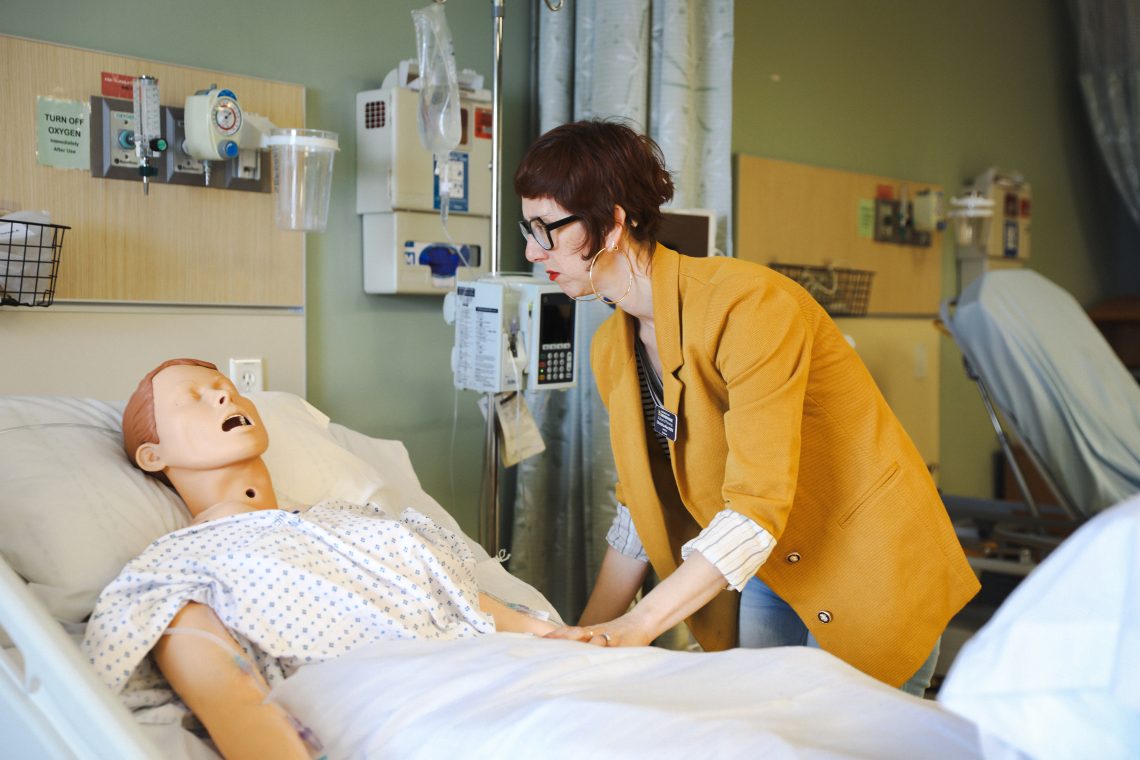
Hart’s combined expertise in nursing and Women and Gender Studies gives her a unique perspective in the classroom. The critical thinking, empathy, and focus on equity she explored in her second bachelor’s degree, and throughout her career, now shape how she engages with and supports her students.
“I want my students to think critically and care deeply,” Hart said. “Nursing is more than skills — it’s understanding people, systems, and the context they live in. My background helps me see the bigger picture and bring that into the classroom.”
Modern nursing students are experiencing higher burnout rates and need more emotional support than previous generations. Hart is adapting: focusing her simulation work on helping students process uncertainty rather than just perform tasks, and reframing difficult clinical experiences as learning opportunities.
What USM gave her — and what she’s giving back
“Everything I tell my students now reflects what I learned at USM and at the bedside,” said Hart.
Her time at USM taught her that nursing isn’t just about technical skill — it’s about advocacy, creativity, and understanding the systems that shape patient care. Her years at Maine Med showed her what that looks like in practice. That combination of education and lived experience shapes how she teaches, empowering students to embrace challenges and grow as nurses.
Even after 20 years, returning to campus has its surprises.
“I tried to give a colleague directions to the computer lab in Masterton,” Hart laughed. “It’s been gone for years…But I was still able to just kind of get right on board.”
Three degrees later, Hart has found her place at USM — not as the uncertain student who once doubted she belonged, but as the educator helping others find theirs.