

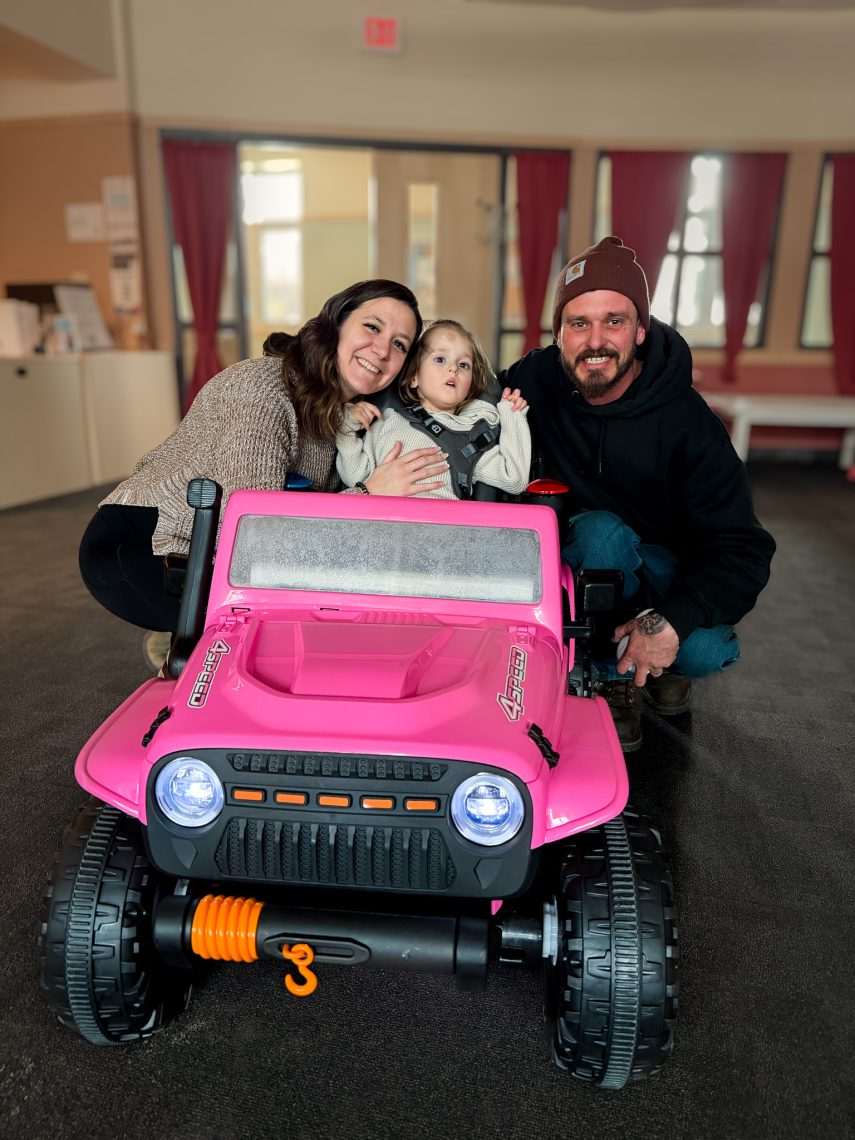
On Jan. 13, a young girl with mobility challenges came to the University of Southern Maine’s Lewiston-Auburn Campus to get her very own hot pink, customized ride-on Jeep with flashing lights – a moment made possible by a collaboration between students in USM’s Occupational Therapy and Engineering departments through the Go Baby Go program.
Go Baby Go is a national community-based outreach program that works with families, clinicians and industries to provide pediatric adaptive equipment to children with disabilities to help provide mobility and enjoyment.
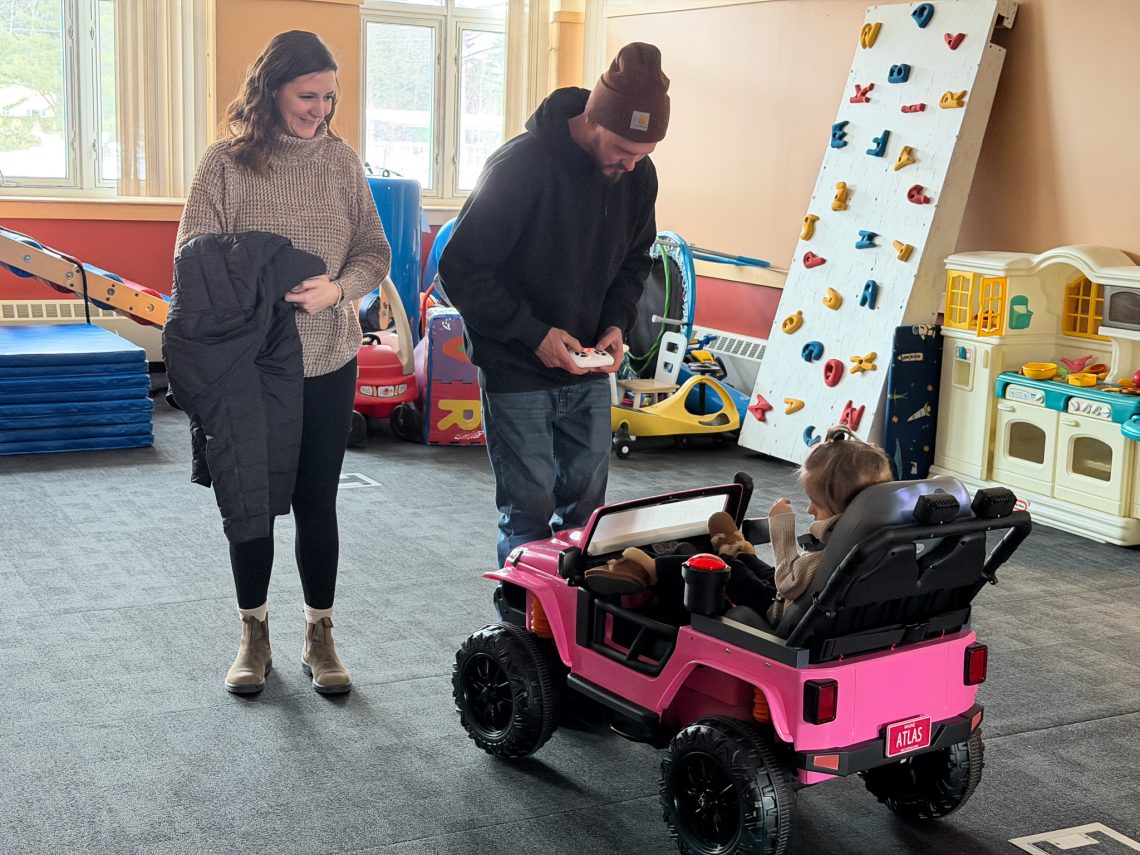
The big reveal for 4-year-old Atlas was months in the making and marked completion of the first Go Baby Go project at the University. With help from her parents, Atlas slid right into the custom seat designed to support her posture and movement. She played with the lights and sounds as her dad handled the remote controls to take her for a spin.
There were smiles all around as students and faculty members watched their hard work pay off.
“Seeing her sit in the car for the first time was very exciting,” said Marissa Munoz, an occupational therapy student. “It felt as though everything was all coming together, and getting to hear the family talk about how excited they were to take it home for her to be able to use made the whole experience feel very rewarding.”
The experience started in early spring of 2025 with approvals. Engineering and occupational therapy students began their work in the fall, which required a slow, deliberate approach. Before tackling the design, students spent time getting to know Atlas and her mobility challenges.
“We first discussed the areas that would be necessary to evaluate, such as posture, strength, muscle tone and cognition,” said Munoz. “Learning about her diagnosis and talking with her mom allowed us to develop a better understanding of what her everyday needs are.”
Occupational therapy students then handed that information over to engineering students, who used it to inform the physical design.
“One of the biggest constraints was working within an existing toy platform that wasn’t designed to be modified,” said Daylin Soule, a mechanical engineering student. “We had to remove and add components while working around the car’s original design and electrical systems. At the same time, safety and reliability were non-negotiable.”
Christian Taylor, machine shop manager in the Engineering Department , said the project pushed students to think beyond standard classroom design constraints.
“They worked through challenges ranging from ergonomics to electrical systems and were very open to feedback on improving functionality and manufacturability,” said Taylor.
Taylor said they went above and beyond.
“It was really fun seeing them create the custom light bar and additional details like the license plate and key fobs to personalize the car,” Taylor said. “Those touches made it clear how invested they were in the child and her experience.”
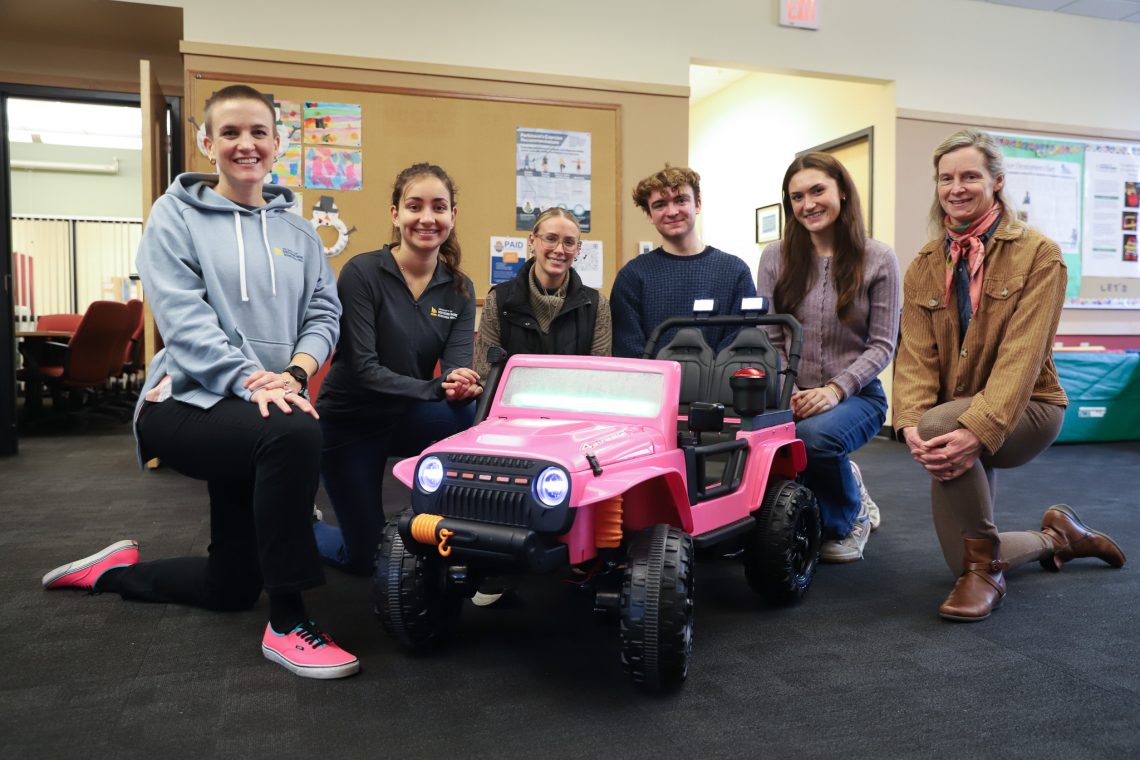
Occupational therapy students, like Kaitlin Hanna, remained involved throughout the project, offering input about details like the placement of interactive controls. She said the experience underscores just how closely clinical work is tied to family context.
“Parents and caregivers are incredible sources of information as the foremost experts on their own children,” said Hanna. “Understanding a child’s personal mobility needs requires understanding the context of her family and support system.”
Hanna, who’s a parent herself, said the end result turned out even better than they expected.
“Seeing the finished car was incredibly rewarding,” Hanna said. “The engineering students created a vehicle that met and far exceeded our original vision, providing the child and her family with a new and exciting way for her to play and engage with her environment.”
Robina O’Rourke, community clinic coordinator for the OT department, said it was a true team effort across disciplines with all students involved from start to finish.
“They were able to observe and evaluate the client and engage with the family, which is very different from classroom learning or simulation experiences,” said O’Rourke.
Faculty members hope this will be the first of many Go Baby Go projects. Another one is already underway.