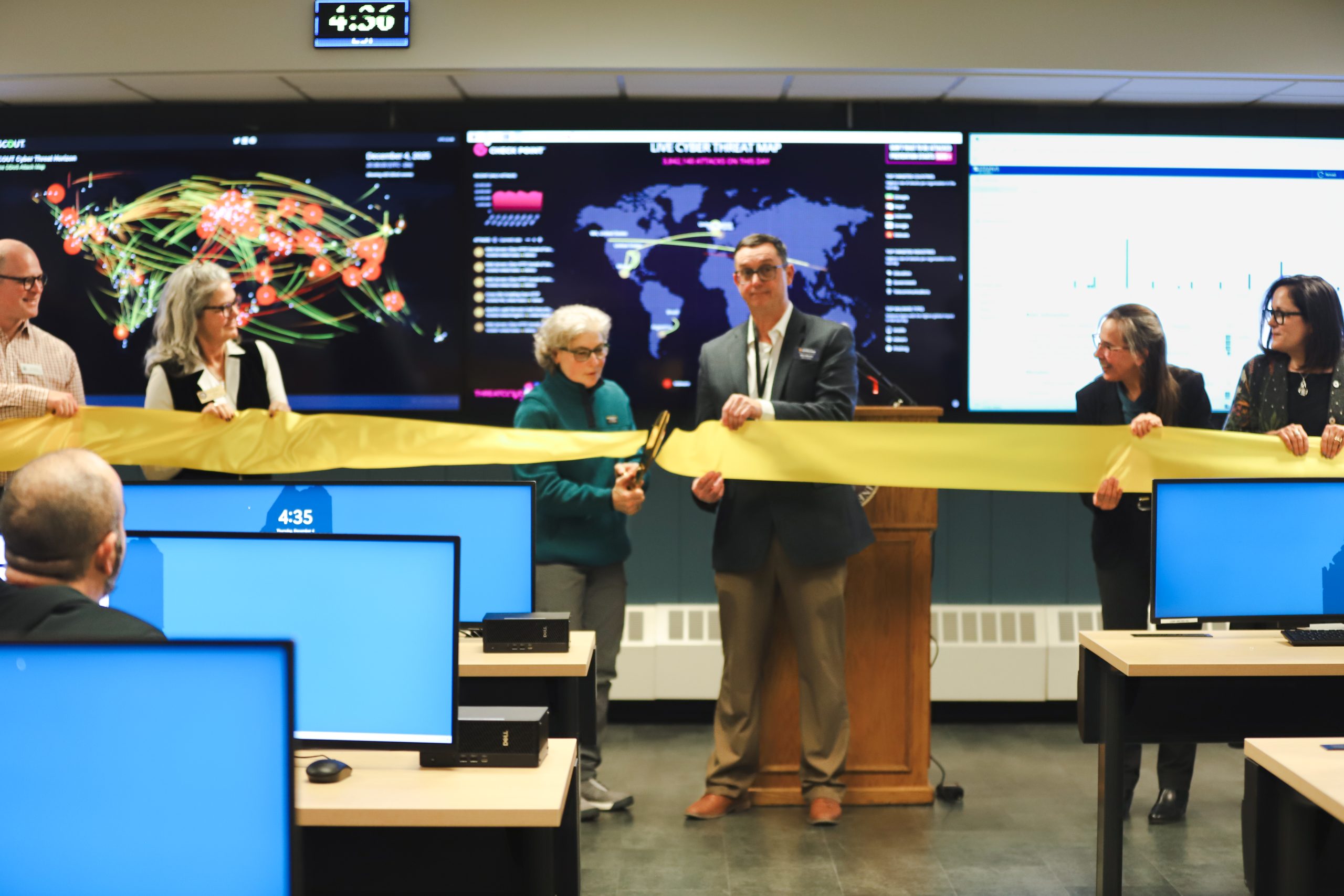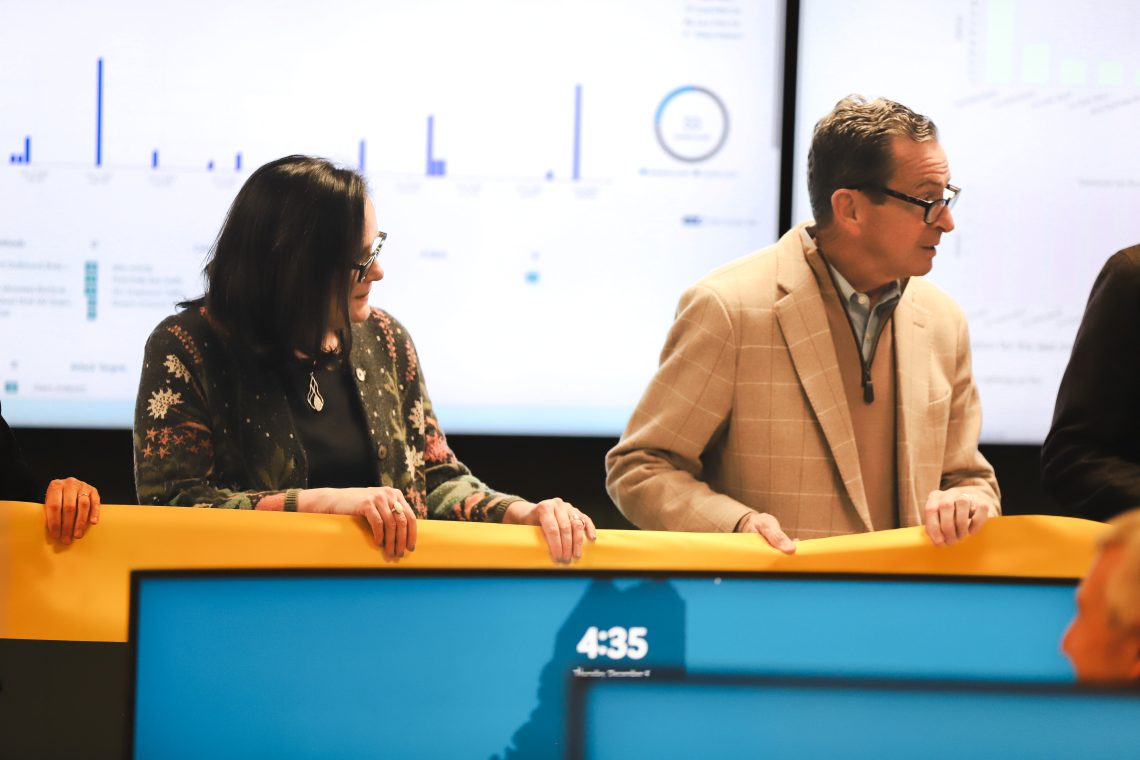

On December 4, the University of Southern Maine unveiled a brand-new, state-of-the-art Security Operations Center (SOC) classroom on its Gorham campus. A university-wide resource, the classroom is designed to give students and professionals practical, hands-on experience in detecting and addressing cybersecurity threats. The ribbon cutting on Thursday marked the classroom’s official debut, highlighting USM’s commitment to developing Maine’s cybersecurity workforce.
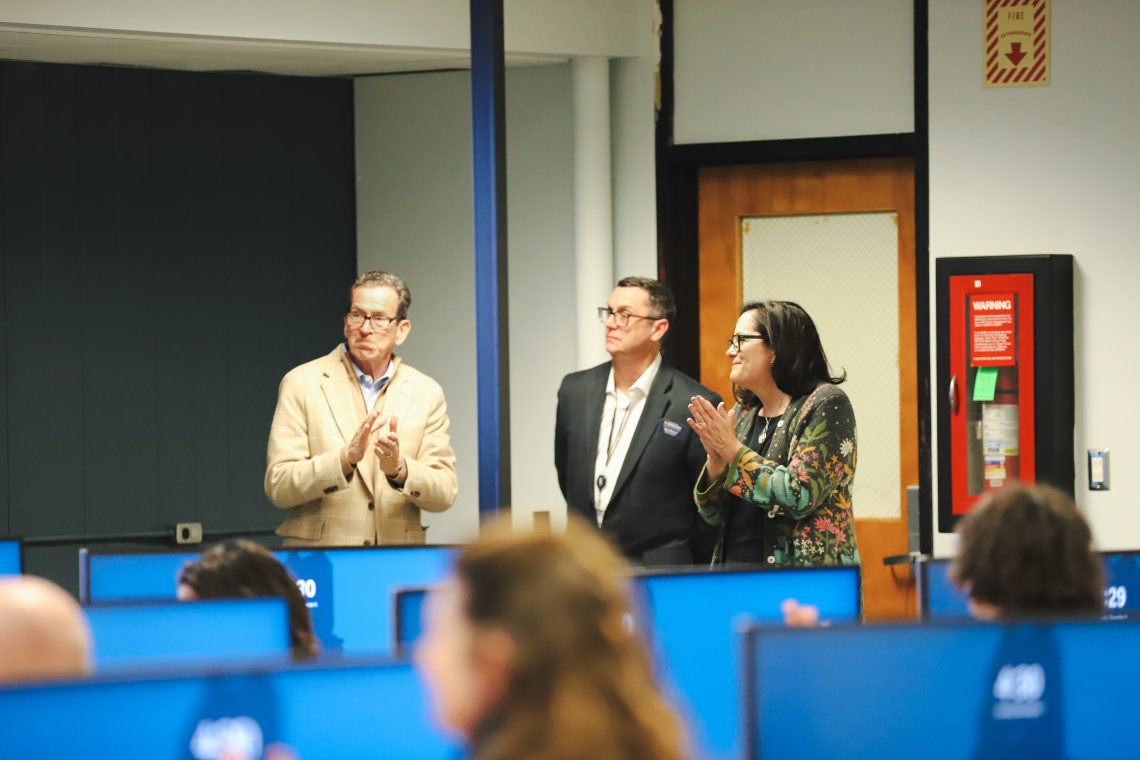
The ceremony featured remarks from University of Maine System Chancellor Dannel Malloy; USM President Jacqueline Edmondson; and representatives from the offices of Senators Susan Collins and Angus King, along with select USM faculty. Students, staff, and other attendees were also present to celebrate the classroom’s debut.
“This is an opportunity for people to see their successes,” said Mark Monnin, chair of USM’s Department of Technology, “As a teacher, I get that every day with my students. But for behind-the-scenes people, this is their moment to be recognized.”
The project was primarily funded by $463,000 in one-time Congressionally Directed Spending secured by the University of Maine System at the request of U.S. Senators Susan Collins, chair of the Senate Appropriations Committee, and Angus King. The SOC classroom represents a major investment in Maine’s cybersecurity workforce, providing USM students with the technology, equipment and skills to safeguard the state’s digital infrastructure and communities.
“This investment is really about helping people find their profession – what is going to drive the rest of their life,” said Chancellor Malloy. “In a world that is being overtaken by AI and other developments, are we on the front line? That’s what makes a day like this a great celebration. Now we have the state-of-the-art equipment that we so desperately needed for this program to go to the next level.”
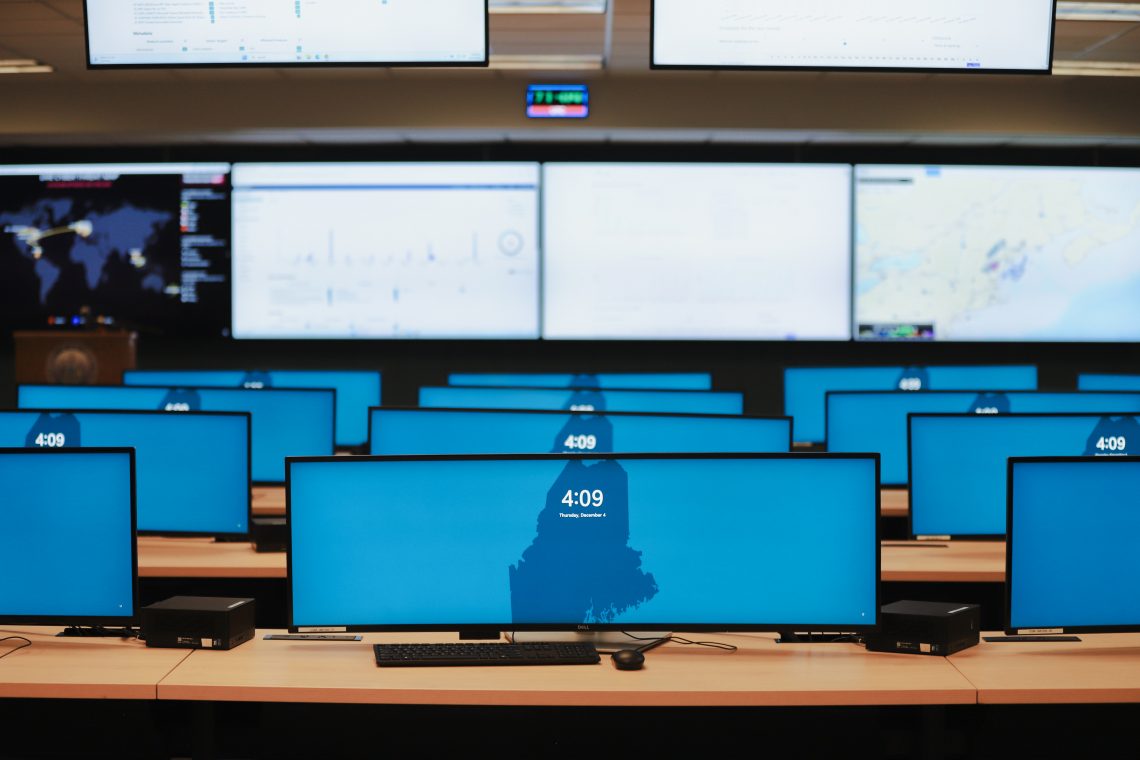
Renovations for the SOC began in January 2025, and the first classes were held this fall. Designed as a multi-faceted space, the classroom can support a variety of disciplines, from its “SOC mode,” which simulates a real-world operations center, to serving as a computer lab for Arts courses. When activated, the six screens at the front of the classroom enter “SOC mode,” allowing students at their individual monitors to be split into two groups – an ideal setup for cybersecurity competitions – with a control room for professors to oversee and guide the simulation.
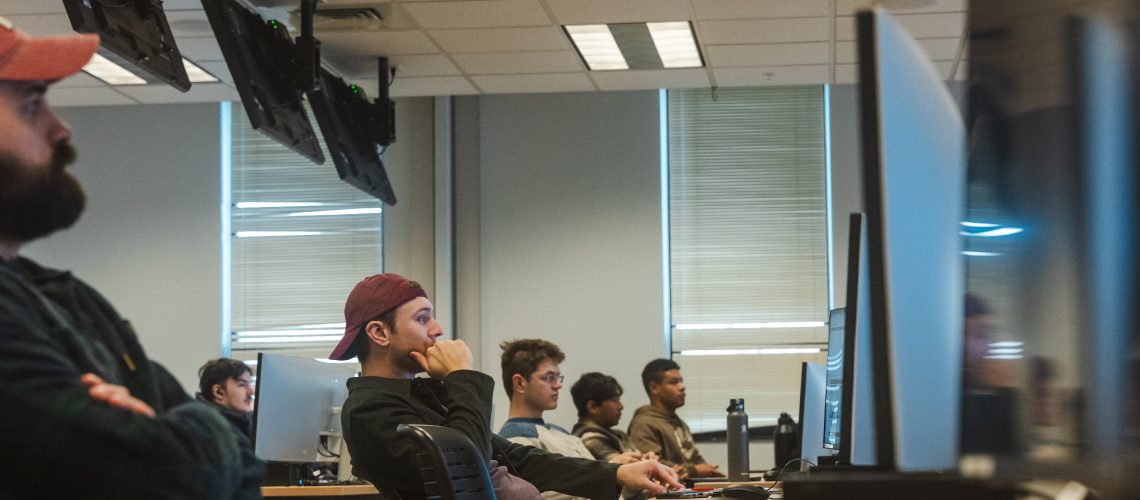
“The room itself will be instrumental for practices, capture the flag challenges, monitoring of networks, configurations, and intrusion detection, as well as incident response practice,” said Ashley Hayes, USM Cybersecurity and Information Technology Lecturer. “We will be using it a lot for course competencies as well as extracurricular opportunities for all USM students who might be interested in learning more about cybersecurity.”
The space will also serve student-led groups like the Husky Hackers, USM’s cyber defense club, which competes in national events such as the National Cyber League, the Department of Energy’s CyberForce Competition, and the National Collegiate Cyber Defense Competition.
“The SOC provides a shared space to train, and club members can more easily participate and work together seamlessly on challenges,” said Jaclyn Shirley, a USM senior cybersecurity major and former leader of the Husky Hackers. “Learning in the SOC is the equivalent of a nursing student training at a hospital and working with real patients. What you learn in class becomes more meaningful when you practice in a setting that mirrors the job you’re going to apply for.”

As the world becomes increasingly digitized and cyber threats grow, the need for skilled cybersecurity professionals has never been greater. USM’s Cybersecurity program has been recognized as a Center of Academic Excellence in Cyber Defense Education by the Department of Homeland Security and National Security Agency, and the new SOC classroom represents the next step in giving students real-world experience to prepare for careers in cybersecurity.
“Cybersecurity is one of the biggest growth areas in technology. There are far more jobs than people available,” said Monnin. “Many entry-level positions go through a SOC. Before the new classroom, students were prepared for many aspects of a cybersecurity career, but we couldn’t mimic what their first experience as a full-time cybersecurity analyst would look like.”
Unlike many universities that rely on virtual environments for cybersecurity training, USM’s SOC classroom gives students direct, practical experience in a simulated operations center. Beyond serving as a learning space for students, the SOC also has the potential to support individuals and organizations across Maine. The Cybersecurity Ambassador Program (CAP), a USM-sponsored team of undergraduate and graduate students, identifies and assists groups statewide that face elevated risks from cyber threats.
“This SOC is going to be a vehicle for helping these at-risk groups,” said Monnin. “It can help them understand what they need to do during an event and perhaps what they need to do to better understand when they’re being targeted.”
As the SOC’s range of applications continues to expand, it’s clear that this is more than a campus resource – it’s a long-term investment in student learning and in the resilience of the communities they will go on to serve.
“Our graduates will be prepared to protect local businesses, organizations and communities from digital threats that impact us all,” said President Edmondson. “This initiative doesn’t just open doors for our students. It strengthens Maine’s capacity to safeguard its digital future.”