

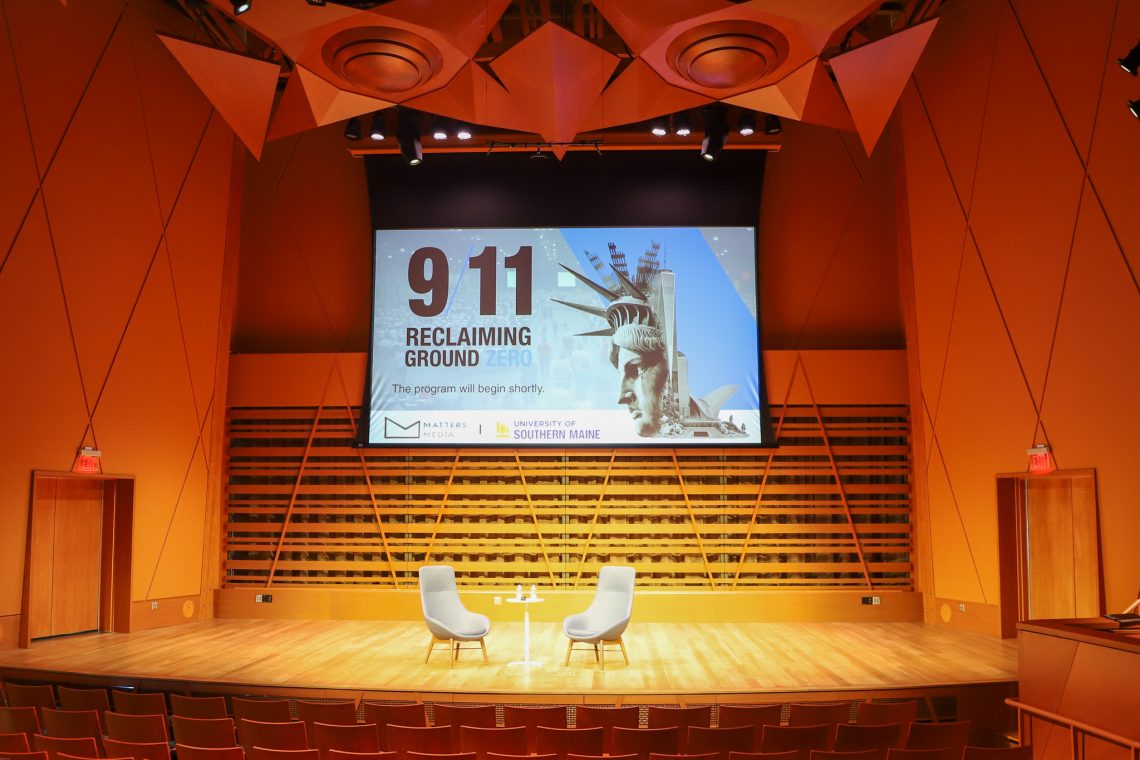
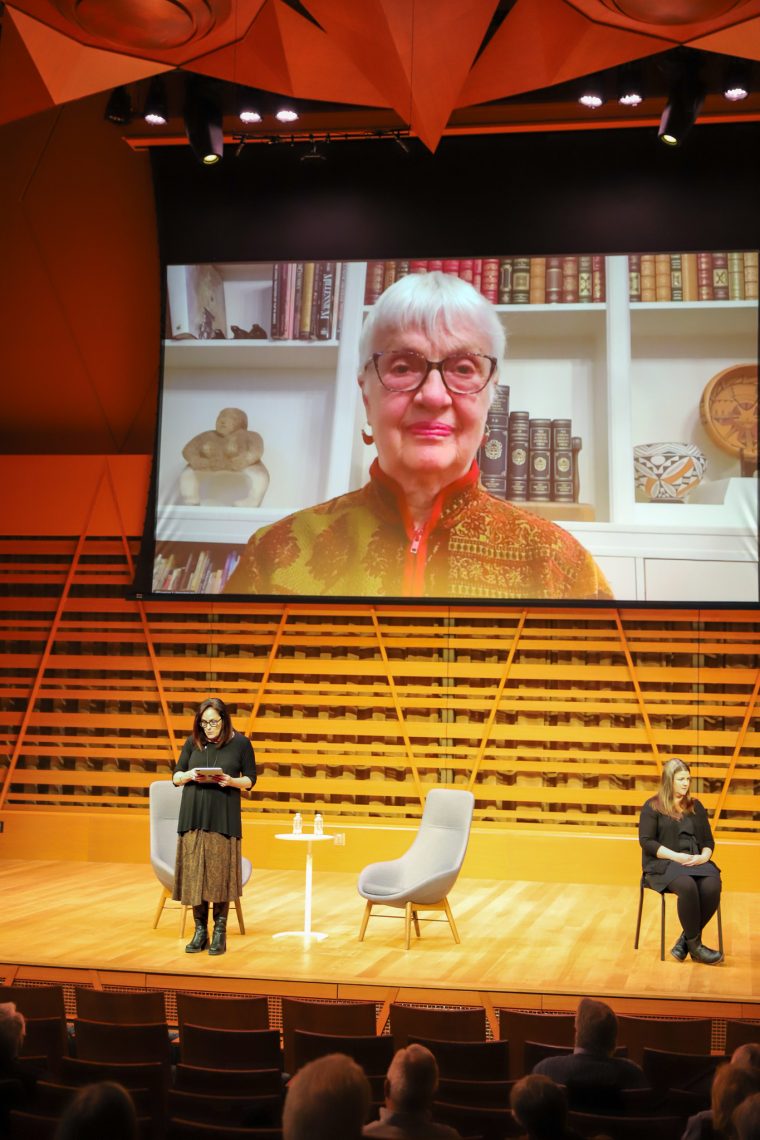
On Sunday, Feb. 15, the University of Southern Maine hosted a pre-release screening of the documentary “9/11: Reclaiming Ground Zero,” drawing roughly 90 students, faculty and community members for a program centered on democratic process and civic engagement.
The film opens by revisiting the events of Sept. 11, 2001, through archival footage and personal accounts, recounting the shock and hardship experienced in New York City and across the country. As the immediate crisis subsided, attention turned to a difficult question: What should replace the Twin Towers at Ground Zero?
Early redevelopment proposals revealed deep divisions. Traditional public hearings were proving unlikely to produce meaningful direction. The film documents how that moment led to a different approach.
In July 2002, 5,000 New Yorkers gathered at the Jacob K. Javits Convention Center for what became known as “Listening to the City,” a large-scale public forum designed to give residents a structured role in shaping redevelopment plans.
Carolyn J. Lukensmeyer, who founded AmericaSpeaks in 1998 to expand citizen participation in public decision-making, helped design and lead the forum.
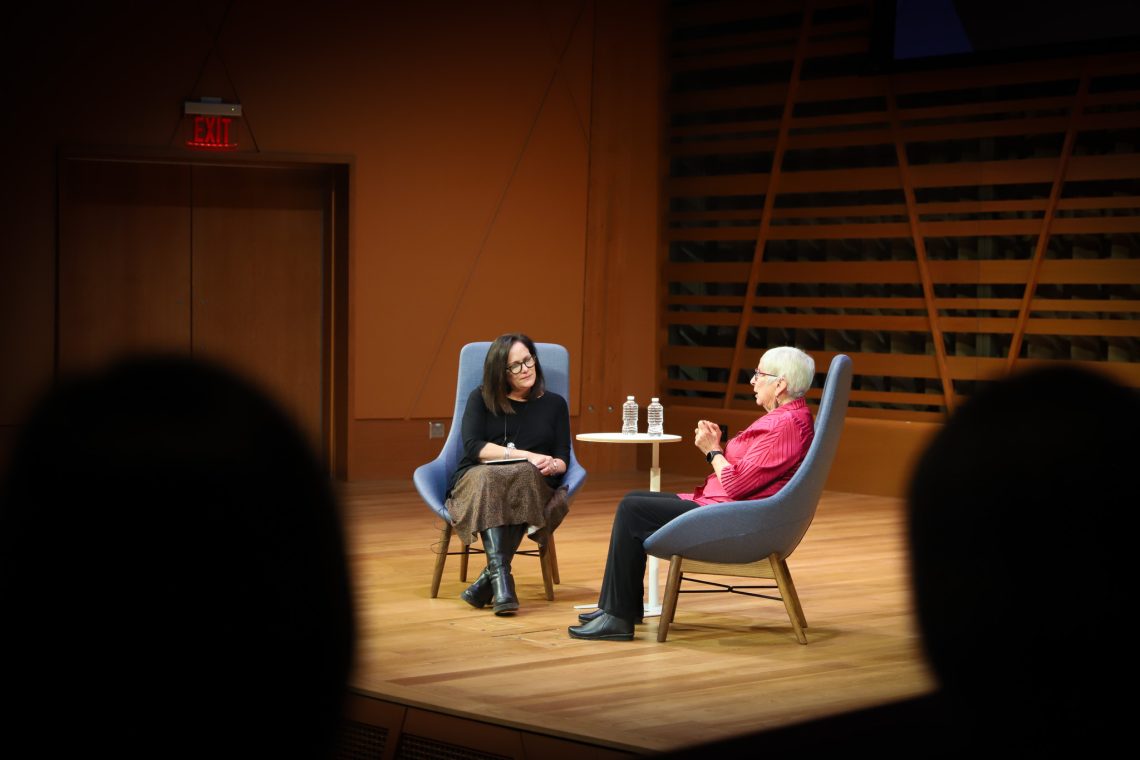
“I think most Americans have no idea that both the processes and technology to enable citizen voice to become collective citizen voice actually exist,” Lukensmeyer said in a recent interview. “Frankly, my excitement about the film has all been about what’s happening now and making it visible to Americans all over the country so that we could have more voice and agency.”
Participants at the forum worked in table groups rather than as individuals. Each table of 10 discussed the six conceptual designs together and submitted collective feedback through a shared computer. That input was analyzed in real time by a “theme team,” which identified recurring themes and projected representative comments onto large screens throughout the hall.
As similarities across tables emerged, the collective mood in the room shifted.
“When the quote went up on the big screen, ‘It looks just like Albany,’ the place went wild,” Lukensmeyer said. “I think that’s the point at which all of us knew that there was no hope for these six designs.”
The reaction reflected widespread frustration that the proposals felt too conventional for a site many viewed as sacred ground. As comments appeared on the screen, participants began recognizing their own table’s language in the shared themes.
“People were actually feeling heard,” Lukensmeyer said.
Carol Wishcamper ’14H, who attended the original 2002 gathering, said the film captures both the scale of the event and the shift in the room as collective understanding took hold.
“You can feel people’s anxiety about ‘What are we doing? Is this going to work?’ to that moment when there’s sort of like a hush in the room, when the energy changes,” Wishcamper said in a recent interview. “There’s a message of hope there.”
Lukensmeyer said the film’s focus extends beyond the events of 2002 and speaks to current civic challenges.
“If you look back in the United States and social protest movements that moved us forward on the big issues, they were almost always primarily led by young people,” she said.
Wishcamper said she hopes students left the screening with a renewed sense of agency.
“I would hope what would stay with them is that their voice matters, that people care and that we want to hear more from them,” she said.
For Lukensmeyer, the central lesson of the film is rooted in practice.
“Watching this movie will be really inspiring about the capacity of ordinary people to do the right thing at the right time,if we create a safe space that gives them the opportunity to do that,” she said.
“9/11: Reclaiming Ground Zero” is currently being submitted to film festivals, including Tribeca Film Festival, and is not yet available for public streaming or distribution. Organizers noted that additional screenings will be announced as the festival process continues.