
When the University of Southern Maine Department of Theatre in collaboration with the Osher School of Music selected Cabaret for its spring 2026 season, the production existed only as a title, a timeline, and an early vision of what it could become.
Over the following year, that vision moved through auditions, rehearsals, and technical builds, taking shape through the work happening both on stage and out of view. Through the perspectives of a senior musical theatre major and a second-year theater major, this story dives inside how the show gets its magic.
Building toward the audition
Karoline Brechter is a senior musical theatre major in the Osher School of Music. She came to USM from Massachusetts and has spent her college years building her skills in both classical voice and musical theatre.
“I have a whole arsenal of, like, hundreds of songs and tens of monologues that I can pull from depending on the show,” she said. “That’s kind of what you’re training for… learning how to walk into an audition with options and be ready for whatever they ask for.”
But when it came time to audition for Cabaret, she decided to try something completely new.
“For this one, I didn’t use anything that I had already prepared,” she said. “Cabaret is just such a specific type of show… I really wanted to do something unique, something that I knew nobody else was going to do.”
This choice meant she worked closely with her teachers, musical director, Edward Reichert, and the director, Danny Hutchins, to find the right audition piece.
“I worked with both of my voice teachers, my classical teacher and my musical theater teacher, to figure out the right material,” she said. “And then I worked with Danny on it too, just to make sure it fit the world of the show and what he was looking for.”
She went into the audition knowing exactly what she wanted.
“I kind of had my eye on the prize from the beginning,” she said. “I was like, this is your senior year, your last semester… you should just go for it.”
Her hard work paid off—she landed the role of Sally Bowles.
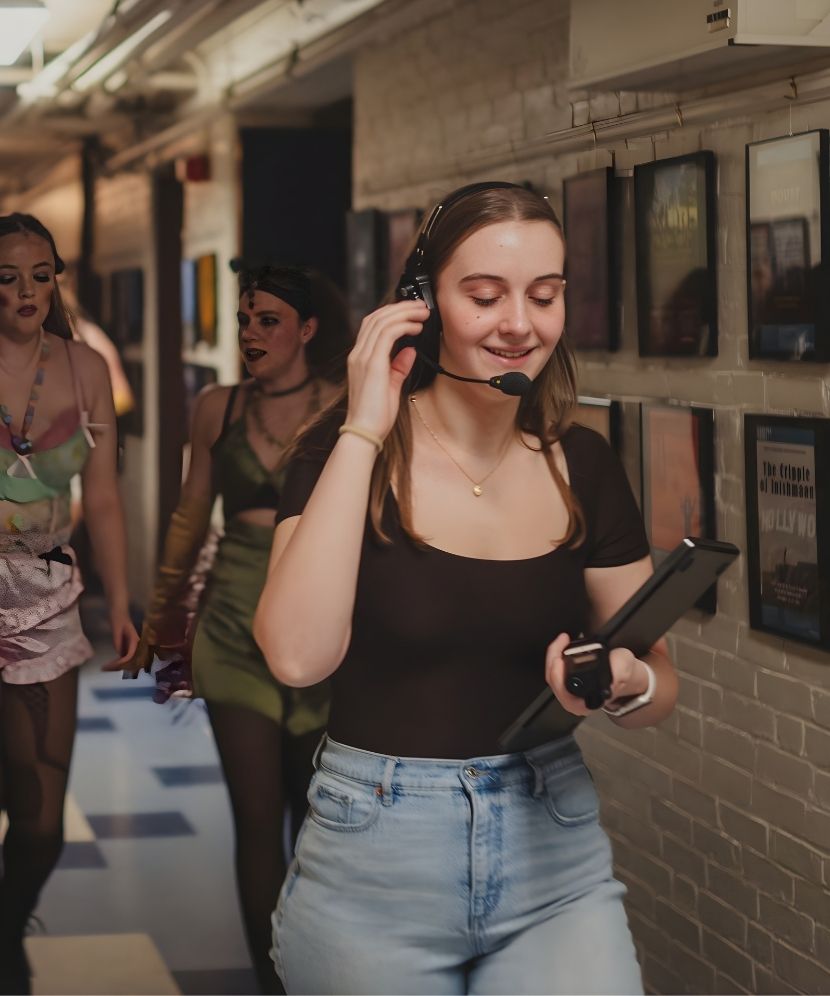
While Karoline was getting ready to audition, Hannah Gravelle was preparing for a different challenge in the same show.
Hannah is a second-year theater major from southern Maryland. She brought years of stage management experience to USM and earned trust in the department by taking on more responsibility each semester.
“I started stage managing my freshman year of high school, so when I got here, I was ready to jump in,” she said. “And once I was here, I just kept taking on more and more… trying to prove that I could handle it.”
All that effort led to a big opportunity.
“I was approached and asked if I would want to be the production stage manager for Cabaret,” she said. “And I remember thinking, this is a really big show… this is a big deal.”
She jumped right into the job.
“Basically from November on, it was meeting after meeting,” she said. “We have about five meetings a week… leadership, director, stage management, production… and then extra ones depending on what needed to get done.”
Rehearsals take shape
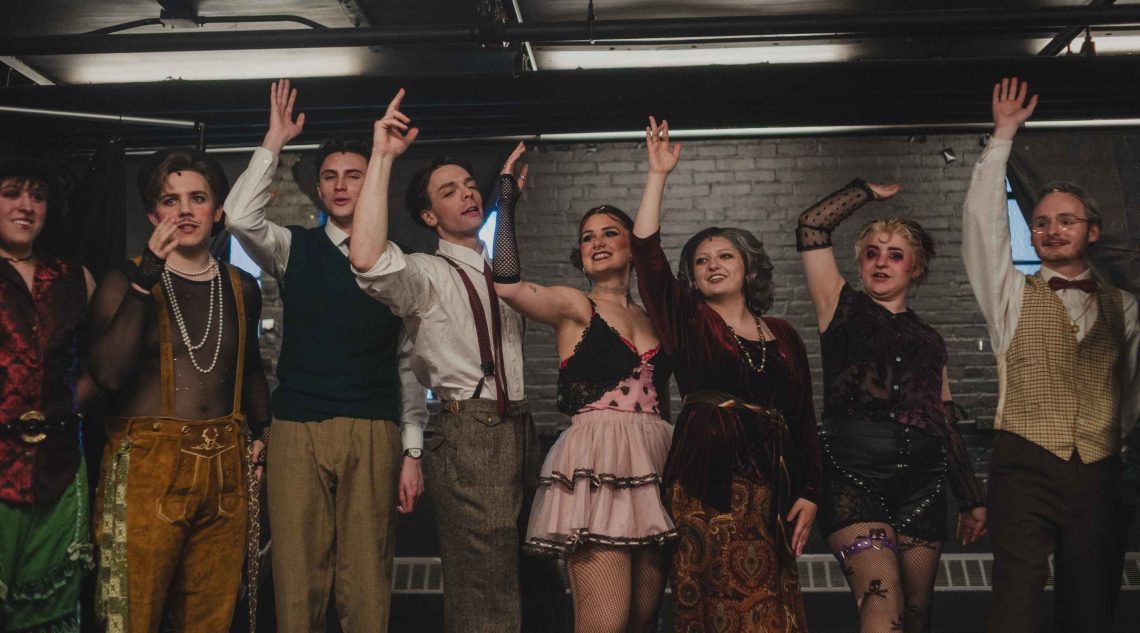
Once the cast list was posted, everyone moved straight into rehearsals.
“This semester is pretty much just all Cabaret,” Karoline said. “I’m not working, I’m not doing anything except this… and we’ve been putting a lot of work into it.”
Each part of the process builds on the last.
“We start by reading through the script, singing through the music, learning everything piece by piece,” she said. “Then we move into blocking, and you start figuring out what your character wants, what they’re feeling, what their conflict is.”
Movement becomes part of that process as well, with choreography shaping how scenes transition and how energy carries across the stage. Working with choreographer Vanessa Beyland, the cast builds those sequences alongside the music and staging, layering physical storytelling into each moment.
While the cast is rehearsing, Hannah is making sure every department knows what needs to happen next.
“Every night after rehearsal, I’m typing notes for every department,” she said. “Lighting, sound, scenic… everything that happened that day, and then everyone comes in the next day and works off of that.”
Bringing the character to life, crafting the show
As rehearsals go on, Karoline spends more time figuring out who Sally Bowles really is and how she fits into the story.
Cabaret takes place in the last years of Weimar Germany, a time when the world was changing fast. The characters live in a city full of nightlife and excitement, but also uncertainty.
“She’s turning a blind eye to everything happening around her so she can stay in her own world,” Karoline said. “And sitting in that mindset every day, you start to understand how she justifies everything she’s doing.”
Karoline uses the difference between Sally’s stage life and real life to shape how she plays the character.

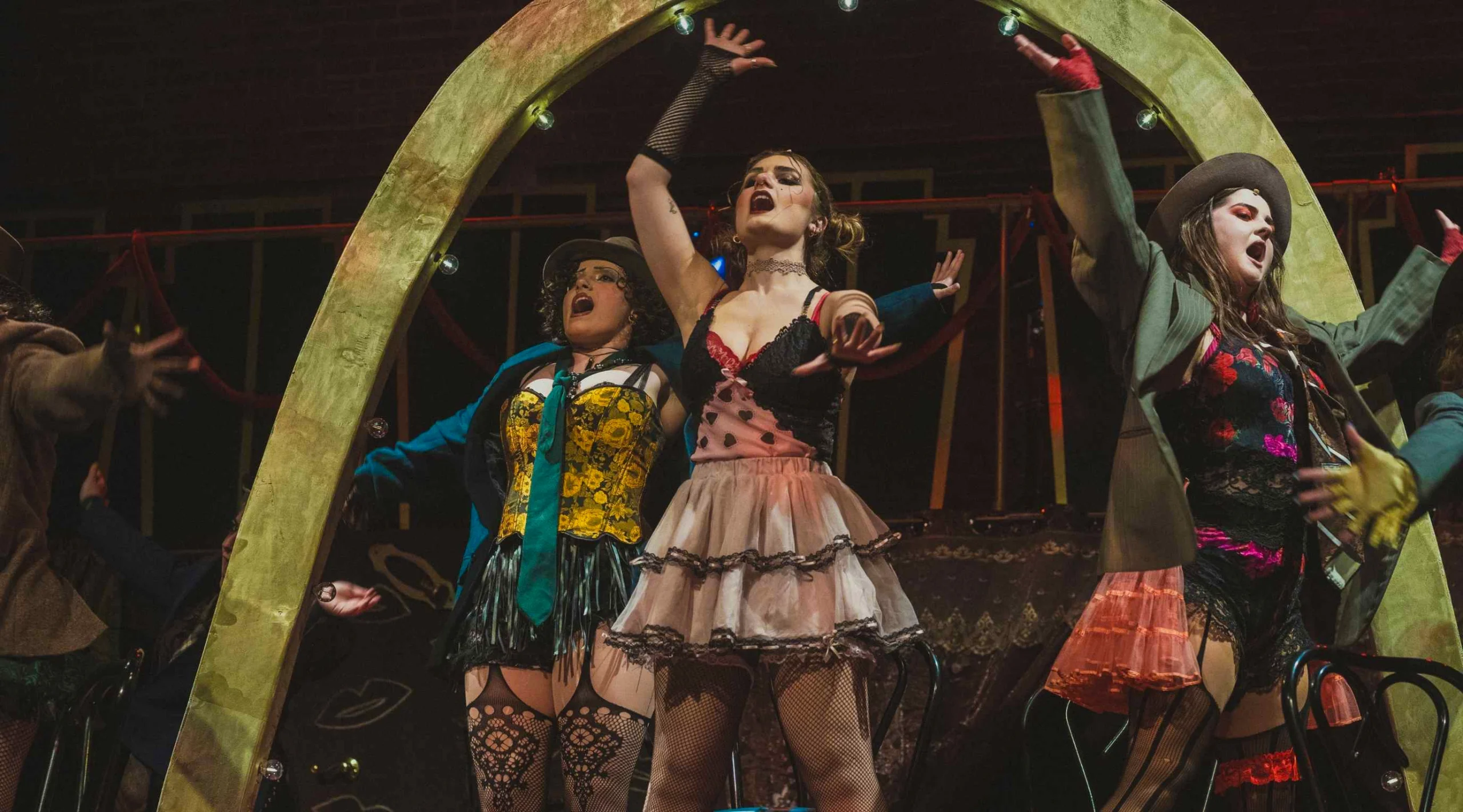
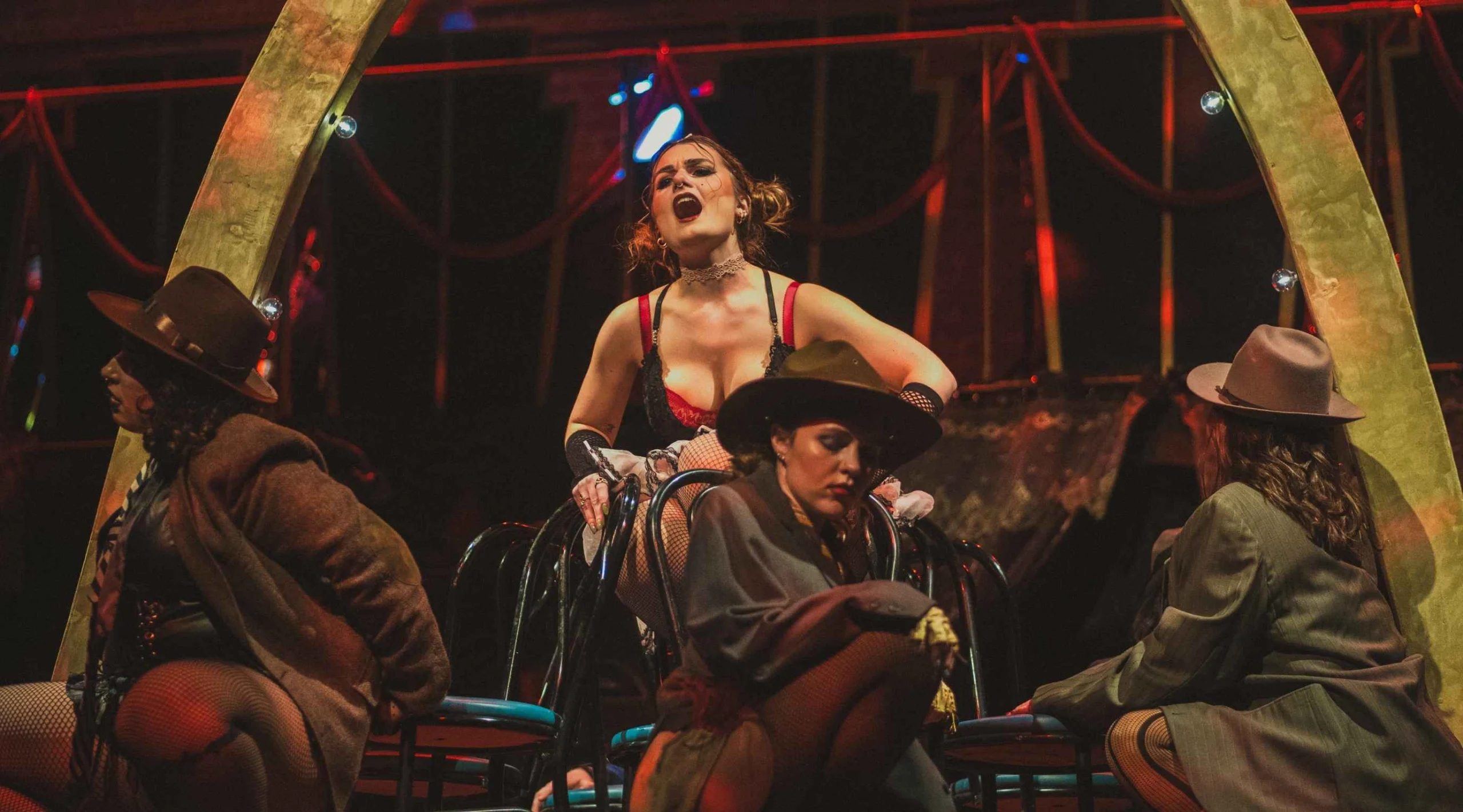

“There’s so much happening historically around her,” she said. “And she’s actively choosing not to engage with it… so figuring out how she lives in that space, and why she makes those choices, becomes a really big part of building the character.”
Inside the Kit Kat Club, that feeling never goes away.
“You’re in this environment that feels fun and exciting and removed from everything else,” she said. “But at the same time, there’s this whole other world outside of it that you can’t ignore… and she’s choosing to.”
As rehearsals continue, those choices start to show up in every performance.
“There are moments where you’re on stage and something just clicks,” she said. “Where you’re not thinking about what comes next… you’re just in it.”
For Hannah, these weeks of rehearsal are about making sure the whole production runs smoothly from beginning to end.
“You start to notice patterns. Where people naturally move, where something consistently takes longer, where something might need to be adjusted… and you build the show around that.”
Hannah Gravelle ’28
Theater Major
She pays attention to how every part of the show fits together and makes changes before problems come up.
“We spent a lot of time thinking about what could go wrong,” she said. “Like if someone has to cover multiple roles, or if something overlaps… how do we make that work before it becomes a problem?”
Even during rehearsal, you can see how all the behind-the-scenes work adds up to the final show.
“I tape out the entire set on the floor… every wall, every stair, every entrance,” she said. “So the actors are learning the show in a space that doesn’t exist yet, but will.”
When it all comes together
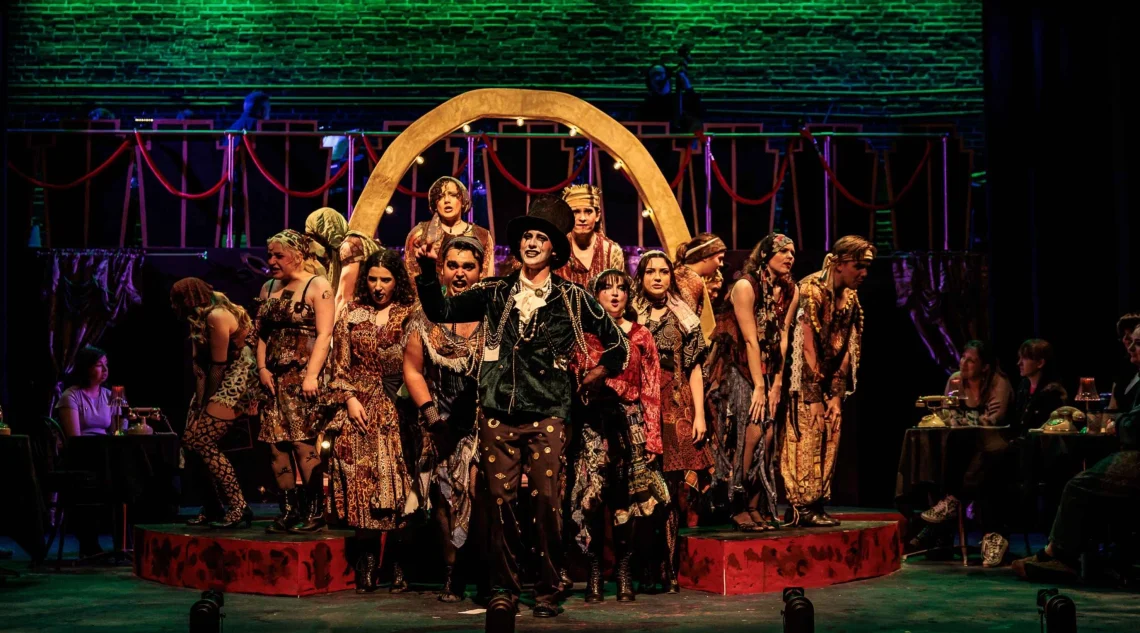
Technical rehearsals are when every part of the show finally lines up.
“We spent about 13 hours just programming all the cues… lights, sound, everything,” Hannah said. “And then the cast comes in, and suddenly it’s not pieces anymore… it’s the show.”
The change happens right away.
“You can feel when it stops being rehearsal and starts being a performance,” she said. “Even if there’s no audience yet, it feels different.”
Karoline feels that difference as soon as she steps on stage.
“There are parts of the show where everything around you is moving so fast,” she said. “People are changing, things are shifting, and you’re just trying to stay grounded in what your character is doing in that moment.”
What happens behind the curtain
Some parts of the show are meant to stay hidden.
“There are people moving set pieces in complete silence, right next to you,” Hannah said. “Or someone waiting for the exact second to trigger something from above… and if they’re even a little early or late, it changes everything.”
Other moments happen right next to the audience.
“There are actors coming through the audience, interacting with people, pulling them into the world of the show,” she said. “And at the same time, there’s a whole other set of things happening just out of sight.”
What the audience takes away
The show builds up to a big shift.
“It starts off feeling really fun and energetic,” Karoline said. “And then it just kind of drops… and you can feel the room change.”
That moment is what people remember most.
“I hope people leave thinking about what’s happening in the world around them,” she said. “Not just watching it, but actually sitting with it.”
From the back of the theater in the booth, Hannah sees that moment land.
“There’s a pause at the end where nobody really moves right away,” she said. “And that’s when you know it landed.”
The effort behind the performance
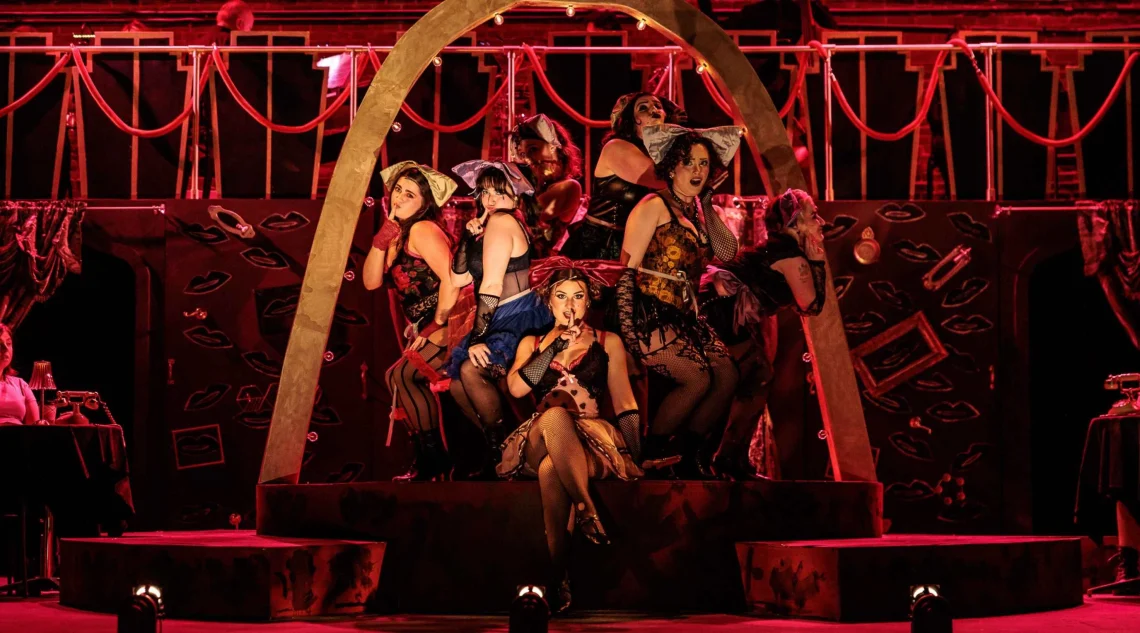
When the curtain goes up, you can’t see all the separate parts anymore.
What you see is one performance, built from months of hard work, teamwork, and problem-solving by students in all kinds of roles.
To the audience, it all looks smooth and effortless.
For the students, it’s proof of what you can accomplish when you learn how to build something that lasts.