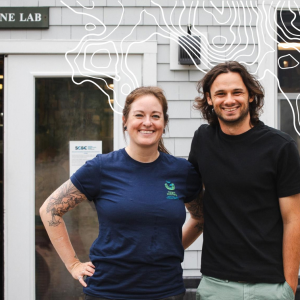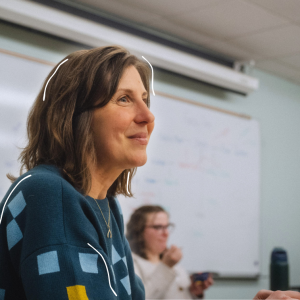

The Road Behind Us: A Final Reflection From the Green Curtain Roadshow
September 8, 2026
|
by Calvin Soule
Three weeks after leaving Portland, the Green Curtain Roadshow has returned home. The van has been returned, and the crew has dispersed — but the questions raised along those thousands of miles haven’t gone anywhere. What does it mean to witness these places? What does it take to protect them? Where might the road take us next?
The final leg: Climate refugia beyond the forest
Eben and I crossed over Lake Michigan into Wisconsin, where we stopped at Collins Marsh. The forest was in the background on this visit, but it and the marsh are connected: forests provide shade and nutrients, while marshes provide flood protection and filter water. Deer, frogs, racoons, field sparrows, snakes, salamanders, and many other species spend time in each, knowing no boundaries, only bounty. Both can also provide climate refugia — places that offer some protection for plants and wildlife as the climate changes.
But this area didn’t always look this way. Conservation efforts transformed the Collins Marsh, including the installation of a dam to maintain marsh conditions year-round. through damming. The restored wetland habitat became an important stop for migrating birds.
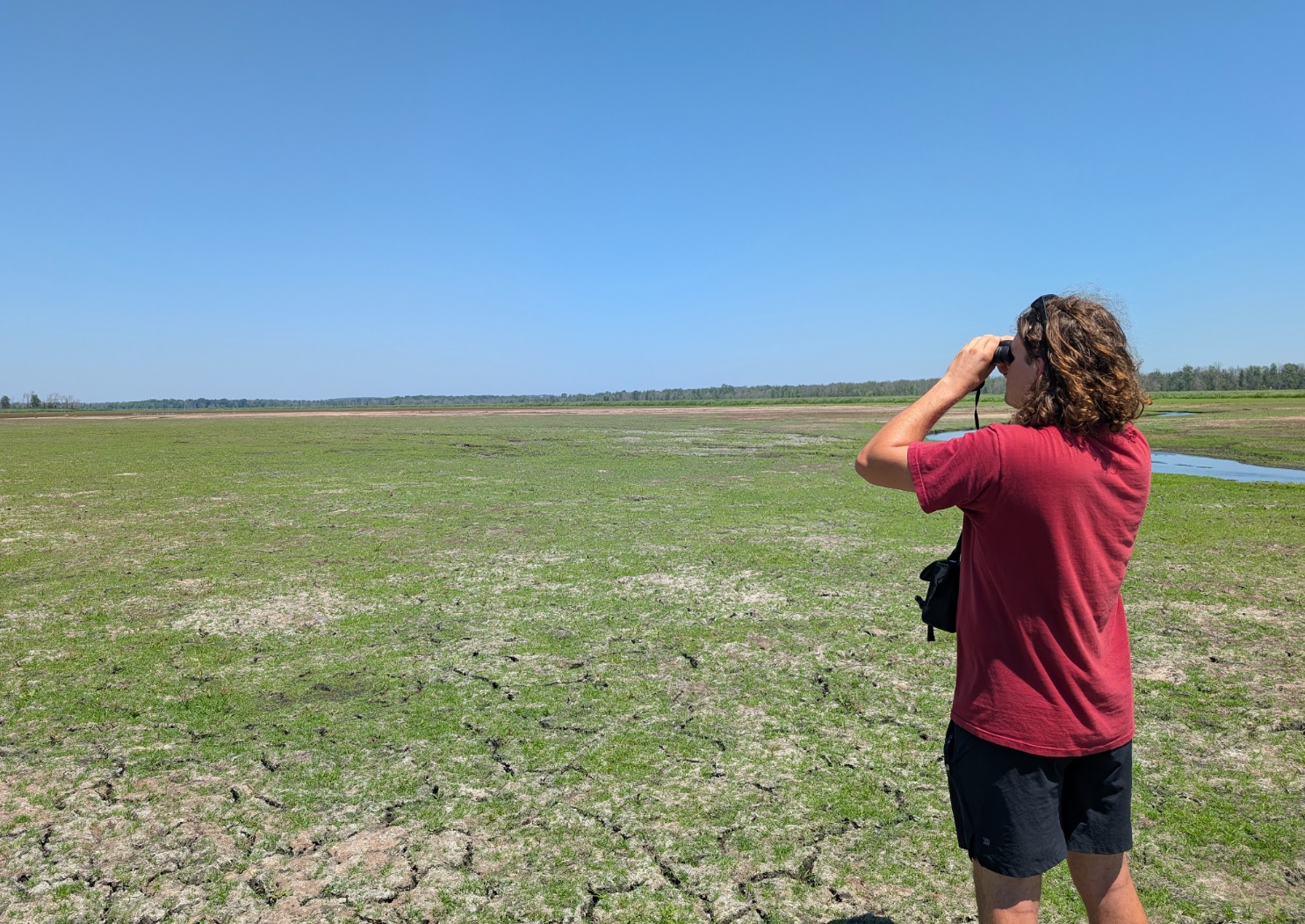
When should we seek control over land management? When should we let it go, and let it grow? These are difficult questions to answer, but are essential to the mapping of the Green Curtain.
At our next stop, in Theodore Roosevelt National Park, at the North American Bison Discovery Center, and on the American Prairie, these questions stretched before us, vast as the prairie lands themselves. The American Prairie organization offers a glimpse into what restoring these habitats might look like. Prairies can store significant amounts of carbon through the deep roots of their grasses. And the reintroduction of bison, a keystone species, could help preserve and restore the prairie.
By buying and leasing land, American Prairie is one of several groups helping restore wild bison to parts of Montana. If a free-roaming herd of bison were to return to the American west, how would the general public react? Would they be willing to support a return to a more complete ecosystem even if it meant a herd making a great migration across the interstate? At the heart of the issue, again and again, is what we are willing to sacrifice in order to restore some balance in the ecosystem we have thrown off-kilter.
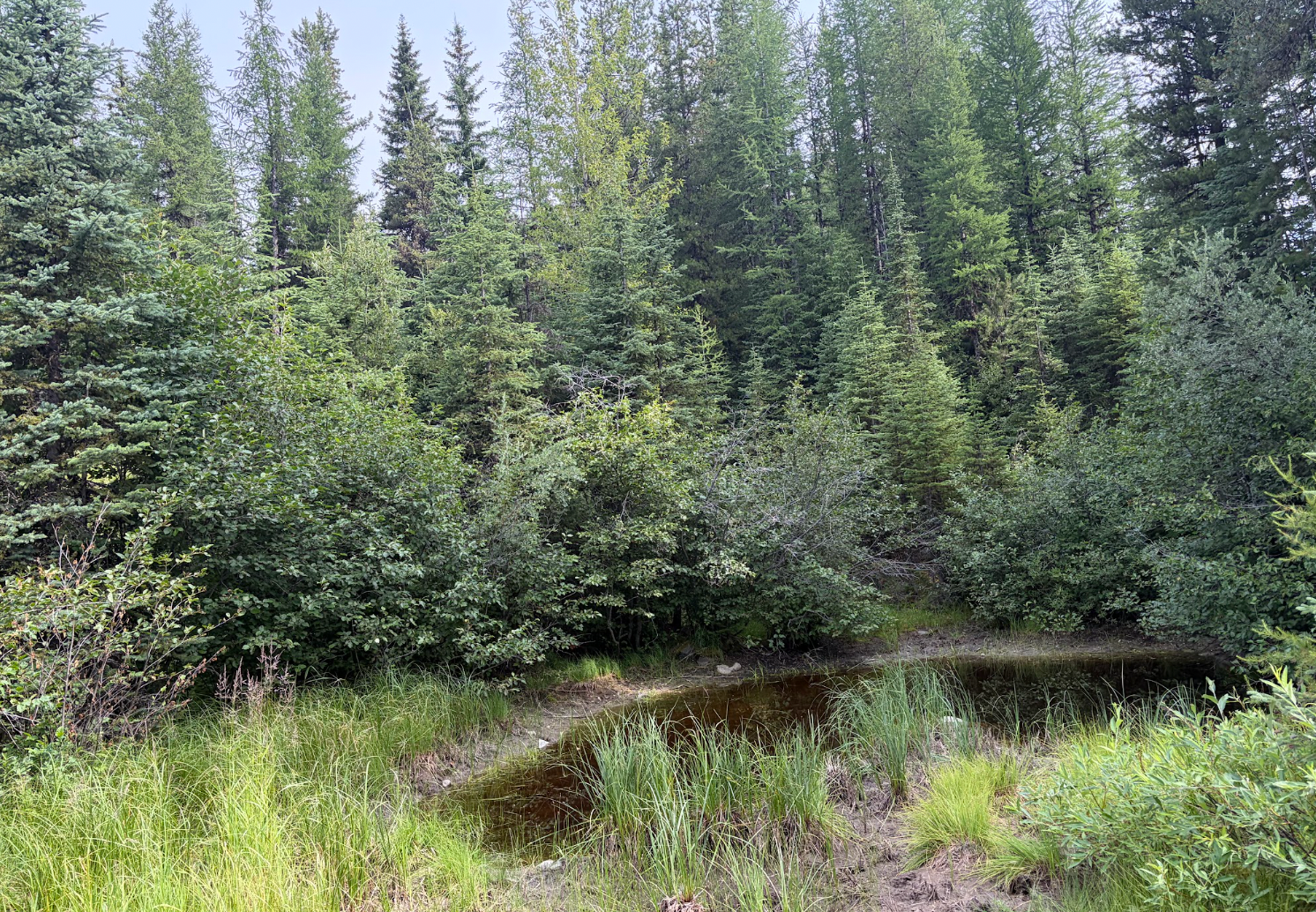
At last: The Yaak Valley
Montana is one state but two very separate regions: Eastern Montana is flat, open prairie while Western Montana grows more mountainous with every mile. And then there’s the Northwest corner.
The drive into the Yaak Valley feels remote. At different points we wind up and along mountain roads, encountering dropoffs that make our jaw drop and our hands sweat. But then we land in the valley, into our little bubble we can call home — most importantly, the Yaak river, inviting us in for a cool dip after a long drive.
In the morning we head down the logging roads and into the physical landscape that our minds have mythologized after reading so many pages by Rick Bass. He’s telling a story and mentions the word moose — I don’t remember why — when suddenly a mother moose (a cow) and her two calves appear. We stop — and so do they. Well, the cow does, anyway. The two calves continue to tromp around, eating the greens.
That they are standing on the grounds where logging trucks have parked and cleared is not lost on anyone. Neither is the fact that Eben has been asking for a moose sighting — the first of his life — for the entire trip.
We watch.We wait. Then we pull forward, deeper into the Yaak, and toward a logging wound which still festers.
With Rick as our guide, we head into the “old forest,” as he calls it. This is the forest he has been trying for decades to protect as climate refugia. This is the birthplace of the Green Curtain movement. It is also the place where the wind knocked over a newly exposed 315-year-old spruce, which became the Black Ram guitar.
The Yaak Forest is unlike any other I’ve stood in. It contains rare pockets of inland temperate rainforest. Stand on the soil, and you’d feel the difference too: centuries and centuries of decomposition. You can see each log, piled on top of another. Each decayed tree giving back what it received long ago.
The forest is thick, and as we ramble along, I see signs of what almost happened: future cuts marked by blue tape and orange blazes. But for now, they’ve survived.
There are so many big trees standing — and so many big trees down. But there’s one tree in particular Rick wants us to see. After lunch, we find it: a western larch tree Rick says is estimated to be 600 to 800 years old. It’s a cliche, but a tree that old sends my mind spiraling everytime: What does that tree know? What has it seen? What do we lose, when these trees are cut down?
A biologist once told Rick that if he came here he’d discover a new type of beetle every week.
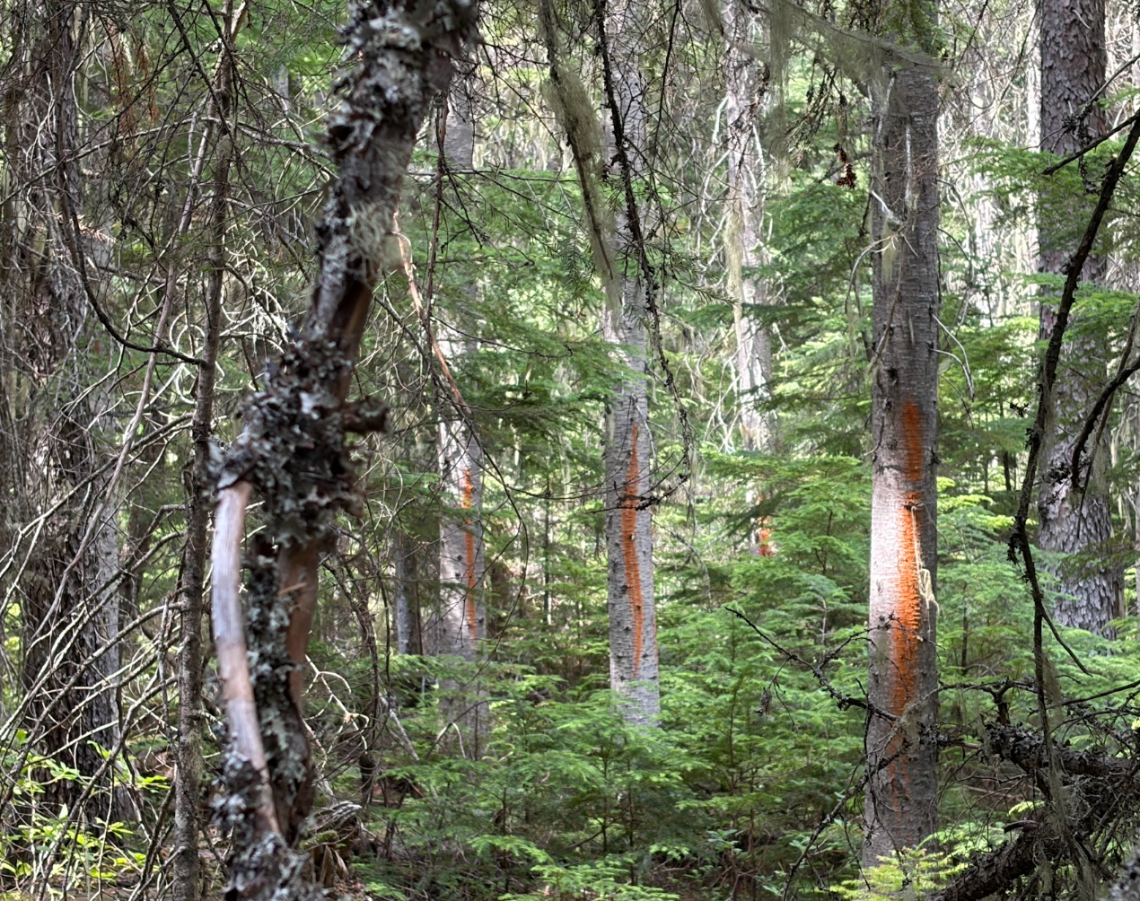
“We know nothing about this forest,” Rick says. “We should.”
There are other moments that hint at just how unique this forest is. Rick points out spruce and western larch growing side by side — a combination he says is rare.
I don’t believe in saving a place just because it looks pretty. But a place that has not been fully studied, a place so biodiverse and capable of storing so much carbon, should surely be considered for protection. If this place were designated as a climate refuge, more trees could grow old. There would be fires — certainly, there would be fires.But most of this old growth is fire resilient. Species such as western larch have adaptations that can help them survive some fires. There would still be carbon stored here. There would still be cool shade and rich microclimates of soil and moss.
The Green Curtain Roadshow: Where will the road take us next?
Three weeks have passed since we completed the circle of our first Green Curtain trip and the question remains: what’s next?
We don’t truly know, other than that we will keep advocating and building community. On Oct. 2, Eben and I will return to Montana for the Climate Aid concert. And on Jan. 12, the Green Curtain Road Show will host its own concert event celebrating work produced by writers and participants, where the Black Ram guitar will be played — by far better guitarists than me!
The road trip may be over, but the work of identifying, witnessing, mapping, and protecting the Green Curtain continues.
Checking In From The Green Curtain Roadshow
July 22, 2026
|
by Calvin Soule
As I write this, I sit in a motel in Montana. The road has been long. Camping in 98 degrees last night, eating the same camp meal and snacks over and over again, and living out of a van are far from what many of us prefer. Yet, all along the way I feel certain that this matters. We have learned so much, though we also feel like we are just getting started.
White Mountain National Forest
On July 8, we arrived in New Hampshire’s White Mountain National Forest by Chocorua lake. It was the first stop of many on our journey and we wanted people to notice us.
We wanted them to ask us questions. We wanted to engage in conversations about old growth forests. So we painted forests and mountains on the van windows, added our Instagram handle, and pretended we didn’t have a New Jersey license plate.
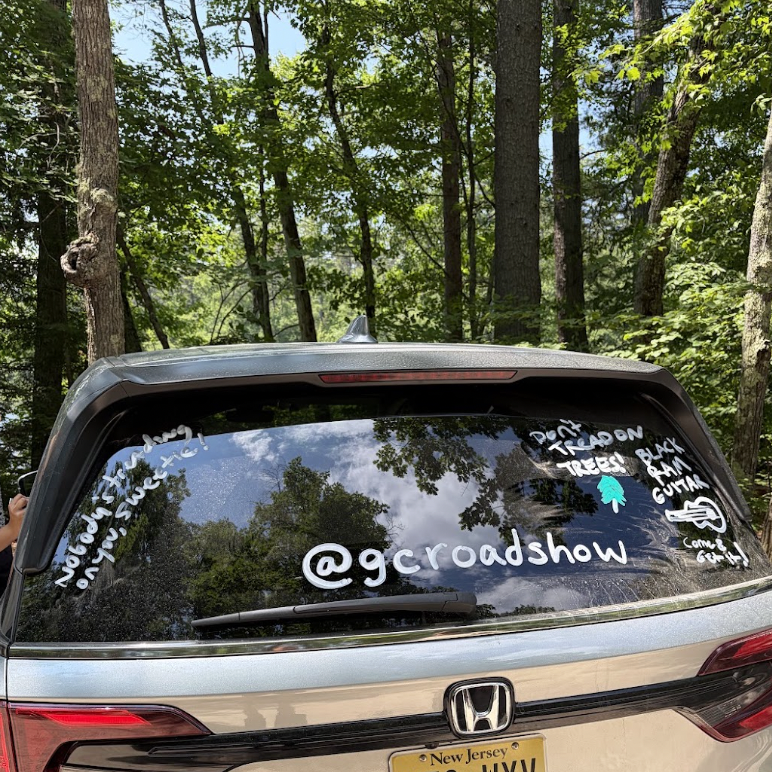
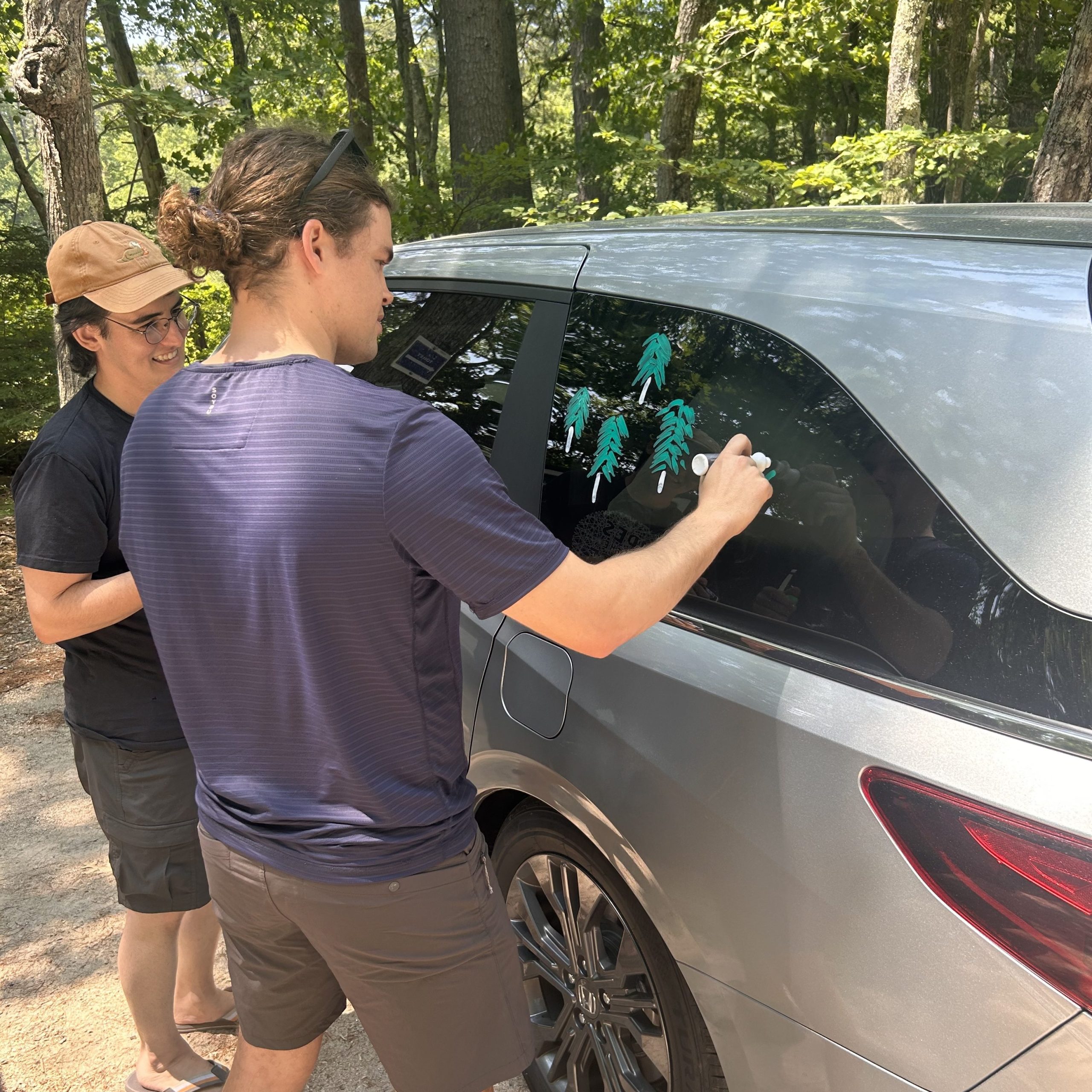
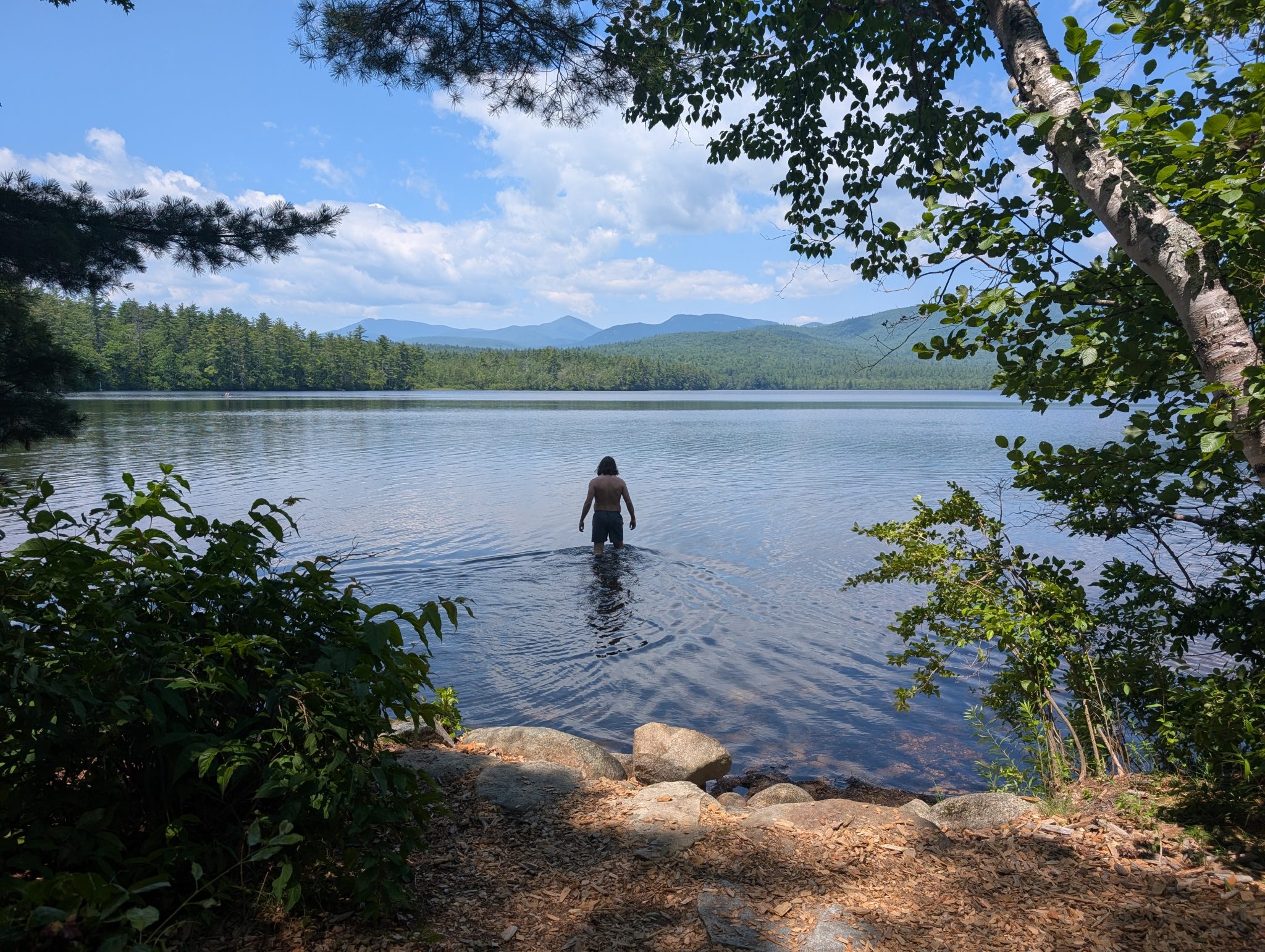
The Stonecoast crew consists of myself, Eben Thomas, Ryan Schmidt, and Rick Bass. Later, Melanie Collins, Jules Guerra, and Luke Johnson will meet us on the road. Once in the White Mountain National Forest, we ate lunch by the lake, and I couldn’t resist a a lake swim. The water was cool, clear, and buoyant. After driving down the gravel road, rutted out from recent rains, we met up with Zack Porter, executive director at Standing Trees. Three community members joined us on the walk, and each of us took turns introducing ourselves — mostly, it’s the roadshow crew explaining what our mission is, and why we’re interested in climate refugia.
The trip has been designed to take us through forests managed in many different ways. The National Forest provides about 15-20% of the nation’s timber, so it is an important part of understanding why our society continues to cut down old growth, and why the Department of Agriculture (which runs the Forest Service) does not value the ecosystem benefits old growth trees provide. I’ve visited the White Mountains many times, always with the intent to hike, to sweat, to summit. Today, though, we learn.
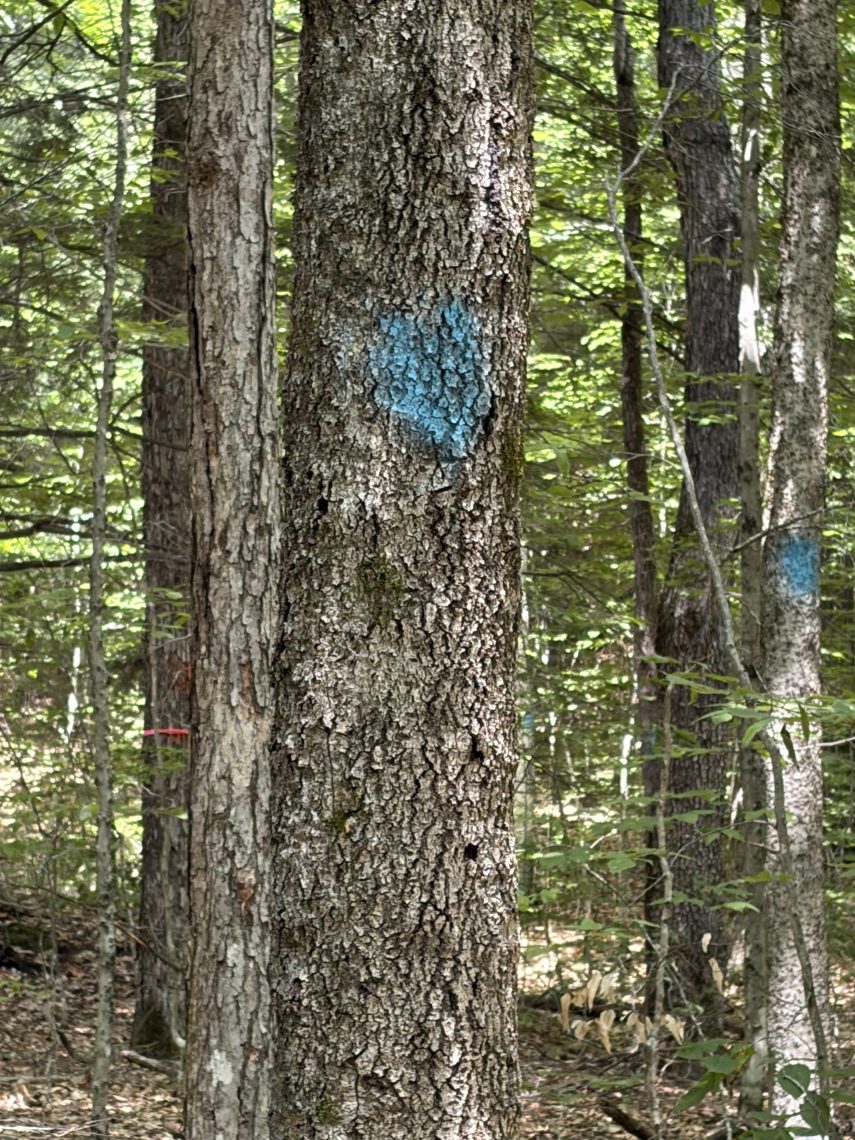
The Claybrook trail is wide, flat, and follows a brook with clear water. Follow the trail all the way up and you’ll summit Mount Chocorua, but we’re not here for summit views. We’re here for the trees that live here —, that grew from seedlings here. We’re here for the trees that the forest service painted blue.
On so many trails, the bright blue path signals something important for hikers: follow me! But these patches indicate something else: cut me. That’s because this project falls under the proposed Sandwich Vegetation Management Project. The word management suggests that the forests need to be “treated,” and indeed, it’s this type of medical language that’s used again and again by the Forest Service. But as we walk through the forest, we discuss the ways that old growth offers integral habitats to species, protection from flooding, natural fire resilience, and that they need no treatment: they’re fine on their own.
One of the indicators for old growth forests are tree snags. When trees get old, they fall, and tree snags indicate there has not been cutting since the fall. Even more important, the snags provide critical habitats for birds and insects. And when the tree falls, or snags, it leaves a sun spot behind, where new saplings can take its place. Later, when the tree has fallen, or if it falls straight to the ground, the trunk and roots form pits and mounds, offering an incredible amount of nutrients for new trees to grow.
The Sandwich Vegetation Project contains several stands of old growth, many of which were slated to be chopped. Standings Trees sued the Forest Service to protect them, but the ruling only covered plots that met the agency’s narrow definition of old growth. The forest contains many old growth beech and maple —but old growth is always multigenerational.
The difference is that in New England we haven’t let the second growth mature. We keep cutting them down. Less than 0.1% of old growth forests remain standing. In New England states, that’s usually defined by over 150 years. The definition varies from a legal perspective across the country — everyone’s got a different definition. But what remains the same in each place is that people are not letting trees grow, opting instead to “manage” and “treat” forests. After this first stop, I’m left wondering: why can’t we let them grow?
Green Mountain National Forest
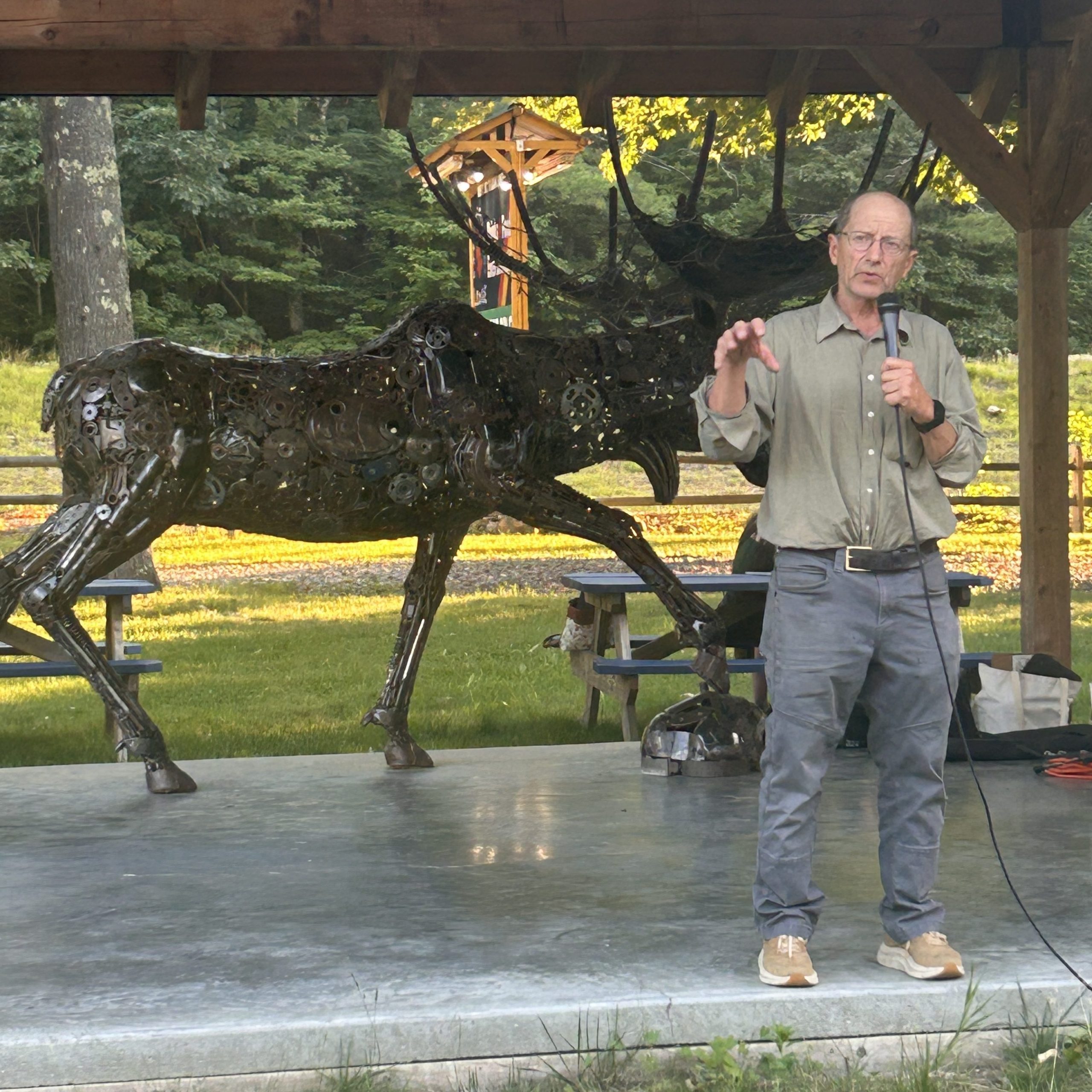
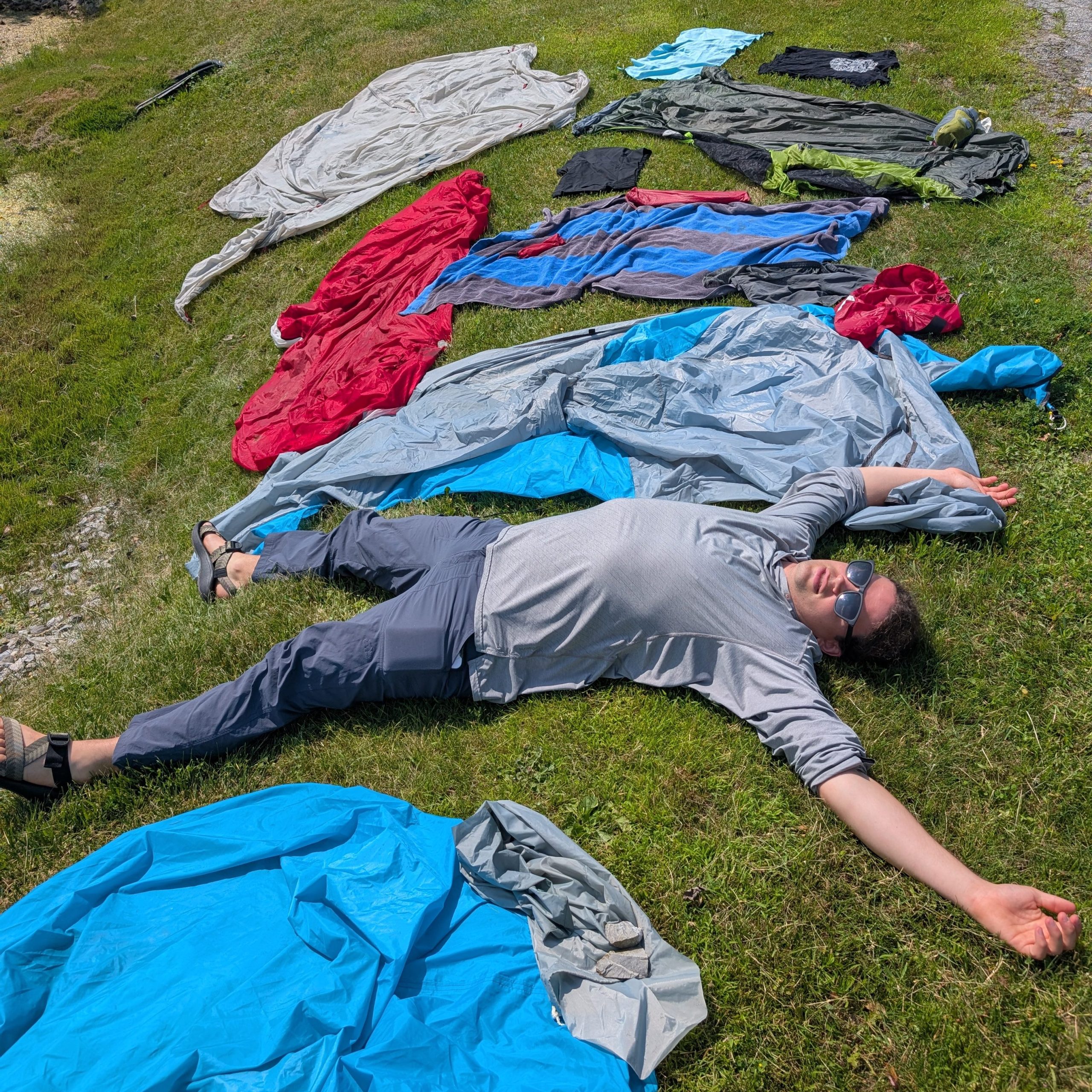
After an event at Ledge Brewing in Intervale, featuring the Black Ram guitar, Rick Bass, and poetry from Stonecoast student Melanie, we camped out under the starry night. We headed to the Green Mountain National Forest in what is now known as Vermont. We visited the Telephone Gap Management Project. Under this project, the late succession trees have also been prescribed a “treatment” from the forest service. But the forest shows all signs of health.
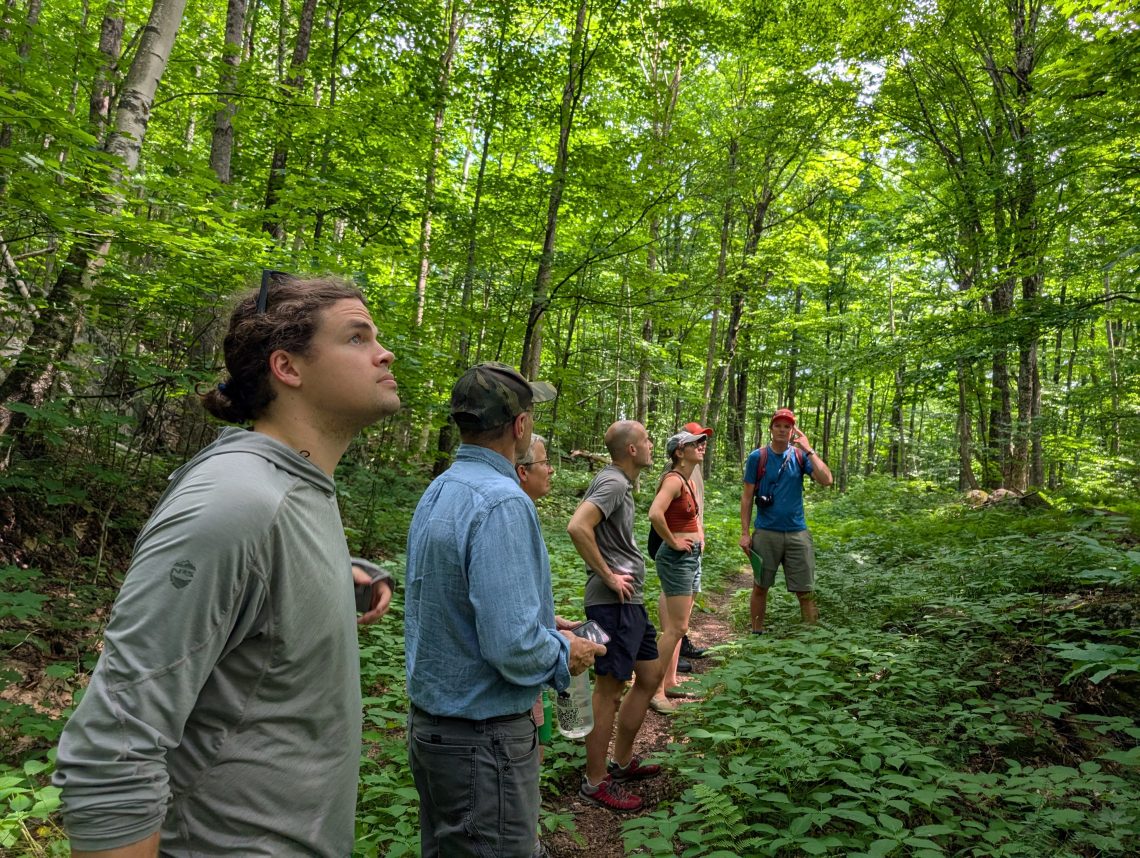
As Zack Porter explained, the forest takes care of itself. The mature forest here recycles nutrients, creating pits and mounds on the contoured floor. These nutrients will go on to feed the next generation.
Only old growth trees feature cavities like these — cavities that are critical nursery grounds for the Northern long-eared bat, an endangered species that lives nearby. In the same forest here, a lynx was seen last year.
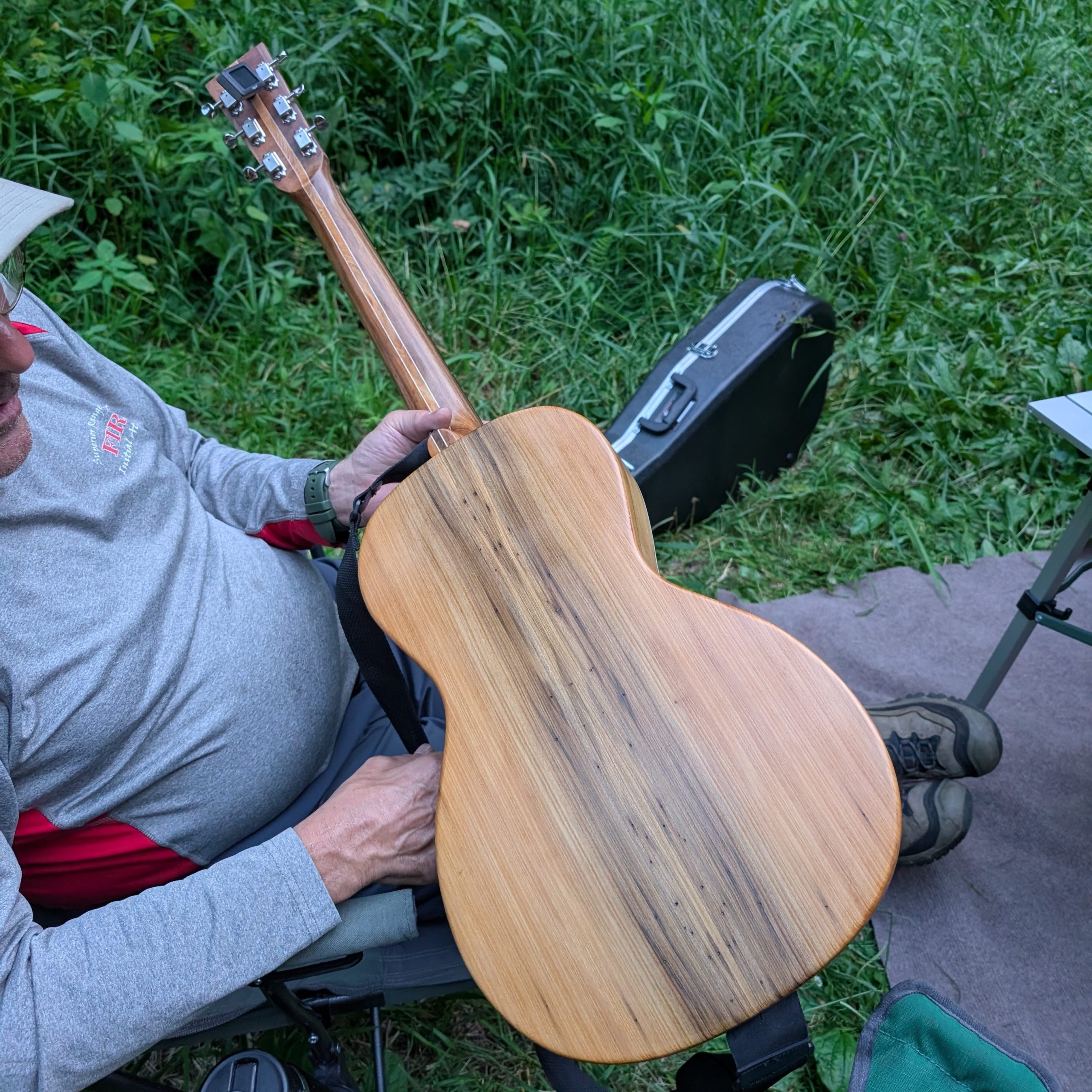
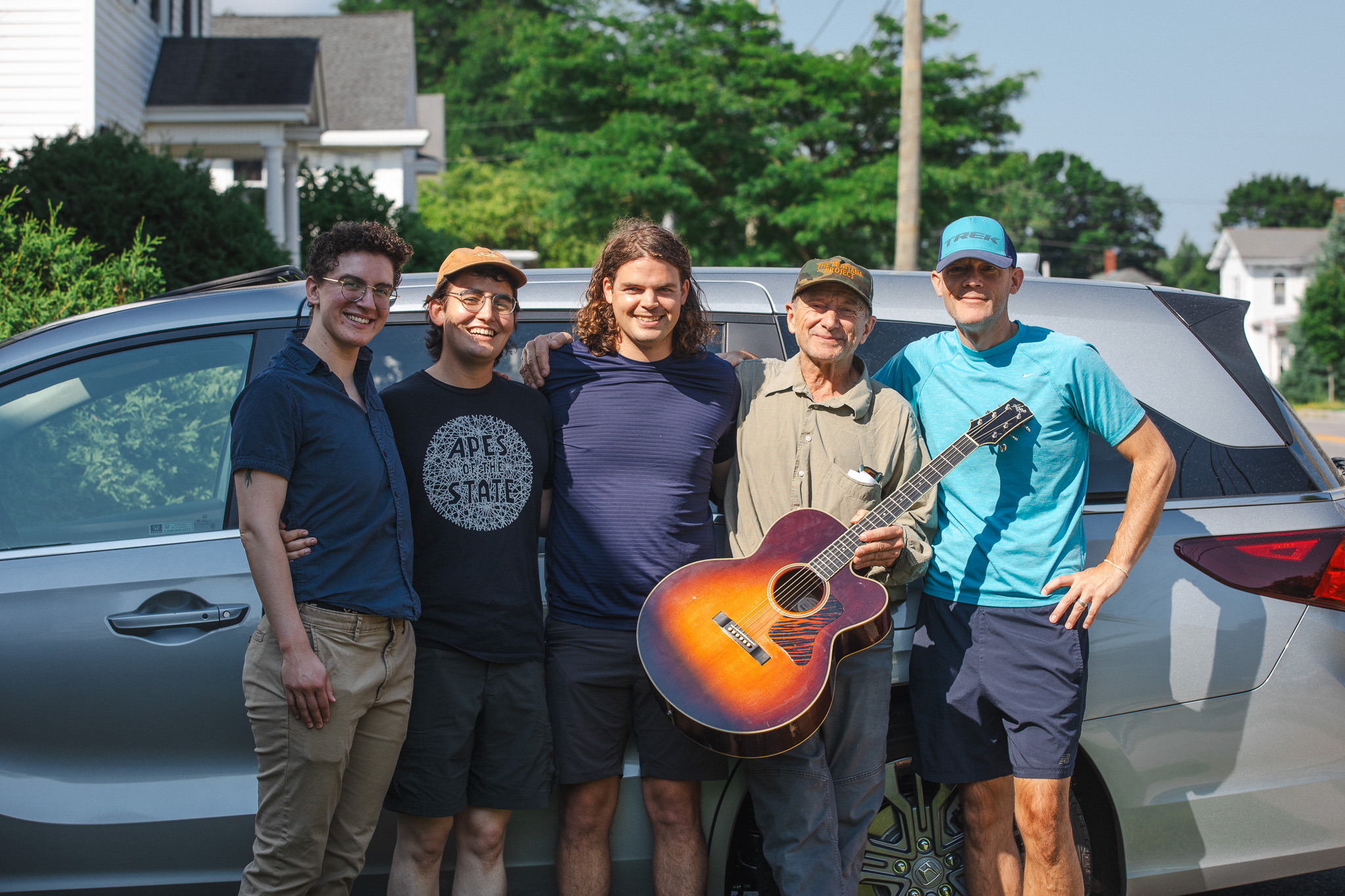
Afterwards, we met Victor and Linda. When I introduced our crew, I added our new favorite question: do you play guitar? The story of the Black Ram guitar is easy to tell — a guitar made from a three hundred year old tree! But to my surprise, Victor had a guitar, with a story of its own. He made the guitar himself, out of an old growth cedar tree dredged from a Mississippi bog. The back of the guitar even had wormholes — by the end of the night we called his guitar Wormhole. Under the Vermont stars, two old growth trees sang once more.
Adirondack Park Forest Preserve
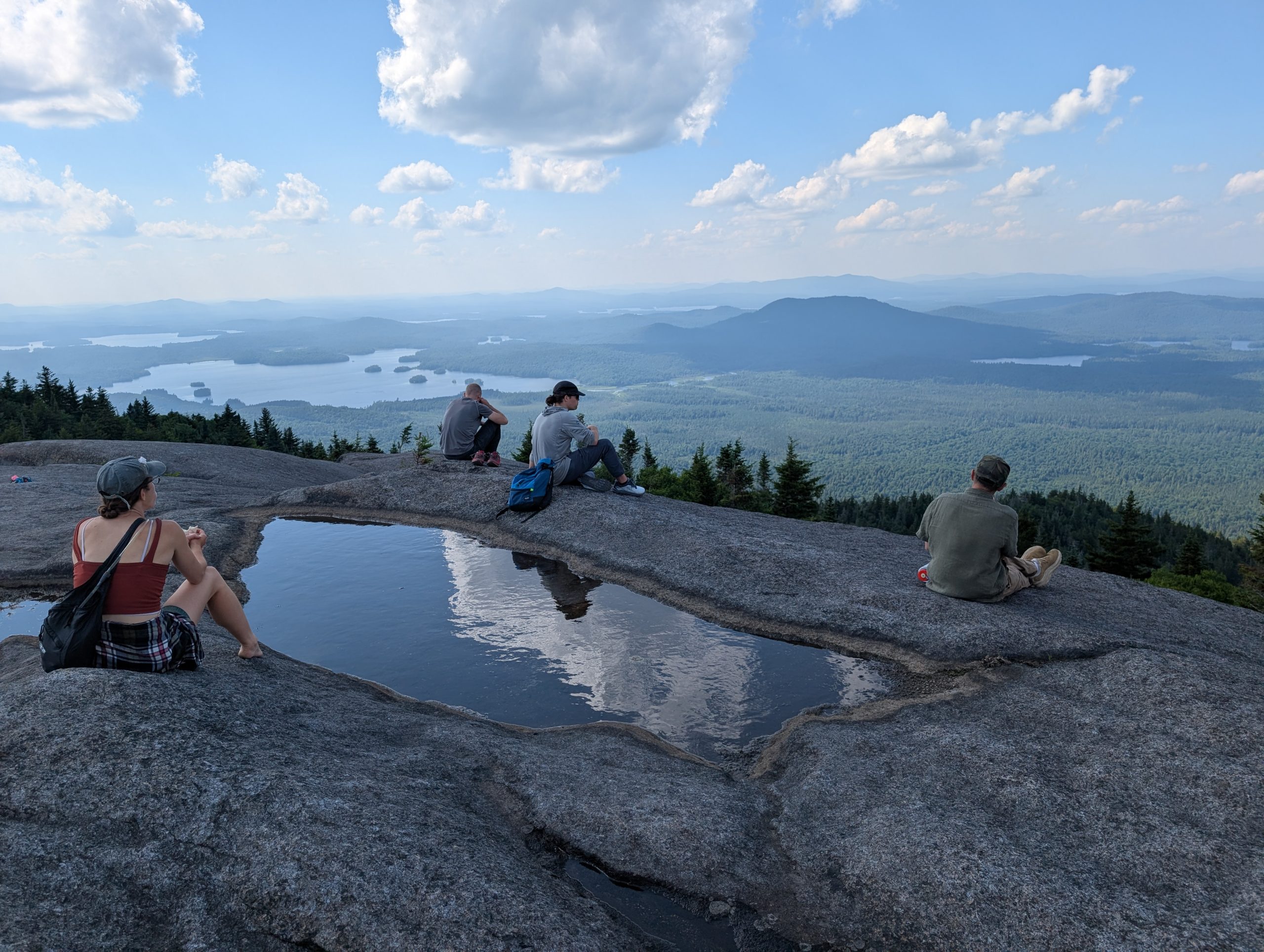
The Adirondacks provide a different picture of management than the National Forests. These old growth trees have been protected by the state. Some of these trees are three to four hundred years old. They are not under threat from logging companies. Local management allows these trees to grow, and this provides a sanctuary for many species. The trees clean these watersheds, sequester carbon, and sponge up excess rain. All is visible as we sit on top of Ampersand Mountain.
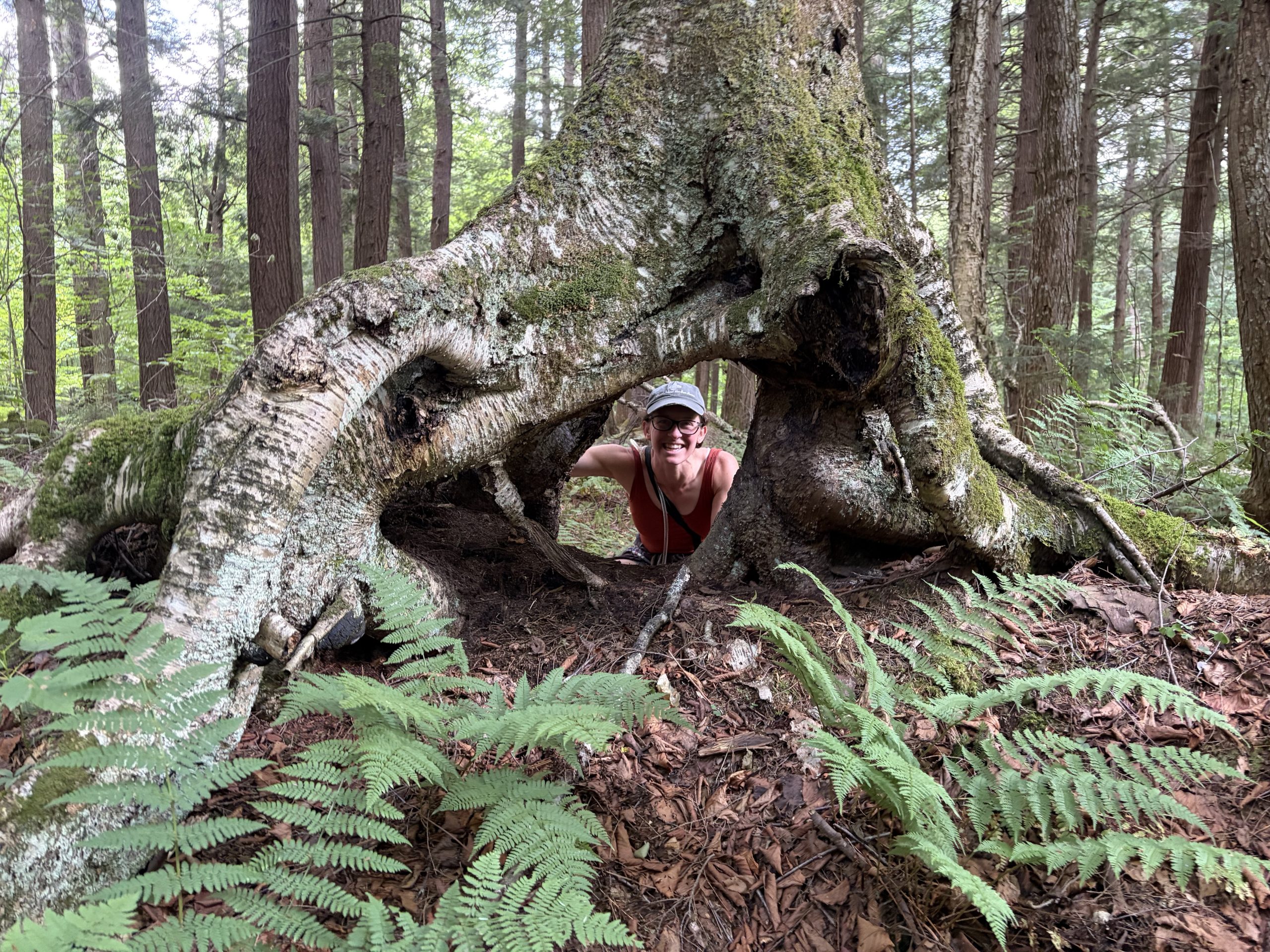
Another telltale sign of old growth is when a tree is raised like this. It indicates the tree grew up out of a root ball. When we clean or treat or cut old growth, or late successional forests, we lose the rich nourishment fallen trees provide.
Hartwick Pines State Park
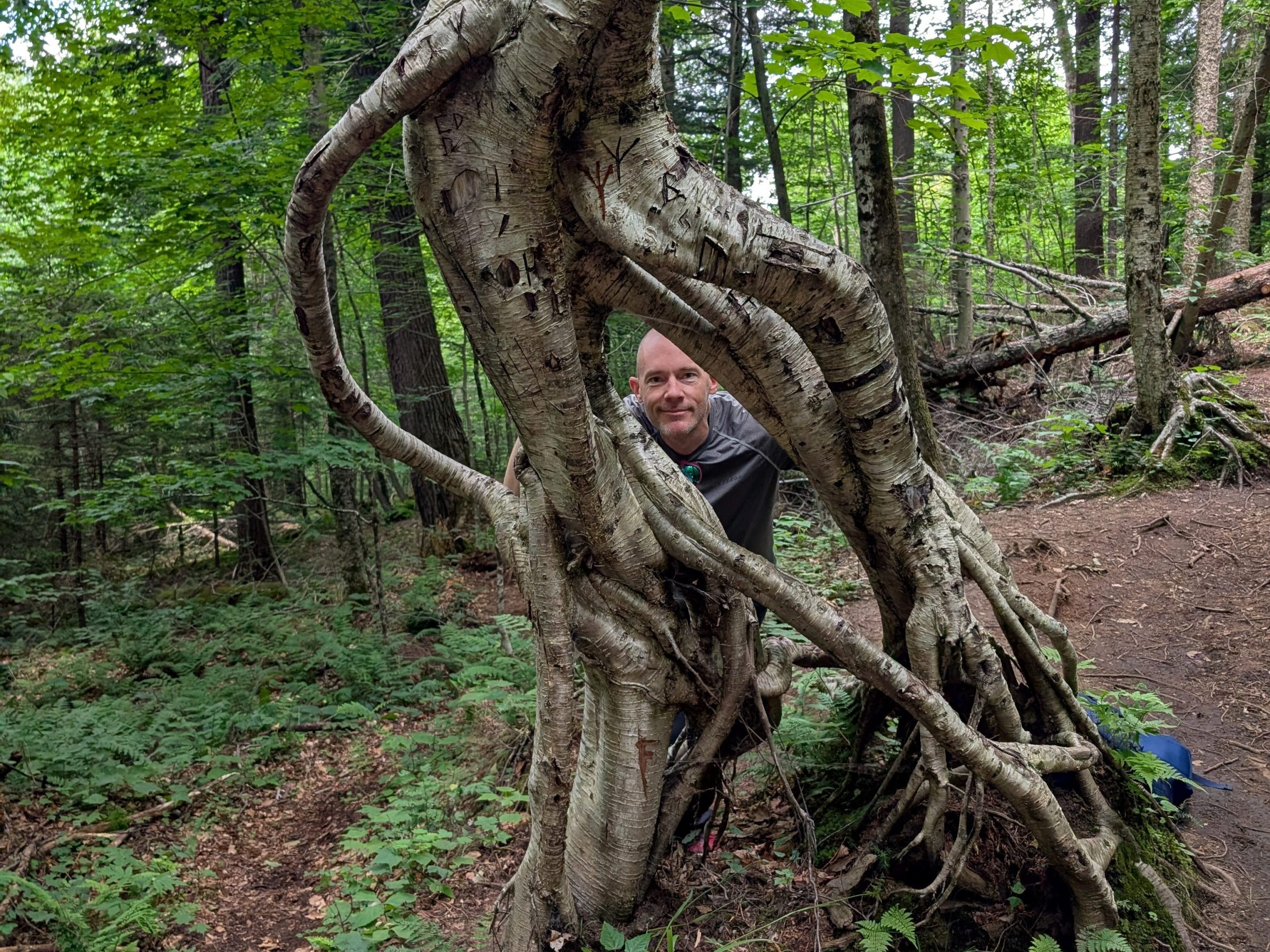
At Hartwick Pines State Park in Michigan, we witnessed examples of sinuation. This is when a tree trunk or branch changes its direction to go towards sunlight. This indicates old growth because it often means an older tree fell, making more room for sunlight to reach the other tree. Thus is the cycle of forests when we let them grow old!
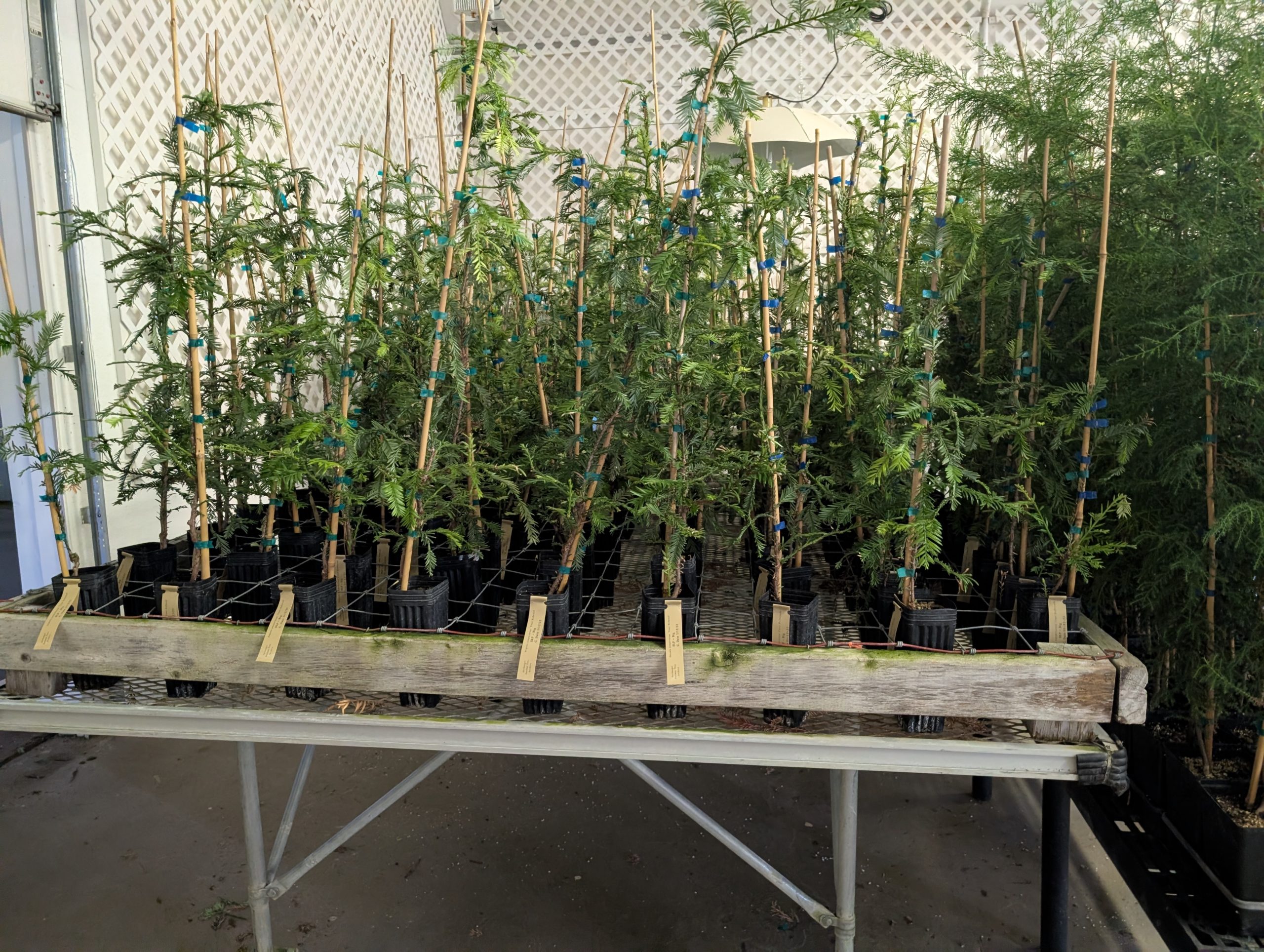
At Archangel Ancient Tree Archive in Michigan, the mission is simple: clone big tree seeds and plant them. We learned a lot about this organization which is doing incredible work — and doing so with schools. By planting big trees, the Archangel Ancient Tree Archive hopes the trees can play a small role in sequestering more carbon.
The journey continues
Along the way, the Green Curtain Roadshow has come back to a few essential questions: what is old growth? Why does it have value? How do we elevate awareness that old growth forests do not only bring value to ecosystems, but also to us?
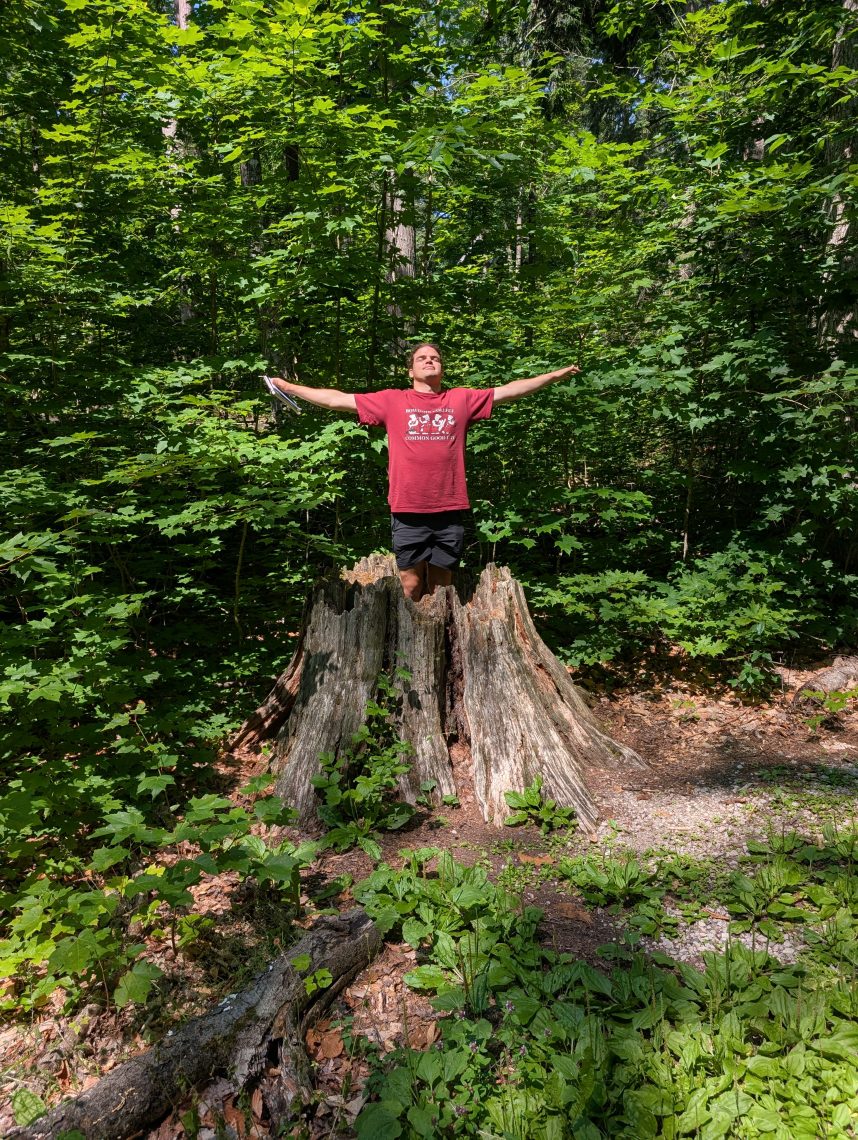
Of course, not everyone agrees with our interest in old growth. One man complained to me about how the Adirondacks didn’t do any management, and it was dangerous, unhealthy. This is a predominant thought, one pushed by the Forest Service. But even this doesn’t deflate me. Across the country now we have made connections, people really passionate about old growth. We have planted the seeds of the green curtain behind us, with plenty more to plant ahead of us.
Now, in Montana, I can’t wait to go fight for the Yaak Valley —, a place I’ve read so much about, but have never visited. We owe much of this advocacy work to Rick Bass, who has written about the Yaak’s protection for decades. His written words have not only impacted us, but they also have paved the way for the green curtain. If we can get the Yaak officially labeled as a climate refuge, why can’t we get other places?
And it starts with people using their voice. Rick tells a story of how, a few years ago, he had so many students writing to a representative in Maine that the representative began to look into the Yaak Valley’s protection herself. I am certain that we have power if we act together, just as I am certain this will take time. I know now that this journey is just the first wave. But protecting the green curtain is possible. We can let old trees grow. We can create climate corridors to maintain ecosystems that protect species and our communities and infrastructure.
Old Growth, New Hope: Why I’m Going on the Green Curtain Roadshow
July 8, 2026
|
by Calvin Soule
White cedar. Bicknell’s thrush. Red fir. The gray wolf. Schreiber’s moss. Long-tailed rock shrew. Mountain maple. American bobcat. Hickory. Spotted salamander. Hemlock. Boreal chickadee. Larch.
These species represent just a few of those which benefit from climate refugia. The term refers to areas that naturally act as buffers against climate change. In other words, these places are more resilient in the face of climate change, offering respite to species which inhabit them. As clear-cuts, mining operations, and other industries continue to harvest, extract, and extinguish, these places require our protection.
Keep reading to find out what the “Green Curtain” is, why it matters, and what’s behind my personal decision to join.
What is a climate refugia?
Often, old growth forests act as climate refugia, particularly because of what they are: forests that have developed over centuries without disturbance. Old growth forests often have multi-layered canopies. Fallen, decomposing logs ensure nutrients recycle into rich soils and mycelial networks. Century after century these forests have nurtured and matured. And yet, on one afternoon, amidst one season, as part of one contract, a logging company can erase this vast ecology.
The Green Curtain Roadshow
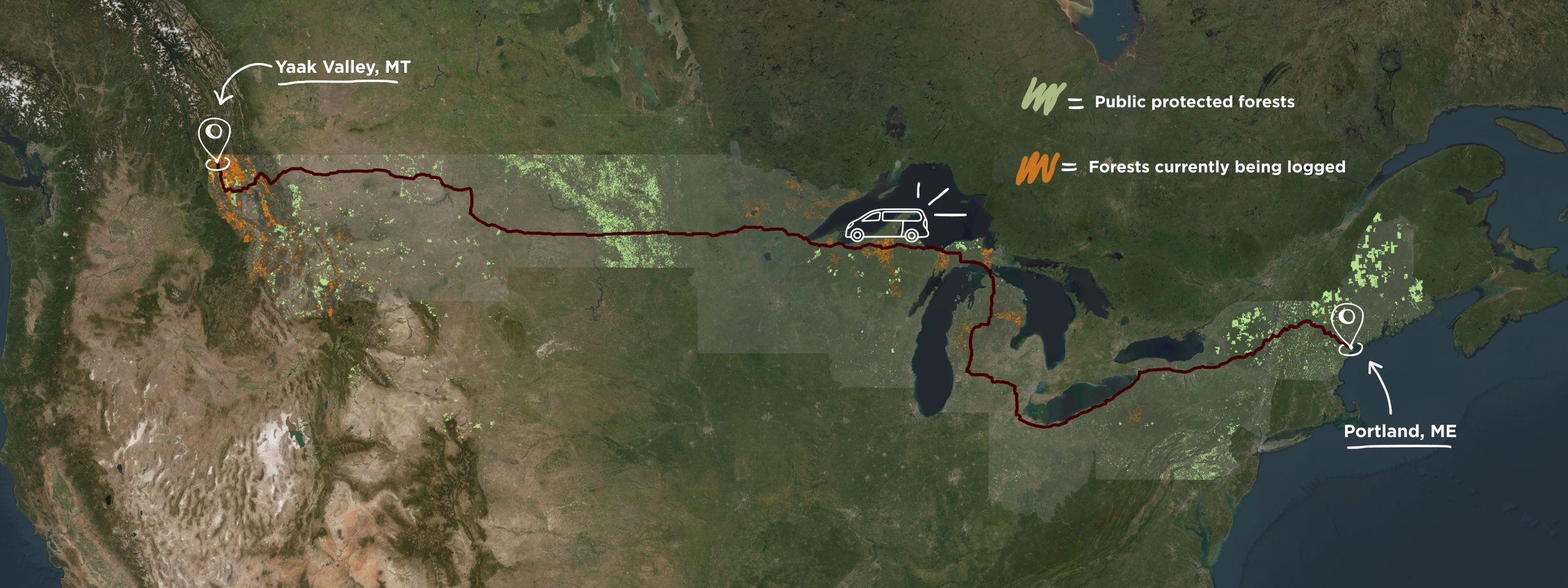
From July 8-22, I’ll be among the group of Stonecoast students, alumni, and professors traveling from Maine to Montana to witness these old growth ecosystems. We will meet with local stakeholders and add their voice to the chorus calling to protect these climate refugia. When these climate refugia are protected, they will form a “Green Curtain” across the northern United States.
Traveling in a nine passenger van, the Green Curtain Roadshow will go hiking with local guides to old growth stands, play the Black Ram Guitar with its old growth siblings, visit the Tree Archangel Tree Archive, collaborate with other artists, and stand in the Yaak Valley, where professor, environmental activist, award-winning author, and Green Curtain Roadshow participant Rick Bass will lead the group to the hallowed and at-risk places in his home valley. Each stop presents an opportunity to plant seeds: to share information about why a Green Curtain is vital, and why our collective voices can actualize this vision. Afterwards, students and Green Curtain advocates will publish an anthology giving literary life to this forward-looking idea.

The Black Ram Guitar
The Guitar is made from a four foot section of a 315-year-old Engelmann spruce that was rescued from a timber sale. It has been played by musicians including Jeff Bridges, Maggie Rogers, and James McMurtry.
Mapping the Green Curtain
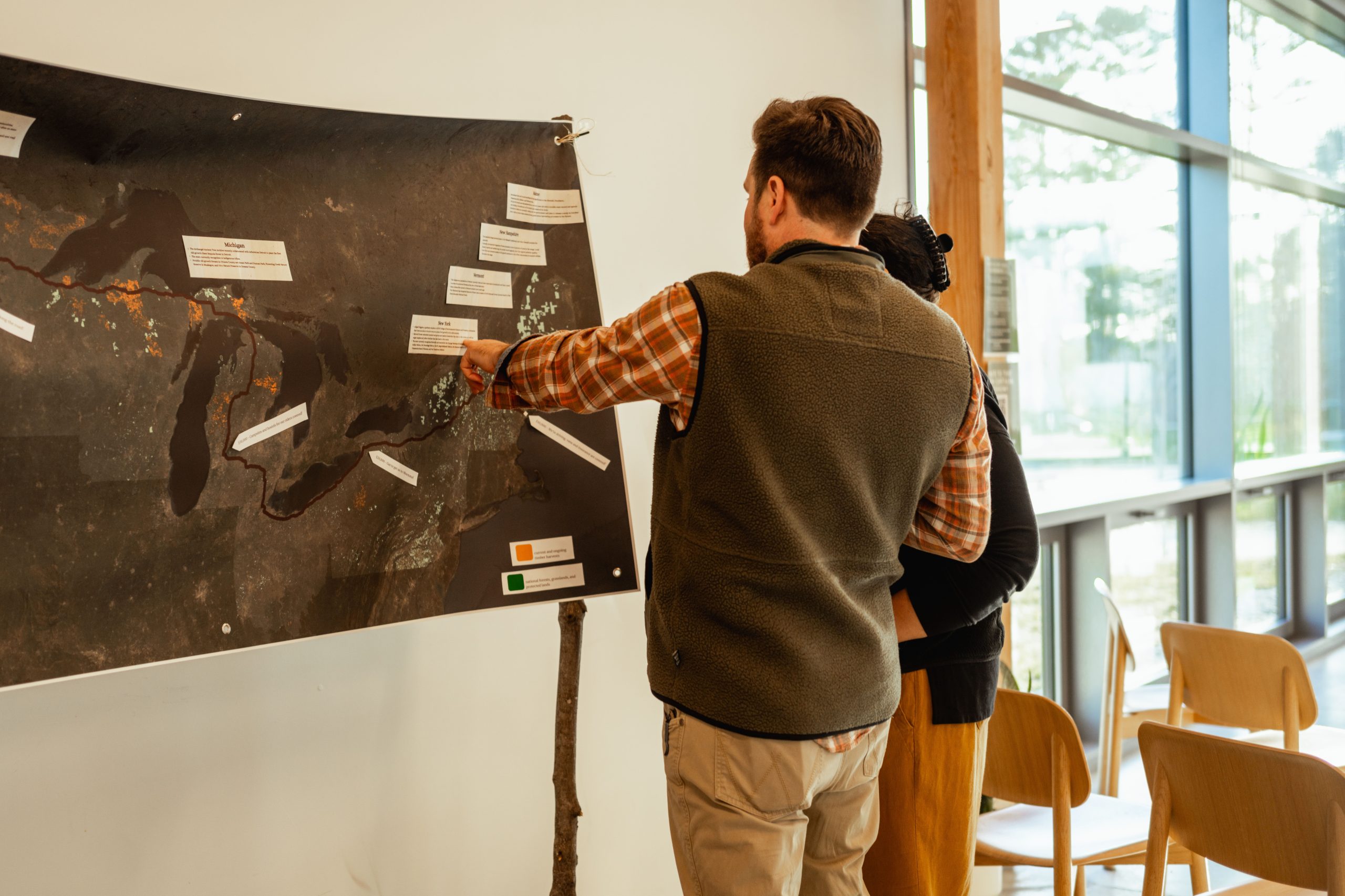
The Green Curtain map documents old growth forests both felled and those still standing (and in need of protection).
Why I’m participating
Six years ago, I graduated from Bowdoin College with a degree in environmental studies, politics, and history. Having also spent time in climate activism, I felt worn down by the state of the world, especially given the government’s continued shortsightedness to extract instead of protect. I found hope in a familiar, yet unexpected place: teaching at a public middle school.
While it is true I hope to write and publish work documenting the Green Curtain, my participation, like old growth forests, is a multi-layered canopy. I hope my participation models for my students that anyone can be a changemaker in their community; that everyone can be an engaged citizen; that life-long learning is vital to a fulfilling, engaged life; and that their future will be protected; that they can be leaders in creating a better 250 years in the United States.
My participation also honors the incredible community at Stonecoast, the staff and students who have sharpened my skills and have deepened the direction my writing has taken me. I’m participating to leverage (and believe in) my skills and voice as a writer now, so that the future can benefit from the climate refugia which will be protected. I’m participating to stand in the Yaak valley, a place I’ve read so much about, courtesy of Rick Bass, an author who has now inspired so many words of my own, and who will be standing there with us. Finally, I’m participating to express myself in the way which has always felt the most comfortable and empowering to me: through written word.
Our goals for the roadshow
As a current Stonecoast MFA student (and local educator), I feel fortunate to be going on the Green Curtain Roadshow. Here’s what we’re hoping to accomplish:
1.
First and foremost, student-activists will be witness to these sacred spaces
By working with and learning from local non-profits, scientists, environmental activists and advocates, and indigenous peoples, we hope to understand these places and their importance in respect to history, culture, and place.
2.
We see it as our duty as citizens and artists to document these places under threat.
As a Stonecoast student, I hope to write about these places and to communicate understanding about what a “green curtain” might look like. I will write essays, poems, and fiction in conversation with these places. And I will not be alone — artists, musicians, and writers on the roadshow will do the same. These spaces matter now, and they will matter more to our youth, and to the future generations which will follow.
3.
Lastly, I approach this as a mission of hope.
The world can feel apocalyptic sometimes. It can overwhelm us. But we can always choose hope. We can activate our agency. We can advocate for protection over profit.
Add your voice
Our friends, classmates, professors, and community members who are unable to join us on this journey can still be part of the project. Follow our website and socials — we’ll be posting prompts along the way inviting written submissions for an anthology of the trip, as well as opportunities to pick up your pen, hop on your device, and add your voice with ours.
Follow along and support us
Instagram: @gcroadshow
Website: https://greencurtainroadshow.org/
Read with us along the way
- In Montana, a Threatened Swath of Old Growth Fuels a Longstanding Debate
- Old-Growth Forests Know How to Protect Themselves from Fire
- The Book of Yaak by Rick Bass (Non-fiction)
- Last Stand: Logging, Journalism, and the Case for Humility by Richard Manning (Non-fiction)
- Braiding Sweetgrass by Robin Wall Kimmerer (Non-fiction)
- The Ministry for the Future by Kim Stanley Robinson (Fiction)
- The Overstory by Richard Powers (Fiction)