

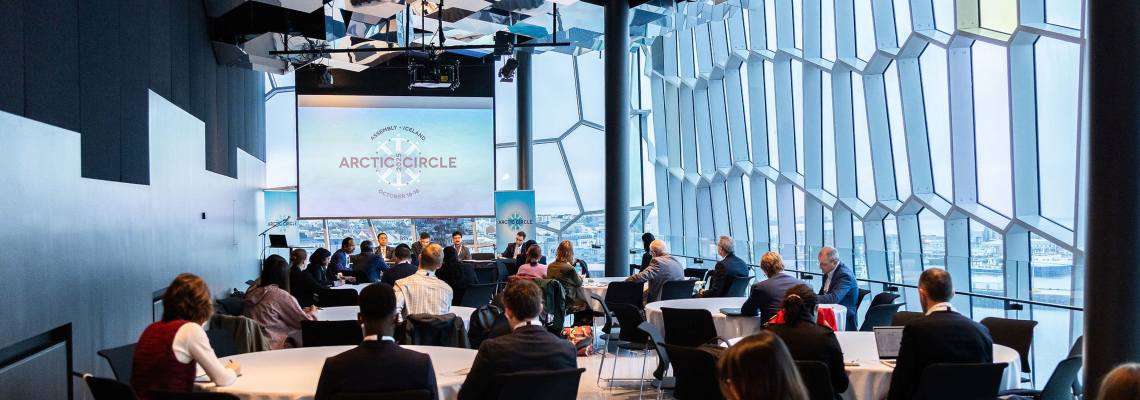
This October, in pursuit of new knowledge and collaboration, a group of ten students, faculty, and staff from the University of Southern Maine traveled to Reykjavík, Iceland, to take part in the annual Arctic Circle Assembly. Coordinated by USM’s Maine North Atlantic Institute (MNAI), the trip builds on a decade of USM’s Arctic and North Atlantic engagement through research, partnerships, and international exchange.
With over 2,000 participants from over 60 countries, the Arctic Circle Assembly (ACA) is the world’s largest annual international gathering on Arctic issues. Founded in 2013 by former Icelandic President Ólafur Ragnar Grímsson, the ACA brings together government leaders and ministers from around the world, directors of research institutions and international companies, university leadership and students, as well as representatives of environmental organizations and Indigenous communities of the Arctic.
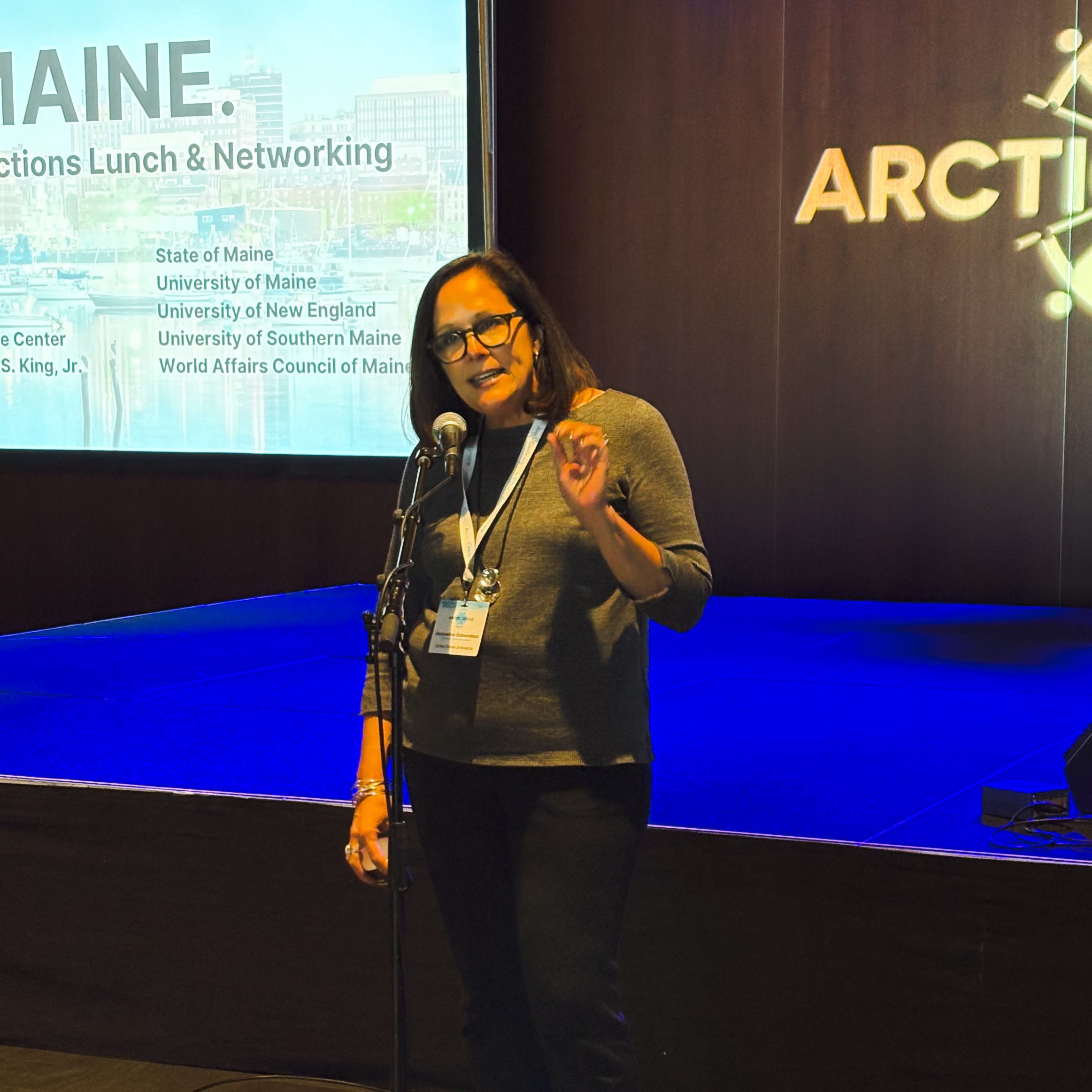
President Jacqueline Edmondson, who was part of the USM delegation, noted that, “USM played an active role in discussions, connecting with universities, Indigenous leaders, corporations, and policymakers to address pressing issues related to the Arctic’s future.”
This year’s conference marked a new chapter in Maine’s engagement with the North Atlantic, reflecting over 10 years of relationship-building that has positioned USM as a trusted academic and research partner in the region. The university has been attending the ACA since 2015 — presenting research, forging partnerships, and taking part in a global exchange of knowledge that will help shape policy, innovation, and sustainability efforts across the North Atlantic region in the years ahead.
In a conversation with Tracey Meagher, who serves as Project Liaison for the Maine Economic Improvement Fund’s (MEIF) North Atlantic initiatives, and Ross Hickey, USM’s Associate Provost for Research and Director of MEIF, they reflected on how the trip offers students a rare opportunity to engage with and present to policymakers and delegates from around the world — while advancing Maine’s growing role in the North Atlantic region.
“Seeing our students present at the Arctic Circle Assembly — where most speakers are researchers much further along in their careers — really set USM apart from the other presenters at the ACA,” Hickey said. “It’s something unique to us and something we should be proud of.”
One of the USM students who presented was Emily Ireland, a second year graduate student getting her Master’s of Public Health in the Muskie School of Public Service. Her research explored maternal health within the context of the North Atlantic’s blue economy.
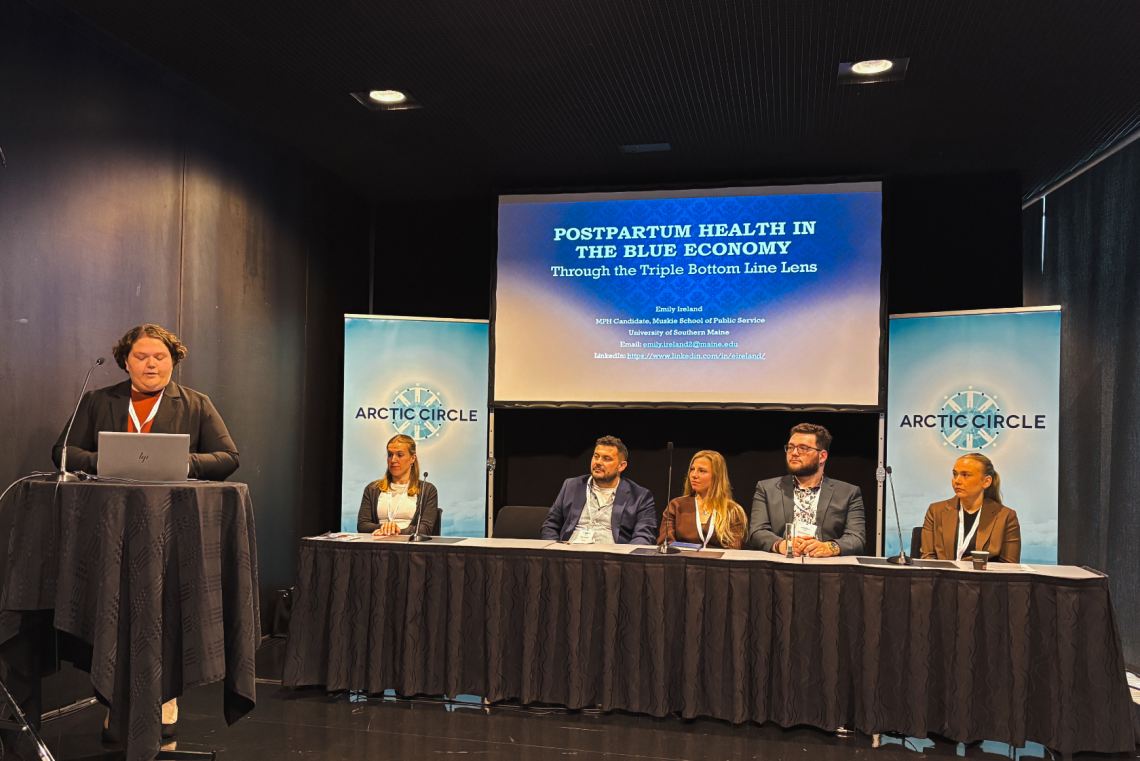
“Emily kind of felt that maybe her project didn’t fit correctly or align with the theme the way the others did,” Meagher said. “Her topic was maternal health, and the fact that you need women to stay alive through childbirth to actually work in the blue economy. It was just amazing, and really brought a richness to the presentation that otherwise might have focused only on industry-related topics.”
Founded in 2015 through funding from Maine Economic Improvement Fund (MEIF), MNAI has been the driving force behind USM’s participation in the Arctic Circle Assembly, coordinating and supporting opportunities for faculty, students, and staff to engage globally. Based at USM, MNAI connects Maine with the broader North Atlantic region, fostering innovation, expanding economic partnerships, and advancing solutions to shared climate and sustainability challenges.
Through MNAI, USM’s Arctic engagement extends far beyond Iceland, leading collaborations between Maine and Greenland that address shared coastal challenges while offering students the unique opportunity to gain hands-on, study abroad experience in the North Atlantic region.
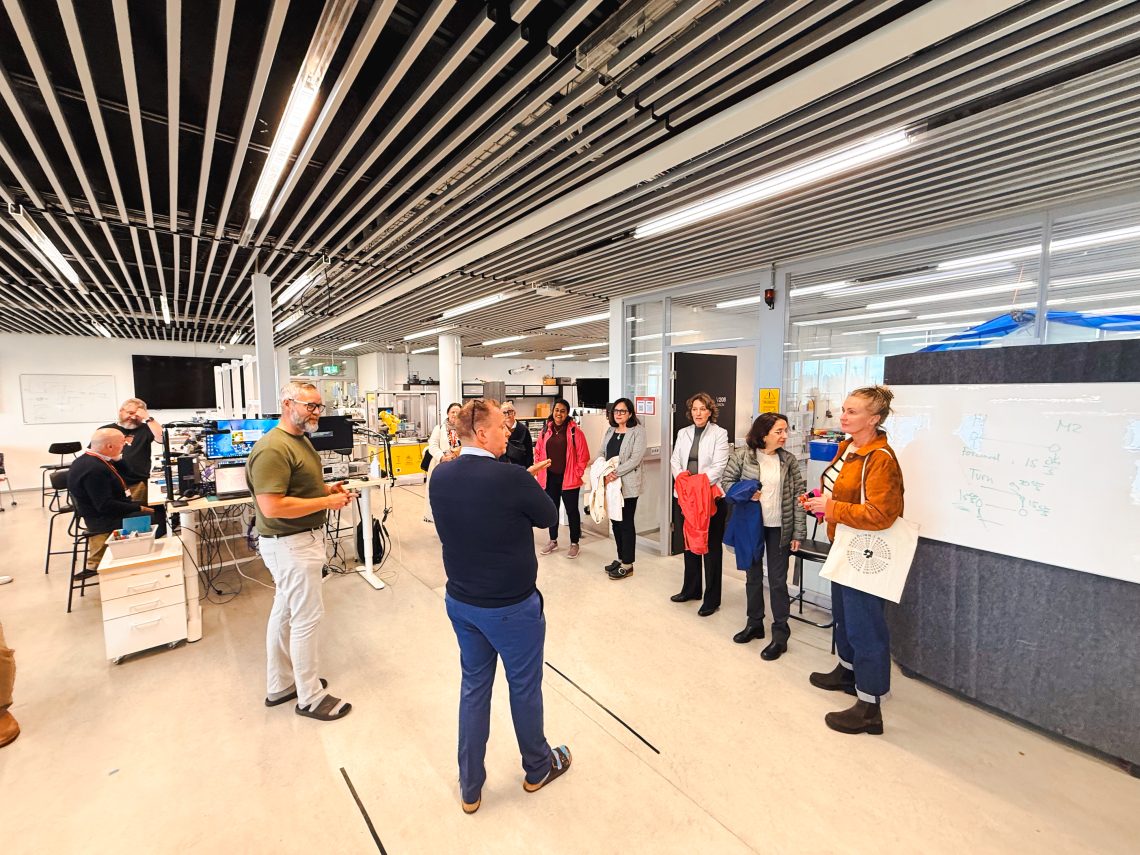
Looking ahead, both Hickey and Meagher emphasized that USM’s partnerships with institutions like Reykjavik University in Iceland and the University of Tromsø in Norway are entering an exciting new phase of growth. After years of collaboration, these relationships are becoming more deeply embedded at the faculty and program level, with new joint projects, grant opportunities, and student exchanges on the horizon — signaling a sustained commitment to advancing education, research, and innovation across the North Atlantic.
“Overall, USM’s participation in the Arctic Circle Assembly elevates our global presence, establishes new avenues for learning and partnership, and reaffirms our commitment to collaborative, cross-disciplinary solutions for the Arctic and beyond,” said President Edmondson, reflecting on the trip’s success and broader impact.
As USM continues to strengthen its North Atlantic partnerships, its presence at the Assembly stands as both a reflection of Maine’s global reach and a promise of what’s yet to come.