

The University of Southern Maine’s Crewe Center for the Arts received LEED (Leadership in Energy and Environmental Design) Gold certification from the U.S. Green Building Council on Feb. 26, making it the ninth LEED-certified structure across USM’s campuses.
The facility, which opened in fall 2025, is home to USM’s Dr. Alfred and D. Suzi Osher School of Music and the Kate Cheney Chappell ’83 Center for Book Arts, and serves as the Portland campus home for the University’s theater, dance, and visual arts programs. The certification recognizes the building’s performance across multiple sustainability measures, from energy efficiency and water use to materials and innovation.
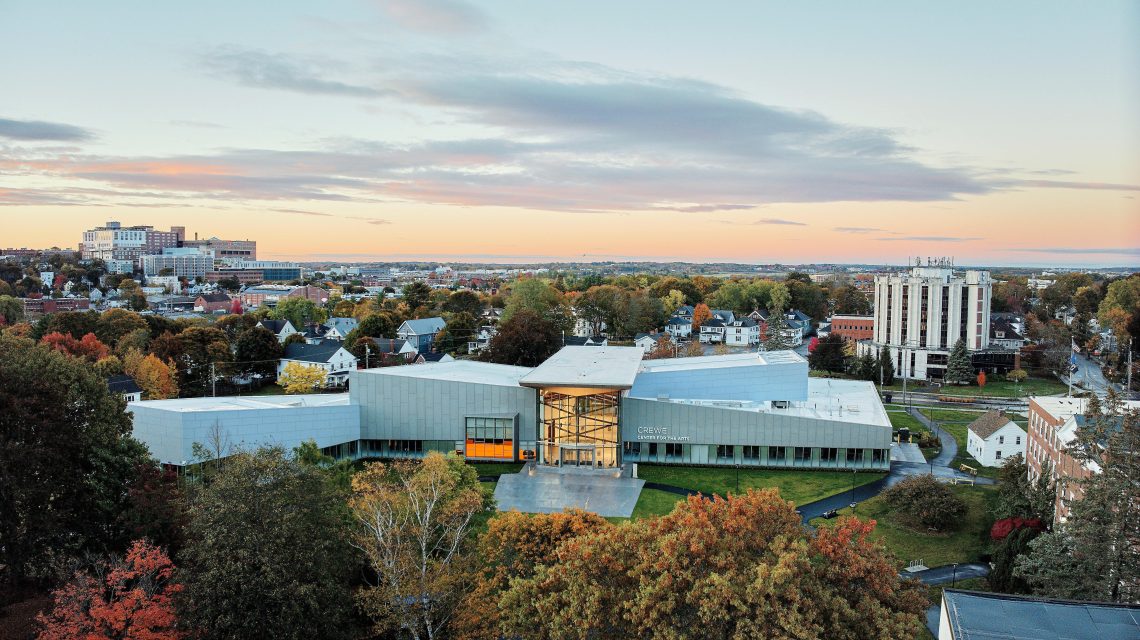
A LEED building unlike the others
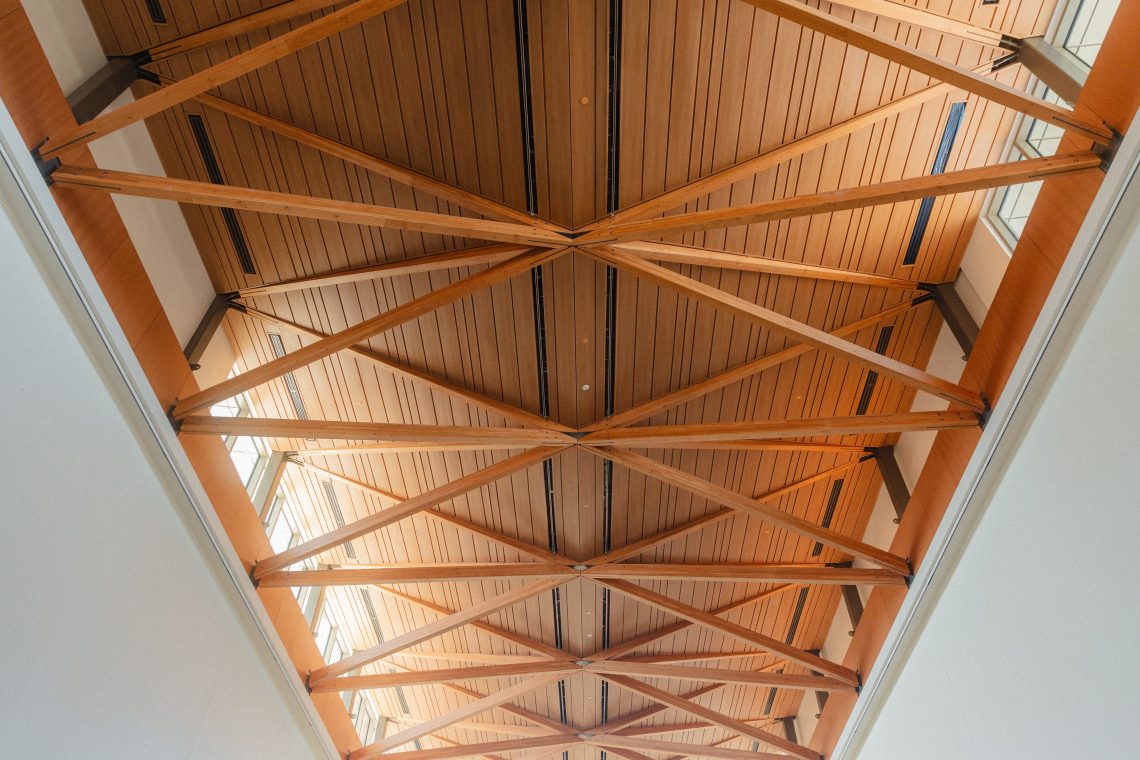
The Crewe Center shares its LEED designation with eight other buildings on USM’s campuses, but several of its features set it apart from the rest. The design, led by Pfeiffer Partners Architects, incorporates mass timber construction — replacing carbon-intensive materials like steel and concrete with large structural wood components. The result is a building with a lower carbon footprint long before it opens its doors.
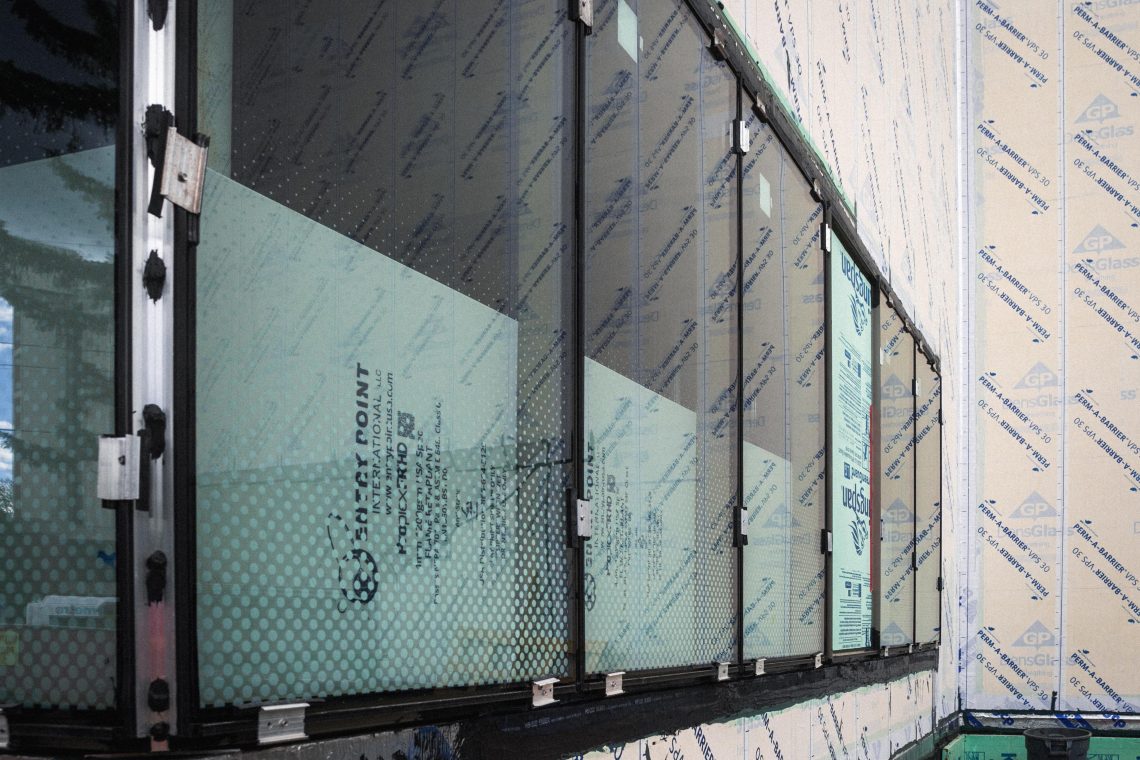
The building also features bird-safe glass throughout its exterior, which uses visual patterns etched into the surface to prevent bird collisions — one of the leading causes of bird mortality in urban environments. It has drawn interest from Maine Audubon and prompted tours of the building from the birding community.
“The fact that this building has bird-safe glass is pretty special,” said Aaron Witham, USM’s director of sustainability. “It speaks to the ethos we have at USM, to not only protect our ecosystem, but help to actively rebuild it.”
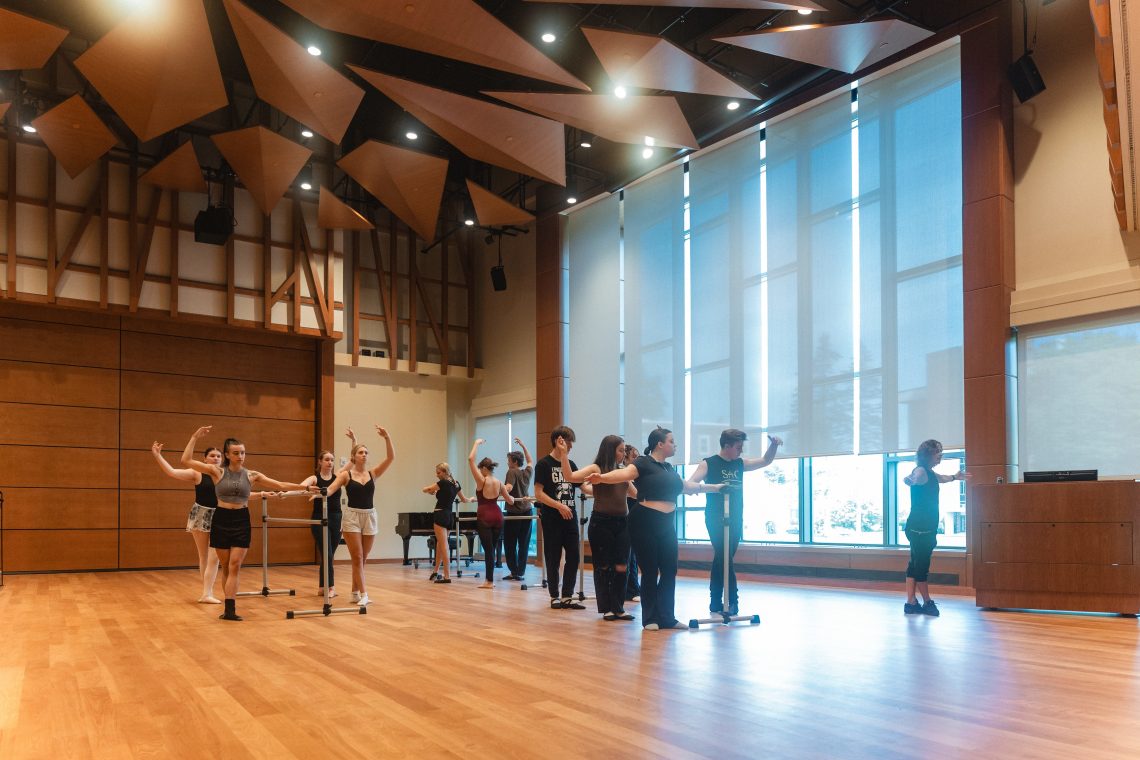
That environmental commitment extends inward as well, shaping the experience of the people who work and learn within. Nearly every room includes large, floor-to-ceiling windows that flood the space with natural light, reducing the building’s reliance on artificial lighting while connecting occupants to the outdoors. Interior elements — paints, adhesives, and flooring — were selected to minimize harmful chemicals that conventional materials can release into the air long after construction.
For Sean Allen, a student who leads green building tours of the Crewe Center, the building is both an engineering achievement and proof that sustainability and livability are not competing priorities.
“Making a place welcoming and comfortable doesn’t have to come at the cost of sustainability,” said Allen. “It’s an investment in the planet and the students.”
Together, these unique features helped the Crewe Center earn a perfect score in LEED’s Innovation category, and place it among the most sustainably ambitious buildings in USM’s growing portfolio of certified structures.
What the data shows
The Crewe Center’s sustainability credentials are reflected in the numbers as much as in the design.
By the numbers
53% Projected energy cost savings compared to a standard building of the same size
35% Reduction in indoor water use compared to a building with standard fixtures
100% Reduction in outdoor water use
42% Construction waste diverted from landfills
The significant outdoor water reduction is achieved entirely through landscaping, with plant species selected to thrive in Maine’s climate without supplemental watering. Students have helped seed more than 70 species of native plants in the surrounding area, turning the grounds into an extension of the classroom.
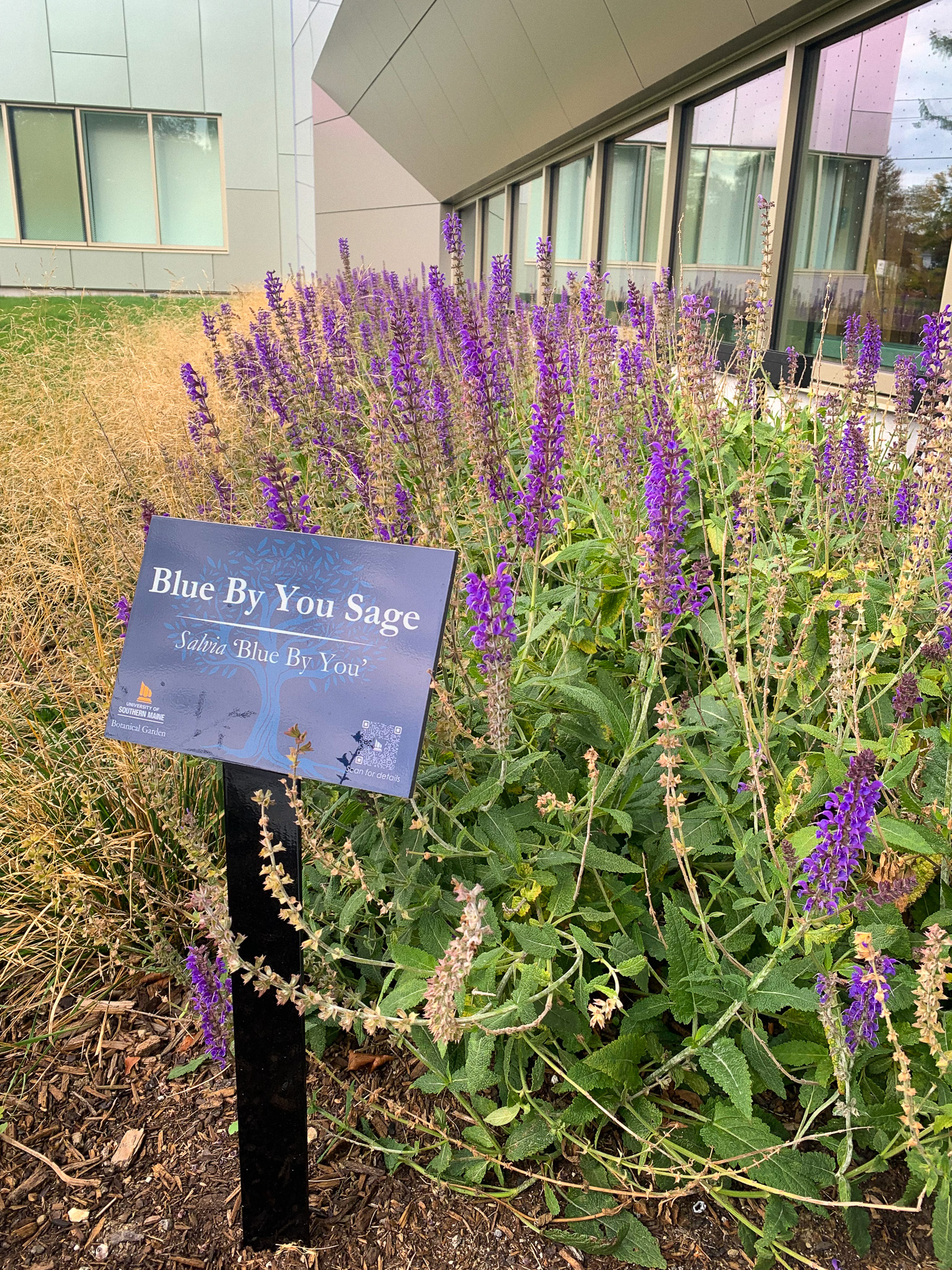
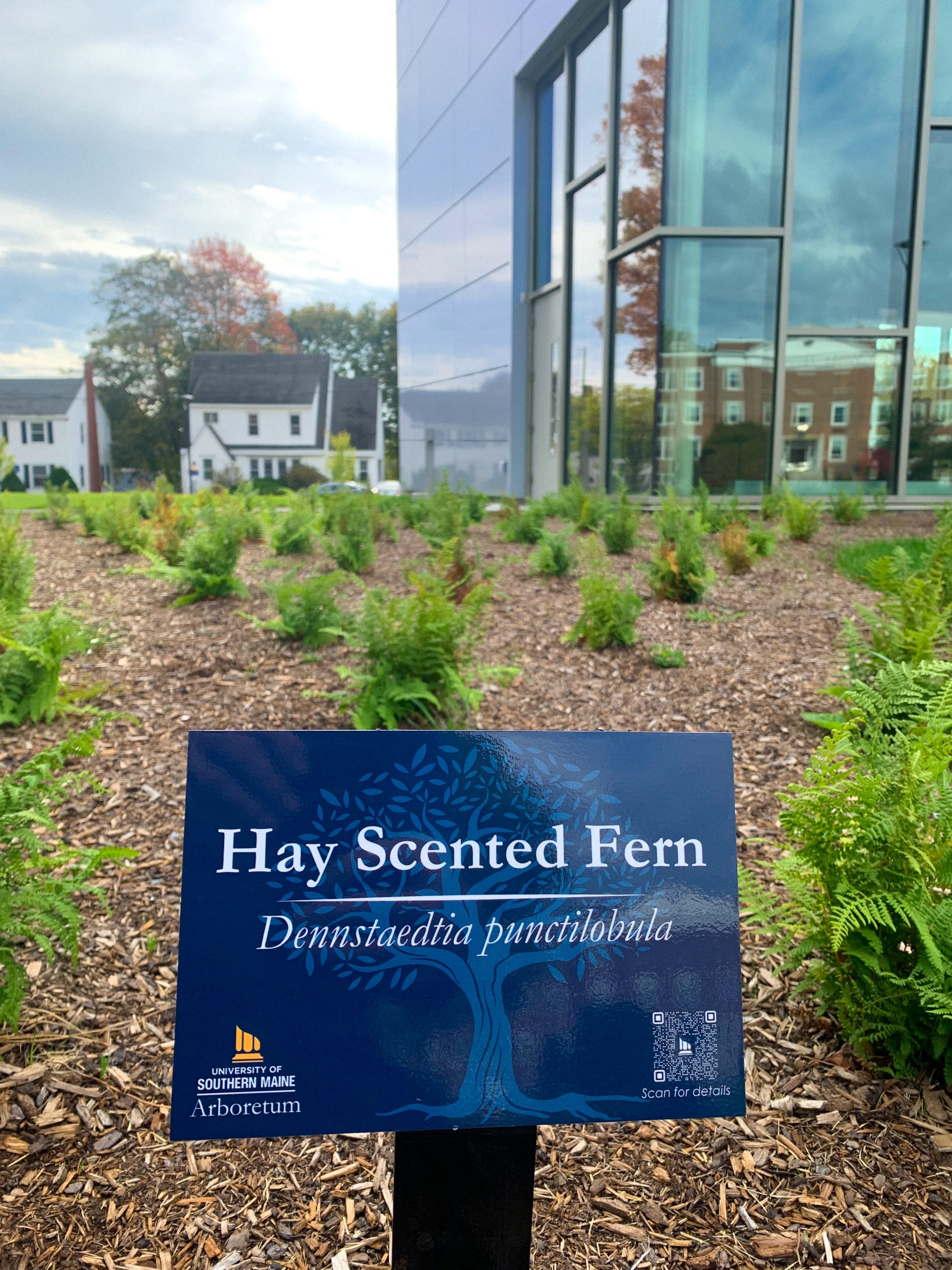
The construction waste figure refers to material generated during the building process — lumber scraps, packaging, demolished debris — that was redirected away from landfills through recycling and reuse. That 42% diversion rate reflects a distinctive sustainability commitment that predates the building’s opening, one that was embedded in the construction process from the start.
Part of a larger commitment
The Crewe Center’s LEED Gold certification is the latest milestone in a sustainability effort that spans three campuses and more than two decades of construction at USM. Of the nine LEED-certified buildings across USM’s campuses, five hold Gold designation, including the Abromson Center, the Wishcamper Center, the McGoldrick Center for Career and Student Success, and the Crewe Center.
These buildings reflect a commitment that goes beyond construction standards — it’s a sustained investment in the long-term wellbeing of its students, its community and the environment they share. Each new certified building is a step toward USM’s goal of achieving carbon neutrality by 2040, a target maintained by the President’s Office and anchored in the University’s 2019 campus master plan.
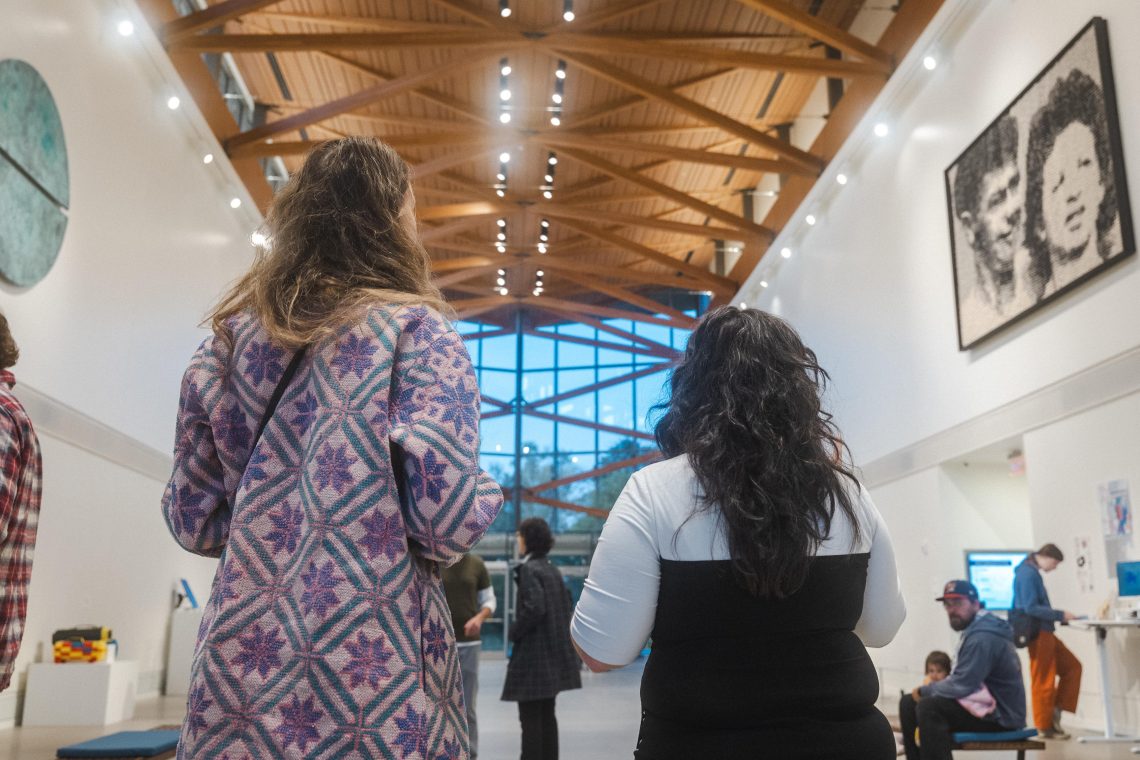
But the building’s impact is perhaps most visible inside. Step through the doors of the Crewe Center and the first thing most people do is look up. The Great Hall Gallery stretches the length of the building, framed by mass timber ceilings and large windows that open onto the campus beyond.
“The Crewe Center invites awe and an exhale of reflection,” said Lee Hartman, director of advancement and outreach for the performing arts. “To have a space like the Crewe at a regional public institution illustrates how important USM is to the cultural economy of Maine.”
The building was designed with that connection in mind. Large windows along Deering Avenue and Bedford Street mean passersby can watch rehearsals and classes in progress, while students look out onto the community where they will eventually perform, teach, and create. Views of the campus quad, arboretum, and native plants are visible from nearly every room.
The effect, Hartman said, has carried into how students approach their work: “A common refrain we hear from students is that they have elevated their practice and dedication to match and be worthy of the new space.”