

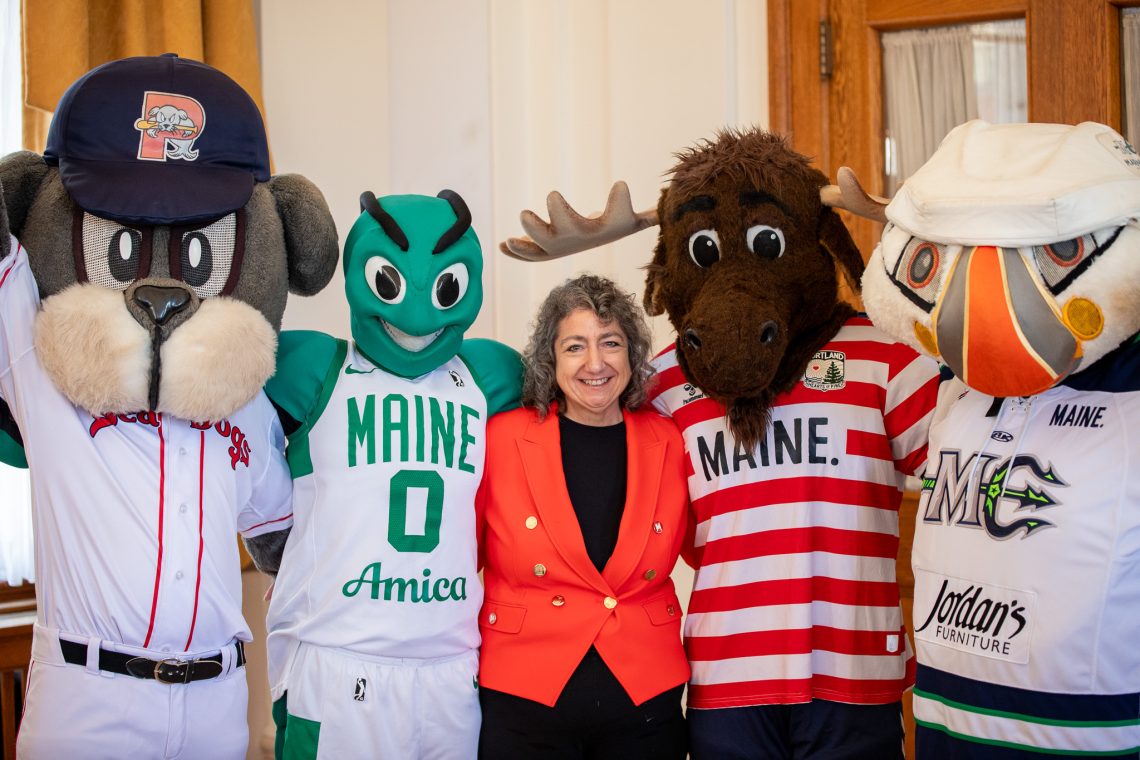
University of Southern Maine researchers released the first analysis of the combined economic impact of Portland’s four minor league sports teams, finding that the Sea Dogs, Maine Mariners, Maine Celtics, and Portland Hearts of Pine together generate more than $110 million in annual economic activity and support more than 900 jobs statewide.
The report was presented at Portland City Hall, where Mayor Mark Dion proclaimed Sept. 16 Portland Minor League Sports Day. Mascots from all four teams joined representatives who spoke about the impact of their franchises on the region’s economy and identity.

The Maine Center for Business and Economic Research at USM’s Catherine Cutler Institute prepared the study for the City of Portland. It was authored by Richard Bilodeau, director of the center, and Caroline Paras, a research analyst.
The report looks at how the teams contribute to the economy through their day-to-day operations, spending by visiting fans and teams, and investments in the venues where they play. It also highlights the teams’ community contributions, though those were not assigned a dollar value. Spending by visitors had the biggest economic impact, accounting for roughly $75 million annually.
The Sea Dogs, the region’s oldest and best-attended franchise, account for $65.3 million in annual economic activity. The Maine Mariners generate $18.5 million, followed by Portland Hearts of Pine at $16.5 million and the Maine Celtics at $9.9 million.
In 2024, Sports Business Journal named Portland the top minor league sports market in the nation, a first for the city since the publication began its rankings in 2005. Paras said that recognition helped prompt the study.
The research also comes as the region considers investments in the venues where the teams play — a question Portland has faced before: What would the loss of a team cost? Paras recalled the Portland Pirates’ departure for Springfield in 2016.
“I remember all the headlines: What will be the impact on downtown Portland, the restaurants and the hotels, in the dead of winter when that spending is needed the most? And at that time, no one had any hard data,” Paras said.
Now, she said, that data exists.
The researchers used an industry-standard economic model and conservative assumptions to avoid overstating the teams’ impact. For example, the analysis excludes spending by people who live within 50 miles of Portland, focusing instead on money brought into the region by visitors.
Paras pointed to her own spending as an example. She lives a short walk from Fitzpatrick Stadium and the Portland Expo, and attended her first Hearts of Pine game last September.
“I spent $125 in the first 30 minutes on food alone — oysters, barbecue sandwiches, beer, creme brulée,” she said. “And because I live within a two minute walk of Fitzy, I don’t count. If I were not spending that money on the game, I might be going out to a restaurant in Portland or I might be going out to the movies.”
Paras said the study is only the second in the nation to examine the collective impact of a city’s minor league sports teams, including their broader contributions to quality of life and the region’s vitality. She hopes the report will also serve as a practical tool, giving each franchise data it can use when making the case for future investment.
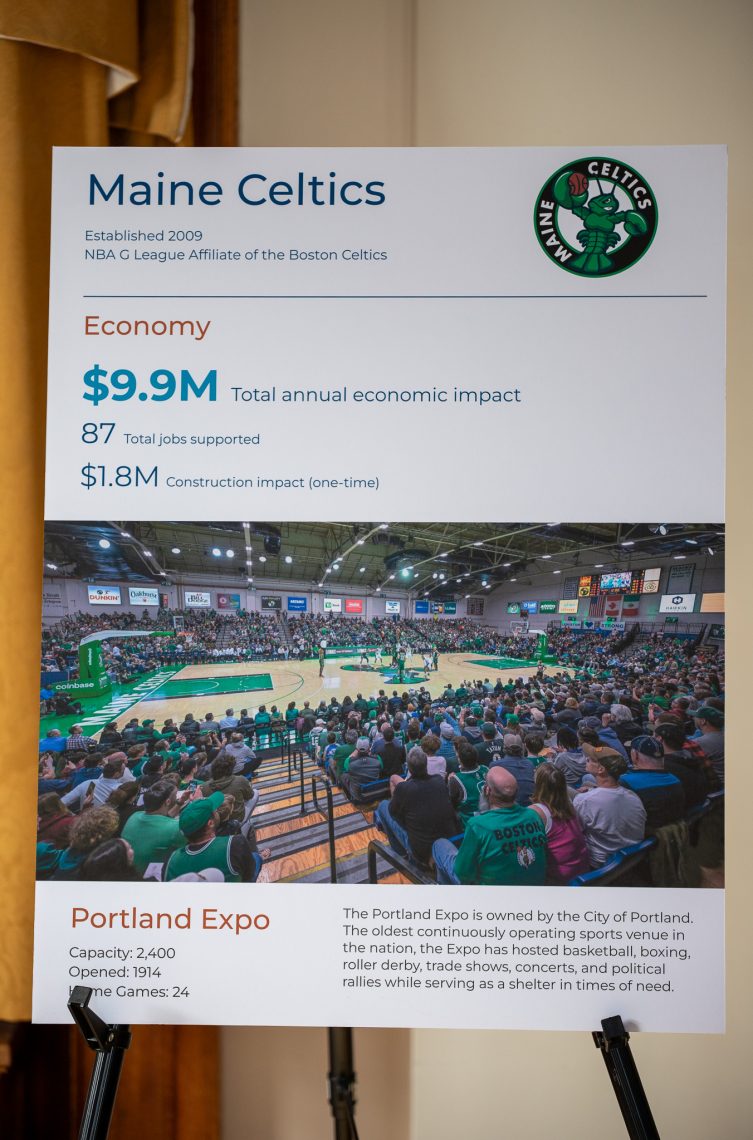
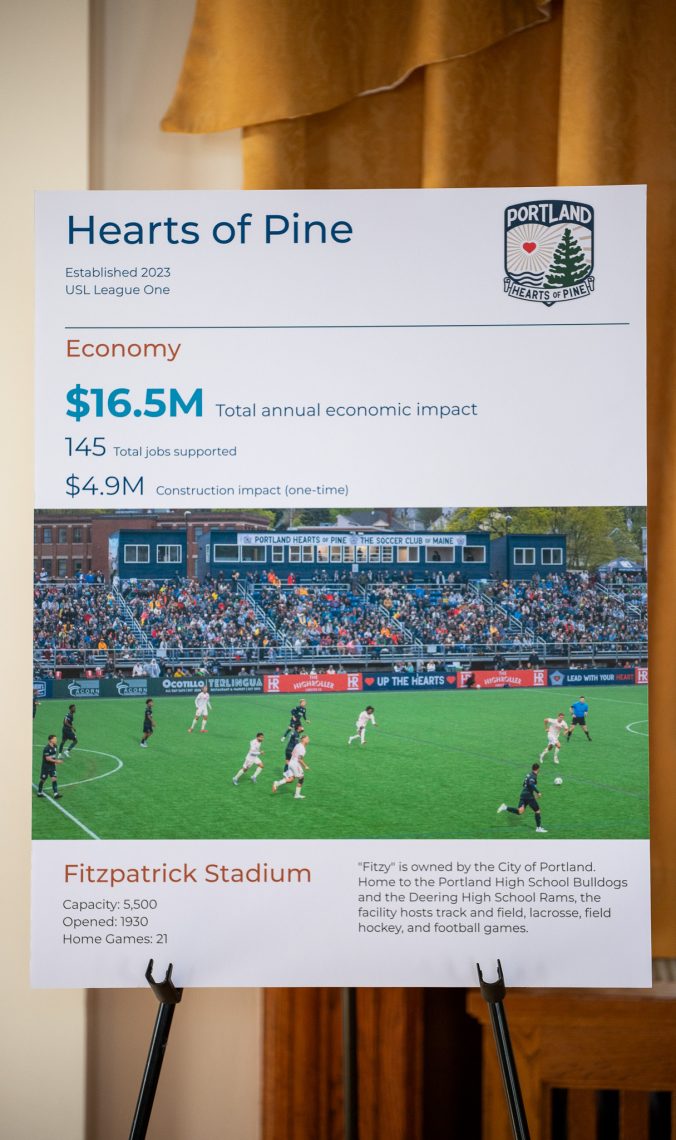
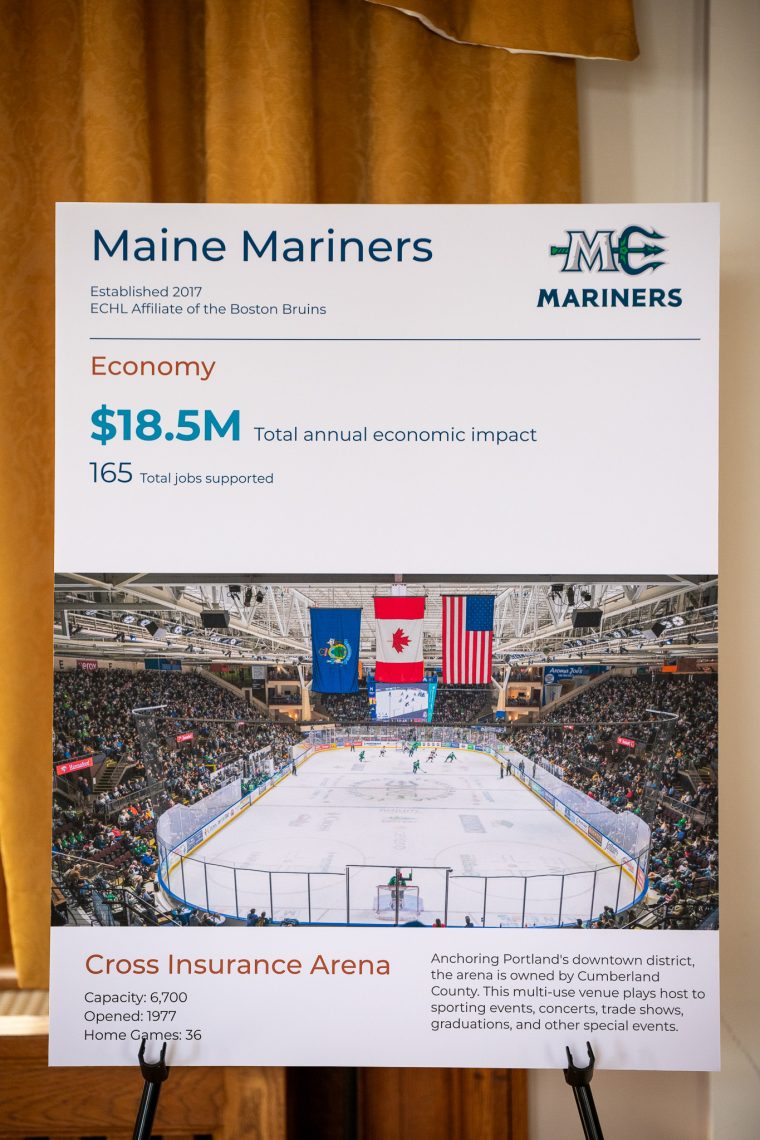
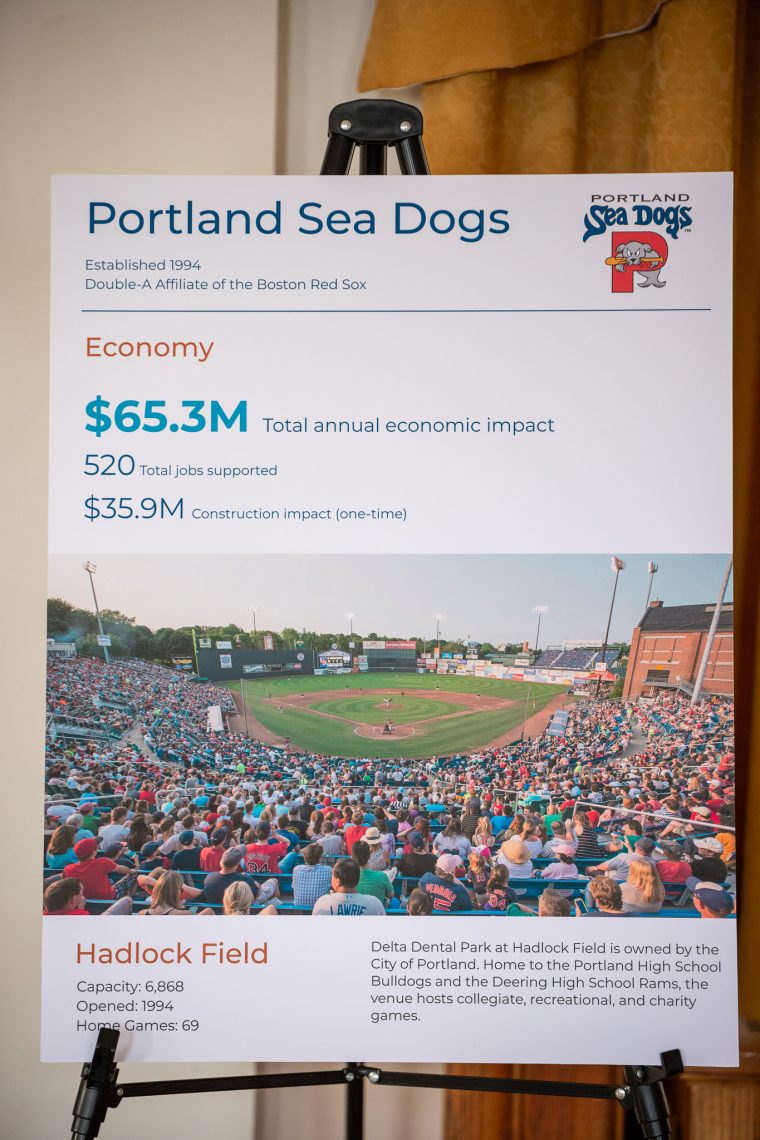
At City Hall, representatives from all four teams spoke about what that investment could mean for Portland. Kevin Schohl, president and chief business officer of Portland Hearts of Pine, said the young franchise is taking cues from the city’s more established teams.
“We’re trying to follow the lead of these other teams that have been here longer,” Schohl said.“How do we make sure we’re bringing people together and celebrating Portland and the entire state of Maine?”
There is already more growth ahead. Hearts of Pine plans to add a women’s team in 2027 and is pursuing a new stadium, developments that could generate economic activity not captured in the current study.
That makes the report a baseline rather than a final tally. Paras said the Maine Center for Business and Economic Research could revisit the analysis in two to three years to measure how the teams’ economic impact changes.
Read the full report, “Economic Impact of Portland’s Minor League Sports Teams,” from USM’s Catherine Cutler Institute.