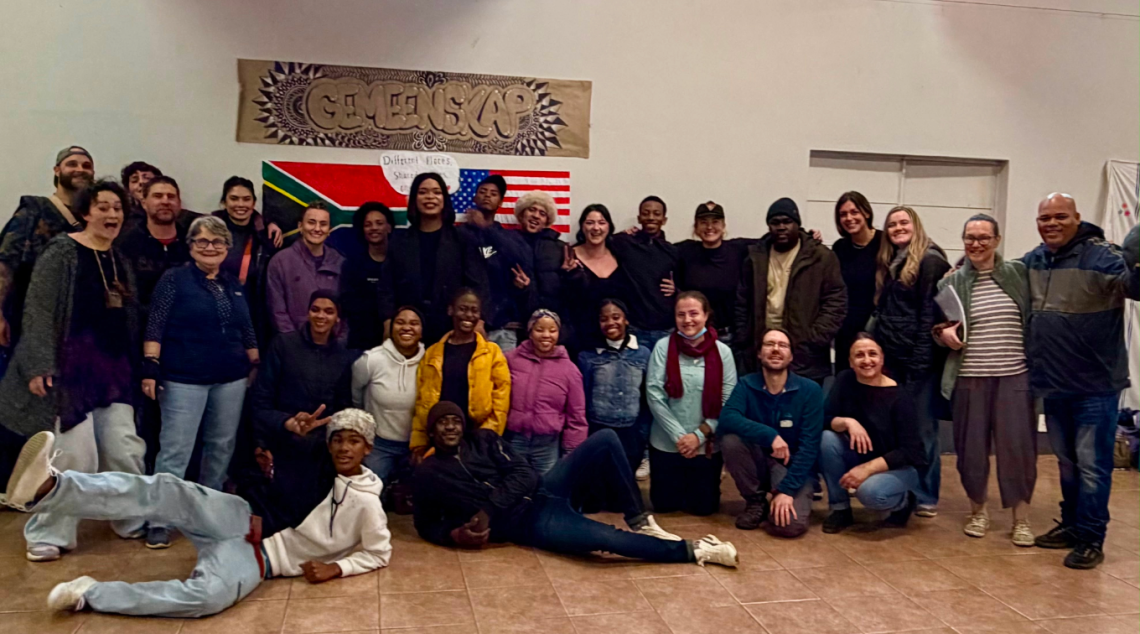

What happens when students step outside the classroom and discover that leadership is not simply something to study, but something to experience? The Montagu Project, an international study abroad program offered through the University of Southern Maine’s Department of Leadership and Organizational Studies, invites undergraduate and graduate students to explore that question in South Africa. Combining intercultural engagement, community partnership, and experiential learning, the program challenges students to reconsider what leadership looks like across cultural and social contexts. At its heart is a simple but powerful belief: meaningful leadership begins with listening, learning, and recognizing the strengths that already exist within communities.
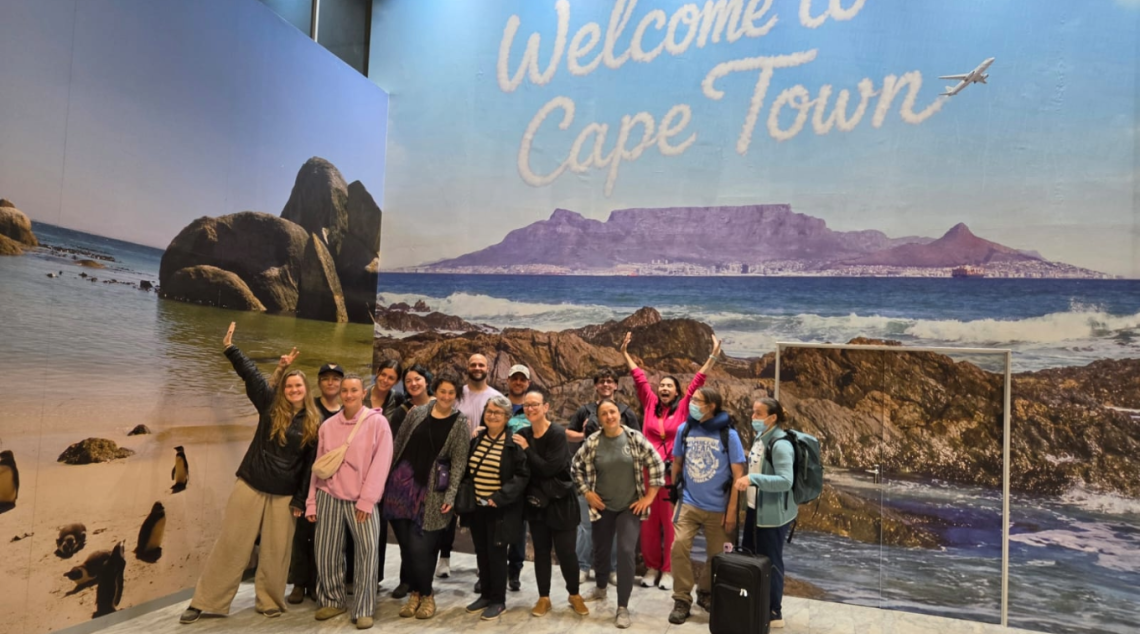
Led by Professor Tara Grey Coste, the 2026 summer experience began in Cape Town, where students explored South Africa’s extraordinary history, cultural diversity, and contemporary life. Visits to Robben Island, the District Six Museum, and other historically significant sites introduced the complex legacies of apartheid, resistance, and reconciliation. A welcome by Cape Indigenous singer, poet, and ancestral lineage healer Ernestine Deane invited students to consider Indigenous perspectives on identity, ancestry, and humanity’s relationship with the land. These experiences provided essential context for understanding South Africa while encouraging students to examine their own assumptions about culture, power, privilege, and leadership. Throughout the journey, reflection helped transform unfamiliar experiences into opportunities for personal and intellectual growth.
The centerpiece of the program took place in Montagu, a small town in South Africa’s Western Cape, where USM students collaborated with local young adults on community leadership initiatives. Working alongside South African facilitators and community partners, participants engaged in a weeklong workshop grounded in Appreciative Inquiry and creative problem solving. Rather than beginning with problems or deficiencies, Appreciative Inquiry encourages participants to identify existing strengths, imagine possibilities, and develop practical approaches to creating positive change. Through collaborative activities, storytelling, dialogue, and creative exploration, people from different backgrounds discovered common aspirations while contributing their unique experiences and perspectives. The emphasis was on partnership rather than intervention, recognizing that sustainable community leadership grows from within.
For USM students, the experience provides a living laboratory for leadership development. Concepts encountered in coursework—communication, collaboration, creativity, cultural awareness, and ethical leadership—take on new meaning when applied in unfamiliar environments. Students must navigate differences in language, experience, and worldview while learning to facilitate rather than direct. Just as importantly, they discover that effective leadership does not require having all the answers. It requires curiosity, humility, adaptability, and the willingness to learn from others. The relationships developed throughout the week often become among the most meaningful dimensions of the experience, demonstrating how shared creativity can bridge cultural and geographic boundaries.
Ultimately, The Montagu Project is about much more than international travel. It represents an approach to leadership education that connects academic learning with human relationships and meaningful community engagement. Students return home with a deeper appreciation for South Africa, a broader understanding of global leadership, and new perspectives on their own capacity to contribute to positive change. The program also reinforces an essential lesson: communities everywhere possess knowledge, creativity, and resources that deserve recognition and cultivation. By bringing people together to discover those strengths and imagine new possibilities, The Montagu Project demonstrates that leadership is not simply about influencing others. It is about creating the conditions in which people can imagine, collaborate, and flourish together.