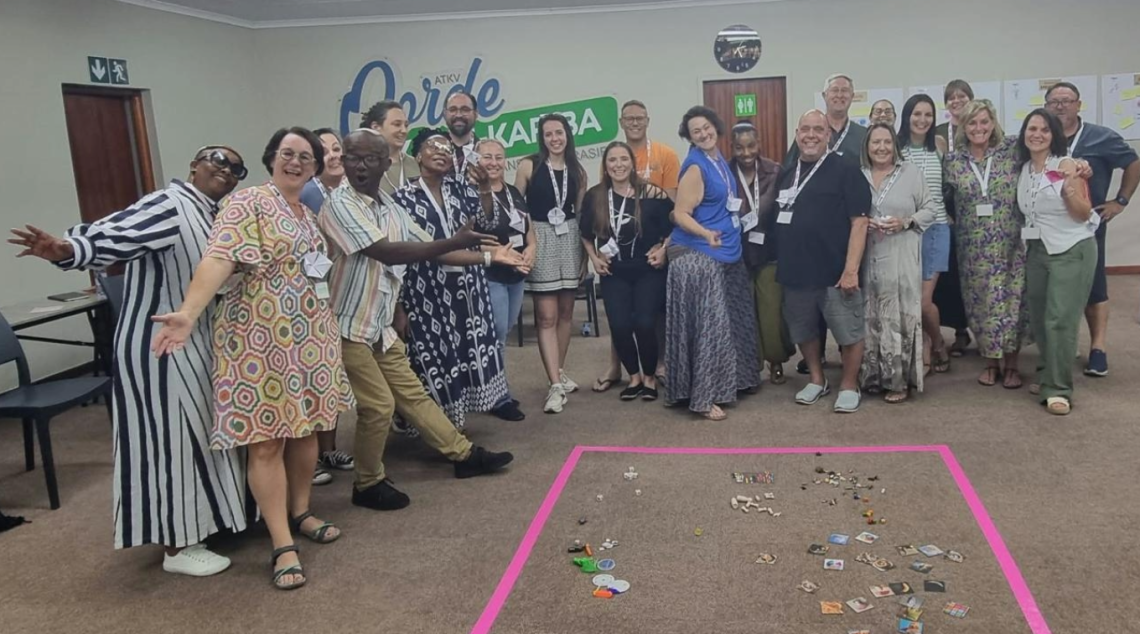

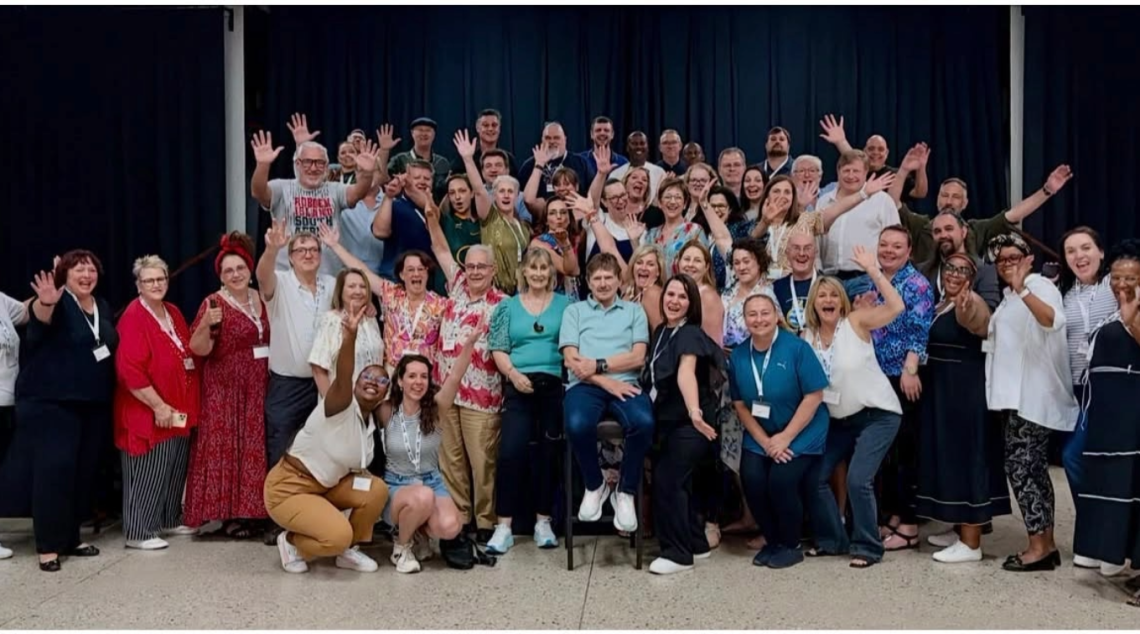
Creativity, leadership, and the courage to challenge conventional thinking took center stage at the 30th anniversary of ACRE: The International Creativity Conference in Africa this October. For three decades, ACRE has brought together educators, researchers, business leaders, and creativity practitioners from around the world to explore how creative thinking can transform individuals, organizations, and communities. This milestone gathering celebrated not only the conference’s remarkable legacy but also its continuing relevance in a rapidly changing world. Representing the University of Southern Maine’s Leadership and Organizational Studies program, Professor Tara Grey Coste, graduate student Ashleigh St. Pierre, and master’s program alumna Melissa (Missy) Kettell collaborated to deliver two presentations examining contemporary challenges to creativity and leadership.
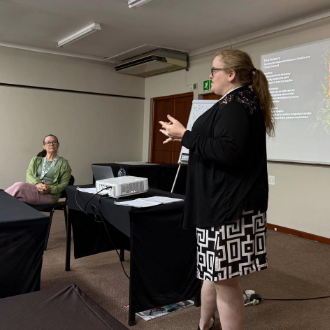
Their first presentation, Creativity in the Age of Overwhelm, explored the increasingly complex relationship between creativity and contemporary organizational life. The session examined how cognitive overload, constant digital interruptions, excessive meetings, workplace urgency, and the pressure to remain perpetually productive can undermine the very creativity organizations need to thrive. The three presenters challenged participants to reconsider assumptions about efficiency, emphasizing that reflection, psychological safety, recovery, and even boredom can be essential conditions for creative thinking. Rather than viewing creativity solely as an individual capability, the presentation encouraged leaders to recognize their responsibility for creating environments in which imagination and innovation can flourish.
Their second presentation, Creativity Under Constraints, explored a seemingly contradictory proposition: limitations can sometimes become powerful catalysts for creative breakthroughs. While insufficient resources, restrictive systems, and competing demands can inhibit innovation, thoughtfully approached constraints can also stimulate resourcefulness, encourage new perspectives, and inspire unconventional solutions. Coste, St. Pierre, and Kettell invited participants to examine how leaders might distinguish between constraints that foster ingenuity and those that unnecessarily suppress creative potential. Together, the two sessions highlighted an important leadership challenge: creating organizational conditions that encourage creativity while acknowledging the pressures, limitations, and complexities of contemporary work.
Marking ACRE’s 30-year history was the publication of A Legacy of Courageous Creativity: How Creativity Can Shape a More Human, Just, and Creative World, edited by Tara Grey Coste, Kobus Neethling, and Heinz Neethling (a student in USM’s doctoral program in Leadership). The book brings together articles written by members of the ACRE community, sharing diverse perspectives on creativity shaped by their experiences, scholarship, and professional practice. The collection captures the ideas, insights, and reflections of individuals whose engagement with creativity has helped shape ACRE’s enduring intellectual legacy. The articles explore creativity through the lenses of leadership, human connection, courage, participation, learning, and innovation, illustrating both the evolution of creative thinking and its continuing potential to shape a more human, just, and creative world.
For USM’s Leadership and Organizational Studies program, participation in ACRE 2026 exemplifies the connection between leadership scholarship, experiential learning, and international collaboration. The contributions of graduate and doctoral students, a program alumna, and faculty demonstrate the value of engaging emerging and established leaders as colleagues in professional conversations and scholarly projects that extend beyond the classroom. As ACRE enters its fourth decade, its enduring message resonates strongly with the program’s educational mission: creativity is not simply about generating novel ideas. It is about having the courage, commitment, and leadership capacity to transform those ideas into a more human, just, and creative world.