

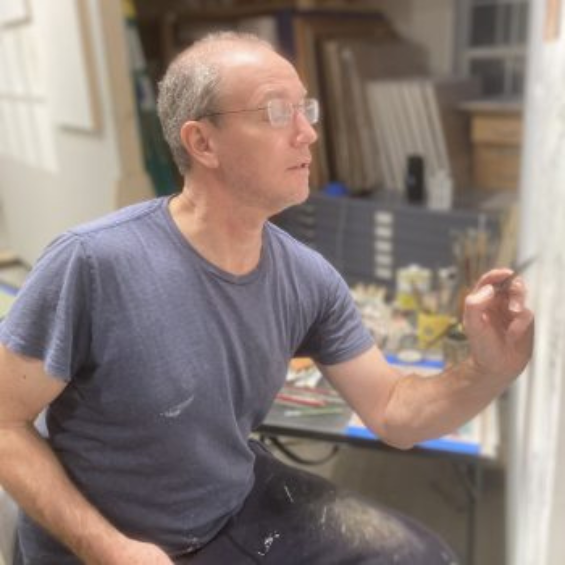
The University of Southern Maine’s 2026 Artist-in-Residence is Peter Bruun, whose Even As We Grieve project explores how human connection helps us endure and transform experiences of pain, loss, and crisis.
Rooted in Bruun’s deeply personal body of work – created since the 2014 overdose death of his daughter – the project invites the University and Greater Portland communities into a shared space of reflection, storytelling, and creative expression.
Even as We Grieve will uplift the voices and stories of people marginalized by loss, addiction, systemic inequity, and the search for connection. Bruun’s project, which is funded through a grant from the Onion Foundation, will culminate in two major exhibitions this spring.
Seven questions for Peter Bruun
1 Your daughter spent her final year living in Maine. How did that shape your decision to come here?
After 30 years in Baltimore, I was ready for a change. My daughter, who died in 2014, had spent the last year of her life on Mount Desert Island, after leaving a residential treatment program with a boy who happened to be from Maine. So, for me, there was a resonance to coming here as a place to find quiet and reinvention.
2 Grief is at the heart of your work. How do you make something so personal accessible to strangers?
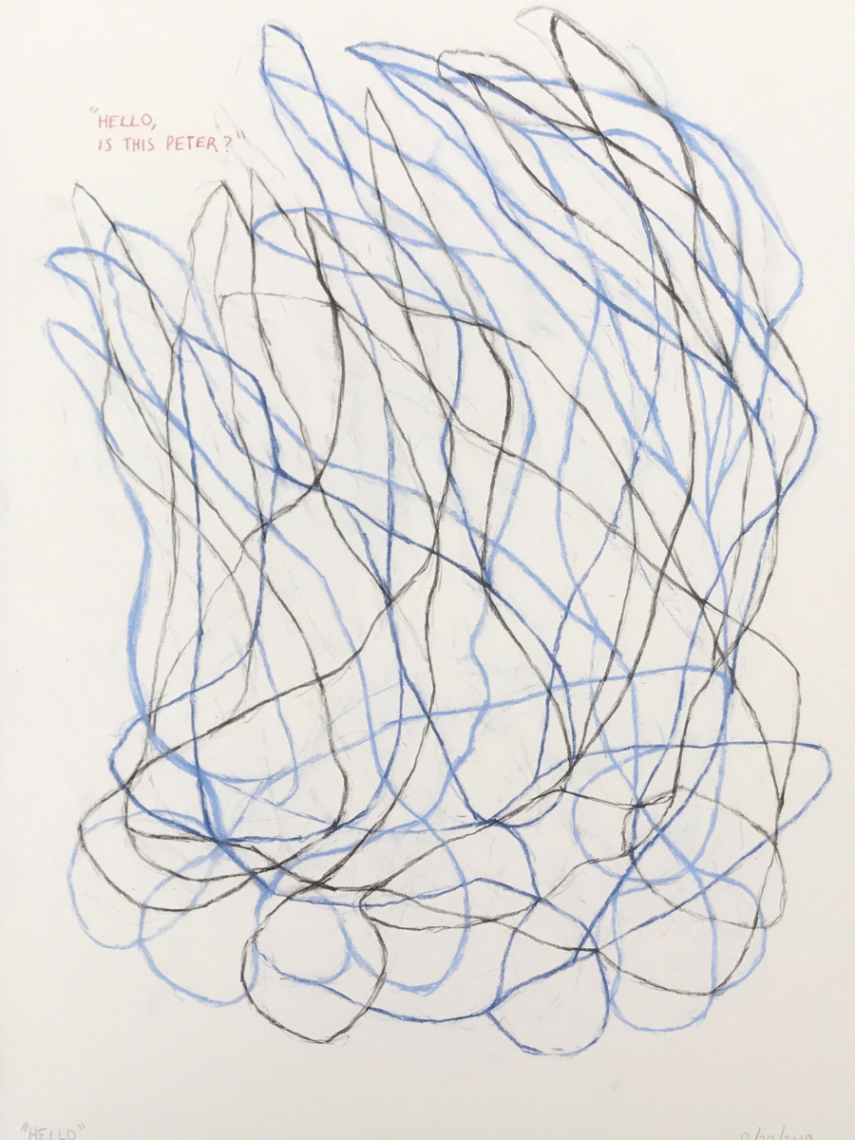
Although the work that’s specifically around my grief experience is abstract, it’s informed by a very particular narrative. I like to make that narrative clear to the audience. Sometimes I do that through text panels that accompany the exhibition, and sometimes I write directly on the drawings. For example, in my Memoir Series, written vignettes accompany the imagery to convey and express the narrative for each piece.
When shown in a sequence, these pieces represent an entire arc: from the death of my daughter to what I consider to be my recovery. In the work I’ll be exhibiting at the Crewe Center gallery, I center my recovery in the sustaining role of “communities of care” – the communities that held me after my daughter died. These became my people.
3 Your project shines a light on the importance of our local communities of care. How did you make those connections?
I began to think about the universal aspect of grief, or loss, or crisis, and where are the communities of care for particular kinds of experiences or populations in our area. How do people find solace? Where do they find healing?
I established relationships with eight Greater Portland organizations that are partnering on this project, including Equality Maine, Center for Grieving Children, Portland Recovery Community Center, and five other communities of care, each focused on a different purpose or population.
Throughout the project, I’ve been collaborating with these organizations and holding art workshops with the folks they serve.
It begins when the community organization invites people to come to the workshop and share their stories about loss, grief, or crisis, and the role the organization plays in their healing and sense of belonging. This becomes the prompt for artmaking and storytelling.
4 What happens in a workshop and how do these stories become part of the exhibition?
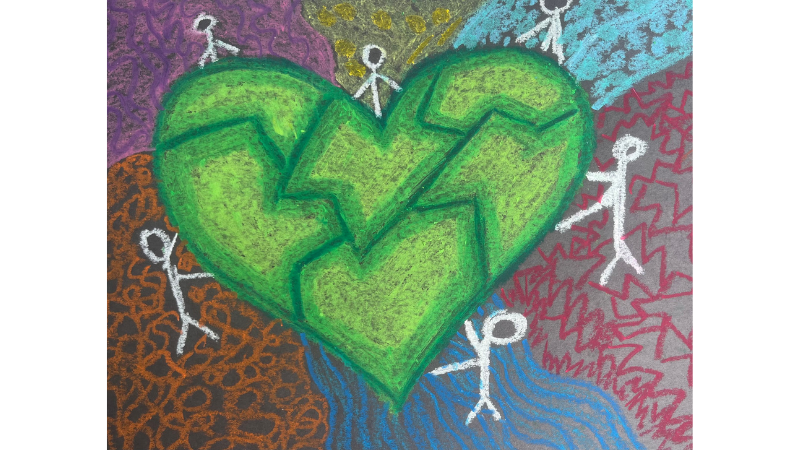
I work with individuals as they create very simple pastel drawings, connected to their personal experience. Each time somebody finishes a drawing, I record a short 3-to-5-minute conversation with them, which I then use to write a descriptive label for the artwork.
I now have more than 50 works from the various organizations that will be shown in the exhibition. You’ll see and hear an array of community voices speaking about the importance of communities of care in their lives, in their crises. And you’ll meet some of the artists and learn more about the communities of care represented in the gallery.
5 Has anything surprised you along the way?
In the workshops, I’m coming across many USM graduates and current students who are actively involved in these community organizations – it’s been eye-popping to see the extent to which USM is populating the world with community-oriented folks. They’re all over the place!
And on campus, there are several students who’ve become deeply involved in this project. One is creating a video about the value of communities of care for her Media Studies capstone project, which will be included in the exhibit. Another is providing invaluable help with editing and artwork. And an intern at WMPG has taken on my audio project as her audio project. She’s playing a critical role as a producer. So, these are examples of USM students who are really owning pieces of my project.
6 What are you hoping people will take away from Even As We Grieve?
For the USM community, I hope to raise awareness of, and ultimately create connections to, the Greater Portland communities of care. I’d like to spotlight these wonderful organizations and provide opportunities for people to get to know them.
Also, I want to highlight the role art can play by directly taking on community issues and inviting regular people to have their voices and stories heard.
Art need not be a passive thing on the wall, but can be an active agent for wellbeing and change…you know, it’s a different paradigm for how art can function in the world.
7 You talk about the need for people in crisis to have their stories heard. How did the Onion Foundation help make this possible?
Philanthropy is absolutely critical. Especially when it can lift up and provide opportunities for people to experience community. This project would not have been as robust without the support of the Onion Foundation.
We’ll have four different events at USM that center community experience. For people who are living marginalized lives because of loss or crisis, being centered in an experience like this can be transformational. It’s like a little line to hold on to in a sea of chaos.
And the value of making a connection between a rareified art space like the Crewe Center gallery, which is about dignity and respect, and those who need that so much in their lives…what can you feel better about?
Peter Bruun moved to Maine from Baltimore in 2019 and established Studio B in Portland. His artist’s residency will culminate in two exhibitions. The first, Even As We Grieve, opens at the Crewe Center for the Arts in Portland on April 16. A later exhibition is planned for the University Art Gallery in Gorham with an opening on May 21.
Even As We Grieve will highlight the lived experiences of immigrant communities, LGBTQ+ individuals, people in recovery, justice-impacted individuals, and those living with grief. Bruun is partnering with eight local nonprofits: Equality Maine, Maine Transnet, Center for Grieving Children, Greater Portland Family Promise, Commonspace, Portland Recovery Community Center, Reentry Sisters, and Youth-LED Justice.