

As a showcase for American history, the World’s Fairs were deeply influential and deeply flawed. A new exhibition curated by students at the University of Southern Maine confronts that legacy.
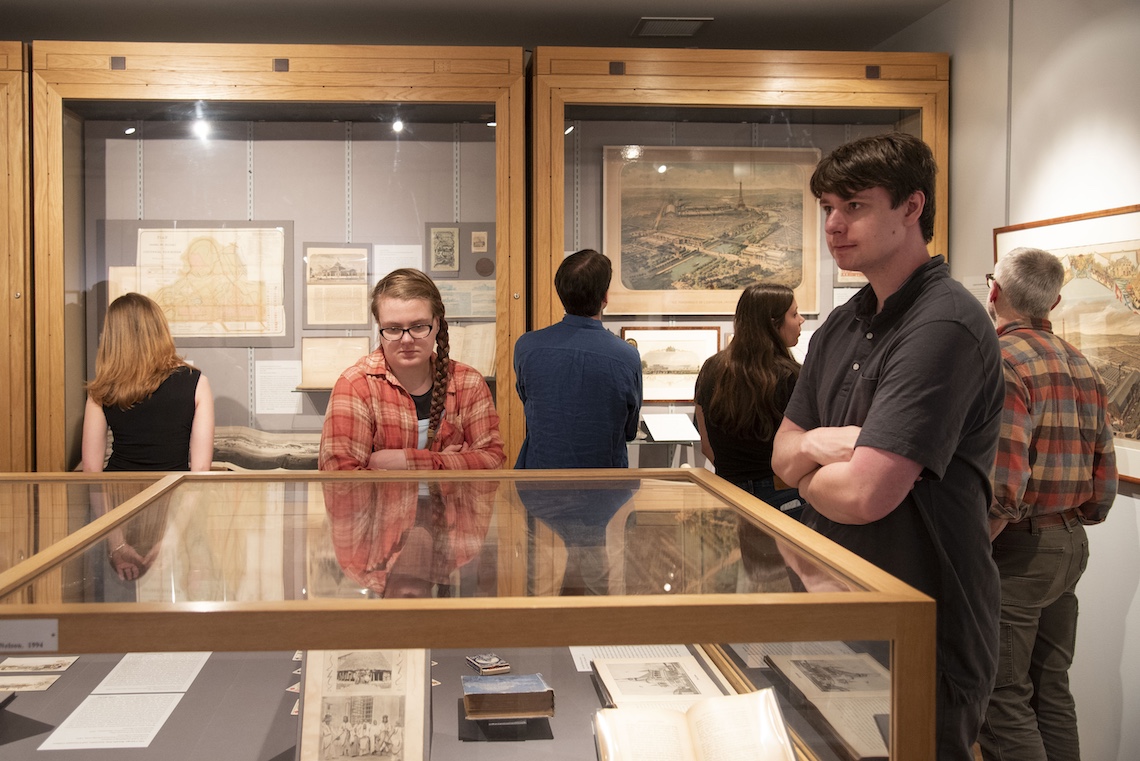
The exhibition is called “A World On Display: Anthropology and the World’s Fairs, 1851-1904.” It opened on May 7 at the Osher Map Library and Smith Center for Cartographic Education in Portland. The idea grew out of the lesson plan for ANT 320: Anthropology and the Museum taught by Dr. David Lowry, assistant professor of Anthropology.
“Everything with anthropology is about really twisting certain things together and allowing it to intellectually explode,” said Lowry. “I feel like this exhibit, this showcasing of the students’ work and these different items that we have in the Osher Map Library really allow things to explode and come to bear.”
Lowry gave students a starting point for their research. He described the World’s Fairs as a series of expositions held in various host cities over a span of decades from the mid 19th to early 20th centuries. Their tone was highly nationalistic with elaborate displays of cultural touchstones and the latest technological innovations.
The fairs reinforced the worldview of the people in power, who were almost exclusively descended from white Europeans. Other cultures were reduced to stereotypes. Indigenous people received some of the worst treatment. They were falsely depicted as fading remnants of the past with no role or agency in current American society.
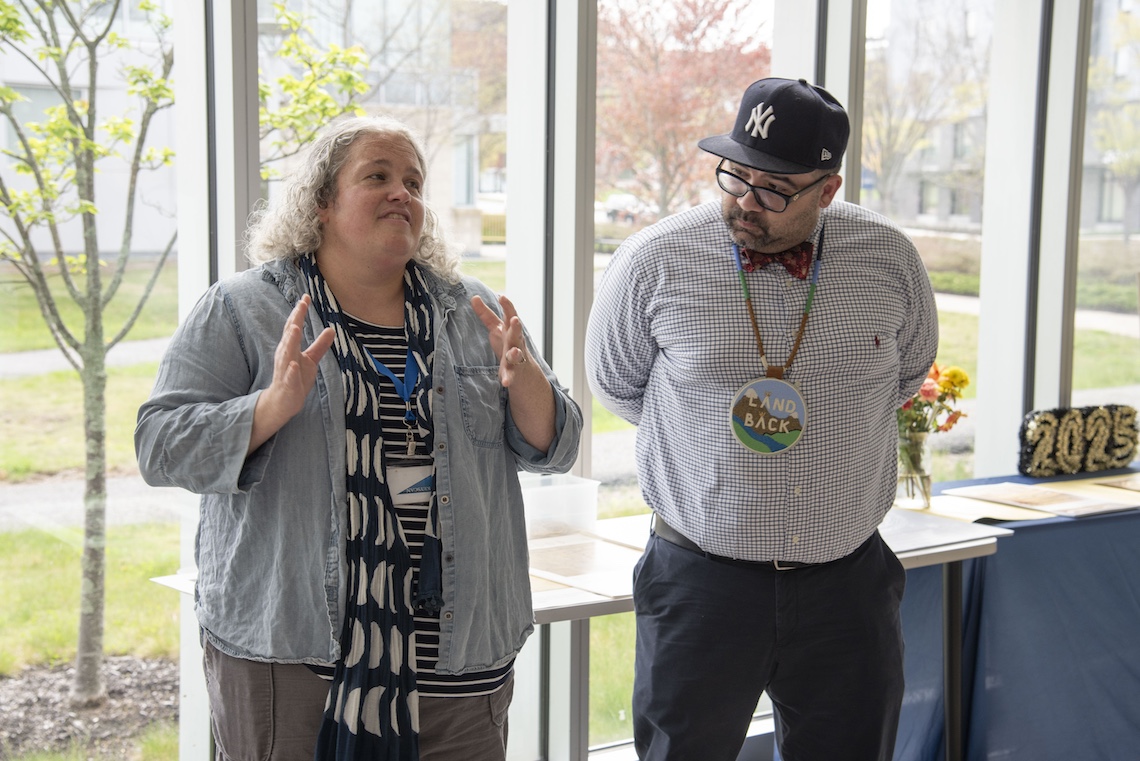
The educational establishment embraced the fairs’ historical narrative. Museums copied the use of visual cues to convey vast stretches of time in a limited physical space. Schools built their curricula around the arc of nationhood. All the prejudices and inaccuracies of the fairs carried over, as well.
Having set the stage with his historical insights, Lowry turned his students loose to conduct their research independently. The class of 20 divided into several groups, each assigned to analyze a different fair. Their research drew heavily on the holdings of the Osher Map Library, with additional support from local historical societies.
Jillian Worster was part of the group studying the 1901 World’s Fair in Buffalo. She has since graduated but was then a senior majoring in Public Health. She is also a member of the Passamaquoddy Tribe.
Worster’s research turned up photographic evidence of Passamaquoddy representation at the fair. The image shows a brass band made up of tribal members. The Passamaquoddies are based in eastern Maine and up into Canada, but the band tried to look and act more like Indigenous peoples from the Western Plains to meet the expectations of white audiences.
Glimpses of the musicians’ true culture snuck into their performances, which chipped away at the false narrative around them. Their simple presence as fully engaged participants in modern society made it harder to deny their claims to respect and sovereignty.
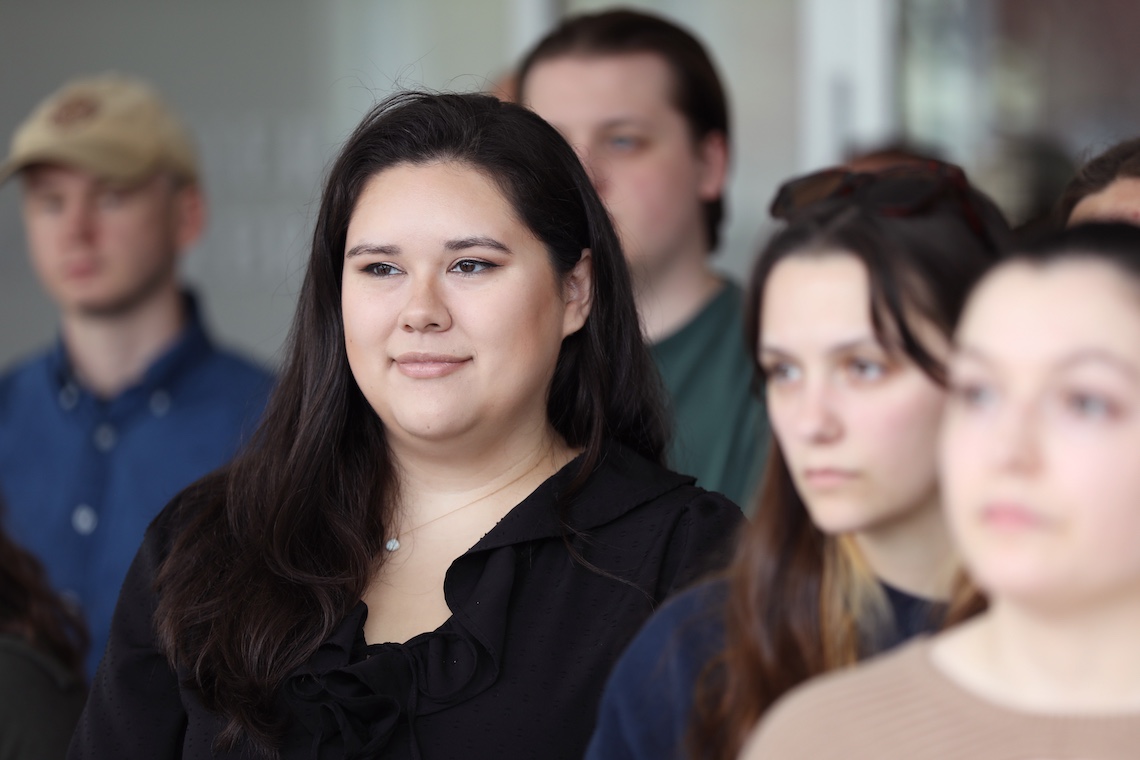
“People don’t expect to see Indigenous people in these kinds of spaces,” said Worster. “That was really exciting for me, to get to see where we’ve gone and where we’re going.”
Other students who didn’t have Worster’s personal ties to the Indigenous community were initially cautious to speak outside their own cultural points of reference. Lowry, a member of the Lumbee Tribe of North Carolina, told them that their input was valid and welcome. His assurance energized their research.
“You’ll start to see these really interesting threads of Native presence, conversations that invite Native presence into what was happening, in ways that I don’t think would have happened otherwise,” said Lowry.
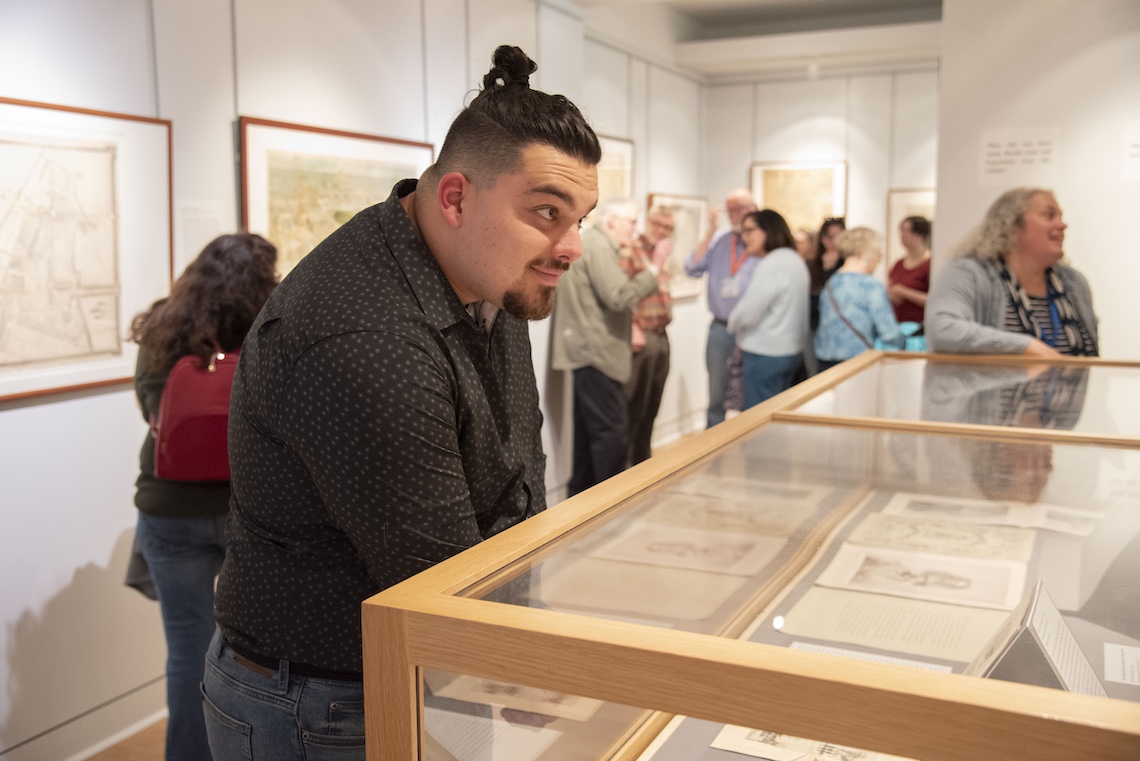
The challenging nature of the exhibition didn’t hurt attendance. The opening reception was so crowded that visitors had to squeeze past each other as they moved through the gallery. Students welcomed a steady flow of family members. USM President Jacqueline Edmondson was one of several faculty and staff members who also took the tour.
“I’m so surprised that there are so many people. It’s a big turnout. That’s great,” said Grace McLellan, a junior Geography-Anthropology major. “I’m glad that people are excited to learn and especially to support students who want to get into this field and try their hand at this type of interaction with the public.”
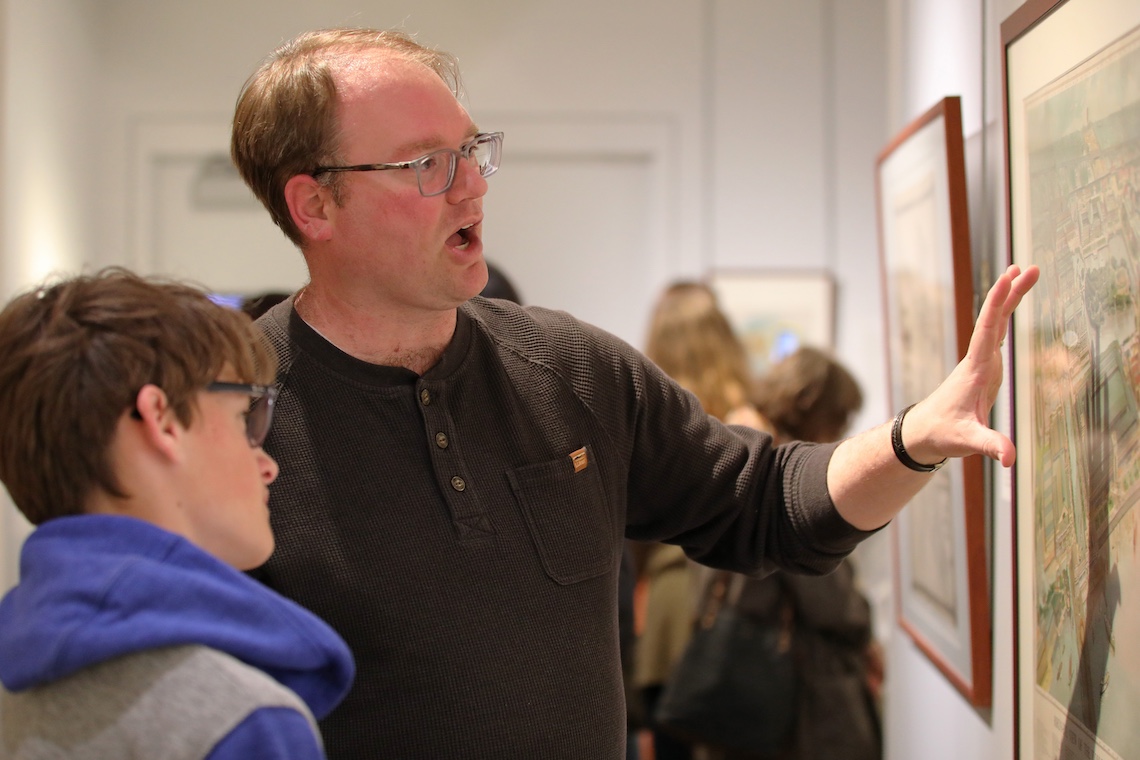
McLellan’s research centered on the 1876 World’s Fair in Philadelphia, which featured a Women’s Pavilion. She explained how its celebration of female scientists and artists was undercut by excluding advocates for the women’s suffrage movement, which was highly active at that time.
Lowry’s class was Maddy Ryan’s first academic foray into Anthropology. Ryan is a junior majoring in Art and Entrepreneurial Studies. The 1904 St. Louis World’s Fair was her focus. By working with classmates outside her primary field, she learned how their different skills and perspectives could elevate their combined research.
“We’ve had so many sophisticated discussions about this all semester long,” said Ryan. “To see all this come together in such a short period of time is really cool. I’m very proud to show it to people I care about.”
Ryan escorted her parents and two friends though the gallery, providing commentary on her areas of research. The exhibition included photographs, maps, and promotional art, as well as bulkier objects like painted dishware and a decorative clock. Students chose the items and wrote the accompanying labels that provide a sense of historical context.
The curation passed muster with a discerning critic. Dr. Libby Bischof is executive director of the Osher Map Library. She was particularly impressed by the students’ success at blending their voices into a unified theme.
“The depth of the analysis, the level of the research and writing are really next level,” said Bischof. “It’s a show that I’m super proud to have in the gallery.”
Proud, but tired. The physical work of mounting the wall hangings and filling the display cases is shouldered by Bischof, preparator Kevin Callahan, and their fellow map library team members. They usually schedule a manageable buffer for the changeover between exhibits. This one was different.
As co-facilitators of the exhibit process, Bischof and Lowry wanted to make sure students saw the finished product before going home for summer vacation. The semester was in its final days when students finished their research, leaving little time to pull it all together.
Bischof and Callahan worked late into the night ahead of the opening reception, caught a few hours of sleep, and went right back to work the next morning. They stuck the last label onto the wall just five minutes before the doors opened.
“One hundred percent worth it,” said Bischof. “Would do it again, just not next week.”
Bischof got the rest she wanted and more. The exhibition will remain on public display for the next several months until August 22.