
A team of University of Southern Maine students won “What About This?” — the University’s first innovation challenge — with an idea to turn discarded fishing gear into prosthetics. Team Oceancycle earned an all-expenses-paid trip to Iceland Innovation Week after competing against four other teams.
Three days from problem statement to pitch
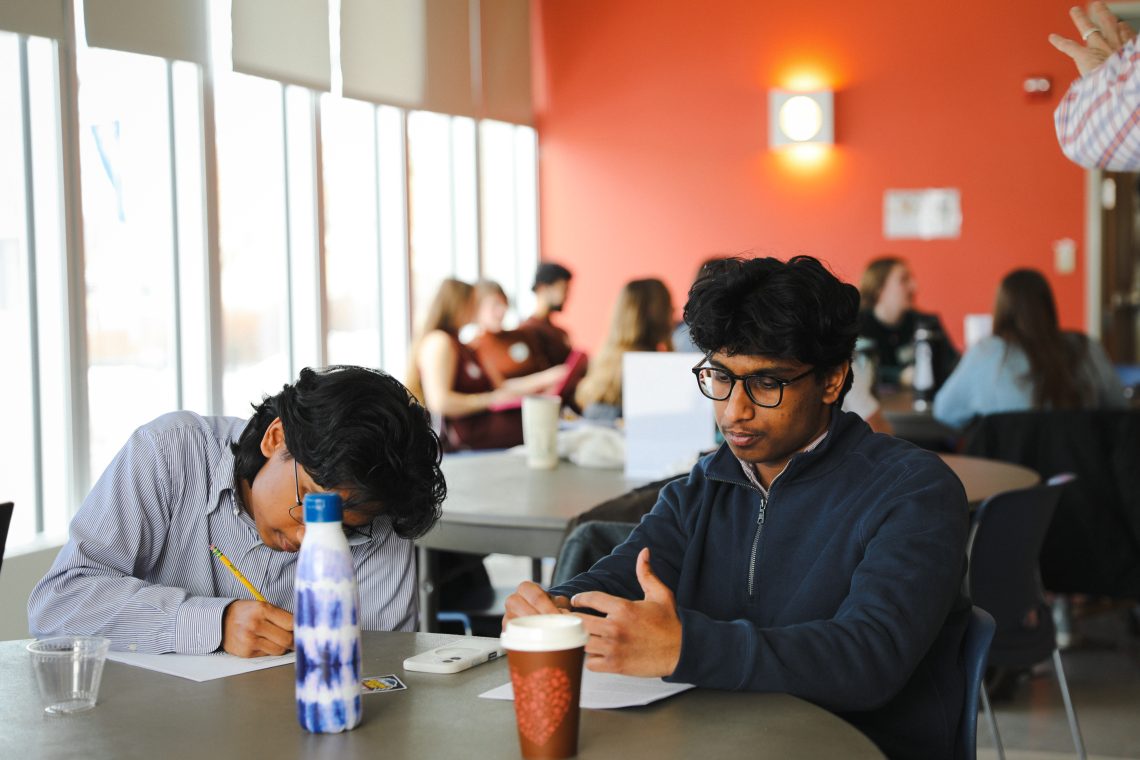
On March 5, students were tasked with reimagining waste from Maine’s Blue Economy (fishing, aquaculture, and coastal industries) as valuable products or resources. Over three days, 15 students working across five teams — most with no entrepreneurial background — developed solutions from scratch and pitched them to judges for a chance to travel to Iceland Innovation Week in April.
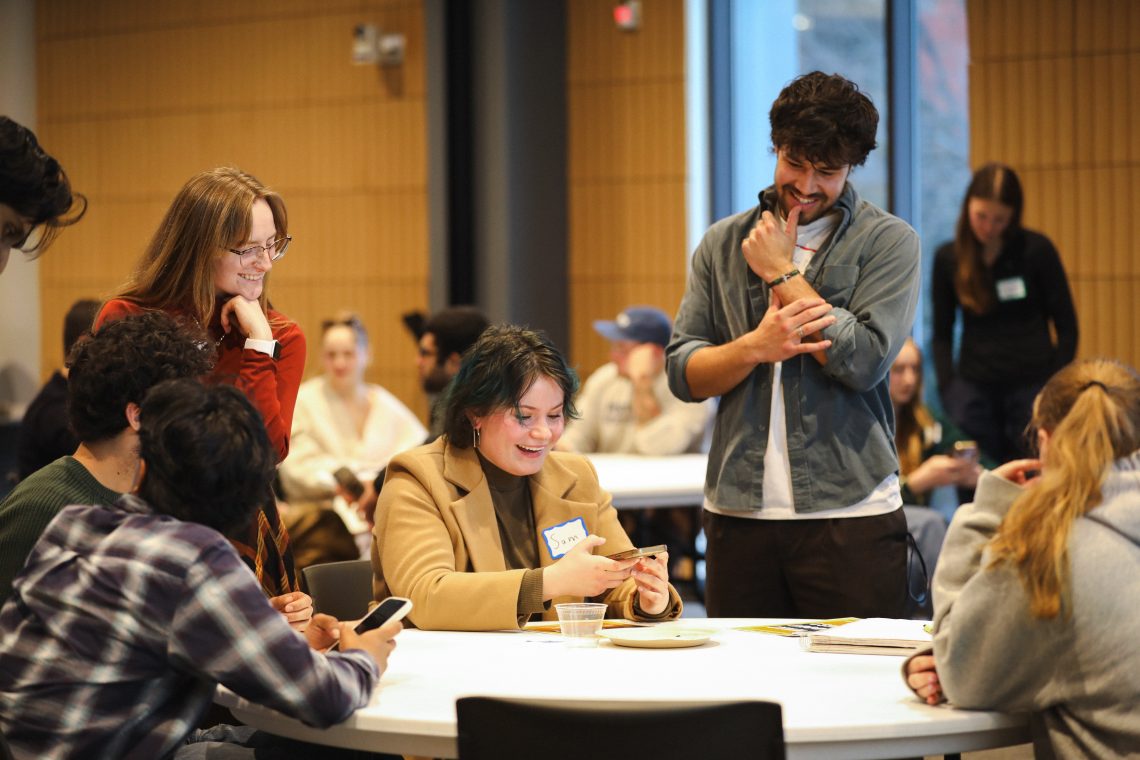
Organizers named the challenge after the question they say drives innovation: “What about this?” The goal was to encourage students to see themselves as problem-solvers capable of creative, entrepreneurial thinking, regardless of their major or career path. This year’s participants ranged from political science and women’s studies majors to engineering and computer science students.
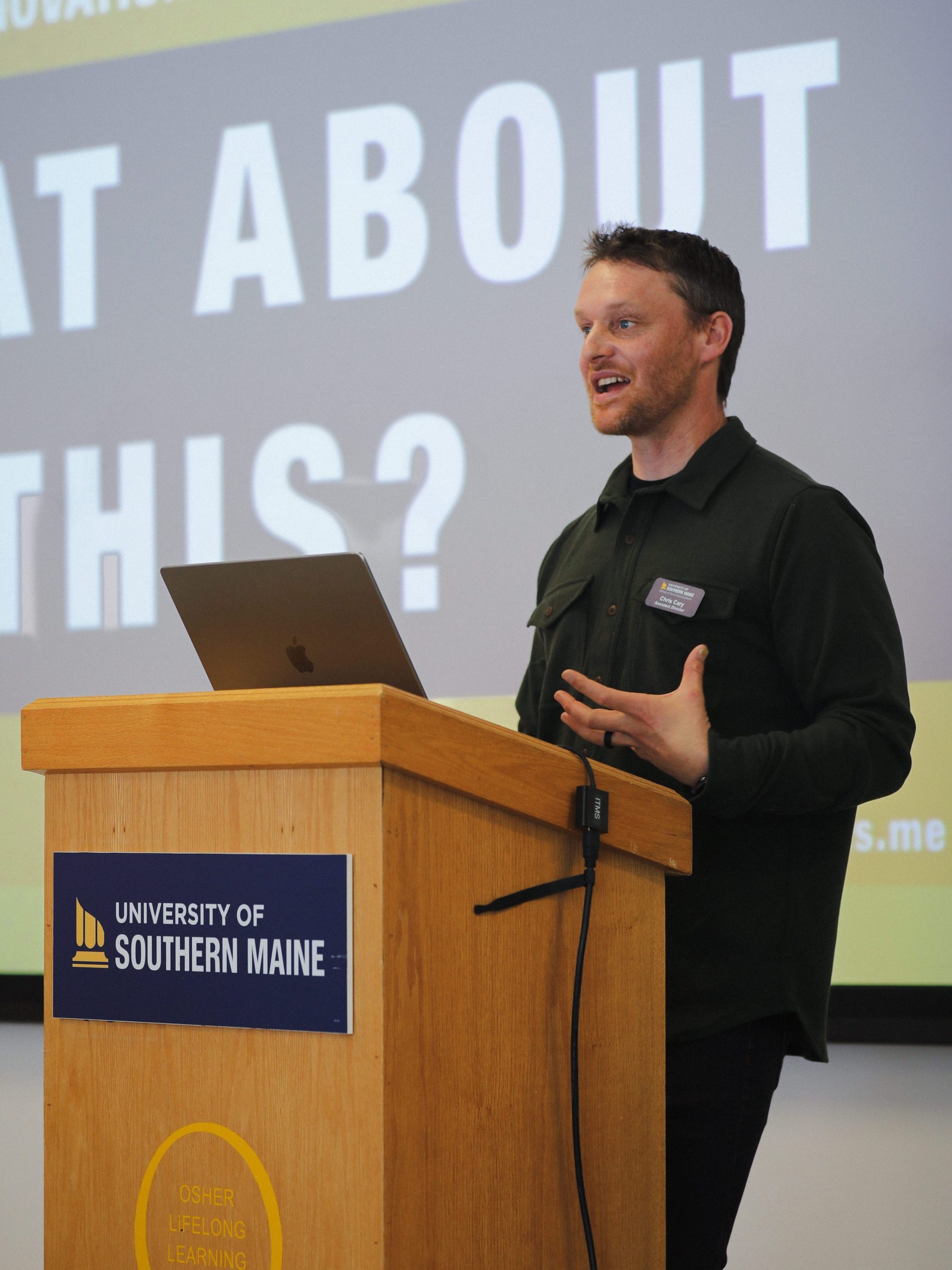
“We want students to realize that the ideas they have or the problems they think they have solutions for — that’s entrepreneurial thinking,” said Chris Cary, assistant director of the Office of Commercialization and co-organizer of the challenge. “That’s what leads to innovation.”
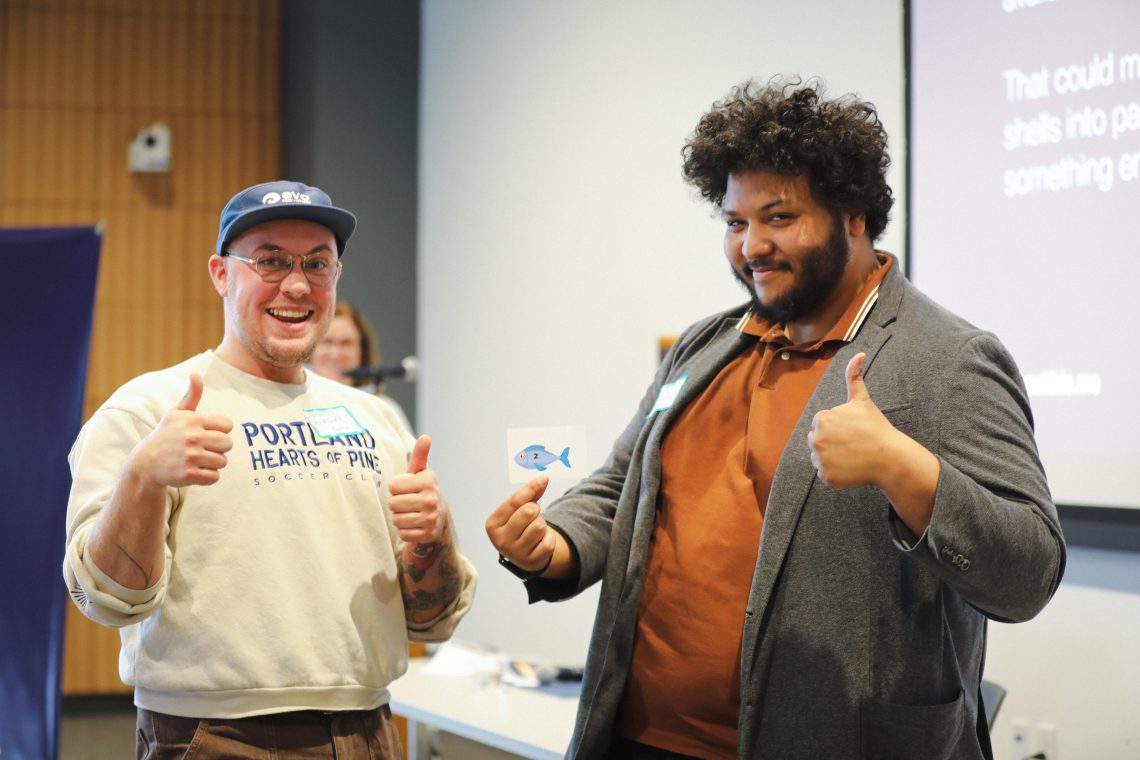
Teams received the problem statement Thursday evening at the kickoff event: Turn waste into opportunity. Students were challenged to design innovative solutions that transform waste from Maine’s Blue Economy into something of value — whether reimagining lobster shells as packaging materials, using digital tools to optimize supply chains, or finding new uses for discarded fishing gear.
Florence Guimont, a freshman majoring in human biology, said the Iceland trip initially caught her eye when she saw the challenge advertised. The problem statement resonated with her early interest in marine biology.
After the kickoff event, Guimont was feeling confident about her team’s prospects.
“We are all in different majors. I think that’s definitely going to help broaden our knowledge and ideas,” she said.
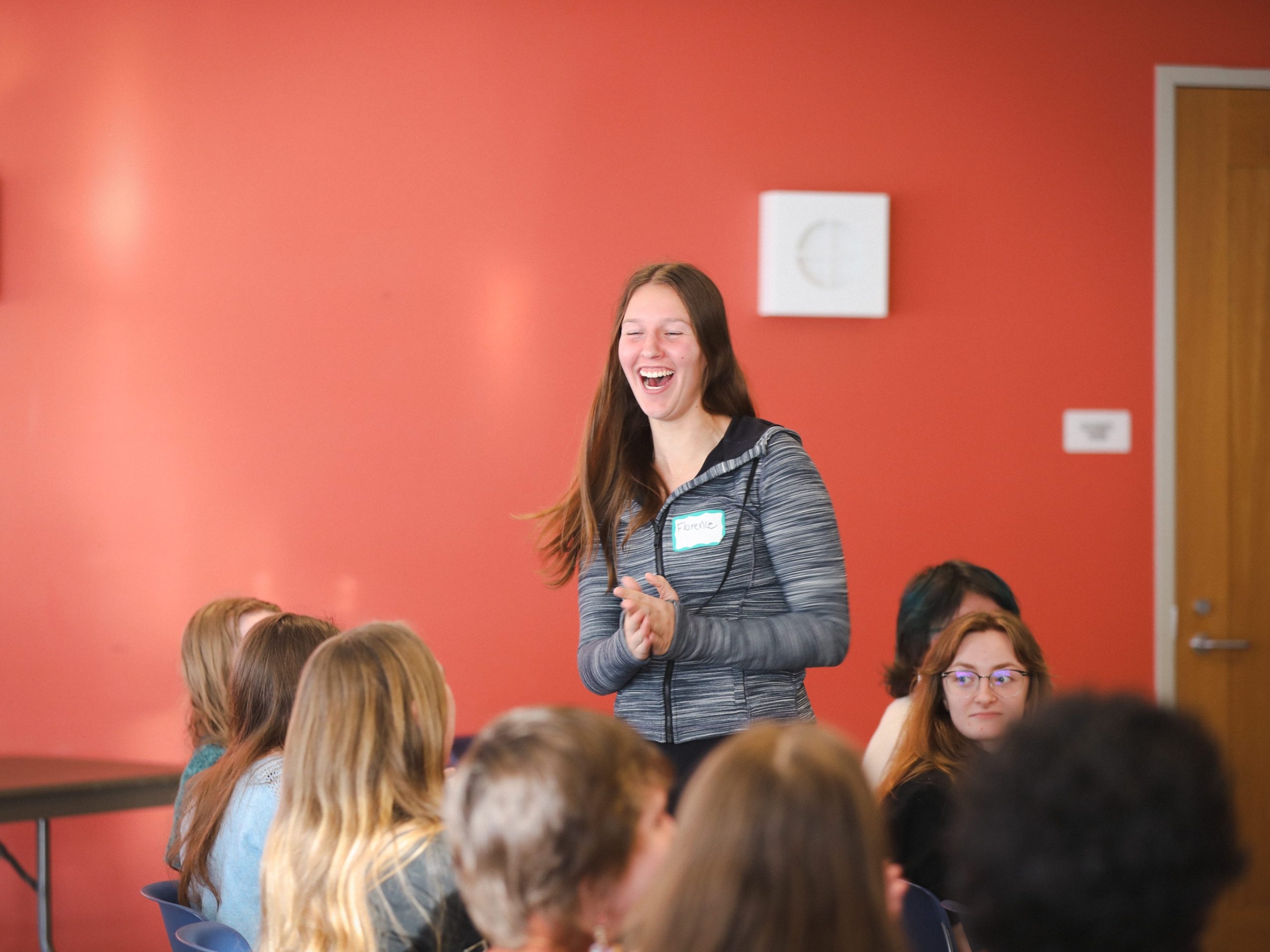
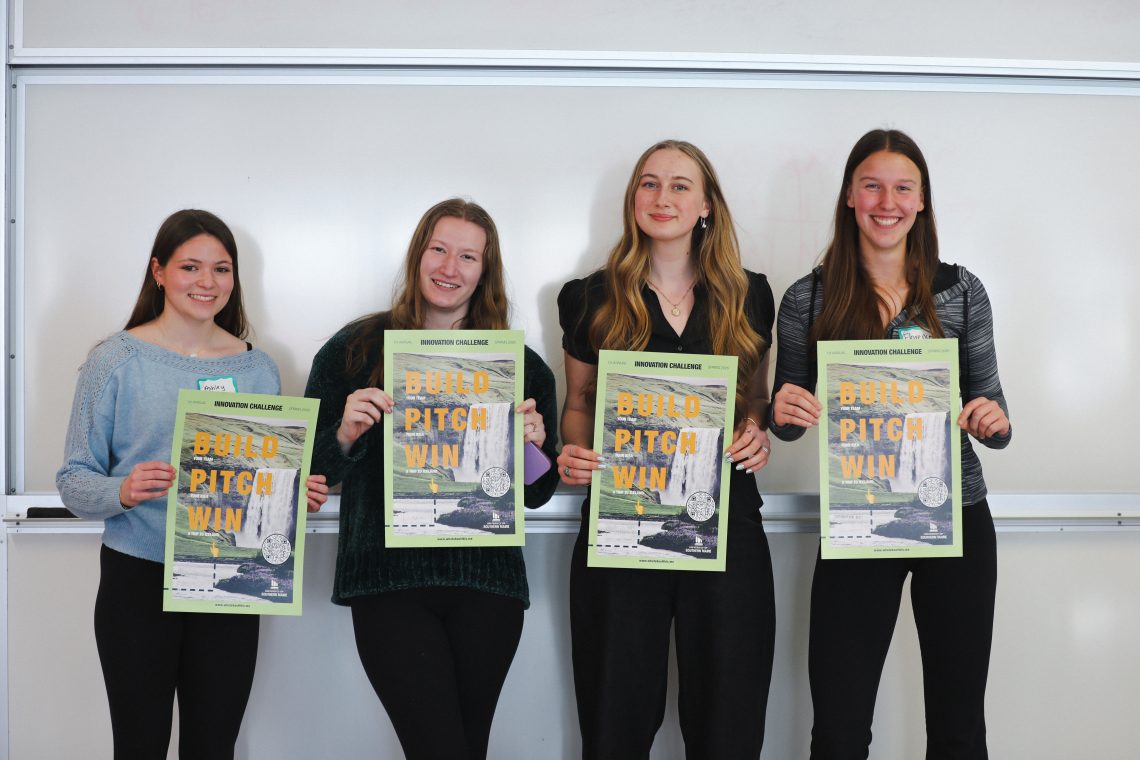
They had the weekend — roughly 72 hours — to turn the prompt into a polished pitch. Sunday afternoon, all five teams presented their solutions to a judging panel. Team Oceancycle, which included Guimont, Chloe Turner, Wynter Simack, and Ashley Arsenault, proposed turning discarded fishing gear into nylon-based prosthetics, addressing both environmental waste and healthcare costs. They took first place.
The team’s approach was personal. Guimont has a family member who is an amputee, which helped inspire the focus on prosthetics. By using recycled fishing gear, the team’s solution would make prosthetics cheaper, more accessible, and more comfortable than conventional materials.
“We did not expect it,” said Turner after the win was announced. “For it to actually come true is kind of insane.”
While Team Oceancycle took top honors, all five teams presented strong solutions. From repurposing lobster shells and green crab exoskeletons to creating outdoor gear and fertilizer from fishing waste, judges saw impressive innovation across the board.
AI as accelerator, not replacement
The challenge, funded by a Provost Office grant focused on AI literacy, aimed to give students hands-on experience using AI tools outside traditional classroom constraints.
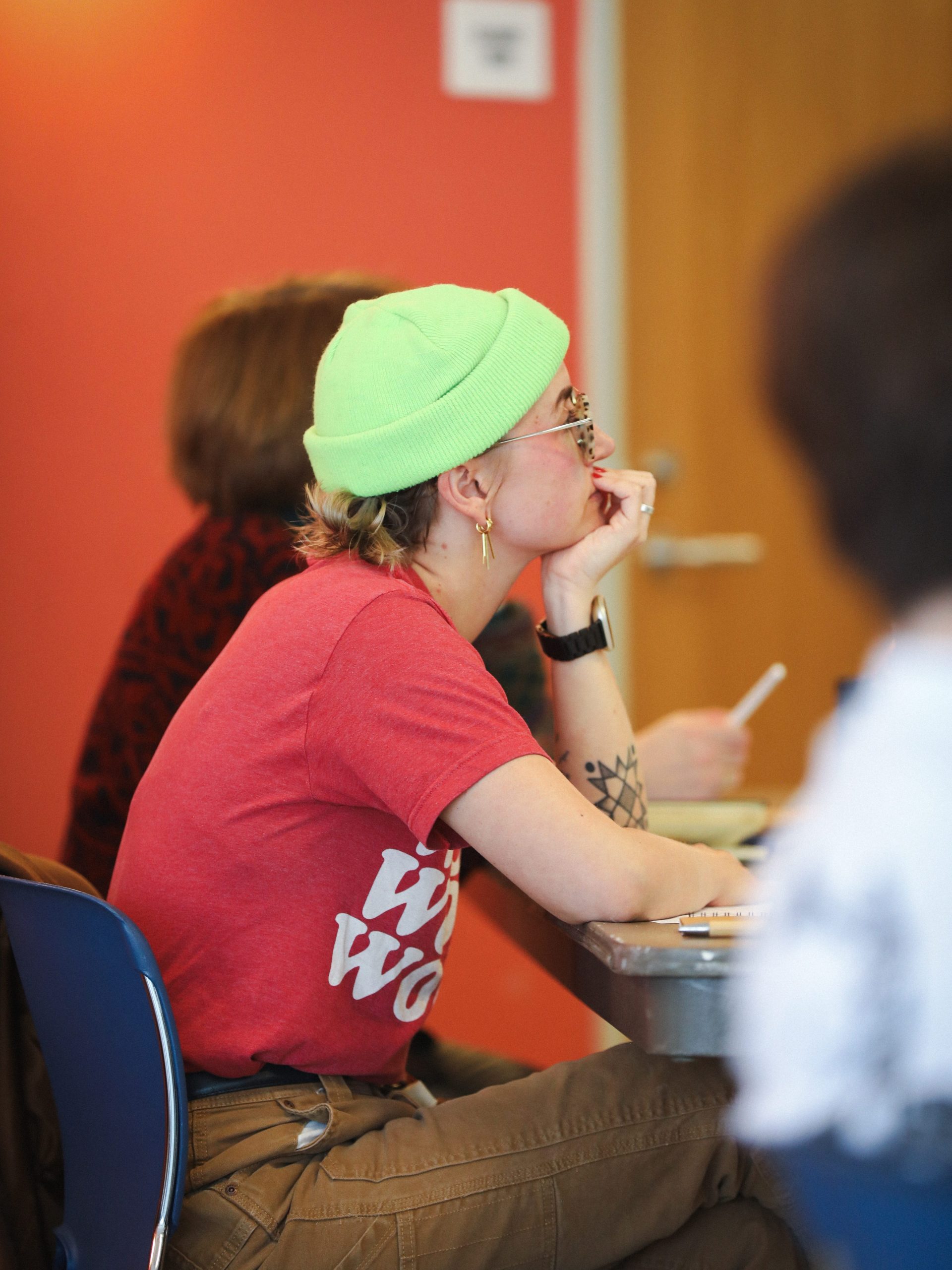
Organizers emphasized AI as an accelerator, rather than a replacement for critical thinking and creative problem solving. Teams were expected to be transparent about their AI usage and prepared to explain not just what solutions they developed but how they developed them.
“The guardrails come off a little bit,” said Cary. “We’re encouraging students to use AI as an accelerator for gathering information and seeing different perspectives — but the planning, prompting, content creation, and presentation aspects make it nearly impossible for AI to do all the work.”
Judges evaluated not just the quality of the final solutions, but how thoughtfully teams used AI — looking for evidence of in-depth research and verification of AI-generated content.
“I looked for pitches with creativity and critical thinking at the forefront,” said Janna Ahrndt, assistant professor of art and one of four judges. “I also looked for teams that fact-checked and looked for holes in their logic as they used generative AI. It is important to understand the strengths and weaknesses of any tool.”
At the kickoff event, organizers walked students through available AI tools, including Google Gemini, Google Notebook LM and Microsoft Copilot — all accessible to students at no cost.
Judging panel brings business, academic, and legal expertise
The four judges on the “What About This?” panel brought a variety of expertise to the evaluation, ensuring student solutions were reviewed from multiple angles: innovation and design, business viability, legal thinking, and global impact.
The panel included Ahrndt; Peter Harriman, director and certified business advisor with Maine Small Business Development Centers at USM; Steven Hammerton, a Maine Law student who served on the challenge’s advisory committee; and Allison Hodgkins, executive director of the World Affairs Council of Maine.
Going into Sunday’s pitch event, each judge brought different priorities to the evaluation.
“I’m not looking for the ‘coolest’ idea — I’m looking for substance,” said Harriman. “An idea that’s been thought out, clearly identifies a need, and presents clear steps toward launch.”
“I’m going to be looking for the hallmark creativity of the Pine Tree State,” said Hammerton. “As a lifelong Mainer, I’ve grown to view creativity and resourcefulness as one and the same — and that adaptability is crucial in a challenge like this, where every team will encounter stumbling blocks.”
Top team heads to Iceland Innovation Week
Team Oceancycle will head to Reykjavik in April for Iceland Innovation Week — an international festival where innovators pitch ideas, visit cutting-edge companies, and connect with investors and leaders on sustainability and tech solutions.
“The students will have a profound, immersive experience,” said Cary. “They’ll get to meet people in a different country and see what it’s like to be a vibrant startup in the food system space.”
During the week, students will attend conference sessions, tour Icelandic startups and network with entrepreneurs from across Scandinavia. They’ll travel alongside Provost Adam Tuchinsky and other university leadership — a unique opportunity for undergraduates to build relationships with senior administrators while representing USM internationally.
The team is eager to meet entrepreneurs, tour startups, and see firsthand how Iceland approaches innovation. For Arsenault and Simack, it will be their first time leaving the country. The team also has personal wish lists: Turner wants to see the mountains and waterfalls, while Guimont is hoping to visit Game of Thrones filming locations.
Building a culture of innovation beyond the weekend
The challenge represents more than a one-weekend competition — it’s part of a larger effort to foster entrepreneurial thinking across campus. Organized by USM’s Office of Commercialization alongside Tracey Meagher with the Maine Economic Improvement Fund and backed by Provost Office funding, the challenge signals an institutional investment in the next generation of innovators and problem-solvers.
As the first innovation challenge of its kind at USM, organizers hope the event will evolve into an annual tradition that attracts more teams and strengthens the University’s entrepreneurial culture.
Learn more about the “What About This?” Innovation Challenge at whataboutthis.me.