
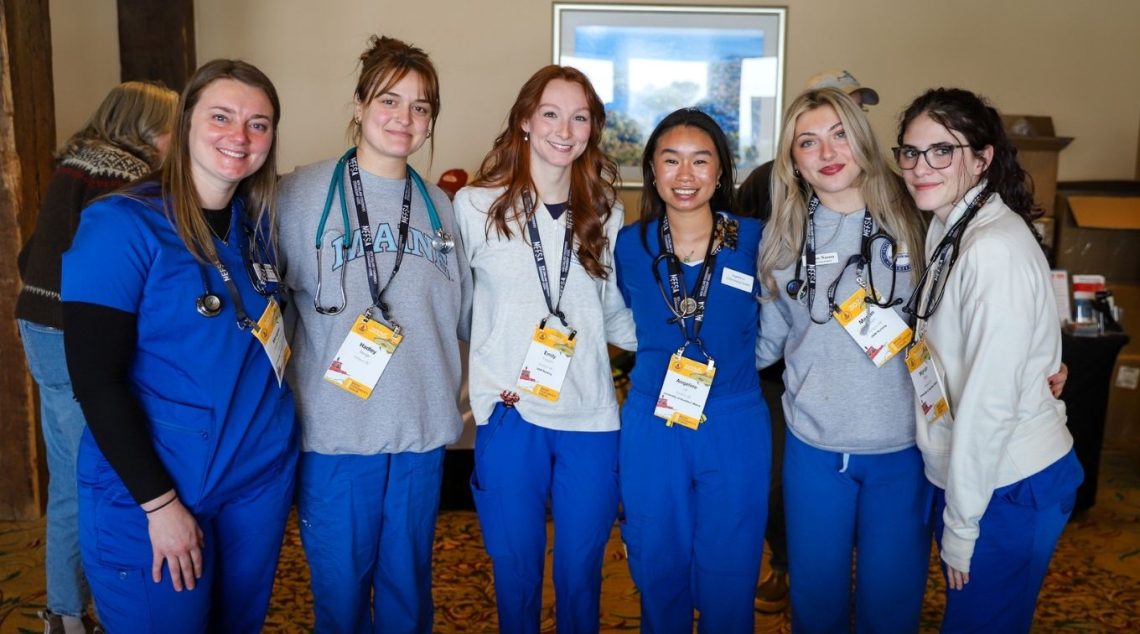
Over three days in early March, senior nursing students from the University of Southern Maine once again offered free health screenings for fishermen, shellfish harvesters, and their families during the Maine Fishermen’s Forum at the Samoset Resort in Rockport.
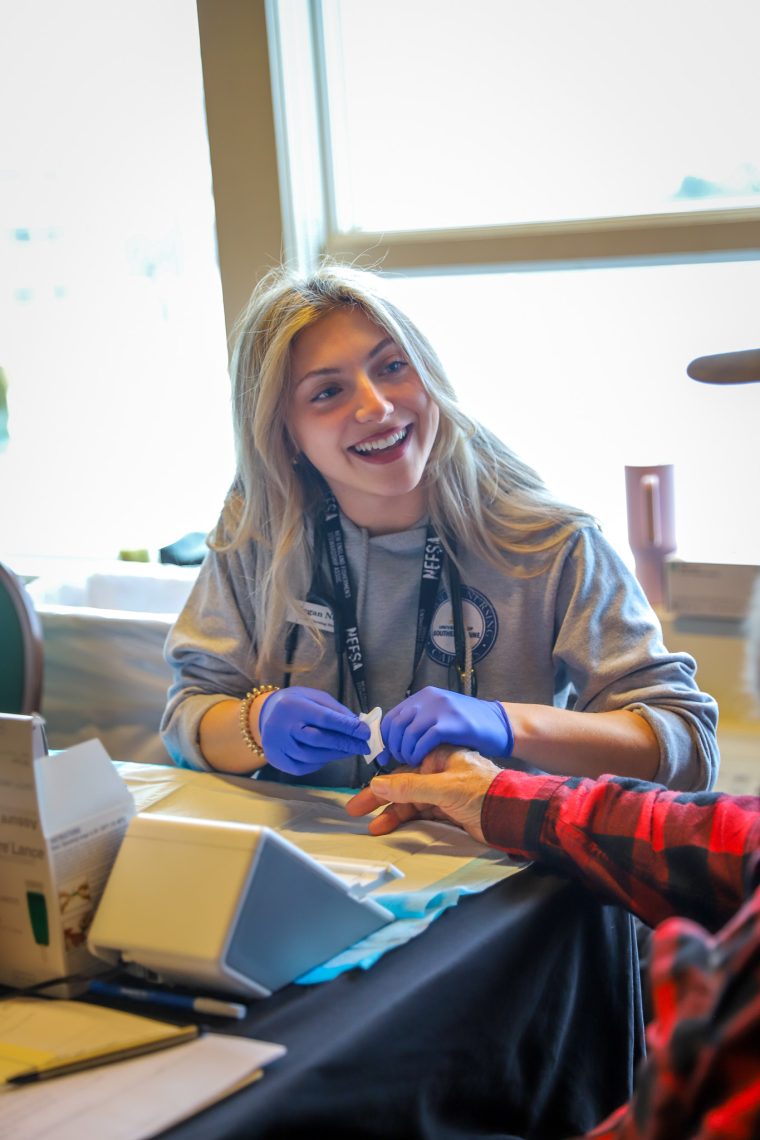
The screenings — including blood pressure checks, cholesterol testing, glucose testing, hearing screenings, and health education — are part of the Casco Bay Fishing and Coastal Communities Partnership, a long-running outreach initiative through the USM School of Nursing that connects students with Maine’s coastal and island communities while offering preventative care to members of the state’s fishing workforce.
Held each year at the Samoset Resort, the multi-day event brings together fishermen, seafood industry professionals, scientists, regulators, gear suppliers, and community organizations for seminars, trade shows, and discussions about the future of Maine’s fisheries.
Seven USM nursing seniors staffed the health screening station, where fishermen could stop by for a quick check-up and conversation about their well-being.
“It feels awesome, honestly, serving a smaller community like this that doesn’t get a lot of access to healthcare,” said Meghan Mason, a nursing student. “It’s rewarding to be able to provide the services we get to do here every year.”
Students worked in what organizers refer to as a “health corridor,” where several health and safety organizations provide services and information for fishermen attending the event. At the USM station, students greeted participants, explained available screenings, and documented results for those who chose to participate.
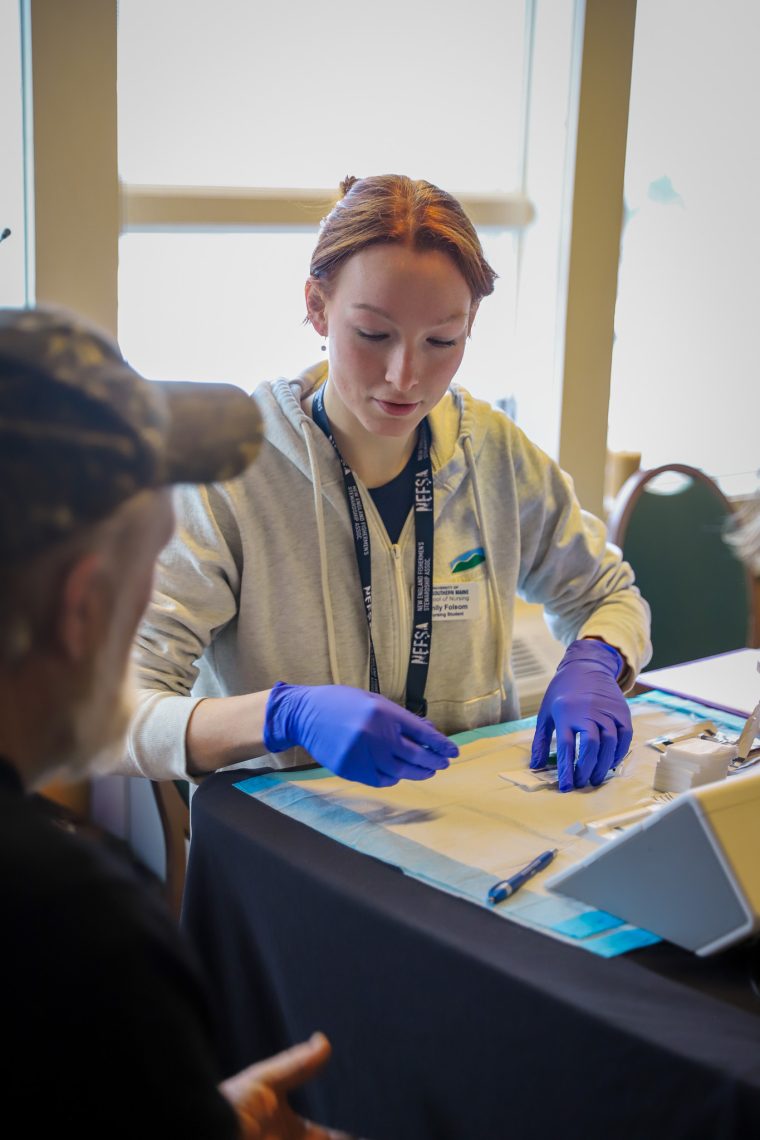
“In the community, you really get to connect with your patients and their story,” said Emily Folsom, a nursing student.
The Casco Bay Fishing and Coastal Communities Partnership was developed in the early 2000s by former USM nursing faculty member Margaret Fournier as the School of Nursing expanded its focus on community and public health nursing. The partnership connects nursing students with communities where people live or work in more isolated settings, including fishermen and island residents who may face barriers to healthcare access.
Community partnerships are a required component of pre-licensure baccalaureate nursing education. At USM, the program uses a service-learning model that places students directly in community settings to better understand access to care, population health needs, and the social factors that shape health outcomes.
For some fishermen, this health screening is now part of their annual routine.
“We met someone upstairs who was talking about how he was a lobsterman, and both he and his son do the family business,” Mason said. “He sent his son down here because neither of them has access to a regular physician. They come here every year to make sure everything looks okay.”
Moments like that often lead to conversations about diet, physical strain from years of fishing, and when someone last saw a healthcare provider.
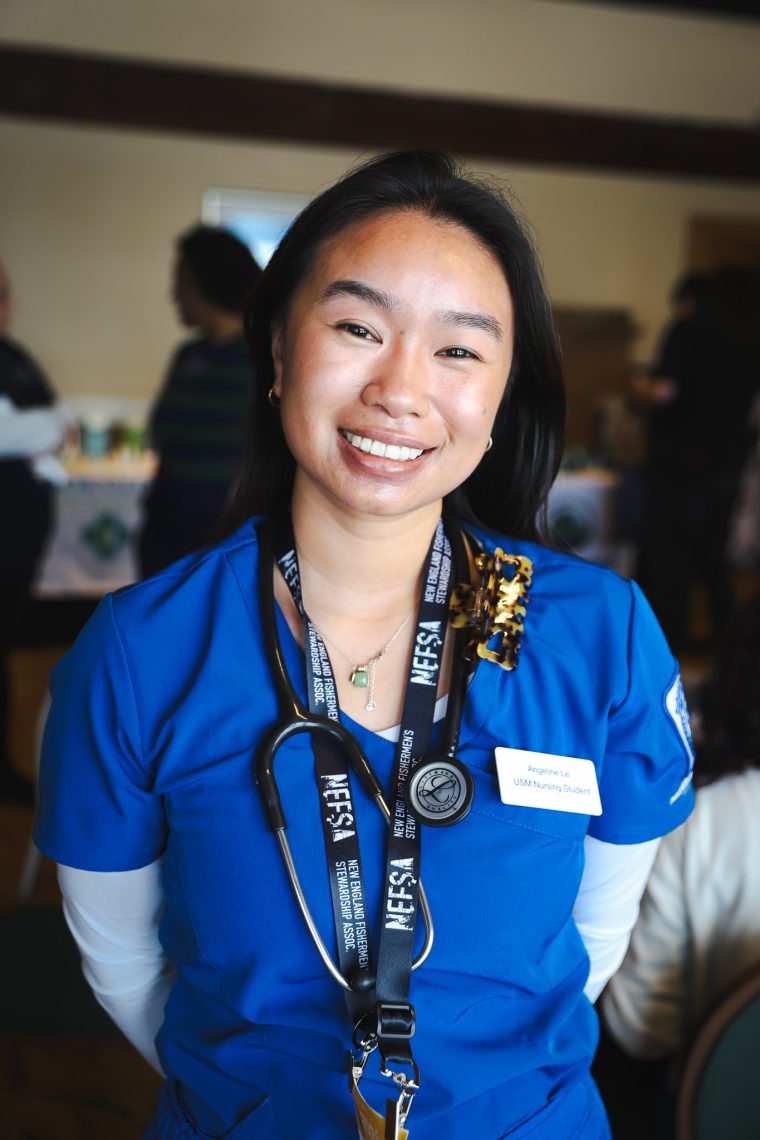
“It’s great practice to put things in simple terms so patients understand what’s going on,” said Angeline Le, who’s also a nursing student.
“This particular partnership has been one of the longest existing ones that we’ve had in the School of Nursing since 2002,” said Tara Casimir, associate professor of nursing at the University of Southern Maine. “The trust that has been established with the community has been really significant.”
The Maine Fishermen’s Forum serves as a key event for outreach, but it’s only one part of the program’s work. Throughout the spring semester, students travel to coastal and island communities including Long Island and Chebeague Island, working with local partners there to host health fairs, provide screenings, and support community health initiatives tailored to local needs.
“Often when we think about nursing, we think about hospital care,” Casimir said. “But community health nursing focuses on primary prevention and health promotion, really helping people help themselves.”
For students nearing graduation, experiences like the Fishermen’s Forum offer a chance to apply their training while supporting communities that play a central role in Maine’s coastal economy.