

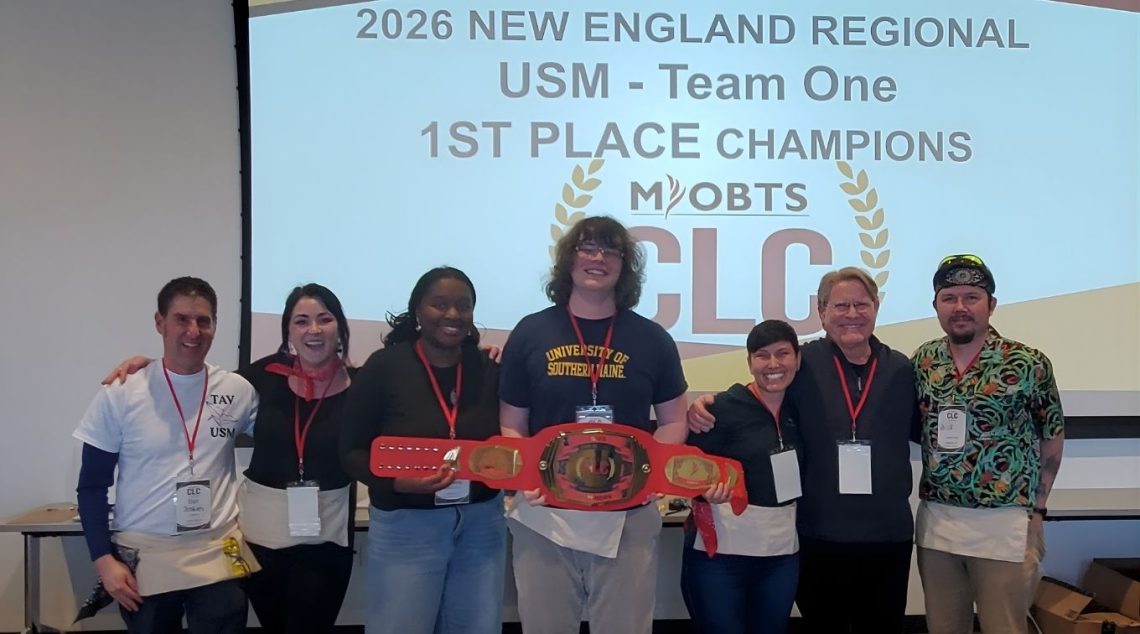
Two University of Southern Maine teams placed first and second at the New England Regional Collegiate Leadership Competition on March 28 at the McGoldrick Center for Career and Student Success in Portland, competing against teams from Bowdoin College, the University of Maine Farmington, and Wheaton College in a series of challenges focused on communication, problem-solving, and leadership.
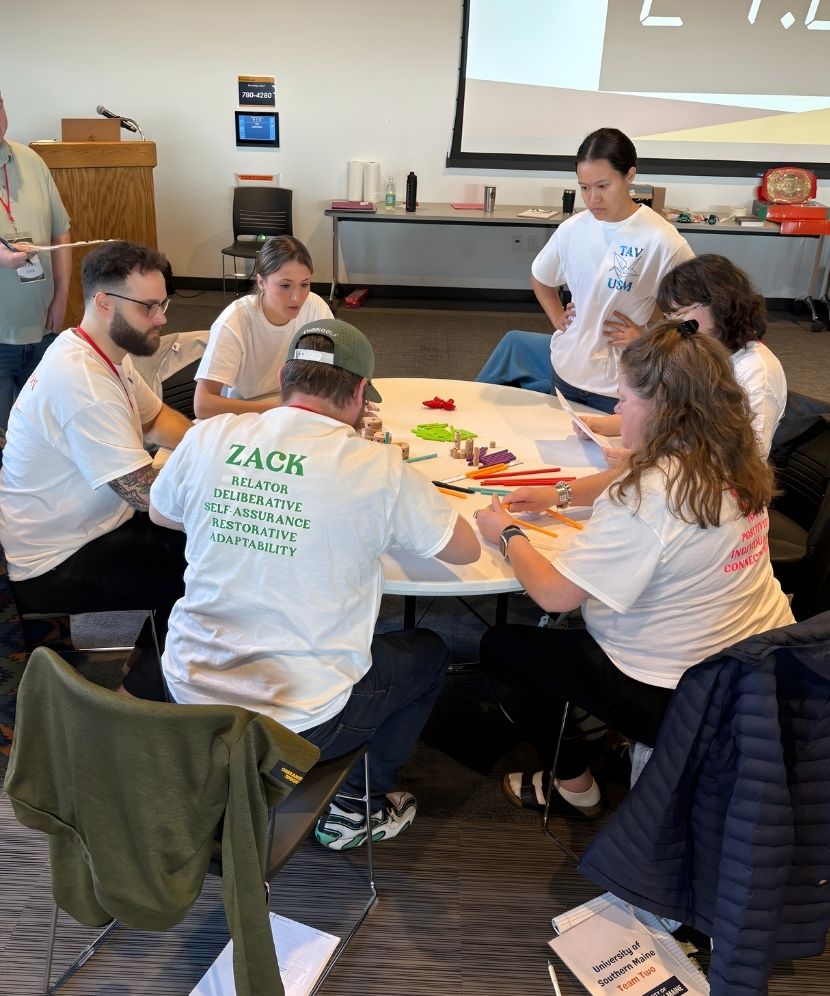
Dan Jenkins, Ph.D., professor of Leadership & Organizational Studies at USM, coached both teams and says the results reflect weeks of preparation. Twelve students met over 10 to 12 weeks to practice challenges, build team dynamics, and apply leadership concepts in real time.
“The growth is significant,” Jenkins said. “These students are very different when they come out. It’s really one of the most rewarding components of doing this as a faculty member and coach, seeing that growth in such a short time period.”
USM has participated in the competition since 2016 and hosted the regional event since 2023. Teams compete in six timed challenges and are evaluated on both their results and how effectively they work together.
Yangki Sherpa, a returning participant and nursing student at USM, said the experience felt more grounded the second time around.
“This year I definitely entered the experience with more confidence and calmness,” she said. “I also felt more comfortable stepping into the leadership role, and knowing how and when to intervene in a situation and when to step back and let the team tackle challenges.”
Sherpa said she’s already carried those lessons into clinical rotations.
“What I never realized about clinical rotations is the experience you get really depends on how good of a follower you are,” Sherpa said. “If you’re able to be supportive, advocate for yourself, and understand the balance of jumping in and observing, they are often much more enthusiastic to work with you.”
Throughout the competition, each team member rotated into a leadership role while supporting teammates in the others. Jenkins said that structure helps students understand both leadership and followership in practice.
One of the final challenges required students to rely on a single teammate’s verbal instructions to fold origami animals without being able to physically demonstrate the steps. Jenkins said the exercise tested patience, trust, and communication as much as problem-solving. One USM team completed the easier frog design and won the competition, while the other finished second by maintaining strong communication and teamwork despite a more difficult task.
“I was so proud of the students because they didn’t get aggravated with each other,” Jenkins said. “They just stuck to it. They were like, ‘We know this works. We know this process works. We listen to each other. We’re going to trust. We’re going to ask questions. We’re going to stay curious.’”
For Sherpa, one of the biggest takeaways is a deeper understanding of how strong teams operate.
“A good team will lack hierarchies based on traditional factors and understand that each person brings expertise,” Sherpa said. “We were all very open to learning and being led by each other.”
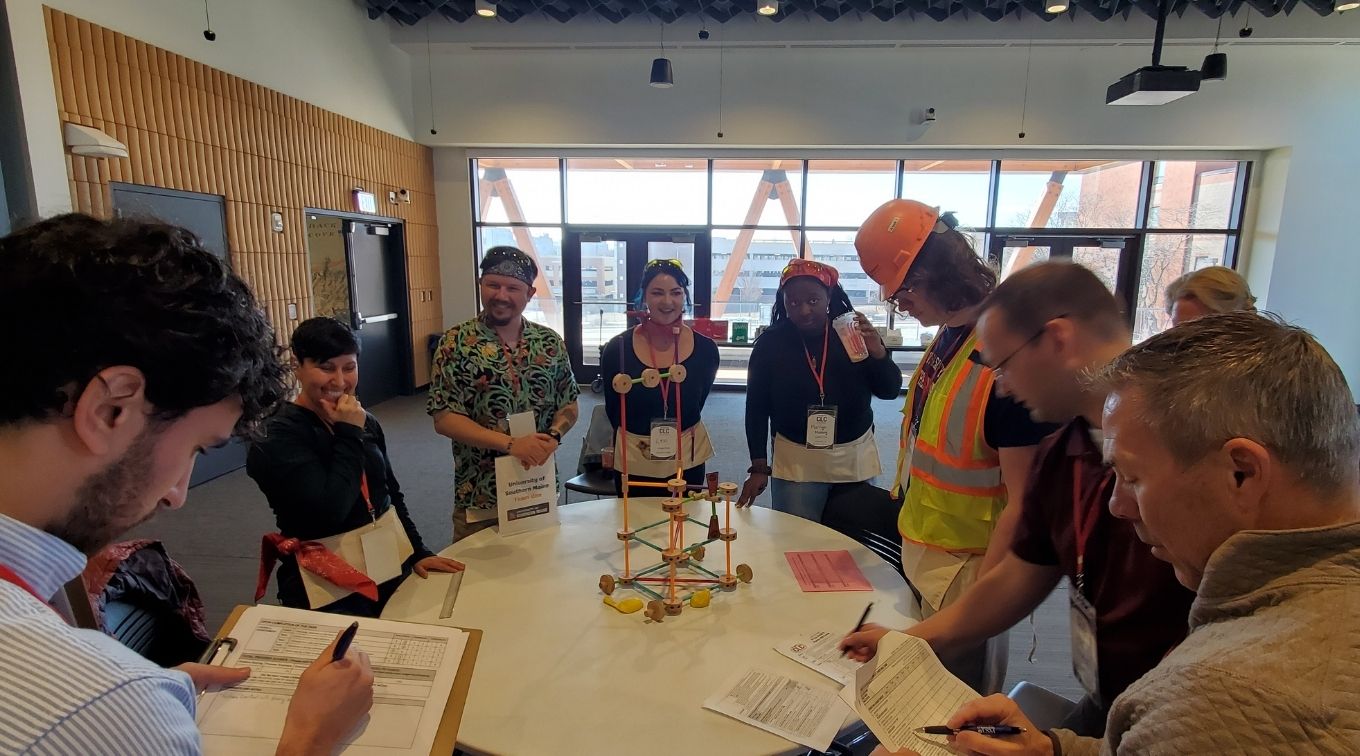
Jenkins said experiences like the collegiate leadership competition help students build communication, trust, and self-awareness that carry into academic, professional, and team-based settings.