
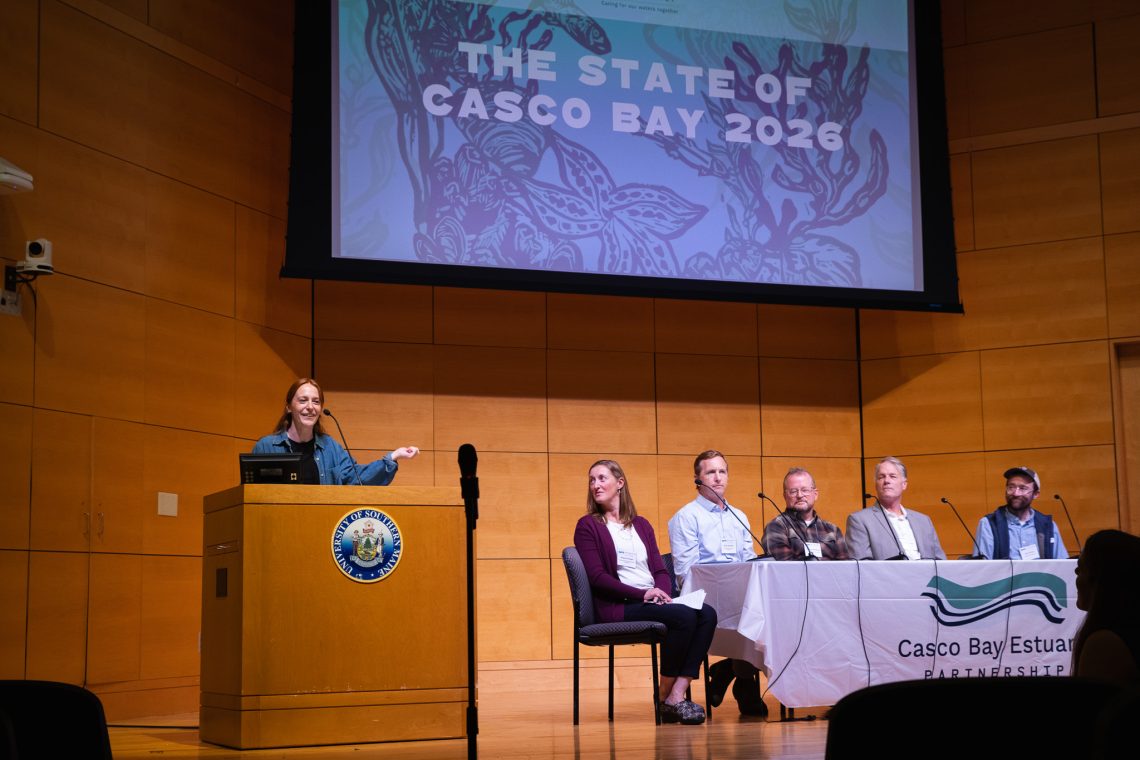
More than 200 scientists, community leaders, artists, faculty, and students gathered at the University of Southern Maine’s Abromson Community Education Center on Oct. 2 for State of Casco Bay 2026. The event marked the release of the Casco Bay Estuary Partnership’s (CBEP) latest report on the health of the bay and its watershed.
Every five years, CBEP publishes a report on the health of the bay, as required by the U.S. Environmental Protection Agency — the State of Casco Bay 2026 report is the seventh edition. Housed within USM’s Catherine Cutler Institute, the partnership is one of just 28 National Estuary Programs in the country.
What’s at stake for Casco Bay
Casco Bay is a major driver of the regional economy. According to Curtis Bohlen, director of CBEP, roughly 10% of jobs in Cumberland County are directly connected to the ocean — a sector worth about $1 billion a year. Much of that activity depends on keeping the bay healthy.
The 2026 report finds that Casco Bay remains in relatively good health. The bay’s strong tides, combined with a watershed that is still 61% forested, help protect water quality and support its ecosystems.
Changes on land continue to leave a mark. Population growth and development continue to drive a steady loss of forest and farmland, urban streams face persistent water quality problems, and eelgrass meadows continue to shrink. While these trends pose real challenges, people across the region are responding.
“What we’re seeing is that communities are really stepping up and investing in Casco Bay, in clean water, and in their own resilience to changing climate, extreme storms, and rising waters,” Bohlen said.
Across the watershed, towns, land trusts, and nonprofits are reducing pollution, protecting land, and restoring habitat. CBEP sits at the center of that network.
A collaborative effort
This year’s report drew on data from 34 organizations, and 60 peer reviewers provided detailed feedback on its chapters.
“As the folks pulling together the report, we depend on the knowledge and insight of the people we work with across the region,” Bohlen said.
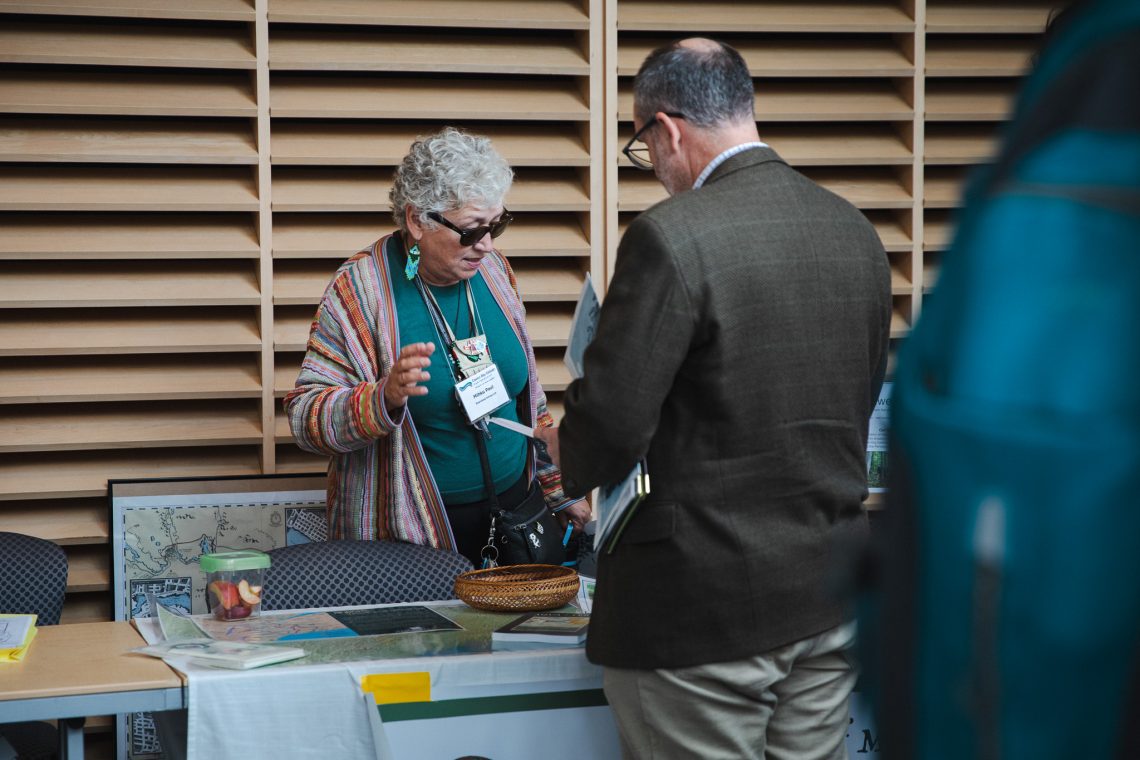
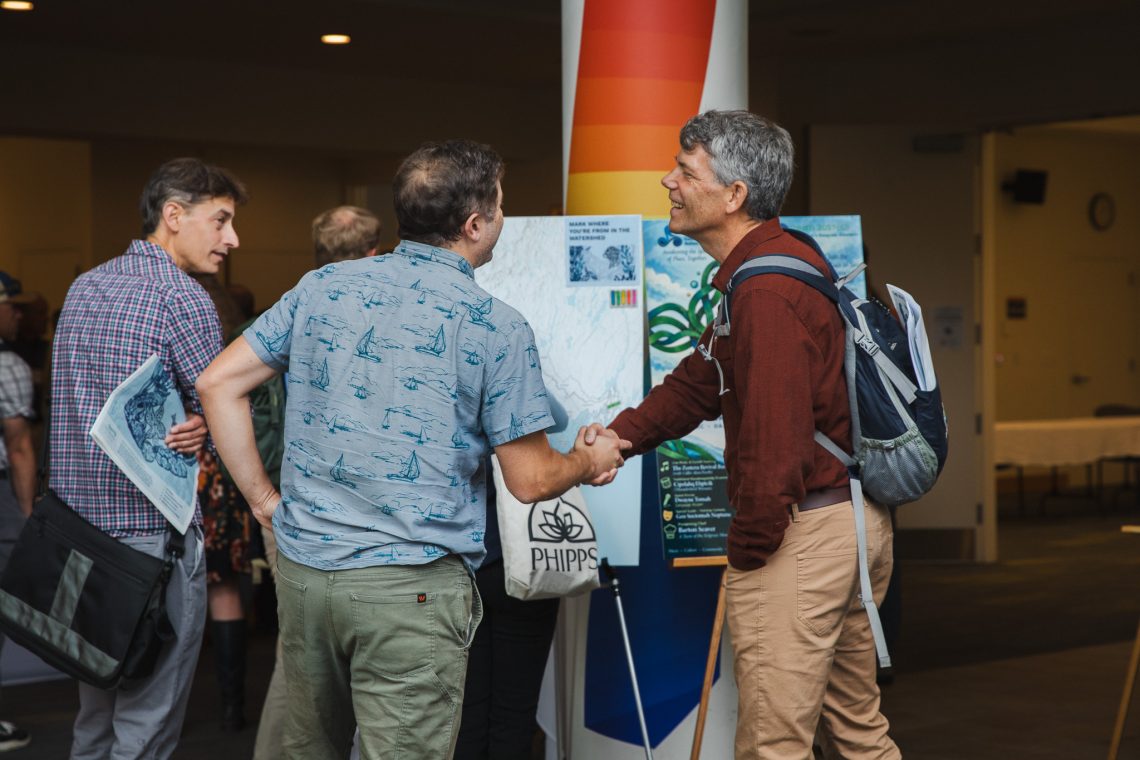
That spirit of collaboration shaped the event itself. Alongside research presentations and a poster session, the program blended science, art, and community conversation through a range of talks, panels, and performances. Students attended for free, and at every panel, they were invited to ask the first question.
“We really wanted students in the room,” Bohlen said. “They’re the people who are going to pick up the work we’re doing.”
Rooted at USM
Based at USM, CBEP offers students access to hands-on, real-world environmental work happening throughout Maine. The partnership hires student interns and graduate assistants, funds student research, and connects students with the organizations working on everything from salt marsh restoration to fish passage rehabilitation across the region.
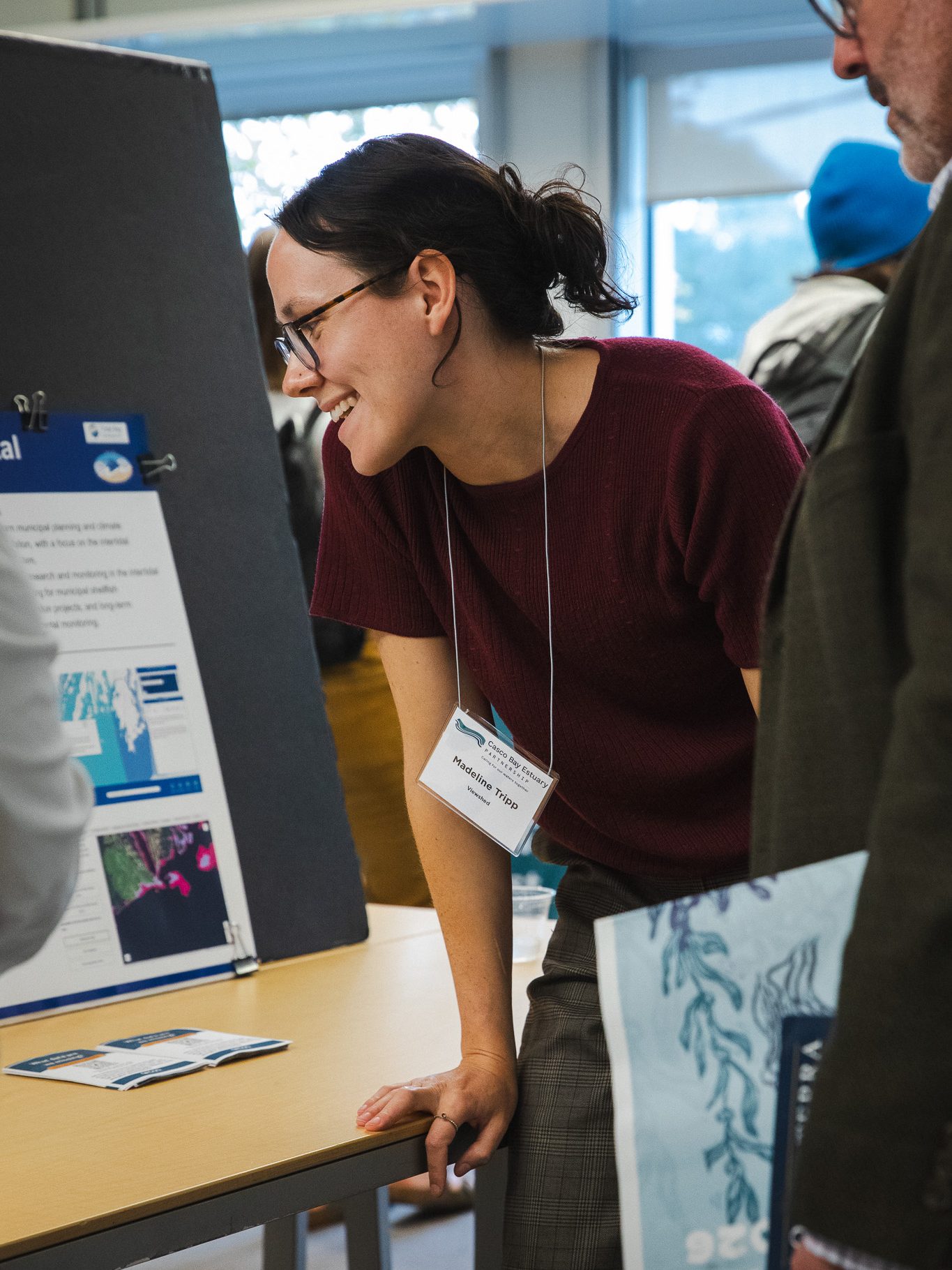
“We bring this ability to tie student work directly to real-world problems on the ground,” Bohlen said. “Our team knows the technical issues, but they also know the people. Knowing the people is the piece that I think we bring that is rare on a university campus.”
CBEP has been based at USM since the early 1990s. While many other National Estuary Programs are housed within state or federal agencies or operate as independent nonprofits, being part of a university gives CBEP a balance of institutional support and independence.
USM faculty have long been central to that work, and several helped lead conversations at the Oct. 2 event, including Dr. Firooza Pavri, associate dean of the Muskie School, and Professor Emeritus of Art Michael Shaughnessy.
While the report looks back on the past five years, Bohlen said the event is meant to look ahead, drawing on the knowledge and perspectives of everyone in the room — from longtime partners to students just entering the field.
“Water defines our region,” Bohlen said in his remarks. “We are all people of the river, people of the lake, people of the bay, even if sometimes we forget.”