

Collection of suggested resource and reference material. This includes LEGO and LEGO robotics guides, presentations, external links, and YouTube playlists.
LEGO Robotics Tutorials and Guides
PDFs, external links, and YouTube videos with tutorials and guides for LEGO NXT, EV3, and SPIKE Prime robotics platforms.
Girls & Women in Science and Engineering
These pages serve to provide a starting point for young researchers who are looking for great role models in the fields of science, engineering, inventing, and computer science. Much of this material comes directly from Wikipedia, but at the bottom of each entry in Wikipedia you can find other sources for the work and should look at some of those as well. Good luck hunting up others.
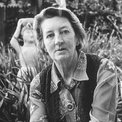
Mary Leakey(Wikipedia, opens in a new window). Born in 1913, Mary was a British paleoanthropologist. Mary and Louis Leakey are two of the most renowned anthropologists. Their work in the Olduvai gorge in Eastern Africa changed the way we think about where we came from as a species. Visit the Leakey Foundation(opens in a new window) for more information.
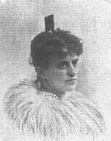
Helen Blanchard(Wikipedia, opens in a new window). Born in Portland Maine in 1840. Helen invented the zig-zag sewing machine and had 28 patents during her career as an inventor.
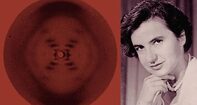
Rosalind Franklin(Wikipedia, opens in a new window). Born in 1920 in Notting Hill, London, Rosalind was a chemist and X-ray crystallographer and was one of the key players in understanding what the structure of DNA was (double helix). Likely would have received part of the 1962 Nobel Prize for the work on the DNA structure, but died in 1958 at the age of 37.
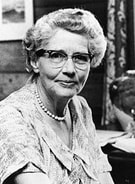
Helen B. Taussig(Wikipedia, opens in a new window). Born in Cambridge, Massachusetts in 1898, Dr. Taussig was a renowned cardiologist, specializing in pediatric cardiology. Along with Alfred Blalock and Vivien Thomas, Dr. Taussig was instrumental in developing a treatment for cyanotic heart defects (often resulting in blue baby syndrome). She was also instrumental in banning thalidomide, a sleeping drug that was resulting in phocomelia in the babies (abnormal limbs). She was the first woman and the first pediatrician to serve as the head of the American Medical Association and received the Presidential Medal of Freedom in 1964.
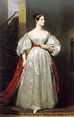
Ada Lovelace(Wikipedia, opens in a new window). Born in 1815 in England, Ada was a mathematician and worked closely with Charles Babbage(Wikipedia, opens in a new window) on programming the Difference Engine, the first advanced mechanical computer.
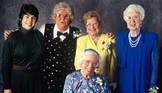
The ENIAC Programmers(opens in a new window) of the 1940 and 50s. Kay McNulty, Betty Jean Jennings (Jean Bartik), Betty Snyder, Marlyn Wescoff, Fran Bilas and Ruth Lichterman (not all shown in image).
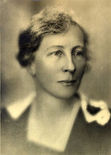
Lilian Gilbreth(Wikipedia, opens in a new window). Born in 1878 in Oakland California, Lilian married Frank Gilbreth of Fairfield Maine. Lillian was arguably one of the earliest practicing woman engineers in the United States and earned numerous degrees including her Ph.D. from Brown University.
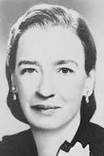
Grace Hopper(Wikipedia, opens in a new window). Born in 1906, Grace was one of this countries earliest and most noted computer scientists. First enlisted in the Navy in 1943 during WWII and while occasionally retired, was finally retired in 1986 after almost 43 years of service and at the rank of Rear Admiral. Hopper worked with the early Harvard Mark I(Wikipedia, opens in a new window) computer and was one of the inventors of the COBOL programming language(Wikipedia, opens in a new window).
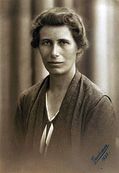
Inge Lehmann(Wikipedia, opens in a new window). Born 1888 in Denmark, Lehmann studied mathematics and physical science and received a Magisterii (Master’s) degree in both of these fields. Lehmann worked in the field of geodetics engineering(Wikipedia, opens in a new window) for most of her career and in 1936 postulated in a paper that the earth had a distinct inner core that was different than the mantle of the earth. It had previously been thought that the entire center of the planet was molten.
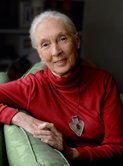
Dr. Jane Morris Goodall(Wikipedia, opens in a new window). Born 1934, Jane is the world’s foremost expert on chimpanzees. Dr. Goodall has spent over 45 years studying chimpanzees in the Gombe Stream National Park in Tanzania, Africa. Visit janegoodall.org for more information.
Sydney Dittman. Sydney is on record as being the youngest person to receive a US Patent. She received a patent for an invention that made it easier to grip circular knobs, such as on drawers or cabinet doors.
Women in Computer Science: Getting involved in STEM(opens in a new window)
Great online article for teachers; parents; guidance counselors, and girls interested in the Computer fields.
FabFems(opens in a new window)
Find role models from around the world
GoGrad: Women and Master’s Degrees
(opens in a new window)Includes profiles of women; their degrees; some historical background; and has a lot of information about getting a graduate degree, particularly using online resources.
Association for Women in Mathematics
AWM Home page(opens in a new window)
(opens in a new window)
Society of Women Engineers(opens in a new window)
Others to add:
Diane Fossey, Gorilla researcher and advocate
Merit-Ptah, physician, 2700 BCE
Nancy Grace Roman, 1925, American astronomer
Rachel Carson, 1907, Marine biologist, author, conservationist
Dorothy Hodgkin, 1910, Nobel prize winning British Biochemist
Jocelyn Bell Burnell, 1947, Irish astrophysicist
Sally Ride, 1951, American physicist and astronaut. First American woman in space.
Boys and Men in Science
These pages serve to provide a starting point for young researchers who are looking for great role models in the fields of science, engineering, inventing, and computer science. Much of this material comes directly from Wikipedia, but at the bottom of each entry in Wikipedia you can find other sources for the work and should look at some of those as well. Good luck hunting up others.
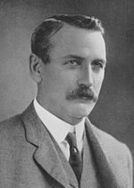
John Frank Stevens(Wikipedia, opens in a new window). An engineer from West Gardiner, Maine. Stevens attended the Maine State Normal School (now University of Maine at Farmington). Stevens was instrumental in his work with the Great Northern Railroad(Wikipedia, opens in a new window) (where he rose from a location engineer to the general manager) and for serving as 3 years as the Chief Engineer for the Panama Canal(Wikipedia, opens in a new window) project during its construction.
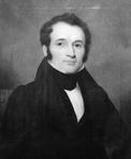
Senator John Ruggles(Wikipedia, opens in a new window). Born in Thomaston, Maine in 1789, John Ruggles was issued Patent #1 for his invention (improvement) of a wheel for railroads. The Senator is also known as the “father of the US Patent Office” for working to establish the patenting system here in the United States. John was not issued the first patent, a number of patents were issues prior to his in 1836, but they were not numbered.
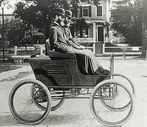
The Stanley Brothers(Wikipedia, opens in a new window). Francis and Freelan Stanley, from Kingfield, Maine, built up the world’s largest automobile company until around 1908, when the internal combustion engine took over the field.
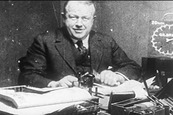
Frank Gilbreth, Sr.(Wikipedia, opens in a new window) Born in Fairfield, Maine in 1864, John was a time-motion and efficiency expert. Made famous by the book and film “Cheaper by the Dozen” of 1950. Married to famous psychologist and industrial engineer Lillian Gilbreth(Wikipedia, opens in a new window). The couple had 12 children.
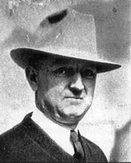
Frank Crowe(Wikipedia, opens in a new window). Chief engineer for the Hoover Dam (largest dam ever built at the time). Graduated from the University of Maine in Orono.
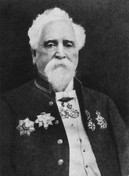
Sir Hiram Maxim(Wikipedia, opens in a new window). Inventor of smokeless gunpowder and the Maxim machine gun. From Sangerville, Maine. Also known for building a railed airplane that lifted off the ground, but was restrained by chains to prevent it from going too high (more than a few inches) and likely crashing.
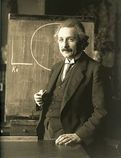
Albert Einstein. Born in 1879, Dr. Einstein was one of the twenty centuries most renowned scientists. Developing the General Theory of Relativity (Wikipedia, opens in a new window)and the E=mC^2(Wikipedia, opens in a new window) formula to relate how energy and mass were connected.
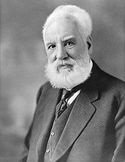
Alexander Graham Bell(Wikipedia, opens in a new window). Born in 1847, Bell was an American scientist, inventor, and engineer. Bell is credited with many inventions – his patent for the telephone(Wikipedia, opens in a new window) in 1876 is the widest known. Bells’ first invention was at the age of 12 where he helped design and build a wheat dehusking machine.
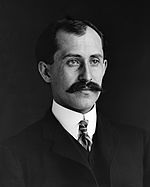
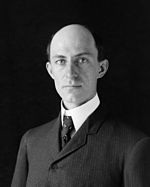
Orville and Wilbur Wright(Wikipedia, opens in a new window). Noted as the first humans to achieve powered flight in 1903 with the Wright Flyer I(Wikipedia, opens in a new window). But there is much dispute in the aviation world if the Wright brothers were the first or if Gustave Whitehead(Wikipedia, opens in a new window) predated their flight.
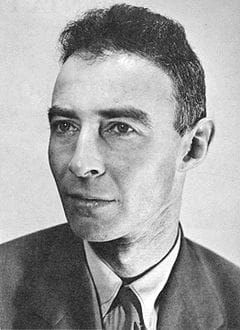
J. Robert Oppenheimer(Wikipedia, opens in a new window). Born in 1904, J. Robert was a theoretical physicist. Head of the Los Alamos Laboratory during WWII, location where the atomic bombs were first developed.
Online Resources
The following information does not include any form of endorsement from STEM Outreach or its staff. We only post here if we have already checked to make sure it is not an obviously fraudulent site, but use due diligence with anything as important as your child’s education or your educational expenses.