

The 2027-28 Free Application for Federal Student Aid (FAFSA) is now open, and whether you’re applying to college for the first time or returning for another year, completing it is one of the most important steps you can take to make your education more affordable.
But where do you start, what information do you need, and what happens after you hit submit?
We sat down with Elizabeth Sarazin, the University of Southern Maine’s director of financial aid, to answer some of the most common questions students and families have about FAFSA — and share a few tips to make the process easier.
FAFSA basics: Why you should apply
Q.
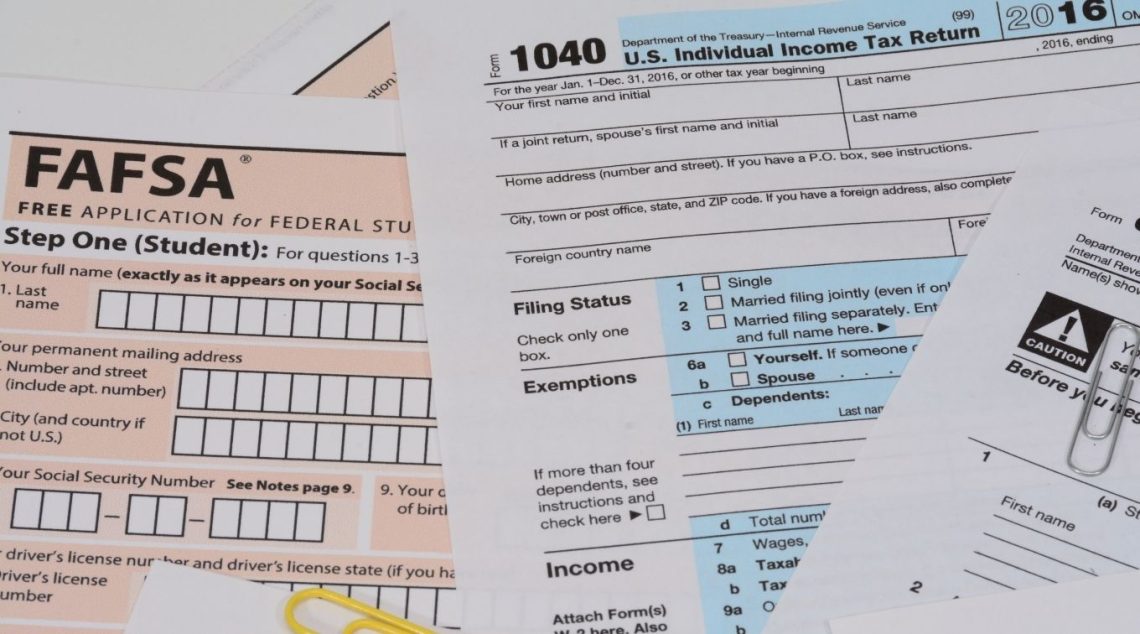
What is the FAFSA and why should a student fill it out?
The FAFSA is the gateway to grants, work-study, and federal student loans. The form is available on an official government website, and applying is free. Be wary of third-party websites that charge a fee. Once you complete the form, it calculates the Student Aid Index, and we use that to build your offer and figure out how best to supplement it.
Any school that offers federal financial aid, including grant money like the Pell Grant, subsidized and unsubsidized federal loans, and work-study, will need a FAFSA.
Q.
What is the Student Aid Index, and how does it shape a student’s offer?
The FAFSA runs all the IRS and other information through a formula and produces a number called the Student Aid Index, or SAI. Need-based aid is offered based on that number. Some aid is a sliding scale, and some is yes-or-no.
The Maine State Grant has a cutoff, so you either get it or you don’t. The Pell Grant is a sliding scale. For things like our supplemental grant, we use a formula that spreads funds as evenly as possible based on need, considering the cost of attending and each student’s SAI, to give everyone an equitable amount. So that SAI is really important for all of it.
Q:
Why do some students and families skip the FAFSA?
Some families don’t file because they know they have a fairly healthy income, which in some cases disqualifies them from grants and other subsidies, but they don’t realize they still need the FAFSA to access federal student loans.
Then there’s a group of students on the other end who feel like it’s just not attainable, like the FAFSA is one more thing that isn’t going to work out.
Those are the folks high schools work really well with, and the Finance Authority of Maine (FAME) helps spread the word and runs FAFSA webinars and help events. Many students, especially strong high school students, can cover most of their costs depending on where they go and the choices they make. Many grants are available for students with need.
Before you begin: What you’ll need
Q.
What do students need before starting the FAFSA?
The FAFSA now pulls a lot of information directly from the IRS, so the long list of documents you used to need is no longer required. The biggest thing to do first is create your login and password on the federal website: your FSA ID. That process involves more than just creating a username and password. The government verifies you’re a real person who matches Social Security records and runs other checks, so setting it up ahead of time saves you and your parents time later.
Have a couple of things ready just in case: a photo ID or passport — since there’s now an identity verification step that most students sail right through, but some are asked to complete — and the balance of your checking and savings accounts, which the form may ask for depending on your situation. If you’re a dependent student, chat with your parents to decide whose information you’ll use and have their email address handy, because they will receive an email directly for their part.
Q.
Should a student use their own email and login instead of a parent’s?
Yes, and this one is important. Each person needs their own FSA ID tied to a distinct email address, and the student’s can’t match the parent’s. It shouldn’t be your high school email address since you will likely lose access to that at some point. A lot of traditional-age students use their high school account, so if you haven’t set up a personal email yet, do it as soon as possible, because you’ll need it to set up your FSA ID.
The student does the student part, and the parent does the parent part, and everyone verifies their own identity. Make a note of the logins you create, because resetting them at the federal level later can be complicated.
Q.
The newer FAFSA uses the term “contributors.” Who counts as a contributor?
A contributor is anyone whose income needs to be on the FAFSA. For a dependent student, that includes a parent and their spouse if applicable, but it’s broader than that. Anyone whose information belongs on the form must give permission for their information to be included. So if your parents filed their taxes separately, or you’re married and filed separately, you may need one or two other people to consent to this release.
The FAFSA really wants that IRS connection. There’s no longer an option to say no and type the numbers in yourself. That’s why inviting your contributors early keeps everything moving.
Top tips for filling out your FAFSA
Q.
What are the most common mistakes you see on the form itself?
Honestly, the form has gotten so much simpler that we don’t see as many mistakes as we used to. The one that still comes up is students marking themselves as independent because they have people who depend on them. That has a very narrow definition. If your extended family shares a living space, or your parent asks you to contribute to rent, that doesn’t mean you have legal dependents. Just because people rely on you doesn’t make them your legal dependents.
When a student checks that box without realizing what it means, the form doesn’t ask for parent information, so a lot of it comes out wrong, and we have to backtrack. The FAFSA makes it tricky to change those answers, so it’s worth getting them right the first time.
The mistakes we see now are less about understanding your tax return and more about understanding what the questions are trying to ask. We help students through those situations all the time.
Q.
What does the FAFSA look like for older or independent students?
A lot of it looks the same, but it’s less complicated because you don’t have as many contributors. The FAFSA calculation is a little different for independent students because it recognizes that you’re supporting yourself. A dependent student who earned a good chunk of money over the summer will see most of that counted as available for school. An independent student gets an income protection allowance, which assumes you need money to live.
Either way, I encourage everybody to fill out a FAFSA. Even if you’re not expecting federal aid and don’t want loans, you may apply for scholarships that use FAFSA information to compare you with other applicants, and you won’t know where you stand in that pool until you file. It’s free, the government already has most of the information, and it’s good to get it out of the way early if you’re planning to go to school that year.
Q.
How can a student make sure USM actually receives their FAFSA?
The form has a section where you list the schools you want your FAFSA sent to, and you’re not limited to one or even five. You can find USM in the dropdown (which can be a pain), or you can enter our school code: 009762.
Financial aid at USM: Deadlines and eligibility
Q.
What is the key deadline to keep in mind?
We have a priority deadline that gives students the best opportunity to receive financial aid. Students who file by May 1, 2027 for the 2027-28 academic year will be considered for the full range of available aid, which is awarded equitably based on financial need. Filing by the deadline doesn’t guarantee a specific amount of aid, but it does mean students will be considered before certain funds, especially grants, run out. After that, some funding may no longer be available, and offers may start to look smaller.
Q.
Does aid cover only fall and spring semesters, or does it include summer too?
This differs by college, even within the University of Maine System, so that can be confusing. At USM, summer is the first semester of our financial aid year. If you file your 2027-28 FAFSA, we will be able to calculate your eligibility for summer 2027, fall 2027, and spring 2028.
Our initial offers all assume full-time enrollment (at least 12 credits per semester for undergraduate students and at least six credits per semester for graduate students), because we have to start somewhere. When you go in to accept your aid, we ask you to update us on your plans. Will you be here in the summer? Will you be part-time? Then we adjust the offer to match.
After you apply: What happens next?

Q.
Once a student’s FAFSA reaches your office, what does your team do with it?
When we get the FAFSA, the federal government may flag things for further review. They can add comments telling us to double-check a student’s tax return or collect certain documents to verify information on the FAFSA. Basically, they give us directions, and we follow a process to evaluate everything.
From there, we can post checklist items to a student’s to-do list in MaineStreet. We also send an email, and for new students, we send a paper letter as well. If we’re missing information we need to put together a financial aid offer, we try to get that out to students as soon as possible so they have plenty of time to work on it.
Q.
What can students expect in the days and weeks after submitting?
Short answer: it depends partly on how early you file.
For incoming students, we aim to put out our first financial aid offers by early December. For other students, it’s usually later, maybe into January, depending on what we’re waiting on and whether there are any software issues or federal rule changes. If we need more information from you, you should hear from us within a couple of weeks of submission, so even the early birds should see those communications by November.
Q.
Can a student’s parent or family member talk to USM about financial aid?
The Office of Registration and Scheduling Services handles a form called the consent to release information form. Federal privacy law is the biggest restriction on our ability to talk with parents and other advocates. If someone calls on behalf of a student and we don’t have that form, we can’t say much, even if the student is a dependent and that person is paying the bill. We strongly encourage incoming students, especially traditional-age students, to complete it if they want someone to speak on their behalf.
Q.
Is there anything students need to do after submitting?
If you plan to take out loans, you’ll need to complete a few extra steps: entrance counseling and the Master Promissory Note. You complete both on the same website as the FAFSA: studentaid.gov. Entrance counseling walks you through what you’re getting into, and the Master Promissory Note is the legal agreement stating you understand this is a loan and that you’ll pay it back.
Completing the FAFSA doesn’t automatically mean you’ll receive federal student loans. Our office uses your FAFSA information to put together your financial aid offer, including your loan amounts. You’ll then need to accept any loans you want to take out. Sometimes students forget to accept their loans at all, and sometimes they accept them but never finish those two steps.
Students also forget to tell us when they plan to be part-time. If we don’t hear until the end of add/drop, we can’t fix their aid until then, which is after they want their money. The sooner we know your plans, the better. And, most importantly, you do need to refile the FAFSA every year. The federal open date is usually Oct. 1.
Where to get help
Q:
What’s your best advice for students preparing for the FAFSA?
Mostly, I want to get the word out that the FAFSA shouldn’t be that difficult. It’s gotten much easier in recent years, and I really recommend that everybody do it. If you need help, your high school guidance counselor is probably happy to help, FAME usually runs FAFSA webinars and help events, and our office is here to answer your questions. We can’t always log in and walk through the whole thing with you, but we can set up a Zoom where you share your screen. Especially early in the process, ask for help when you need it.
The official government site is studentaid.gov, and they have great answers to common questions and a chatbot that’s often faster than the phone line. It’s also where you file the FAFSA and later complete your entrance counseling and Master Promissory Note.