

February 5 – March 21, 2026
Crewe Center for the Arts
111 Bedford Street
Portland, Maine 04103
Hours
|
Monday – Friday |
9 am – 5 pm |
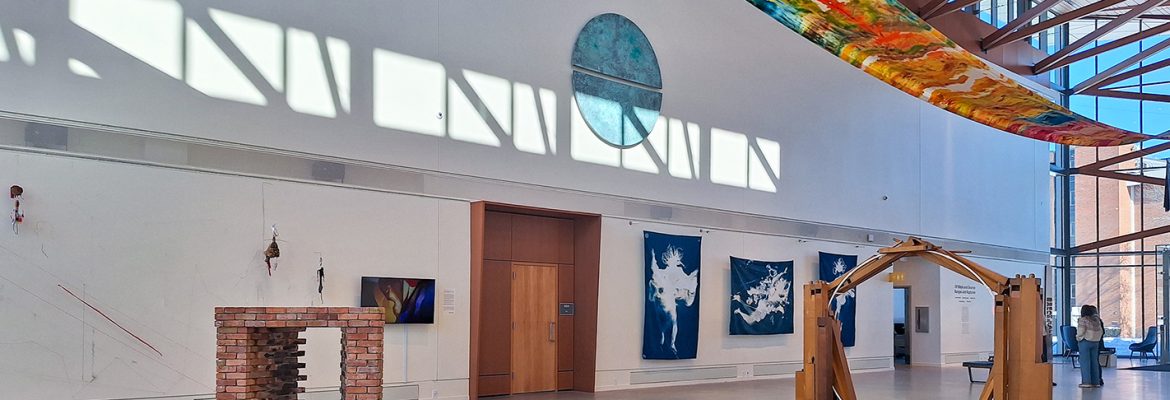
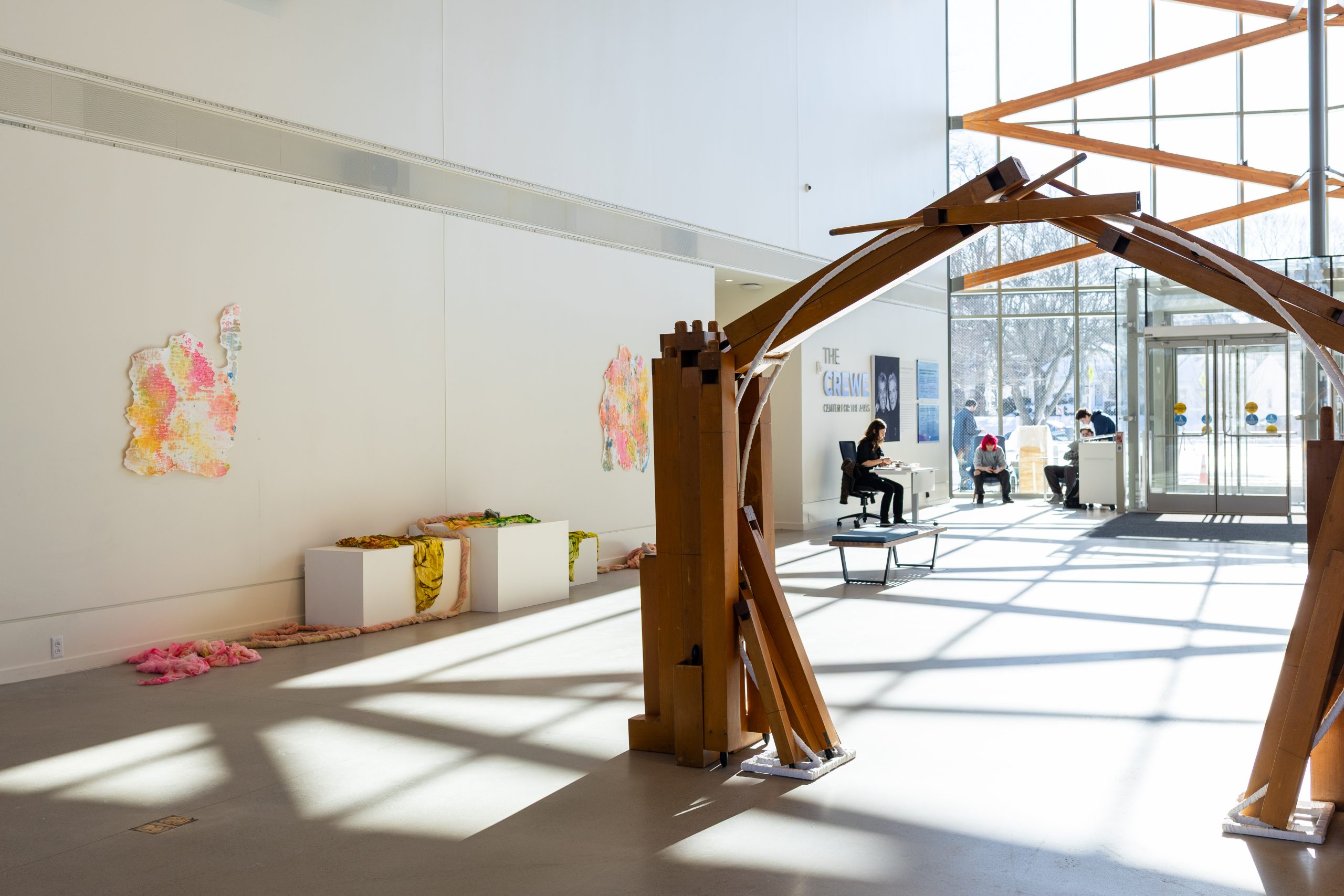
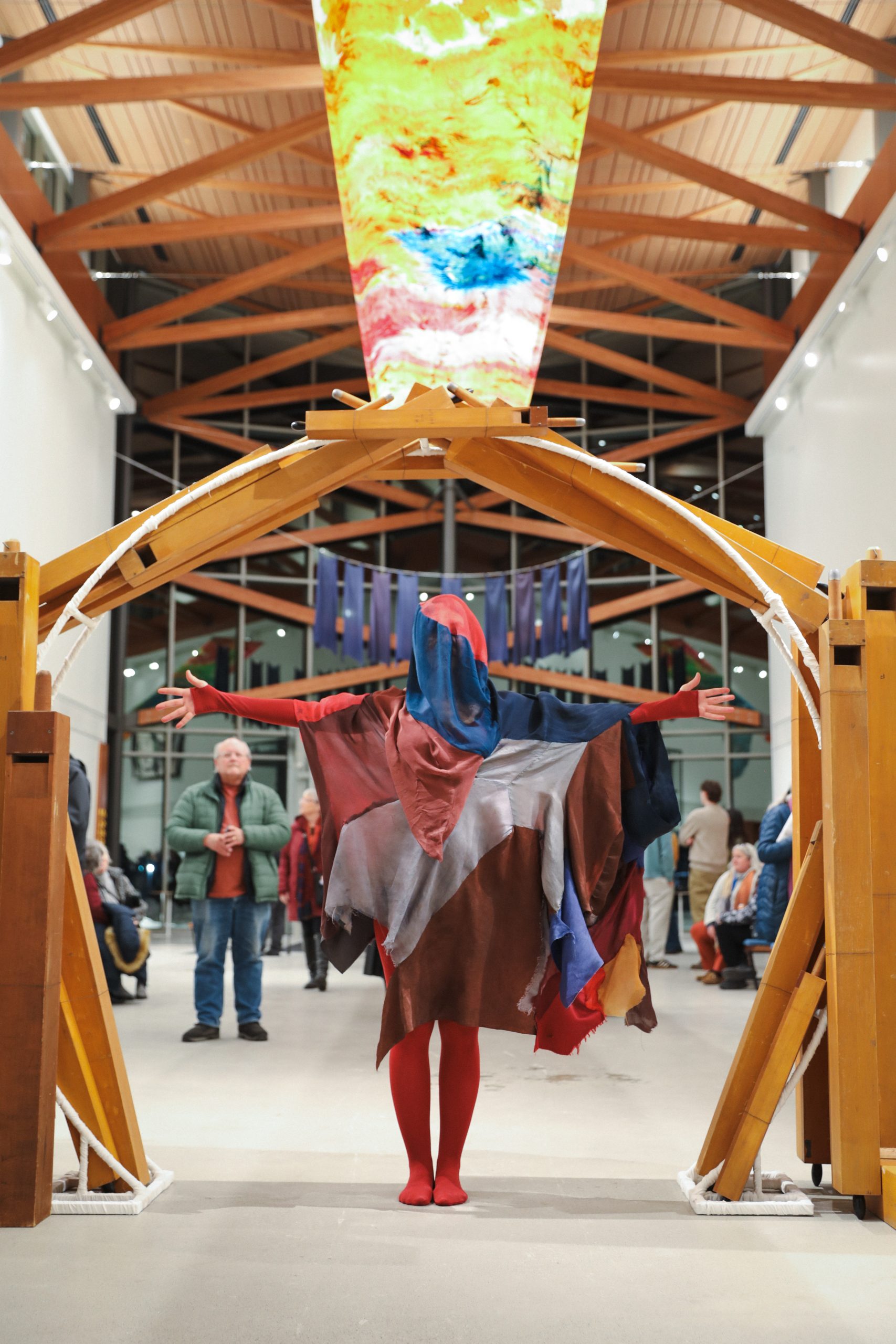
Of Sibyls and Source: Ranges and Ruptures is an exhibition of sculpture, textiles, video, and live performances that investigates ideas surrounding oracles, community, mapping, landscape, and geo-mythic space. Moving through the world as artists, we become strangers and pilgrims in the broad sense, separated from home or daily life and traversing physical and cultural landscapes. These new locations awaken a sense of place when we are out-of-place. Sibyls, or oracles, are born of a rupture, an opening in the earth that speaks to something profound that we may feel intensely, but cannot fully understand.
Of Sibyls and Source: Ranges and Ruptures is a collection of work made in dialogue with the sites of Monti Sibillini National Park in Umbria, Italy, and Acadia National Park in Maine. These creative gestures tenderly explore the possibility in timespace for mountains to touch, for springs to flow into each other, and for horizons to merge.
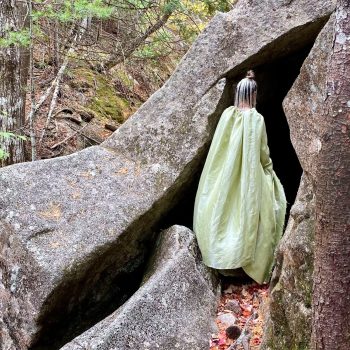
Meet the artists
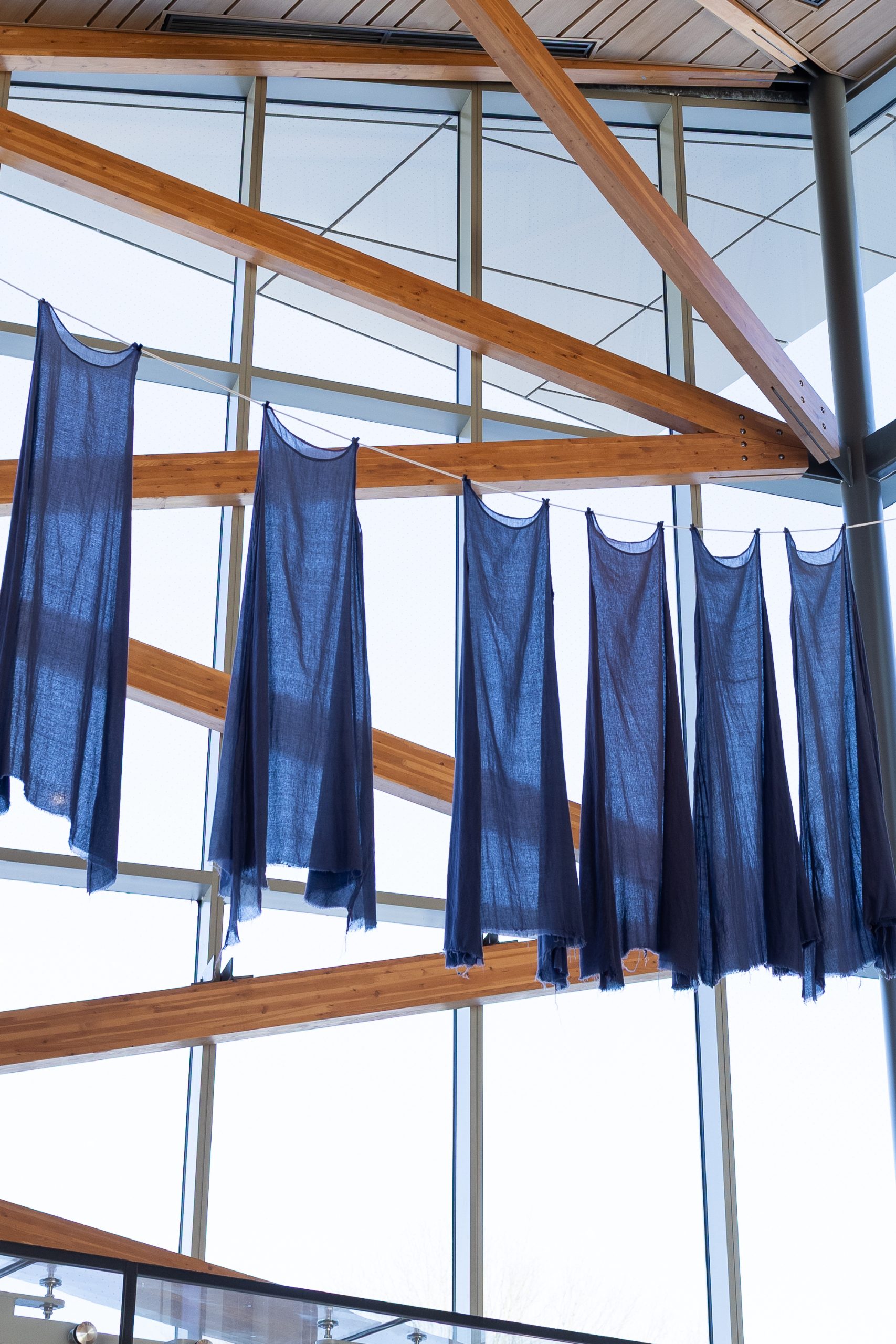
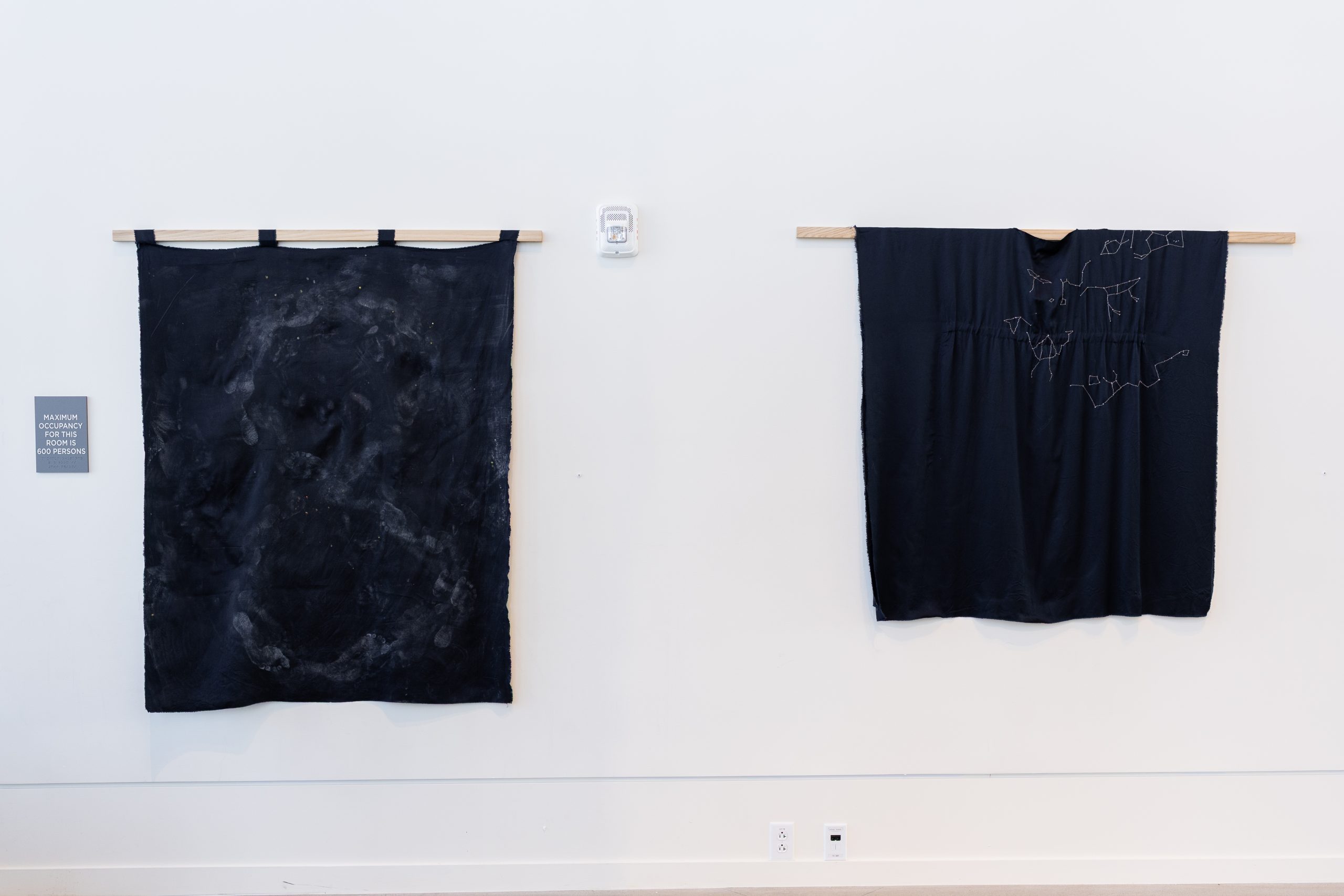
Susan Bickford is a Maine artist working with ecosomatics within the tenants of deep ecology utilizing performance, video, textiles and installation. “Invoking the Muses”: nine hand made dresses, “Beloved Surrender” (video), “Nut’s Garment”, “I am the Bridge” and “Resounding Infinity” (improvisational performance ensemble + astrology reading with Andrea Goodman and Robin Lane) are her offerings for this show. Bickford holds a BFA/BID from RISD and an MFA from MECA&D. She has been teaching art at UMA since 2003. Selected exhibitions include The Portland Museum of Art Biennial, SPACE Gallery, Bates College IMStudio, SPEEDWELL Gallery, The Maine International Film Festival, the Picnic Pavillion, Venice Italy.
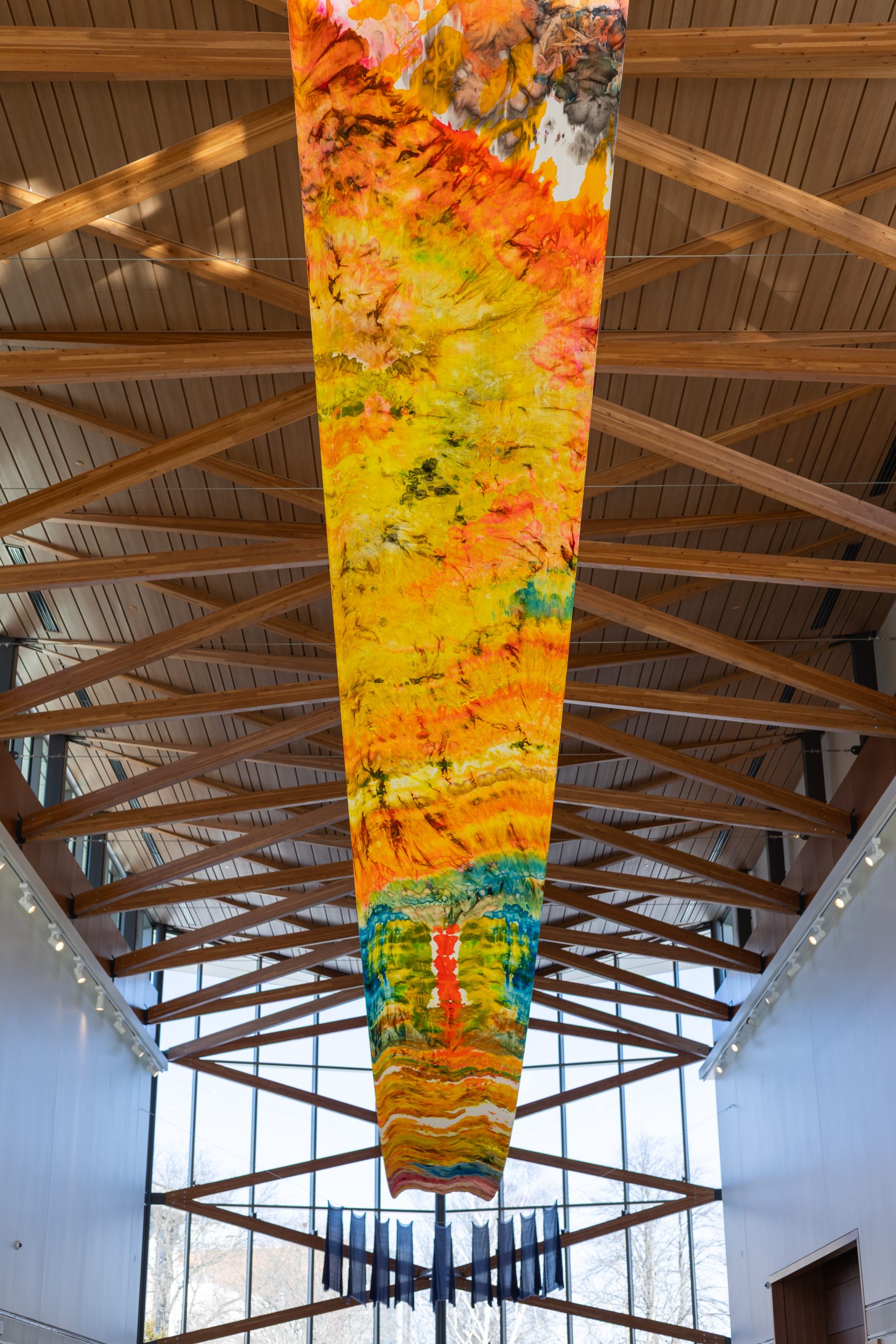
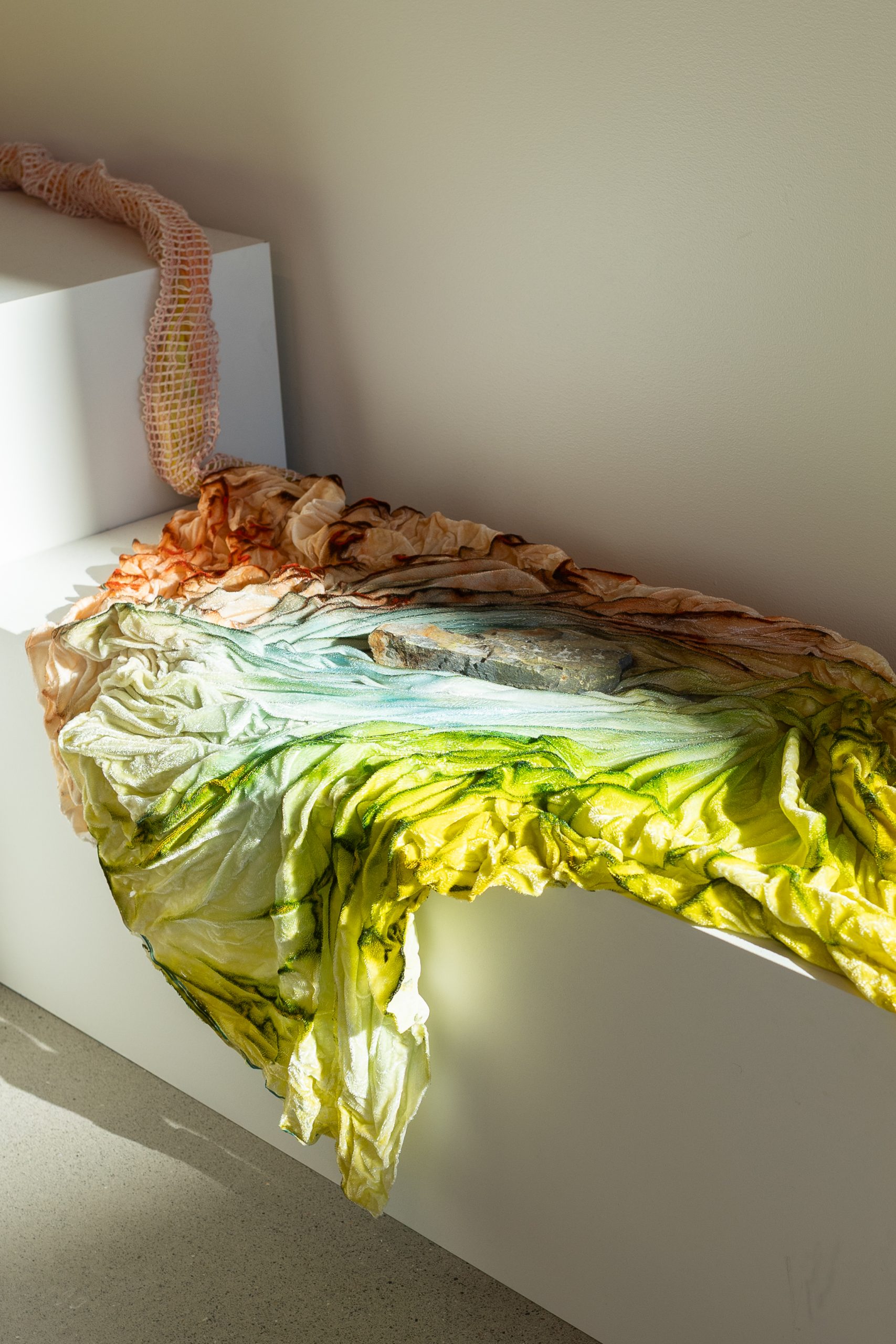
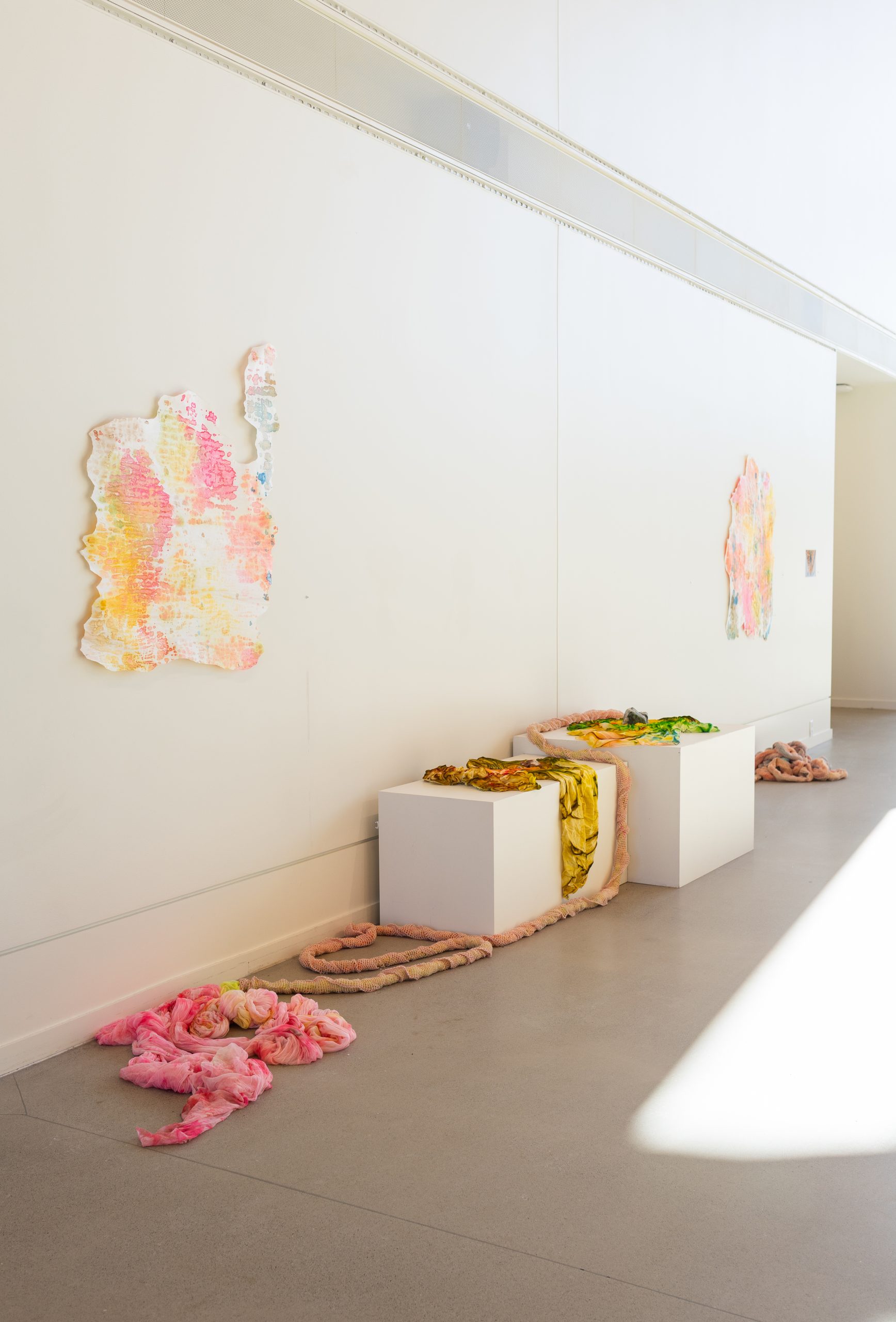
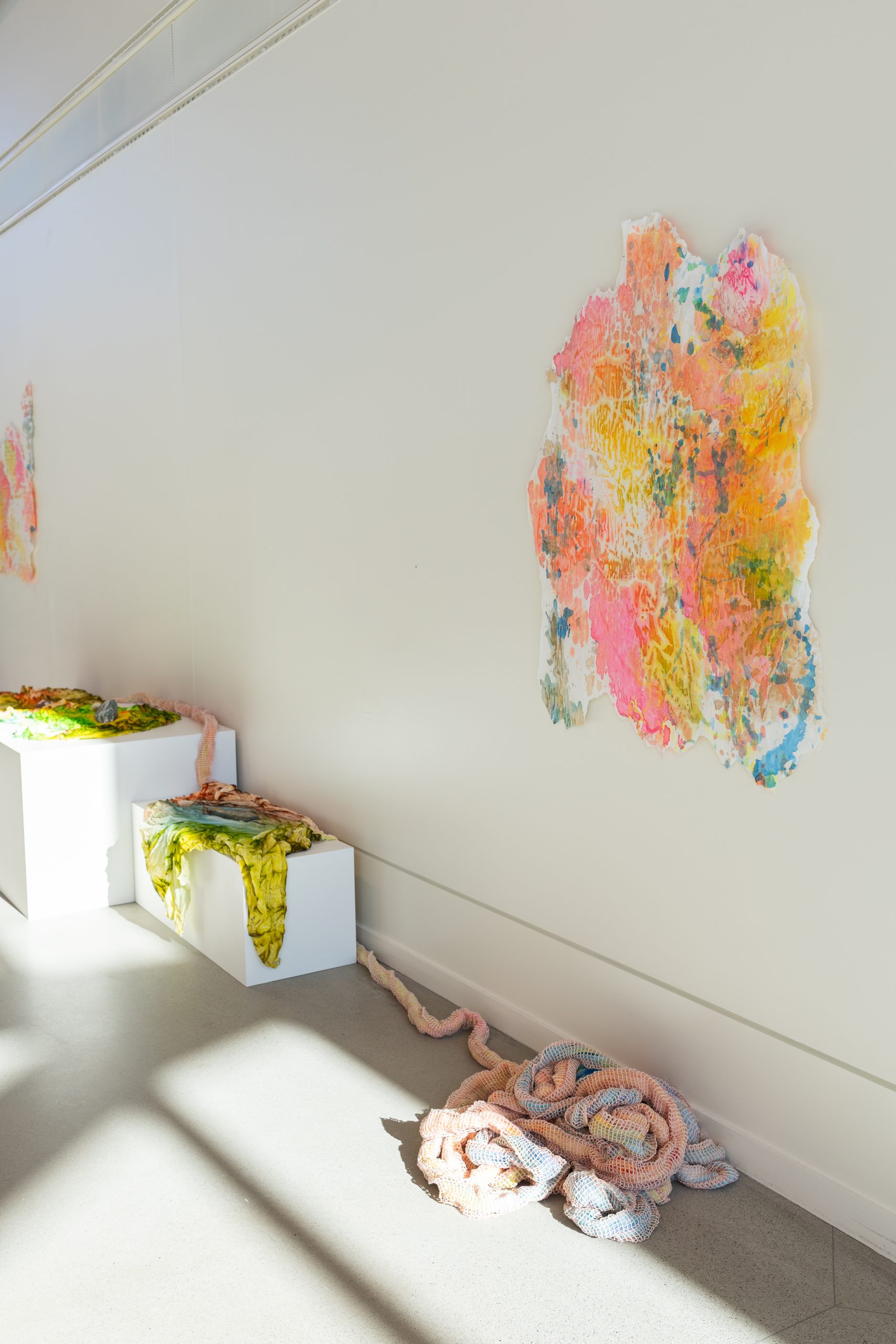
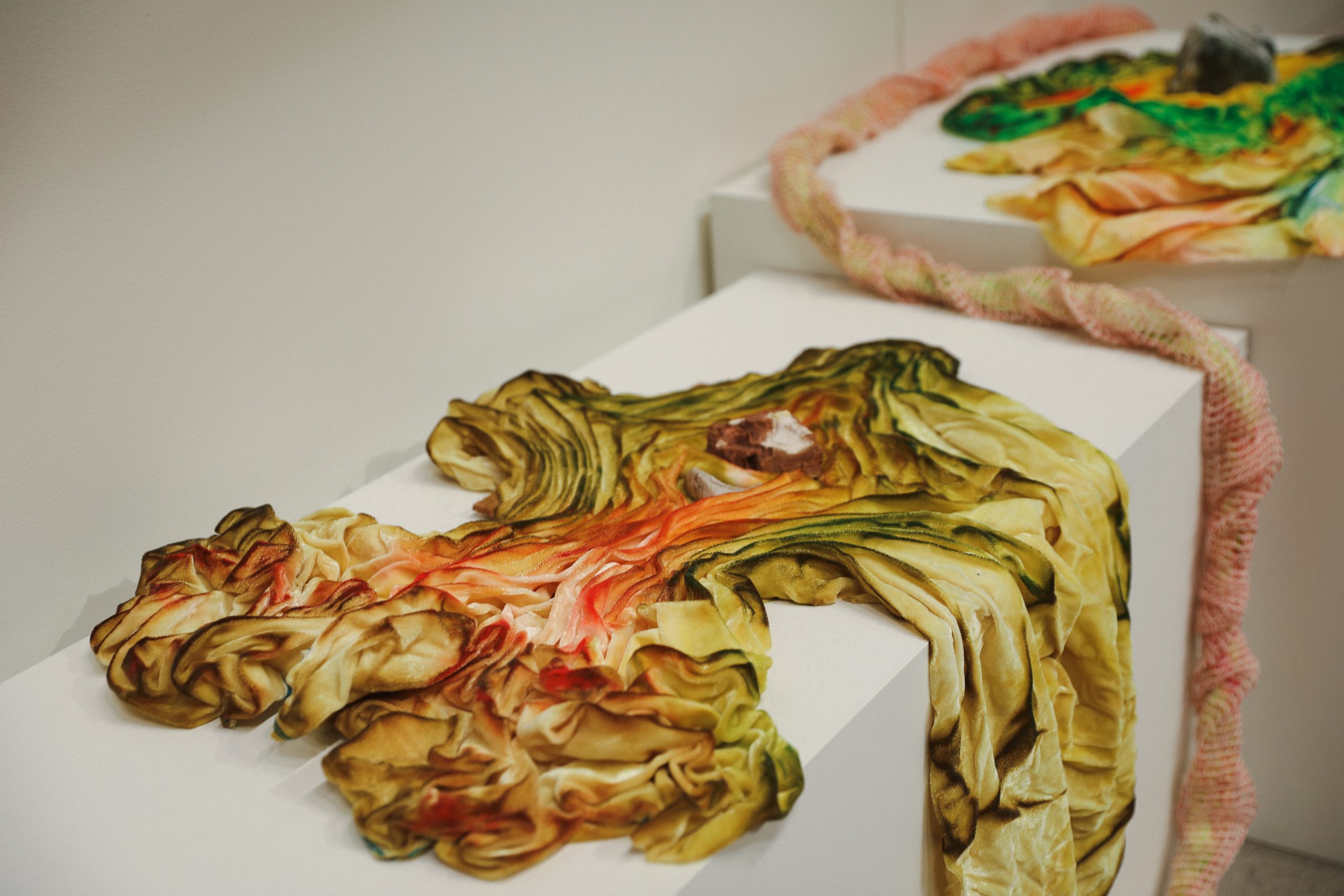
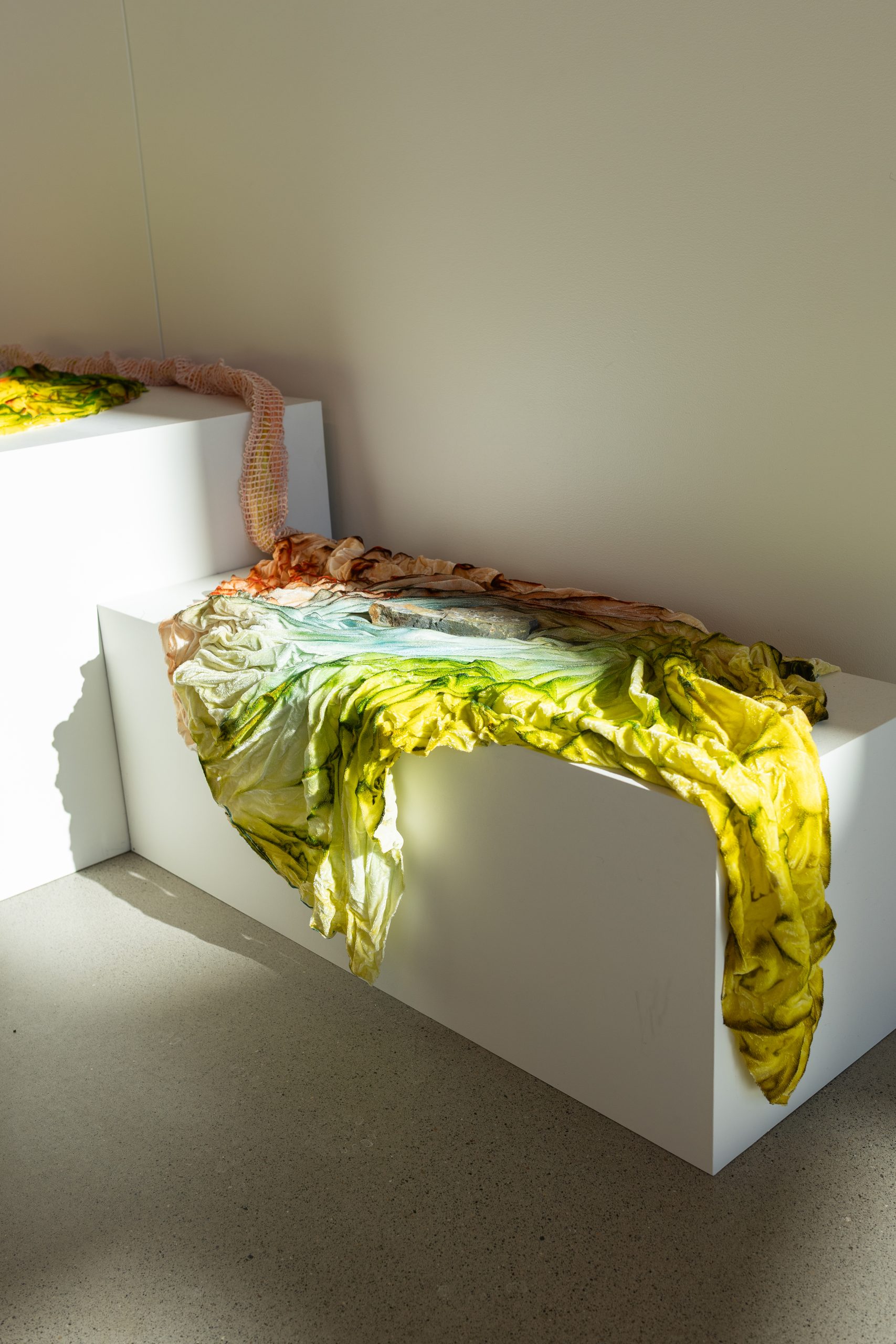
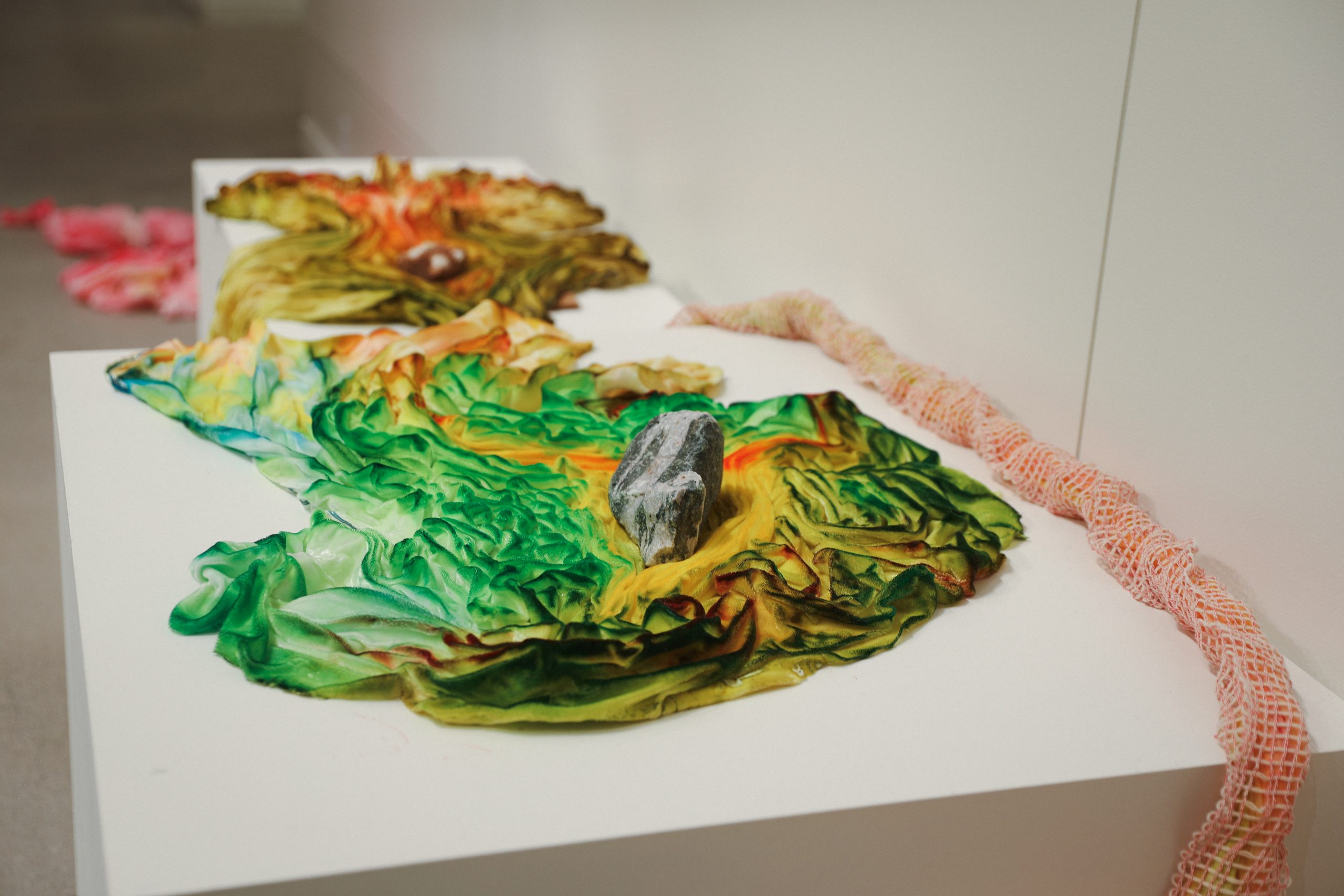
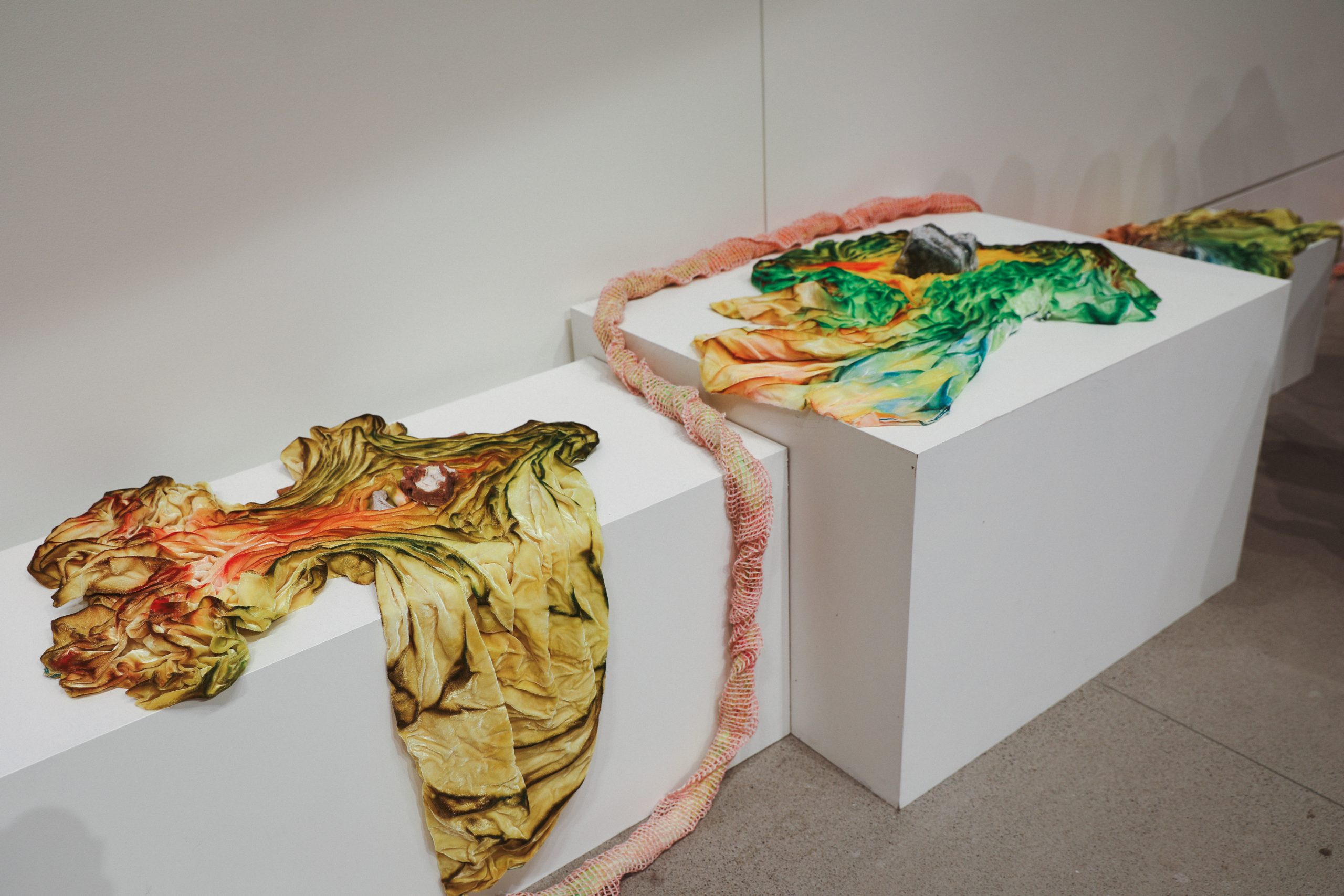
Samantha Jones is a materials-based installation artist living in Blue Hill, Maine. She is an adjunct assistant professor at the University of Maine, holding a PhD from the Institute for Doctoral Studies in Visual Art in Portland and a Master of Fine Arts from Tyler School of Art in Philadelphia. In Of Sibyls and Source: Ranges and Ruptures, she enters into a vital surrealist dialogue with the living material of stone, paper, felt, trees, mountains, and water, including a 90 ft. silk velvet piece entitled In the Belly of the Whale, spanning the length of the Crewe Center. Selected exhibition venues include: The Center for Maine Contemporary Art, Rockland, ME, The University of Maine, Farmington, 3S Artspace, NH, Grace College, IN, and Governor’s Island, NY. She is represented by Amos Eno Gallery in New York.
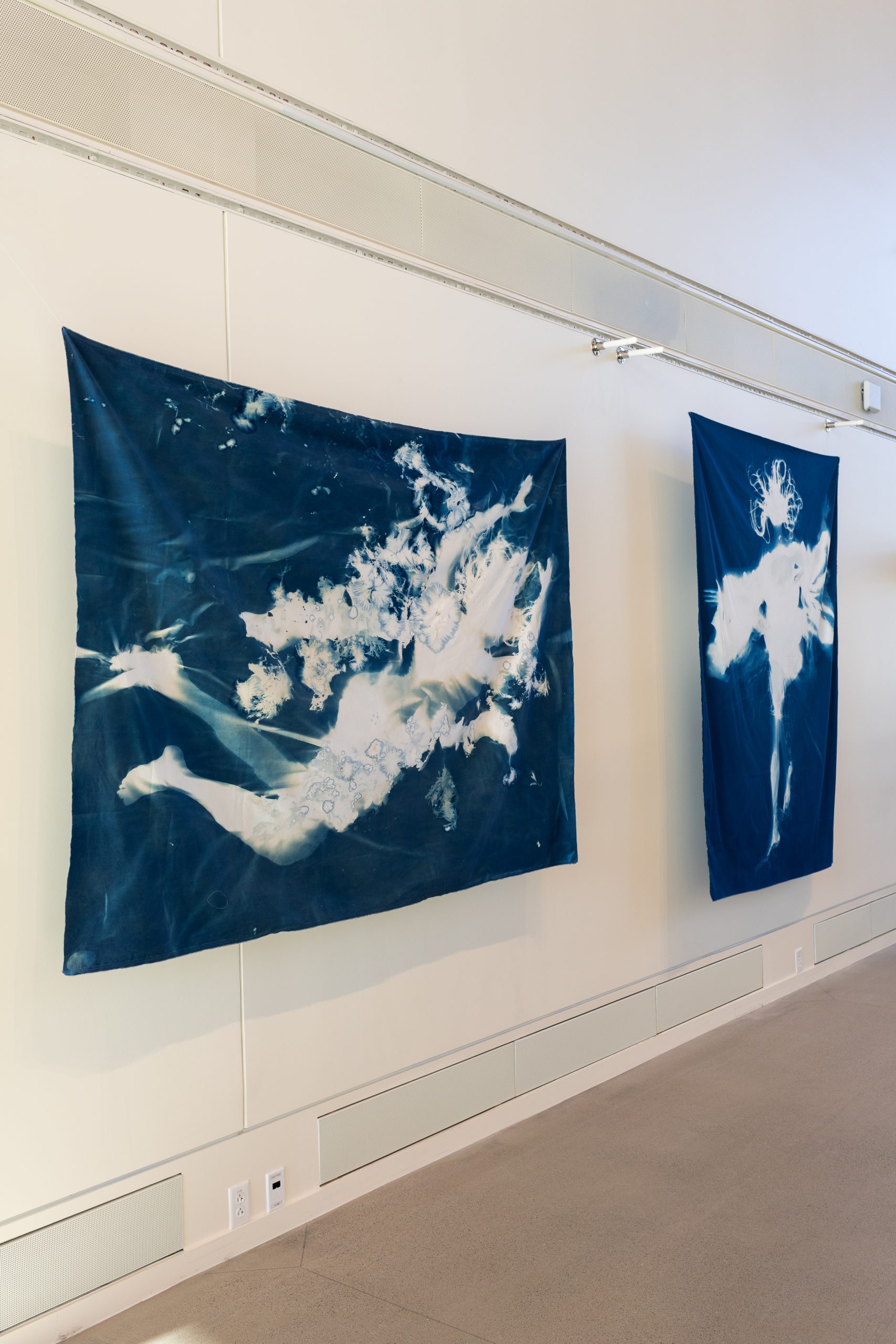
Heather Lyon (she/her) created the Of Sibyls and Source residencies and is an artist and educator living in Blue Hill, Maine. Her site-responsive performance, video, and textiles are an embodied inquiry into the sublime. For Of Sibyls and Source: Ranges and Ruptures, Lyon attunes to and channels the languages of the land. Her work includes large-format fabric cyanotypes of hybrid beings and performances in caves, on mountaintops, and in bodies of water. Lyon is a lifelong student of transcendental meditation and indigenous mystical traditions. She holds both a Bachelor of Fine Arts and a Master of Fine Arts from The School of the Art Institute of Chicago. Selected exhibition venues include deCordova Sculpture Park and Museum, Lincoln, MA; Center for Maine Contemporary Art, Rockland, ME; The State Silk Museum, Tbilisi, Georgia and Lichtenberg Studios in der Museums-Lounge, Berlin, Germany.
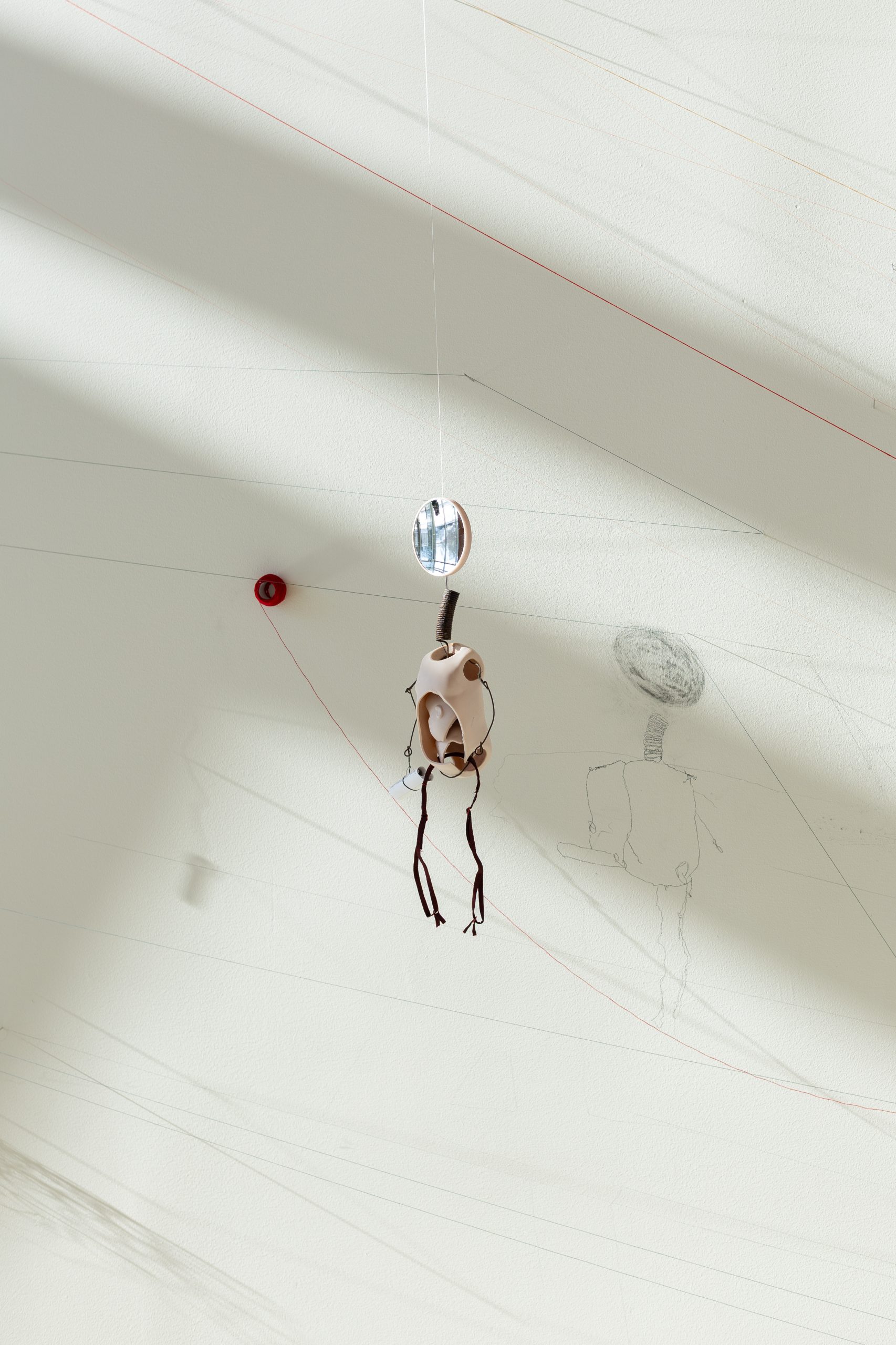
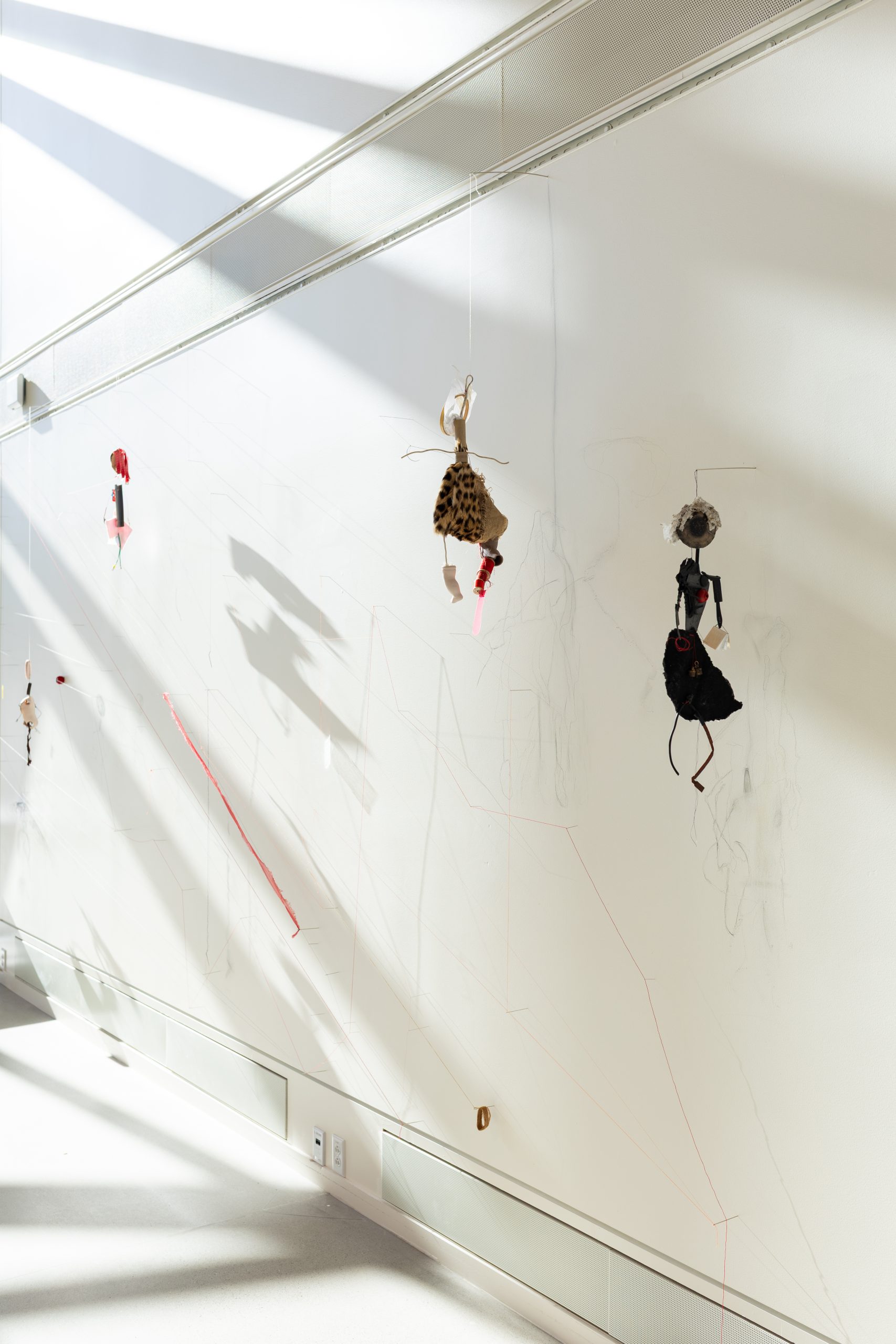
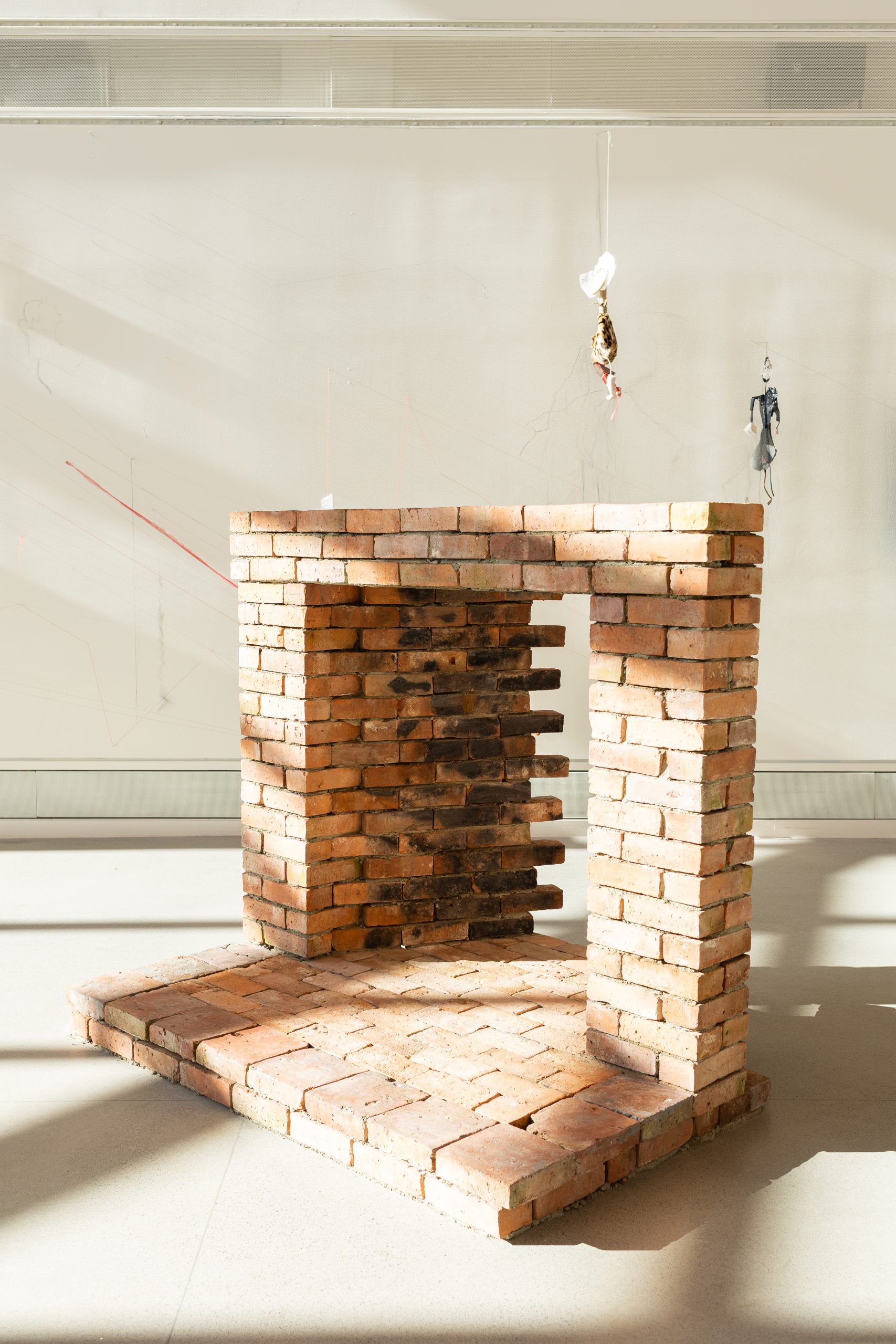
Kristin Mariani’s practice is an ongoing conversation between art and design. Acknowledging the slippery distinctions between the two disciplines, her investigations unfold in this unstable territory. Based in Chicago, Kristin creates works for performance and installation, deploying aesthetic strategies, skill-based knowledge, and text to probe the historical, material, and labor-oriented underpinnings encapsulated in any effort to clothe a body. Recent projects include a costume commission for PORCH: An Architecture of Generosity at the 19th Venice Biennale of Architecture. Of Sibyls and Source: Ranges and Ruptures provides a plateau for Kristin to explore the fugitive nature of the Sibyls’ oracles as a condition of utterance and embodiment of echo with an installation of found-object figure studies encircling a brick hearth.
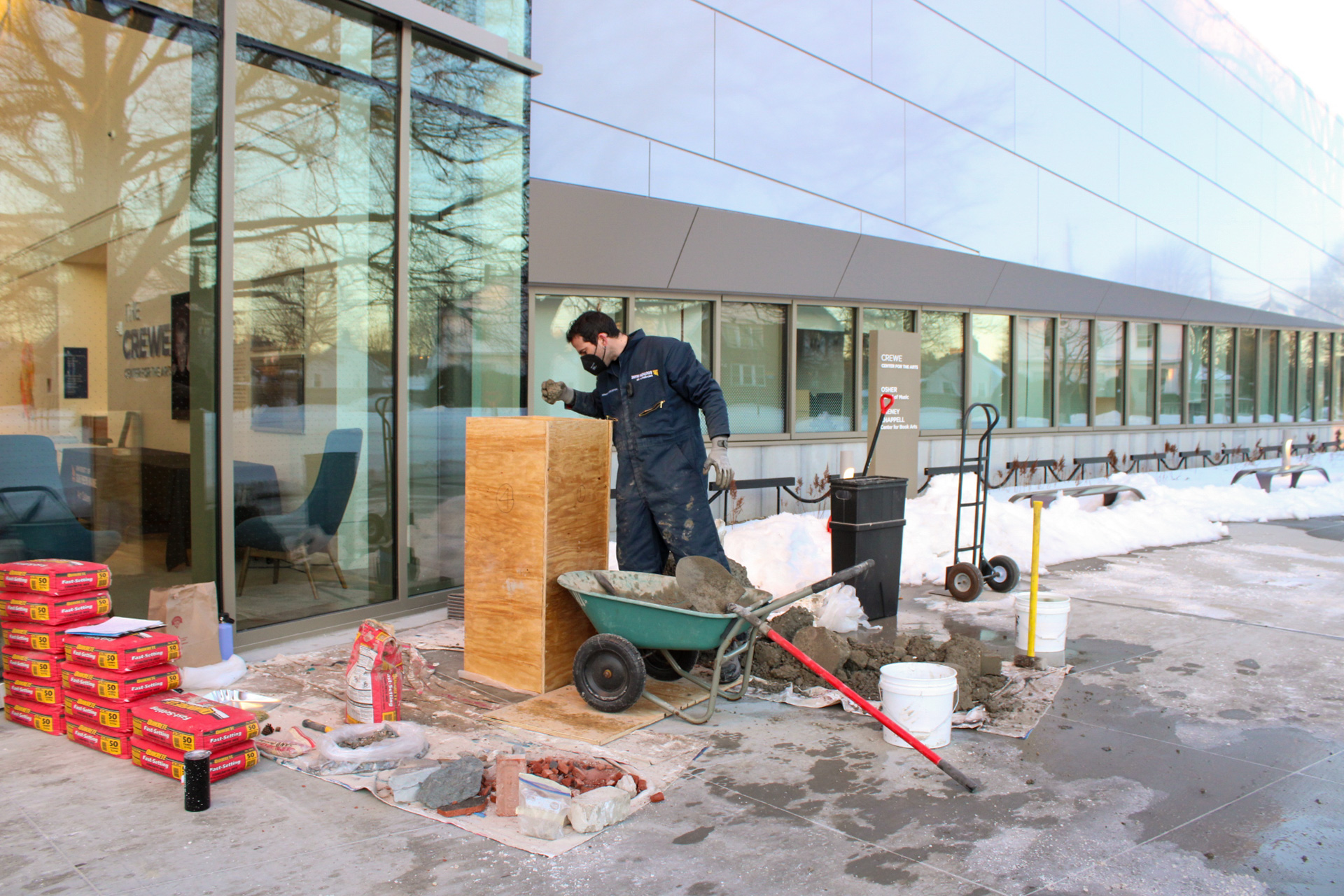
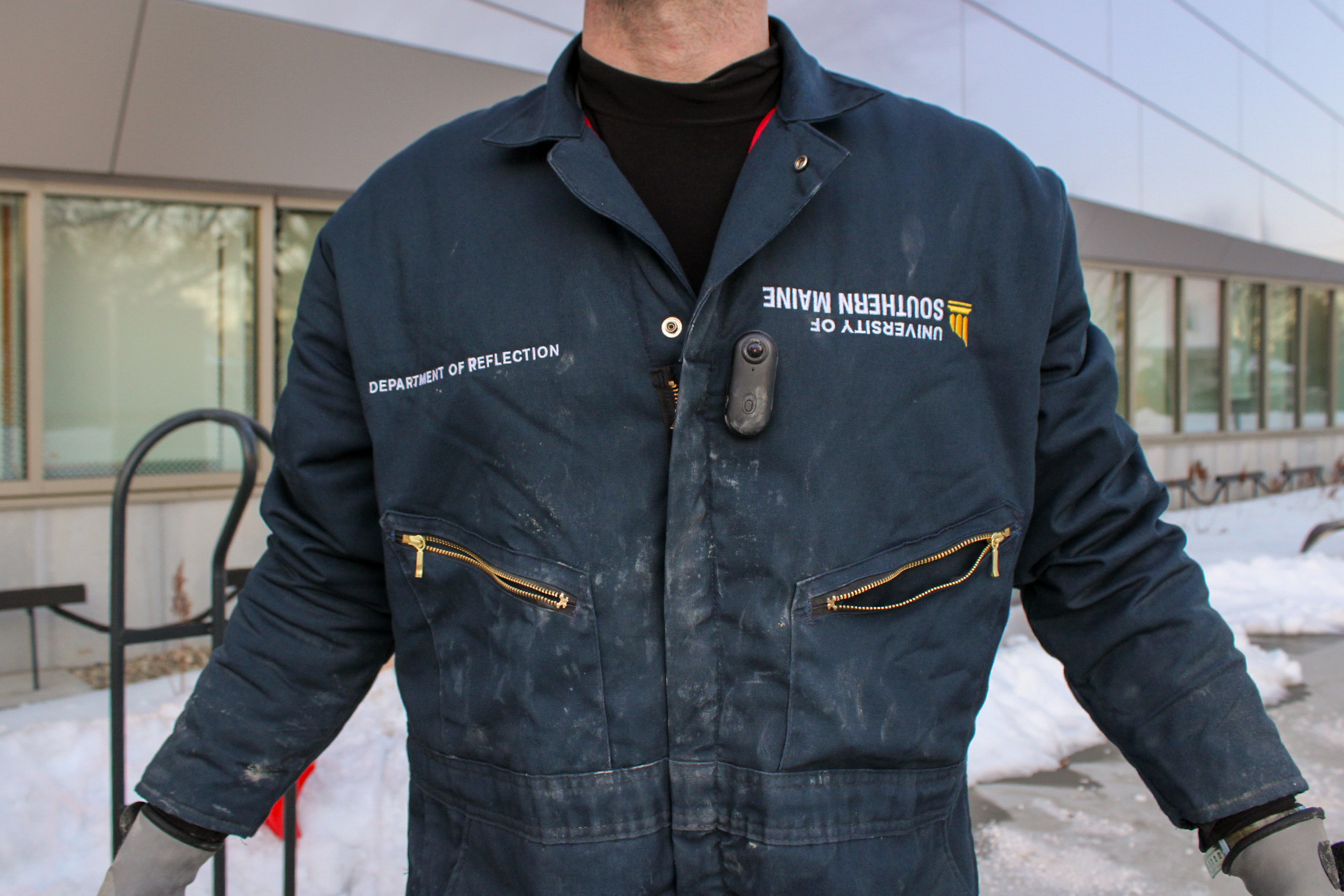
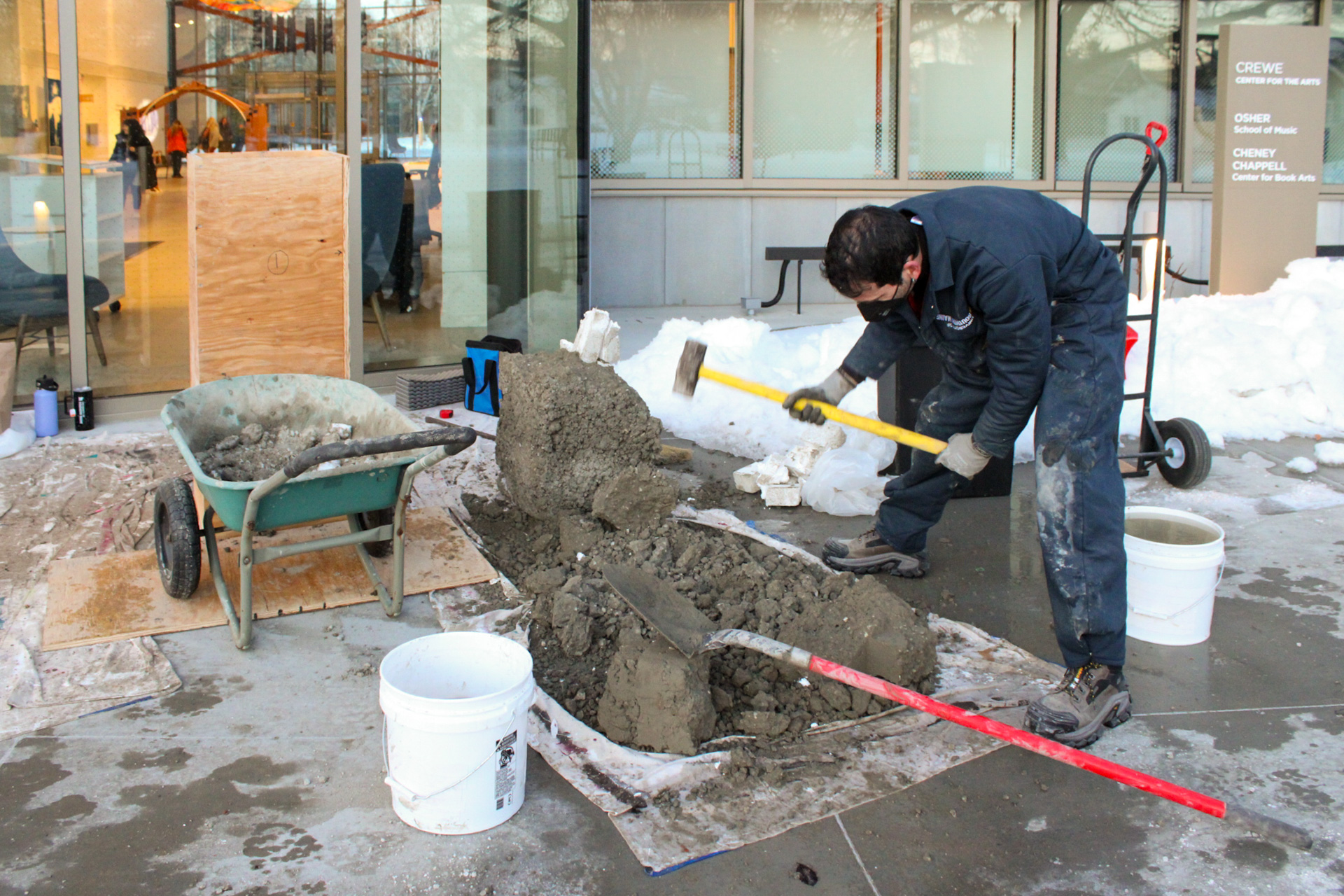
misael soto (they/them) is an artist, educator, and organizer based in Miami, Florida. Their artistic practice interrogates and subverts contextually associated everyday objects and systemic roles, disrupting and manipulating space, systems, and frameworks. Born in Puerto Rico (1986), misael received their Master of Fine Arts from the School of the Art Institute of Chicago (2018). While in residence with the City of Miami Beach’s Department of Environment and Sustainability, misael founded the Department of Reflection. misael is the founder of artist solidarity collective Artists for Artists: Miami, an ongoing effort that has led to various initiatives, including the Miami Artist Census. For Of Sibyls and Source: Ranges and Ruptures, misael will present a temporary public concrete sculpture made in situ via a durational performative installation.
Guest Artists: Firefly the Hybrid (Bangor, Maine), Douglas Paisley (Brooklyn, NY), Ken Hoffmann (Blue Hill, Maine), Andrea Goodman (Trevet, Maine), Robin Lane (Portland, Maine) Matt Shaw (Blue Hill, Maine)
Want to know more about the larger Of Sibyls project, across its residencies and multiple exhibition iterations?
Exhibition Essay: On Deterritorialized Relationality
by Director of Exhibitions and Outreach Kat Zagaria Buckley
Telling stories allows for a locating of the self within a given geography. Eventually, the narrative becomes a constant companion, synonymous with the peaks and valleys that gave it birth. A conflation of myth and land cradles us, offering a means of comprehending space and belonging through parable. It is through this understanding that relationships, and the webs that underpin them, are revealed.
Within this nexus, curator and artist Heather Lyon conceived of the Of Sibyls and Source: Performance in the Landscape residency hosted by the International Center for the Arts in Umbria, as well as two subsequent hybrid residencies in Maine. The exhibition Of Sibyls and Source: Ranges and Ruptures showcases the works and conclusions made across these three engagements and manifested in the University of Southern Maine’s Crewe Center for the Arts.
Participants in this exhibition — artists Susan Bickford, Samantha Jones, Heather Lyon, Kristin Mariani, and misael soto — began their journey together in the Apennine’s Sybillini Mountains, straddling Italy’s Umbria and Marche regions. The site is slick with mythos in its referents: Gola dell’Infernaccio, Lago di Pilato. Old stories rise from its chasms, predating the phonetics by which we identify these features. And while nomenclature and mythos are site-specific, their implications reverberate outwards.
After their sibylline sojourn, the artists reconvened in the two Maine-based residencies. Here, they considered which stories inform their understandings. As they explored the unique topography of the northern Appalachian Mountains system in the Green Hills area, the artists felt echoes of their time in Italy. Specifically, they identified a commonality across terrains as they cultivated an embodied understanding of place, both linked to individual sites and carried within oneself through collective stories and relationships. In this way, place becomes deterritorialized through the rippling expanse of experience.[1]
Writer and philosopher Baptiste Morizot posits an interweaving of relations that undergirds all existence. He explains this interweaving as encompassing not only individual ties but also collective and existential bonds, as well as our connections and affiliations with other living beings. Morizot’s web “forc[es] on us the question of their [other beings’] importance, the way they are of our world, or outside of our perceptual, affective, political world.”[2] If we consider land to be a being outside of our perception — as it cannot be conceived of wholly, all at once — grappling with geomythic lineages is one path to exposing Morizot’s web of relationality. Our stories draw clear lines connecting tales to topographies. These tethers, in turn, etch themselves in our subconscious as places harken to their folk counterparts.
Against this backdrop, the artists in Of Sibyls and Source: Ranges and Ruptures come together to form a community within and beyond themselves. Their expansive sense of who and what constitutes community draws on a narrative tradition. Within this conception, there are no boundaries between the spirits that reside in persons and those embodied in undulating elevations. Such a consideration of community allows individuals to find echoes of home and a sense of belonging across regions and even continents.
Mountains and caves are verdant spaces for oracle mythos. As the air morphs, becoming by turns thin with altitude and heavy with earthly gases, alternate modalities of perception reveal themselves. This expanded awareness is often cited as the wellspring of the oracle myth. In the case of Monte Sibilla, a young girl was said to offer prophecies from its chasm.[3]
While the changing composition of vapors may offer scientifically grounded explanations of mythos for inquiring contemporary minds, such reductive narratives ignore the embodied story. Myths such as the sibyl rely on personifying the land. The mythological spirit is at once ancient and juvenile: a caretaker of the mountain and its chasm, ancient in our perception but young when compared with the universe. The adolescent is a stand-in: a girl’s body is more readily comprehended than the immensity of a summit or the depths and crevasses of a cave. Prophetesses are referents for places, at once knowable in their corporeality and unknowable in a gaze that sees beyond our own.
Here, I present a brief account of the works each artist has contributed to the exhibition. This itemization is by no means exhaustive — nothing ever is. Instead, I focus on a few of the interlocking links conveyed across works and bonds.
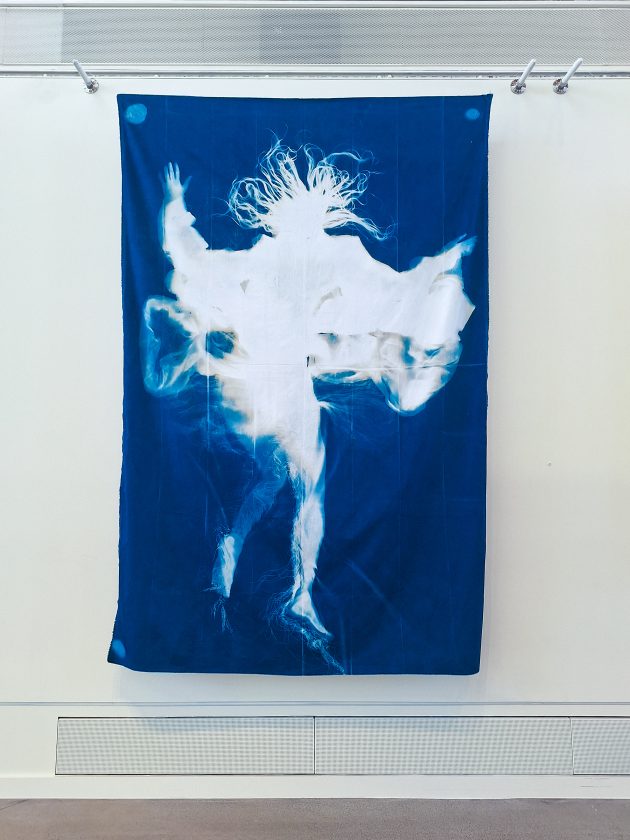
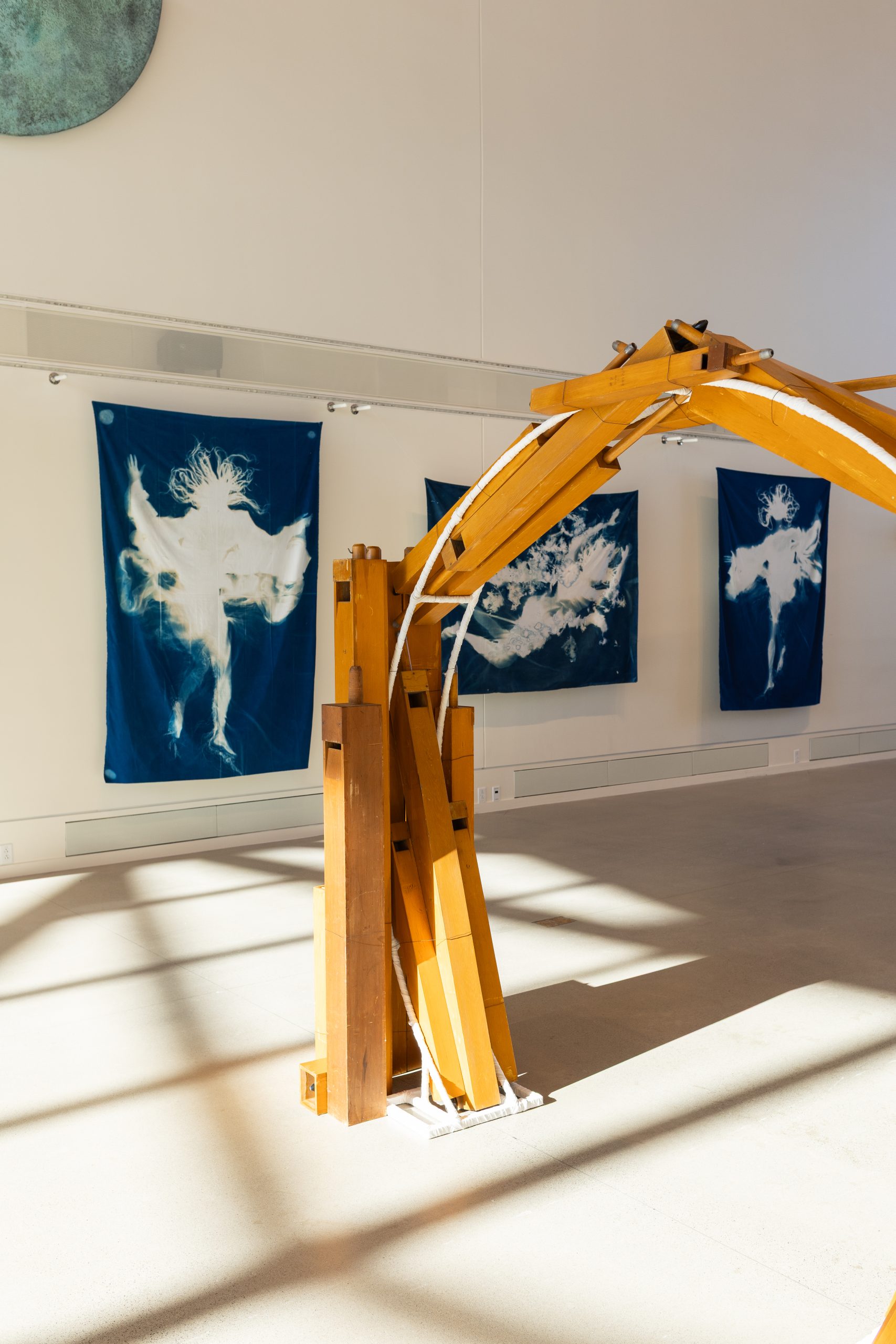
Heather Lyon, Nymphalidae(Sibyl) I, 2024.Cyanotype on cotton, 60 x 84 in.
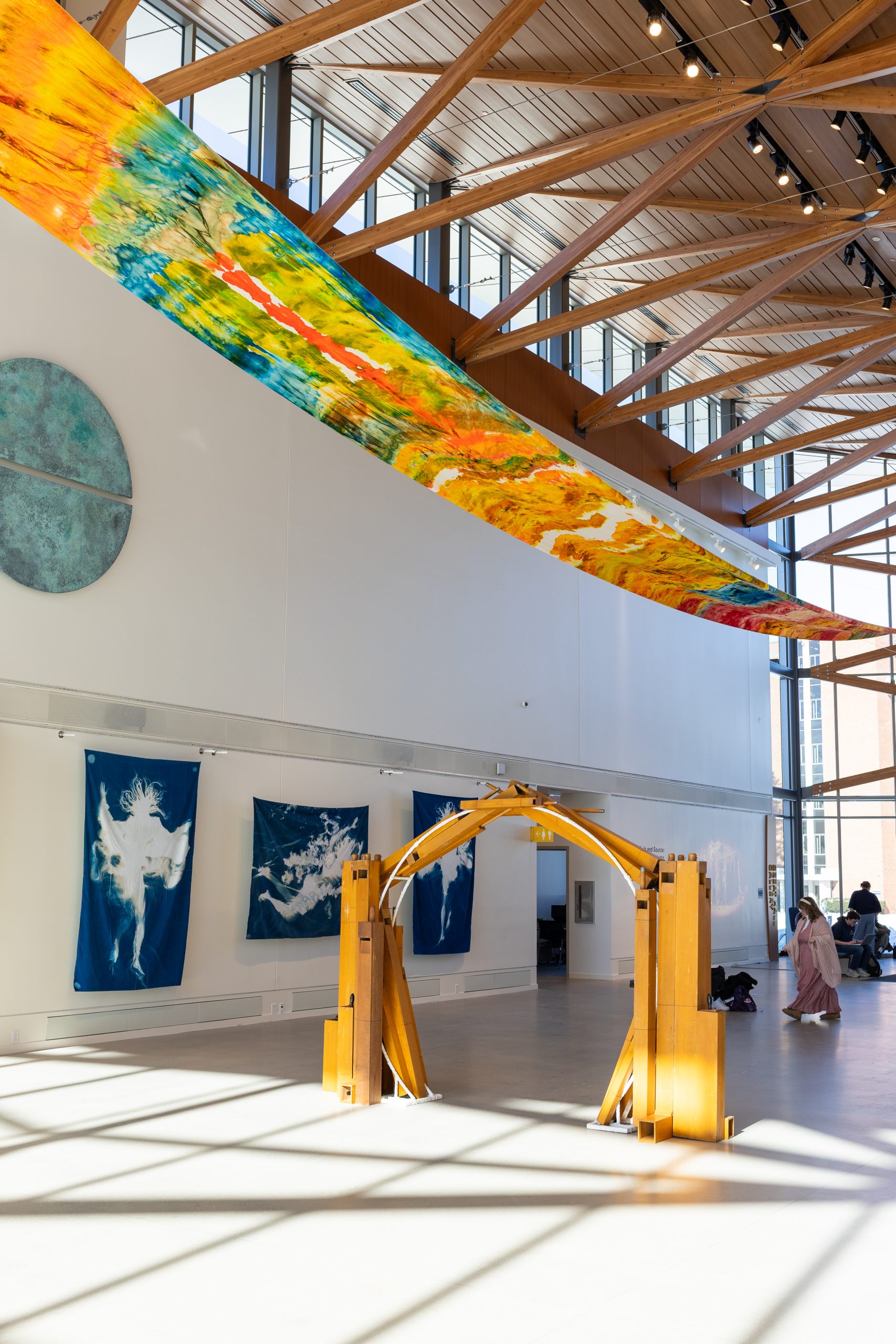
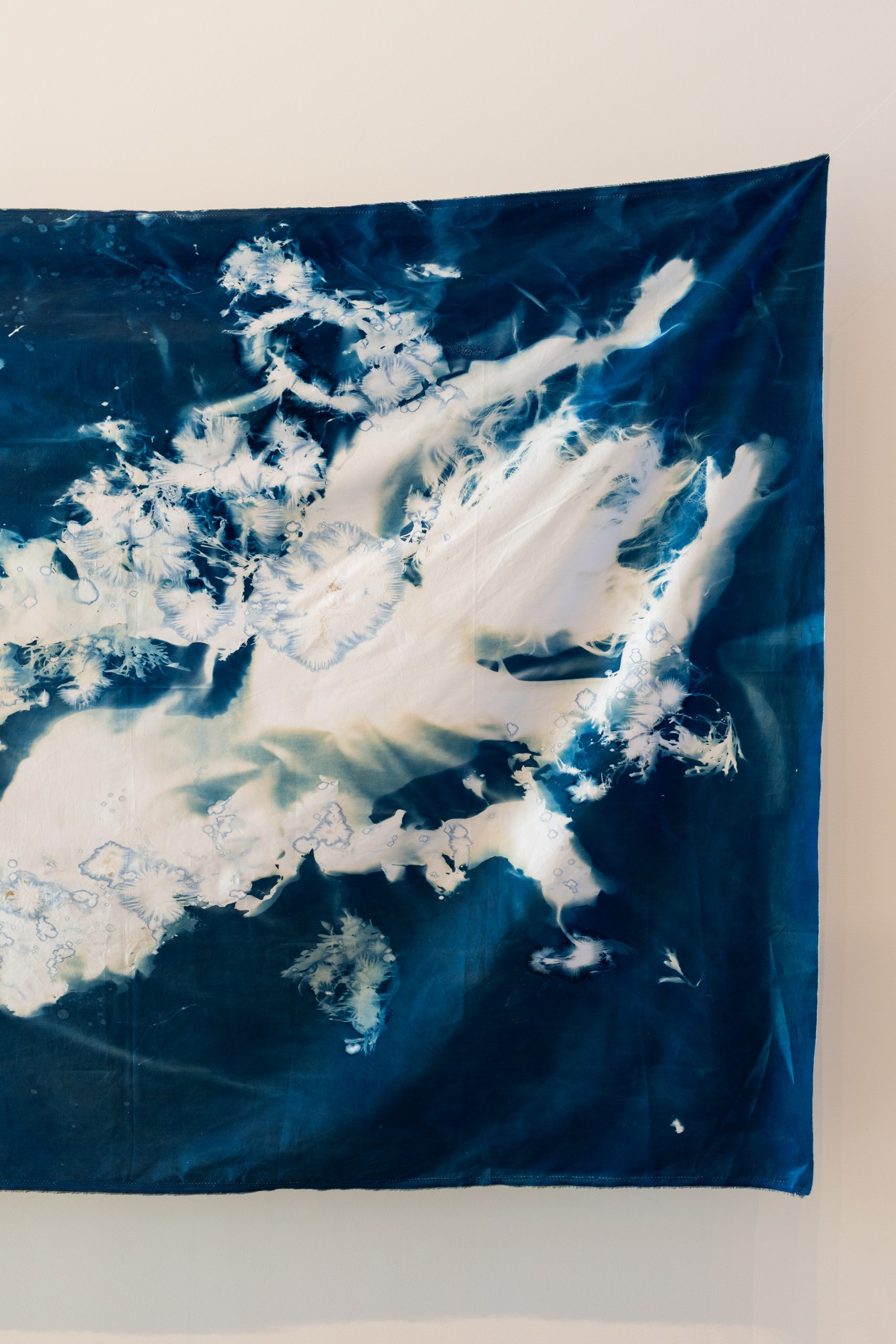
Lyon takes the fabric cyanotype as her medium for interpreting the more-than-human. A light-sensitive conversion of compounds derived from iron and salt, later washed away by water, creates the cyanotype. The reaction produces photogram silhouettes whose ghostly edges allude to a light source beyond. Lyon’s fabrics were exposed under the sun and on the ground across the residency’s multiple sites; the landscape’s surfaces beneath were recorded alongside Lyon’s body and the site’s materials, such as seaweed. In the artist’s hands, cyanotypes — Nymphalidae(Sibyl) I (2024), Oceanid (Sibyl) I (2025), and Nymphalidae(Sibyl) II (2024), respectively — render hybrid imaginings of oracles that swim against the technique’s brilliant blue backdrop. The azure ground on which Lyon’s figure floats is more vibrant than the ocean. Indeed, the artist washed her prints with water from two respective bodies: the sibylline streams and the so-called Frenchman Bay. In doing so, the artist introduced still more salt (along with calcium from the stream) to the cyanotype. The result is a cloth made of the elements that build us. While reflecting the body in outline and chemical composition, Lyon’s cyanotypes represent an intuitive understanding of place rooted beyond the self, one born of communing with topographies. The process’s uncertain edges gesture at the rough, imperfect contours drawn by narratives as we seek to embody expansive, imperceptible spaces.
Lyon characterizes her investigations as “an embodied inquiry into the sublime.”[4] Such examinations relate to the 18th-century Romantic conception of the sublime, which held that overwhelming natural phenomena could inspire spiritual transcendence. Transcendent moments are born of rupture, as are sibyls. Spiritual unmooring requires a cleaving in two. In Immanuel Kant’s conception of the dynamic sublime, reason goes beyond fear to understand the structure of the infinite.[5] He speaks of a spiritual transcendence attained through a recognition of otherworldliness.
It is worth a brief pause for an etymological disambiguation of the word recognize here at its first appearance, as it holds many of the themes within this essay. It is a microcosm of sorts. Re: a prefix of repetition, co: a prefix of togetherness, and (root word) the Latin gnoscere: to know. When we recognize, we know, together, again.
For Kant, perceptual breakthroughs are a precondition for grasping the interconnected.[6] Like sibyls, these breakthroughs rupture foundations. Once impenetrable barriers of schematic mental fortitude are cleaved, an expansive mode of sight is revealed: a means of seeing what lies beyond. This recognition of a connection beyond ourselves depends on severance. We must be unstable underfoot before we can perceive the yoking that straddles the divide.
Artist misael soto creates that necessary weak point against our ordinary backdrop. Their practice involves breaking and subverting the context of the everyday. With the Of Sibyls cohort, misael created Human Infrastructure (2025): a performative practice of relational support, building a scaffolding of care across their work and that of the other artists. For the Of Sibyls and Source exhibition, soto uses the Crewe Center for the Arts as a third site upon which to cultivate a new perspective of the University’s environment. Their engagement, Concrete Pedestal (for USM) (2026), will consist of constructing a temporary sculpture resembling a pedestal, destroying it, and rebuilding it. Over the course of four cycles, cracks and fissures will appear in soto’s object. Despite these, it will remain stable, able to coalesce within space.
Performing and re-performing the actions of construction, destruction, and reconstruction is Sisyphean. soto harkens to an eternal cycle, embodying a mythos through their performance and object. In action and resulting artwork, soto facilitates a schism in our everyday lives. Perhaps in this juncture, in this odd, cyclical, circuitous process, we remember a narrative. That story resides in the break. Slip through, and we might glimpse it all: we might perceive infinity.
For the artists in Of Sibyls and Source, ruptures are a means of creating and recognizing a community beyond the self. Through performance and embodiment, we understand community as reaching through us, as encompassing something more than us. Yes, it constitutes our relationships; yes, it covers the other kingdoms of life, but it also refers to that which has stood before us and will continue to stand long after. Botanist and writer Robin Wall Kimmerer recognizes these interconnected bonds. She proposes using the pronoun “ki” (plural “kin”) to identify the interconnectedness of nature.[7] Kimmerer advocates for ki’s use as a referent in place of “it,” covering everything from animals and fungi to rocks and streams. In the Of Sibyls context, artist Samantha Jones’s work arises from a dialogue with this type of kin.
Jones’s Atopia series (2025) of works on paper mimics the undulating unfurlings of coastlines in their organic edges. Vibrant colors cover over Atopia’s fibers like spores carpeting a host. Her Whale Belly, Whale Mountain (2026) hangs, heavy yet light, over the Gallery’s central axis; repeating Atopia’s amorphous inkblots above. Stones punctuate the artist’s installation (Desideration of Stones, 2026) in recognition of the placemaking potential inherent in kin. Jones’s identification of kin across earthly objects — animate and in — mimics Morizot’s and Wall Kimmerer’s conclusions. Indeed, such understanding depends on the kind of perceptual rupture that Lyon and soto also seek to engender in audiences. Jones places the manifestations of interrelation in the viewers’ path. These rocks are embodiments of connection.
Scholar María Puig de la Bellacasa came to similar considerations of kin in her 2017 treatise, On Matters of Care: Speculative Ethics in More than Human Worlds. In it, she writes, “the livelihoods and fates of so many kinds of entities on this planet are unavoidably entangled.”[8] Puig de la Bellacasa works with permacultures, which she considers to be the “edges” of lands and ecosystems where “encounters are both challenging and diversifying beyond the expected and manageable.”[9] Permacultures, for her, are a conduit to sublime experience. She writes, “[i]n permaculture movements, where care for the earth is inseparable from care of the personal, ecological interdependency is not a moral principle but a lived material constraint — required and obliged.”[10] Puig de la Bellacasa advocates for leveraging a feminist ethics of care within community. When applied to the interwebbing of community that Morizot identifies, such definitions become expansive, encompassing the human, the collective, and the more-than-human world. With Wall Kimmerer’s influence, this chain of interrelations reaches beyond solely what we recognize as animate and into what we recognize as kin.

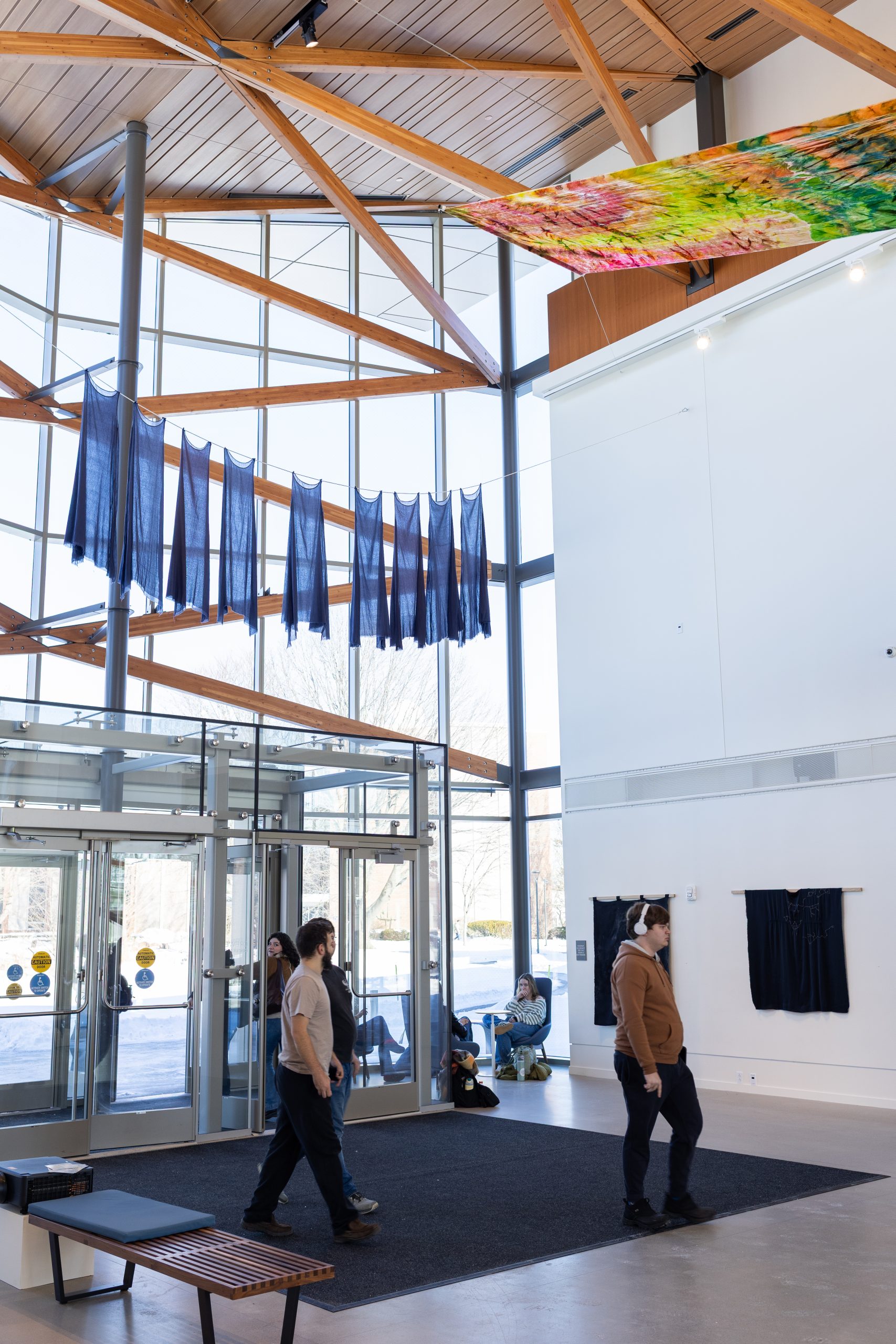
Samantha Jones, Whale Belly, Whale Mountain, 2026. Hand painted silk velvet, aluminum pipe, cable; 54 in. wide by 90 ft. long. Installation view, Of Sibyls and Source: Ranges and Ruptures, Great Hall Gallery at the Crewe Center for the Arts, University of Southern Maine, 2026.
Here, we can distinguish between what the artists achieve in our initial definitions—a kind of transcendence—versus what this coalescing of ideas yields: namely, immanence. In the conceptual framework of the sublime, one looks outside of oneself for transcendence. But through this process of deterritorialization, the artists arrive at what philosopher Gilles Deleuze characterizes as the plane of immanence. Instead of looking outside of themselves for the sublime or transcendence, the Of Sibyls artists come to realize that they carry within and between themselves, in loose and strong ties, in cultural narratives and mythos, the capacity for immanence, defined as residing or becoming within.[11]
Indeed, Morizot’s description of an interwebbing that binds a universe of complex relations conjures three-dimensional models of dark matter, the fabric about which we know so little that holds our universe together. This, too, is nature, kin — elemental (literally, astronomical), but also metaphorical. Woven, invisible fibers prevent the universe from spinning itself asunder and, perhaps, also tie us to what is larger. Dark matter, in my conception within Morizot’s framework, is a connective tissue representing all that is unseen. It is a matrix of relationality. Only ruptures can expose its interlacing, making us cognizant of how dark matter binds the space between.

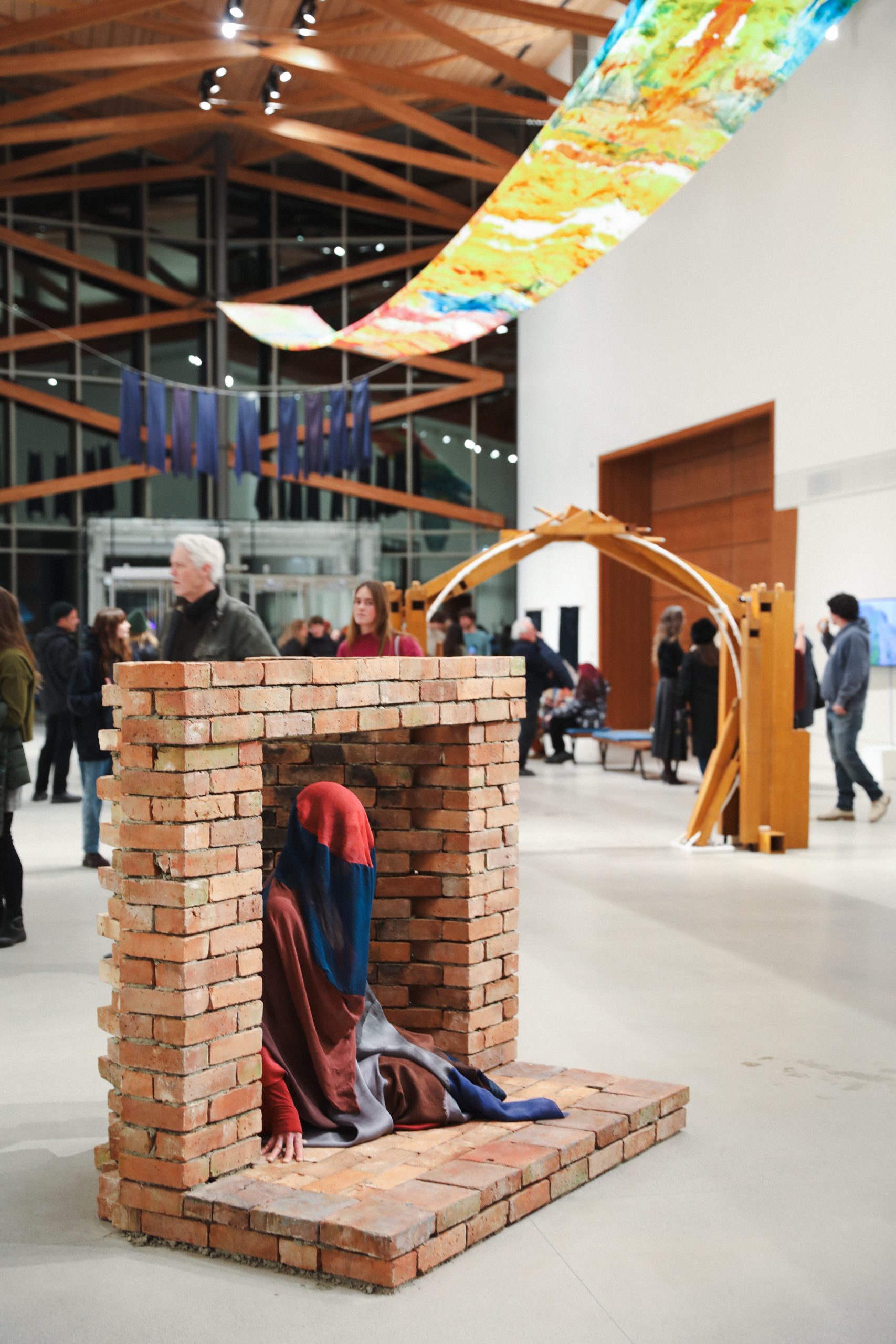
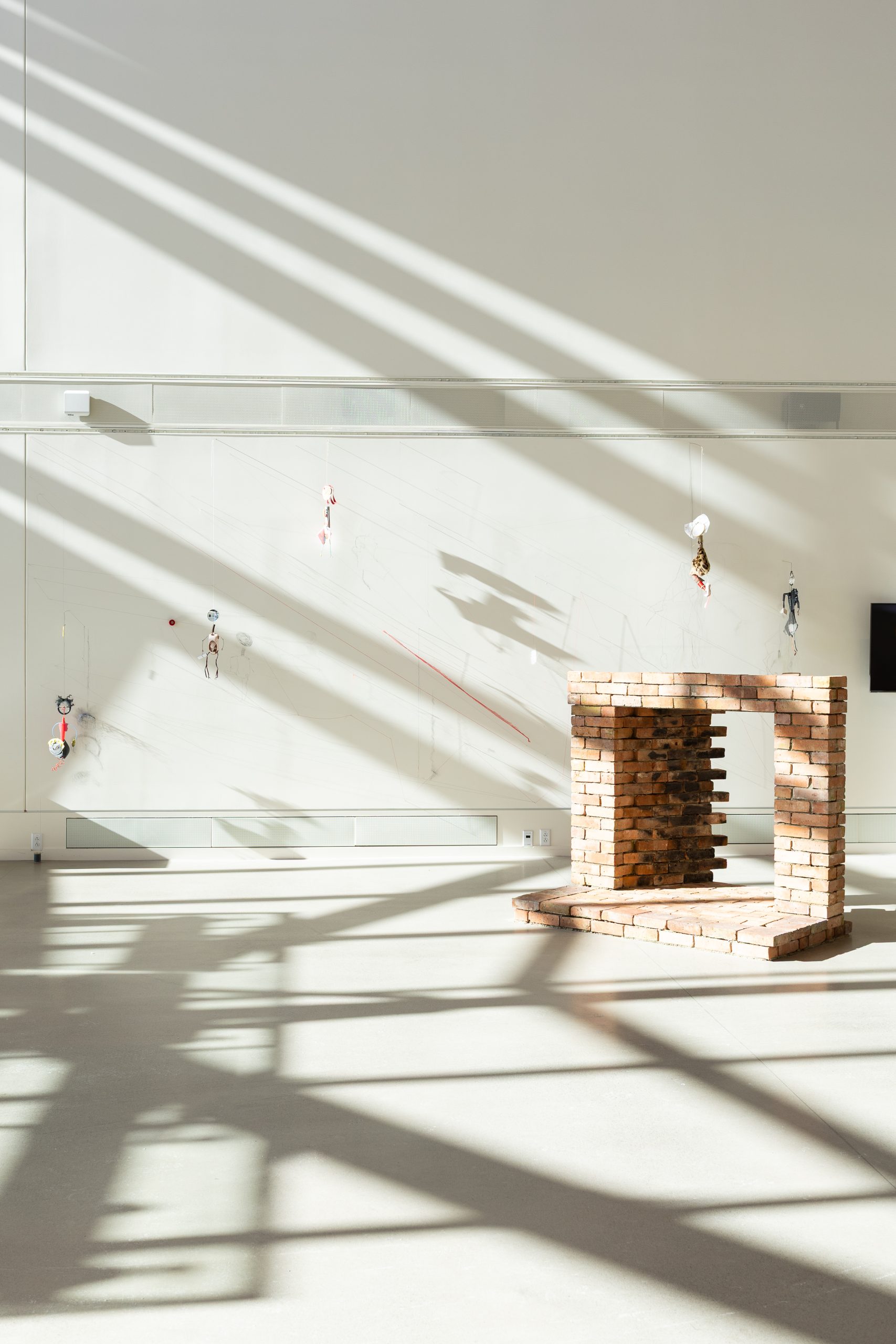
Kristin Mariani, Hearth II, 2026. 150 yr old chimney brick and hearth tile from Maine, local clay mortar; 54 in. high x 64 in. wide x 55 in. deep. Brick structure made in collaboration with Ken Hoffmann.
Artist Kristin Mariani’s practice focuses on what is possible in these liminal territories. Mariani leverages disciplinary fissures while locating a parallel to these earthly cleavages in the nexus of the oracle’s emergence: the cavern. The negative space within the split is the slippage she interrogates. In the exhibition, Mariani has created a hearth made by a local mason. Its bricks are 150 years old, composed of Maine clay and local mortar. The clay harkens to the earth itself, the slip and ground that shifts beneath us as we stand. What it accumulates, amalgamates into is the hearth: an architectural element often personified, much as geographies are. This anthropomorphism is a means of understanding our place in space, performing the same function as geomythos. Around Mariani’s fireplace, puppets composed of found objects hang, as if in discussion of a shared commonality despite their disparate origins.
Susan Bickford’s Invoking the Muses hangs above the Gallery’s eastern entrance, pointing back out to the Atlantic, identifying the inception site where these scattered artists began their communal pilgrimage. Bickford suspends nine dresses. Their indigo hue mirrors Lyon’s cyanotypes, while their quantity harkens to still more mythological underpinnings and feminine personifications. Invoking the Muses is a prayer for the renewed presence of the nine arts in our collective lives. In the Great Hall Gallery, the dresses continue their protection and dance, identifying the breeze generated by passersby as kin, community, and commonality across sites.

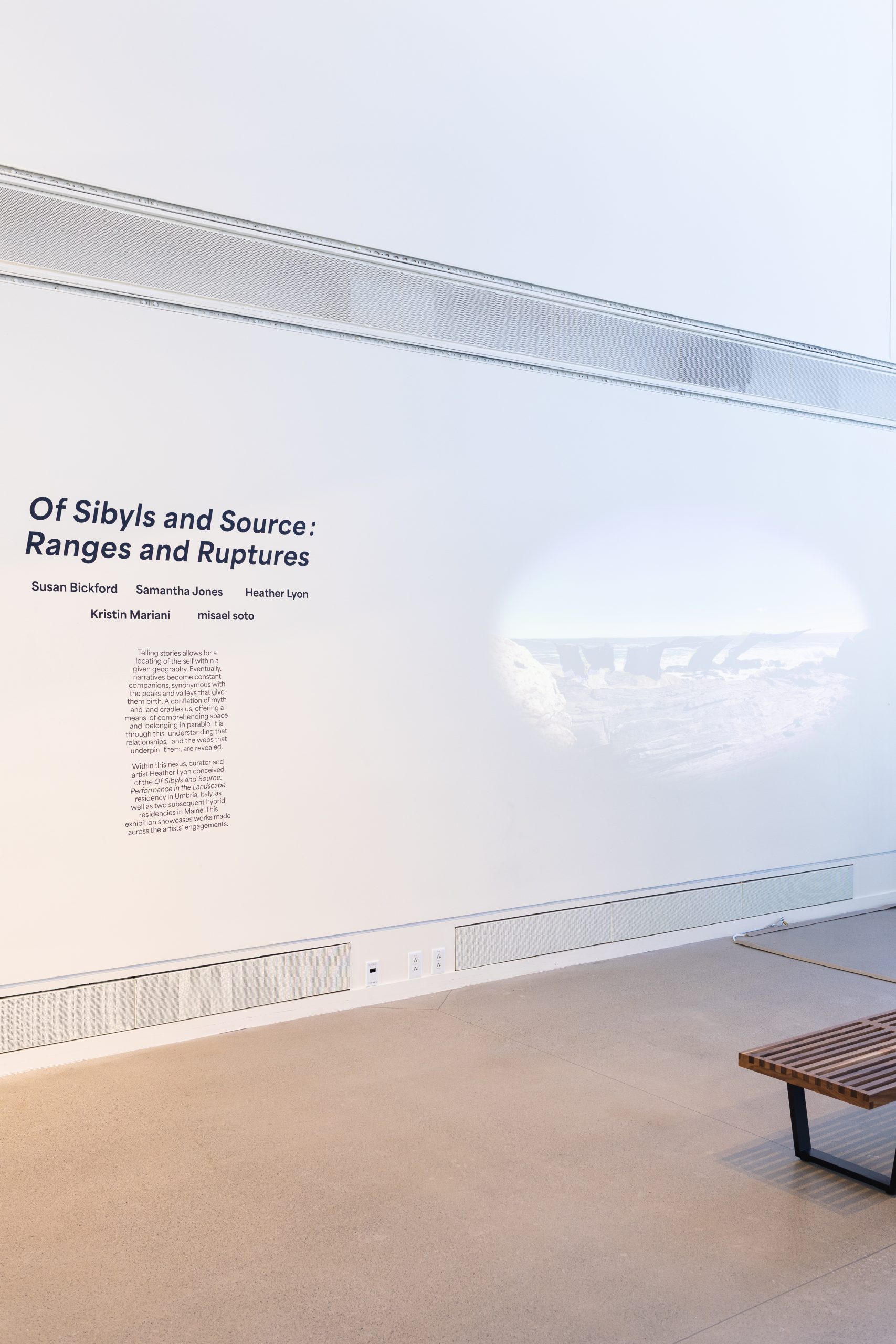
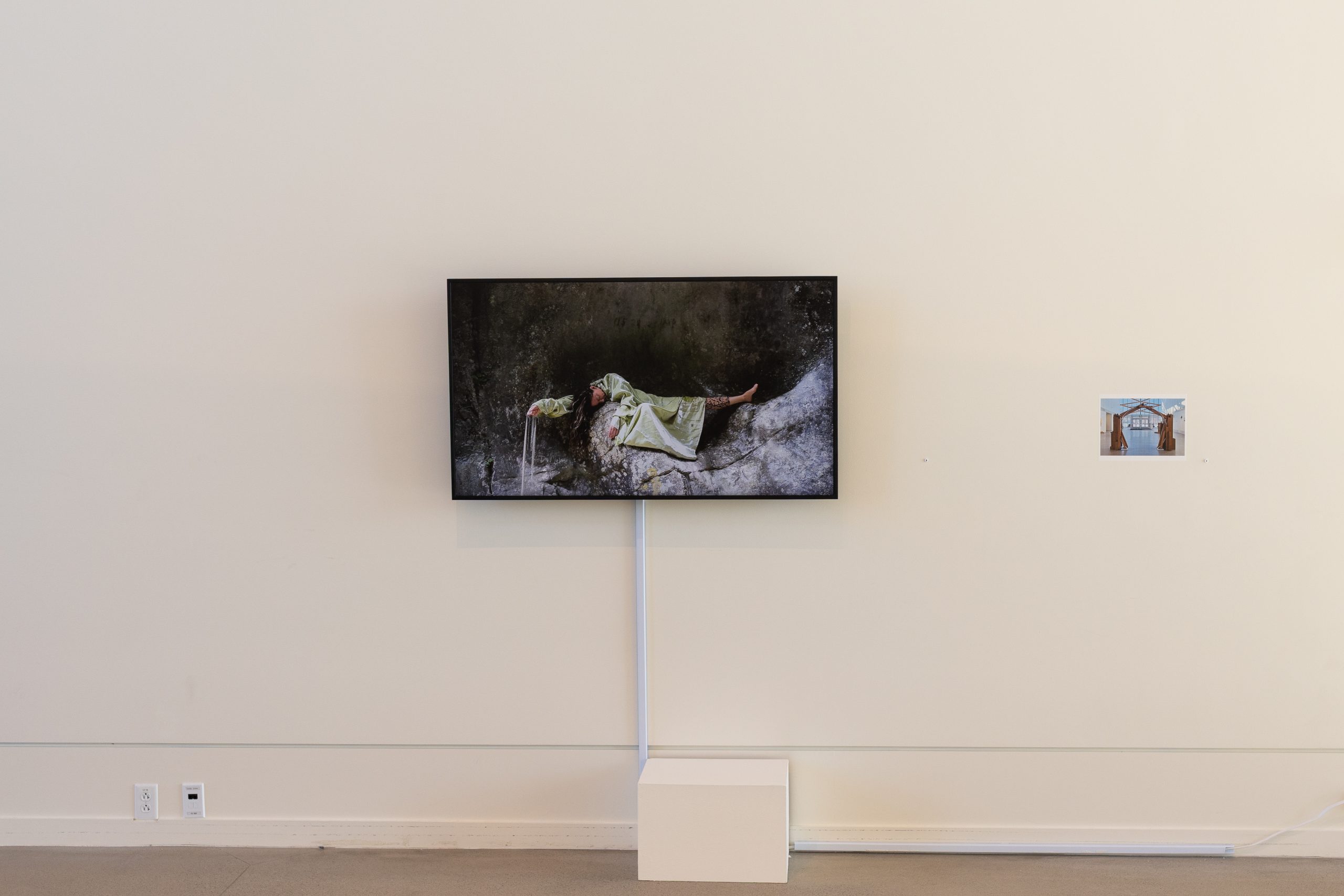
Susan Bickford, Beloved Surrender (still), 2024/26. Single-channel video projection; running time: 29 min 32 sec, looped. Videography by Susan Bickford, misael soto and Luke Myers. A collaboration of place and presence with the more than humans we find when we arrive.
Bickford’s nearby video work, Beloved Surrender (2024/26), showcases the journey of the dresses/muses. At times, the horizon line cuts through their bodies; at other moments, the dresses dance on that band, exposing the imagined edge of separation. The line of delineation is perceived, yes, but false nonetheless. Such reckonings beg their inverse: what else might be true and just out of sight? Where do we perceive separation when there is, in fact, none?
Together, the artists in Of Sibyls embody Puig de la Bellacasa’s call to collective actions of care. She writes, “the obligation of care corresponds to a perception of its endurance and necessity in the contingent naturecultural relational webs of life and death composed of multilateral interdependencies.”[12] Puig de la Bellacasa sees care as embodied action, one which subverts the anthropocentric axis of relationality to leverage the more-than-human perspective. In the exhibition’s context, against Morizot’s relational theory and the artists’ mythic focus, “more than human” becomes a speculative term beyond Puig de la Bellacasa’s original imagining. It extends to encompass the geographical features of kin, the narratives that embody and recognize community, and the underlying web of relationality.
In performance, the artists have identified the most direct conduit for exposing that interweb of relation. Through their embodied actions, the Of Sibyls residents extend moments of care to viewers, the community, and the more-than-human. Their actions prove transformative as a methodology for uncovering the sublime and the immanent, for peeling away the everyday.
The artists engender moments of reflection through embodied care. Care exposes dark matter. It makes visible the warp and weft that structure relationality. Dark matter is the weave that fabricates belonging; mythos is its pattern.
The installations in Of Sibyls and Source are embodied communities across locales. By identifying ourselves as embedded within a lineage of geomythos, our bodies became conduits for channeling the cross-kin network. Once we recognize echoes of kin in new terrain, we gain not only a foundation in belonging’s continuity but also constant companions rooted in narrative. Personifications of space are how we find ourselves and steady our footing amongst cleavings, chasms, peaks, ranges, and ruptures. The act of care is how we step and carry forward.
[1] The most famous definition of deterritorialization comes from Gilles Deleuze and Félix Guattari’s A Thousand Plateaus, where they define nomadic movement as unfolding on an infinite grid; the grid and the potential movements occur within a deterritorialized landscape. Deterritorialization has become explicitly associated with an increasingly globalized world, particularly in anthropological contexts. For Deleuze and Guattari, deterritorialization occurs simultaneously with reterritorialization. I will revisit these concepts later in the essay.
[2] Morizot, Ways of Being Alive, 4.
[3] This is but one myth of the Monti Sibillini. A few others that the artists draw from include:
- A queen and her maidens live in the cave 12 kilometers under the mountain.
- Whoever enters can only leave on the 9th, 31st, or 331st day after entry; otherwise, they will live there for eternity.
- All who live there understand and speak all the languages of the earth, and new arrivals will understand them too after 9 days, and speak them after the 331st.
- At night, the maidens turn into snakes.
- On certain nights, fairies leave the cave, hide their goat legs under their clothes, and dance with the shepherds. They leave a trail of white stones on their return to the cave.
From Mecenero, Le affascinanti leggende dei Monti Sibillini, 8–9.
[4] Artist statement for Of Sibyls and Source; https://usm.maine.edu/gallery/of-sibyls-and-source-ranges-and-ruptures/.
[5] Kant, “§ 26 Sublimity Only In the Mind,” 117.
[6] Kant, “§ 29 Of the Modality of the Judgment upon the Sublime in Nature,” 135. . Kant writes of the moral as corollary for the infinite in his conception of the dynamically sublime (with the infinite as being gasped through the mathematic sublime).
[7] Wall Kimmerer, “Speaking of Nature.”
[8] Puig de la Bellacasa, Matters of Care. Loc. 63.
[9] Puig de la Bellacasa, Matters of Care. Loc. 2228.
[10] Puig de la Bellacasa, Matters of Care. Loc. 2790.
[11] Deleuze et al., Pure Immanence, 27–28.
[12] Puig de la Bellacasa, Matters of Care. Loc. 2806.
Bibliography:
Deleuze, Gilles, Anne Boyman, and Gilles Deleuze. Pure Immanence: Essays on a Life. Zone Books ; Distributed by the MIT Press, 2001.
Deleuze, Gilles, and Felix Guattari. A Thousand Plateaus: Capitalism and Schizophrenia. First edition. Translated by Brian Massumi. University of Minnesota Press, 1987.
Kant, Immanuel. “§ 26 Sublimity Only In the Mind.” and “§ 29 Of the Modality of the Judgment upon the Sublime in Nature.” In Critique of Judgment: Second Book — Analytic of the Sublime, translated by J. H. (John Henry) Bernard, with University of Michigan. New York : Barnes & Noble Books, 2005. http://archive.org/details/kantskritikjudg00kantgoog.
Mecenero, Diego. Le affascinanti leggende dei Monti Sibillini. With Chiara Silvia Salvini. Ephemeria, 2021.
Morizot, Baptiste. Ways of Being Alive. Translated by Andrew Brown. Polity, 2021.
Puig de la Bellacasa, María. Matters of Care: Speculative Ethics in More than Human Worlds. 3rd ed. edition. Univ Of Minnesota Press, 2017.
Wall Kimmerer, Robin. “Speaking of Nature: Finding Language That Affirms Our Kinship with the Natural World.” Https://Orionmagazine.Org/, June 12, 2017. https://orionmagazine.org/article/speaking-of-nature/.
Programming generously sponsored by: