

This summer, a group of students and alumni from the University of Southern Maine will embark on a 2,000–mile journey from the stone coast of Maine to the ancient forests of Montana’s Yaak Valley on a mission to map America’s climate refuges.
The Green Curtain Roadshow, departing July 8, combines creative writing, environmental science, music, and visual art to document old-growth forests that could serve as climate refuges in a warming world. At the center of the journey: a guitar made from a 300-year-old spruce.
A student-led climate journey
“This project is almost entirely organized and run by current USM undergrads, graduate students, and alumni,” said Eben Thomas ’25, the USM alumnus coordinating the roadshow. “It’s a great way of demonstrating how like-minded students are able to find each other at USM and make something happen.”
The roadshow will bring approximately 20 USM students and alumni — from both the Stonecoast MFA program and the Department of Environmental Science — to old-growth forests and climate refuges across the northern United States. At each stop, the group will lead educational events and community workshops, host concerts with the Black Ram guitar, create plein air writing and art, and conduct ecological research to help map what organizers call the “Green Curtain”.
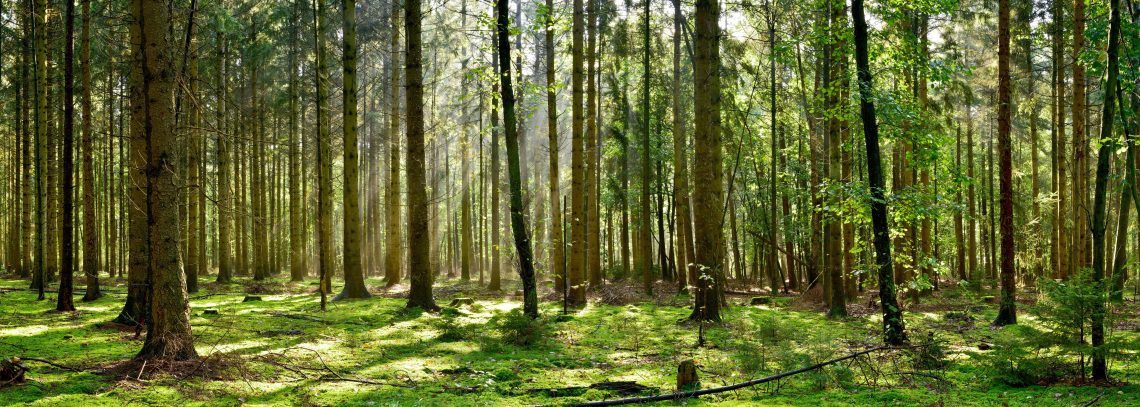
The Green Curtain is a proposed network of protected old-growth forests across the northern United States — ecosystems that remain cooler and more fire-resistant due to their dense canopy, water sources, and topography. They store large amounts of carbon, provide critical habitats for wildlife, and offer natural protection against climate extremes.
“The hope is to educate communities about what climate refuges are, why they matter, and how to build climate resilience locally,” said Thomas.
The roadshow is partnering with conservation and cultural organizations at each stop, including Standing Trees, which will provide access to old-growth forests in New England; the Archangel Ancient Tree Archive in Michigan, where students will explore tree cloning research; and the Missoula Art Museum in Montana, which will celebrate the group at the journey’s conclusion.
“We’re so excited for Maine’s climate ambassadors to come to Montana,” said Rick Bass, author, Stonecoast MFA faculty and Green Curtain Roadshow advisor. “This is a Maine-led climate leadership movement — art and science working together on behalf of the next 250 years.”
An ancient tree’s second life
The Black Ram guitar began as a 315-year-old Engelmann spruce in Montana’s Yaak Valley. When the tree fell during a timber sale at the edge of the old-growth forest, local conservationists recognized an opportunity — they rescued a four-foot section and brought it to Kevin Kopp, a master guitar craftsman in Bozeman.
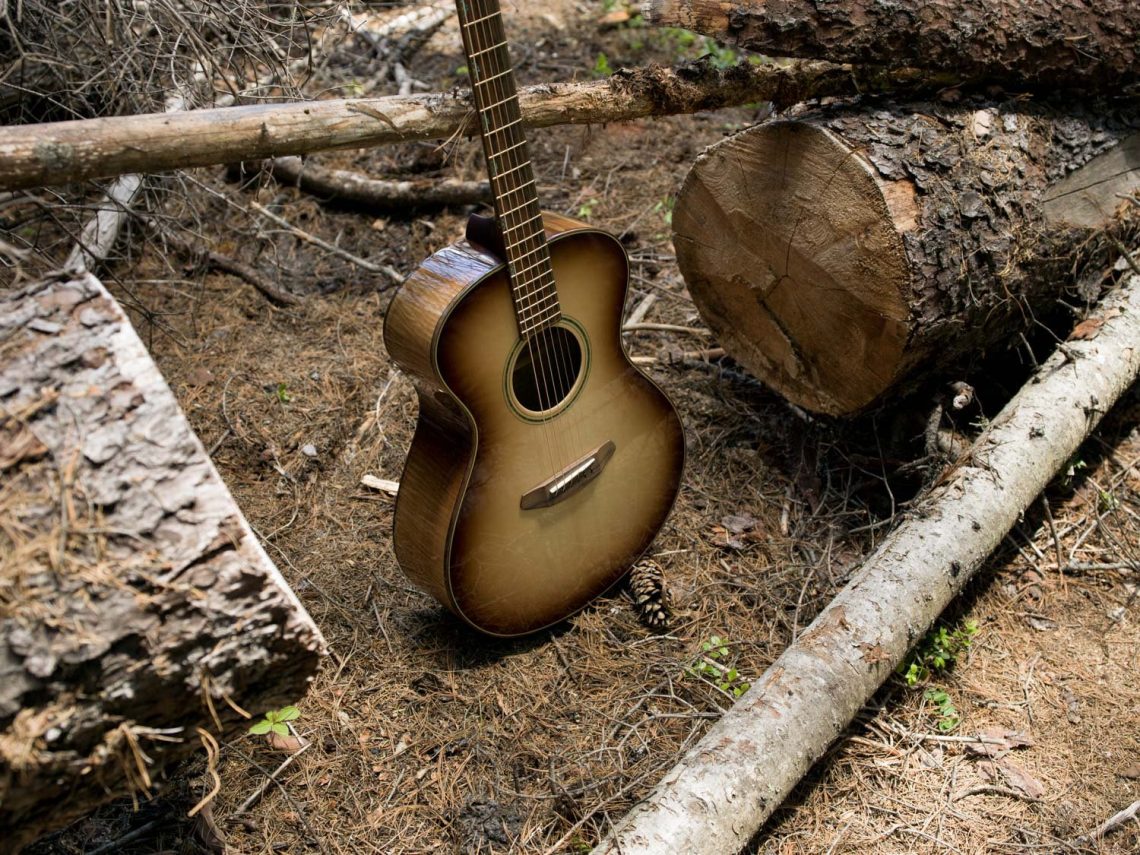
Kopp transformed the ancient wood into an instrument that has since become a nationally recognized symbol of forest conservation, played by musicians including Jeff Bridges, Maggie Rogers, and James McMurtry at events across the country.
“It’s become a symbol of the whole effort to protect these forests,” Bass said. “We think the guitar belongs to everyone. We want anyone — from beginners to professionals — to be able to play her and carry the message forward.”
This summer, USM’s students will have their turn to play the famous guitar — and carry its story across 2,000 miles of old-growth forests.
From stone coast to mountain wilds
The journey launches on July 8 with a public kickoff event in Portland, followed by the group’s first stop in New Hampshire’s Sandwich Range, where students will begin their fieldwork and creative projects. From there, the roadshow winds west, tracing the “Green Curtain” through the northernmost states of the U.S.
“They’ll cross cultural and ecological landmarks, from the Battle of the Greasy Grass to the Berkeley Pit in Butte, and ultimately the forests of the Yaak,” Bass said. “It’ll be exhausting, stimulating, and wonderful — a true pilgrimage of art, science, and restoration.”
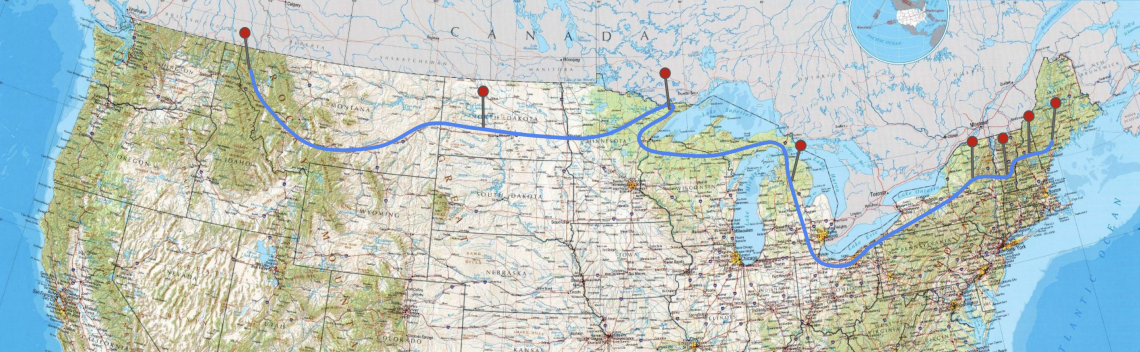
Stops include Michigan’s Archangel Ancient Tree Archive, where students will learn about efforts to clone and preserve old-growth trees, and Montana’s Horseshoe Hills, where they’ll camp and perform in a natural stone amphitheater.
Each stop tells a different story — from forests threatened by logging to landscapes shaped by Indigenous history and resilience. The diversity of these places will shape the art, music, and research students create along the way.
Building momentum at home
Before the group departs in July, they’re hosting their first major event on April 9 at the Smith Center at Wolfe’s Neck Farm in Freeport.
“The April 9th event is a huge opportunity to not only let the larger Maine community know about our work and what we’re doing, but to raise the necessary funds so that the trip can be as low or no-cost for participants as possible,” said Thomas. “The more funding we are able to raise, the greater our impact will be.”
A night with the Green Curtain Roadshow
Where: Smith Center at Wolfe’s Neck Farm, 180 Burnett Road, Freeport, Maine
When: April 9, 2026, 6–8 p.m.
Highlights: Silent art auction, refreshments, live music on the Black Ram guitar, and poetry readings
The April event is held in collaboration with Maine’s leading conservation and climate organizations, including the Natural Resources Council of Maine, Maine Climate Action Now, Sierra Club, Maine Audubon, and Oceanside Conservation Trust.
The event offers a preview of what communities along the route will experience — a chance to see how the group connects art, science, and storytelling around forests and climate.
What comes next
The work doesn’t end when students return. They’ll spend the fall refining the research, writing, music, and art created along the way, culminating in a December showcase in Portland — a celebration of what they found and what it means.
For Bass, this trip is just the beginning of a larger effort.
“This journey is about moving from climate grief to climate joy — mapping a new geography of hope,” he said. “Maine’s students are proving how art and science together can chart a better future.”