
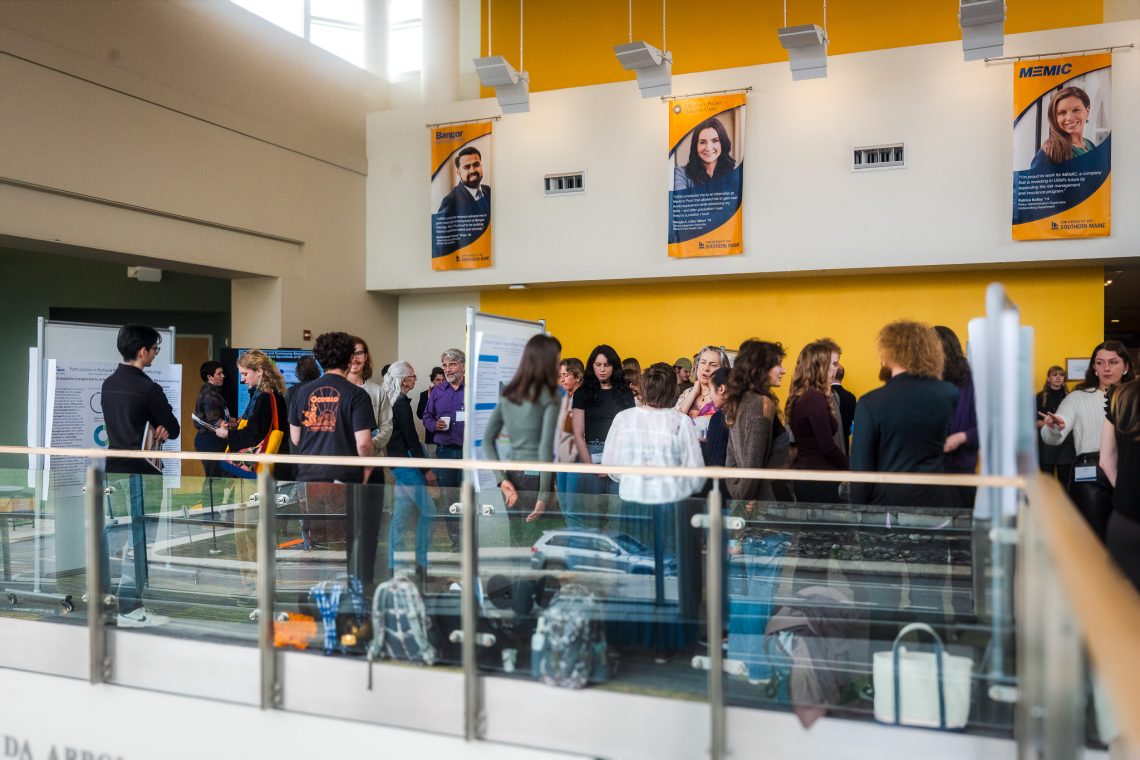
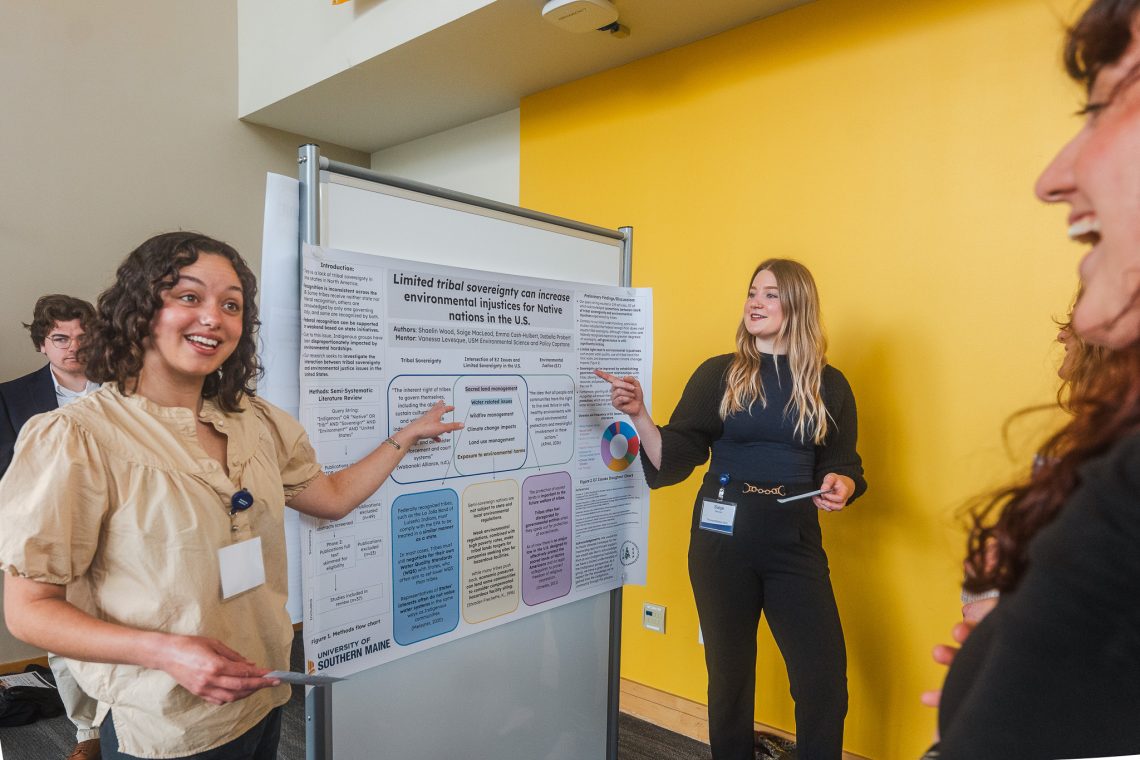
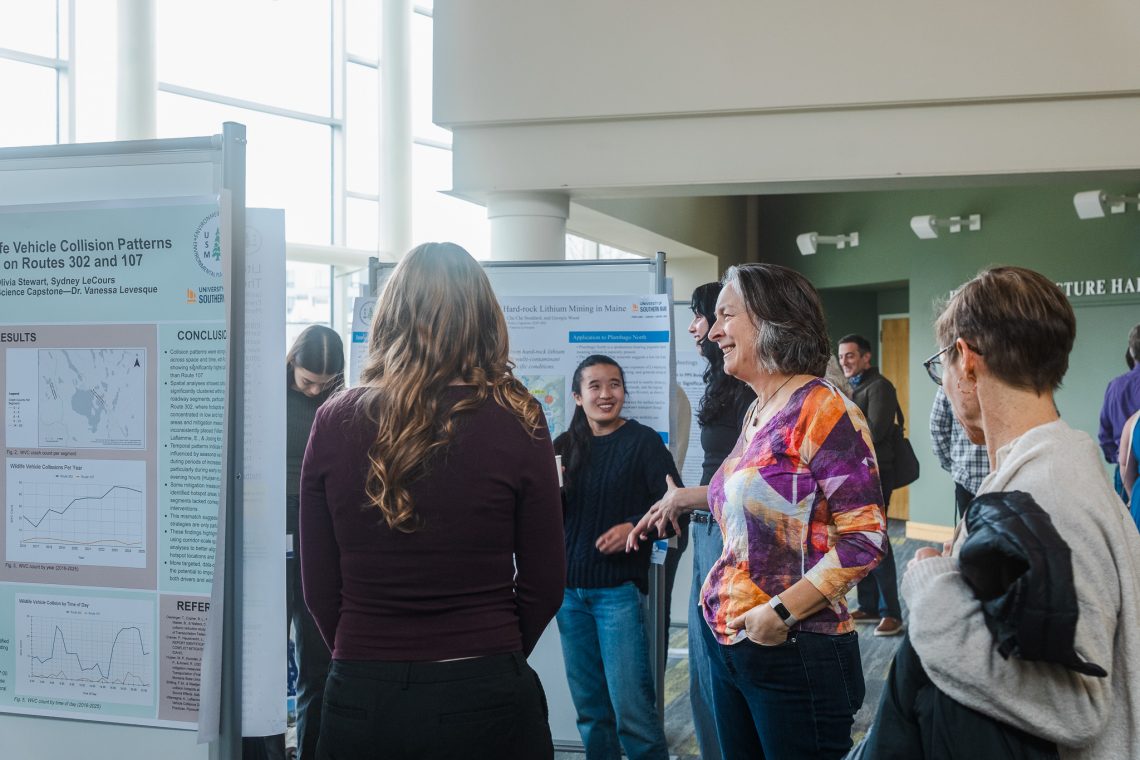
A total of 150 student researchers showcased work at the University of Southern Maine’sThinking Matters symposium on April 17 — the highest number of participants since 2020 — reflecting steady growth and a wide range of topics. Participants also included students and collaborators from Southern Maine Community College, Maine Medical Center Research Institute and Bigelow Laboratory for Ocean Sciences.
Undergraduate and graduate students filled the Abromson Community Education Center and Hannaford Hall on the Portland campus to share projects spanning the sciences, public policy, and the humanities — many with direct relevance to Maine communities.
Sonya Theriault, a graduate student in social science, examined how community paramedicine programs are addressing gaps in care by expanding the role of emergency medical services professionals beyond emergency response.
“My interest in community paramedicine became deeply personal after my mother had a stroke in 2024,” Theriault said. “What was supposed to be consistent support turned into one visit every three to four weeks, and during that gap in care, she developed complications that led to a fall and hospital readmission.”
Her research draws on Maine-based data and lived experience, pointing to how more consistent, in-home care can reduce emergency visits and improve long-term outcomes.
“Community paramedicine is about meeting people where they are, both literally and medically,” Theriault said.
Across a full day of programming, the symposium moved between poster sessions, oral presentations, podcasts, Zine presentations, and a fireside chat focused on how research connects to real-world challenges.Organizers framed the symposium around the idea that research starts with curiosity, often emerging from moments of frustration or fascination that develop into structured questions and, ultimately, new knowledge.estions and, ultimately, new knowledge.
During a conversation with USM President Jacqueline Edmondson, Chris Cary, assistant director in the University’s Office of Commercialization, described the role universities can play in helping ideas move from research into broader application.
“Our goal is to help good ideas travel,” Cary said, pointing to the importance of giving students the tools and pathways to carry their work beyond initial discovery.
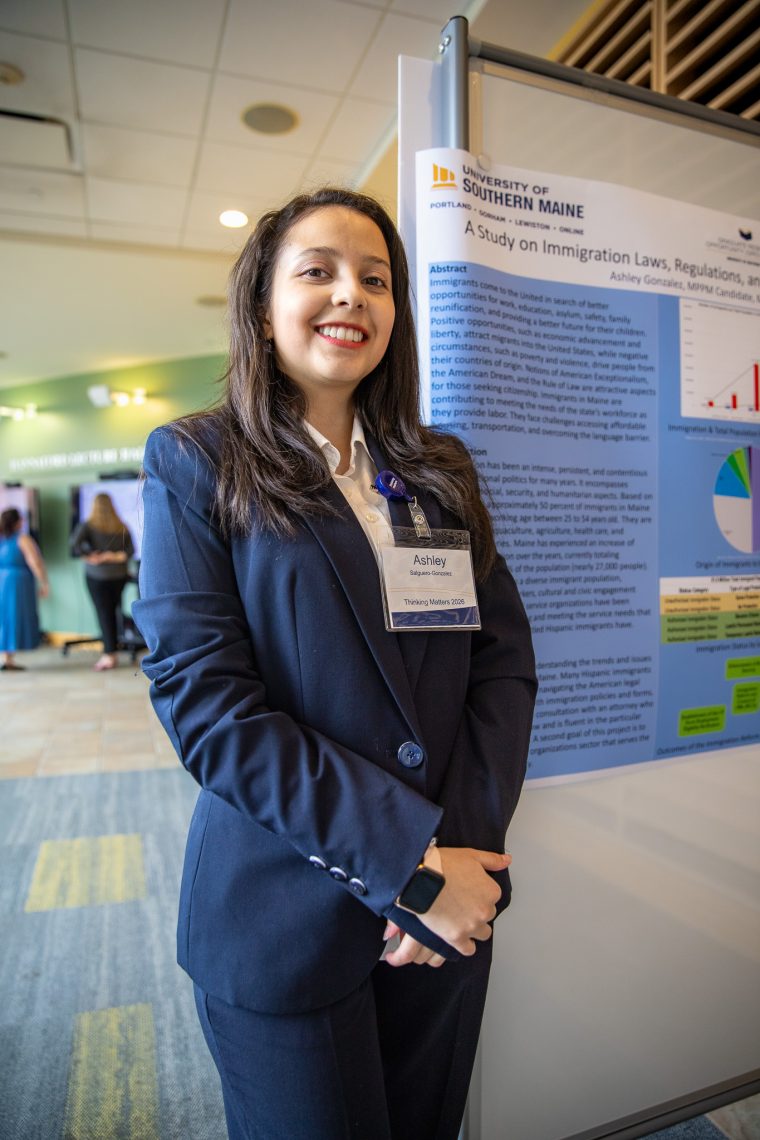
Ashley Salguero-Gonzalez, a graduate student in social science at USM’s Muskie School of Public Service, studied how immigration laws, regulations, and policies shape the experiences of Hispanic communities in Maine.
“As a Hispanic-American, a graduate student studying public policy, and someone who works as a Spanish interpreter in immigration cases, I think it is important to understand the ‘why’ behind the reasons people come to the United States,” Salguero-Gonzalez said. “I hope people can learn from my research about the importance of reading information from reliable sources and being well-informed when talking about topics such as immigration.”
Her work connects federal immigration systems with local conditions, examining how factors such as language access, housing, employment, and nonprofit support systems influence how communities adapt and integrate.
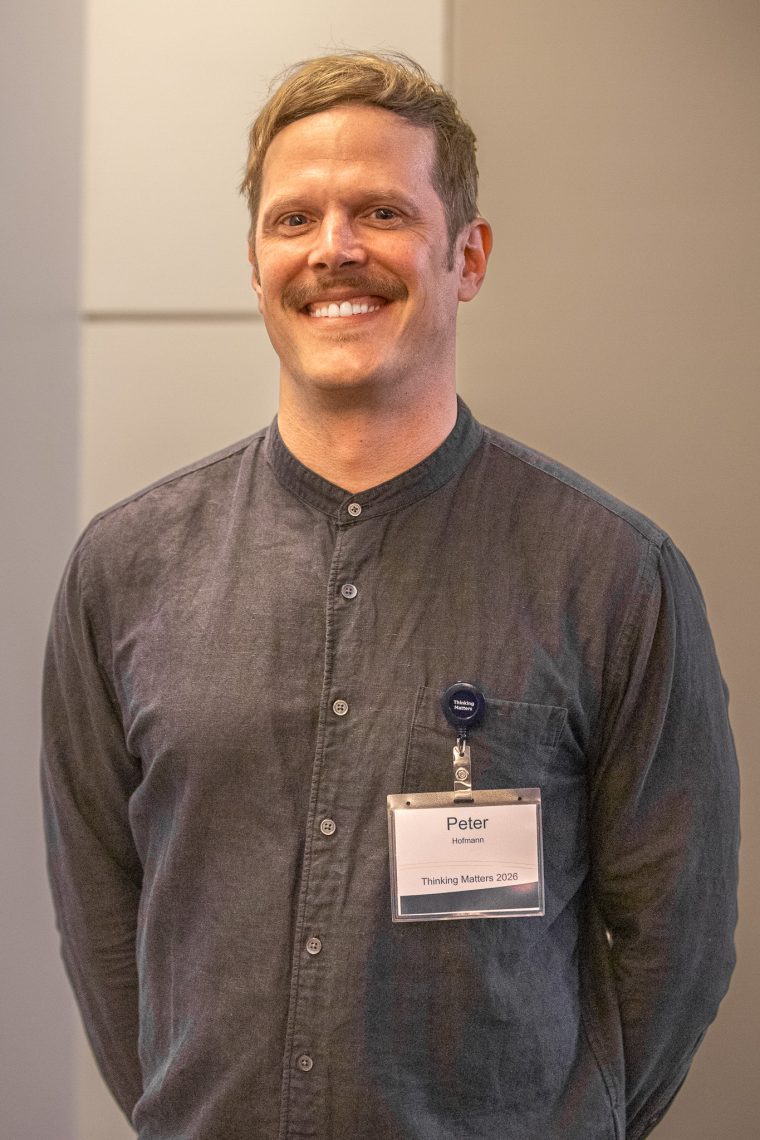
Peter Hofmann, a doctoral student in leadership, examined how U.S. military veterans understand emotionally supportive leadership within environments often defined by discipline and hierarchy.
“The responses indicated that compassion in the military is not only present, but is considered necessary for making meaningful connections with others,” Hofmann said. “It is not always called ‘compassion,’ but it shows up as a disciplined relational practice.”
Hofmann’s research draws on interviews with veterans across service branches, reframing compassion as a functional component of leadership rather than a contradiction to it.
The projects presented throughout the day reflected the early stages of ideas that began as questions and developed through research, experimentation, and reflection. Across disciplines, students shared work shaped by curiosity and sustained inquiry, offering a glimpse into how those ideas continue to evolve.
“Thinking Matters means that I get to share my findings and connect with other researchers,” Hofmann said. “I am always blown away by the variety of topics and every student’s passion for their field.”