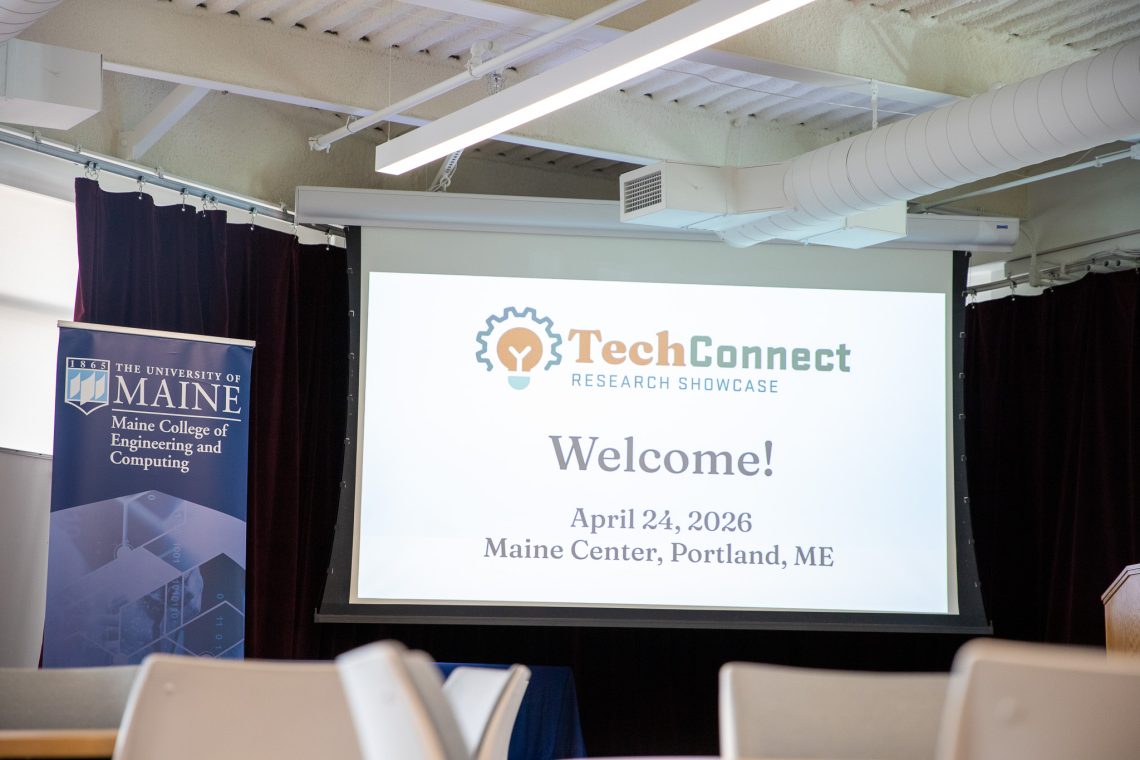
The University of Southern Maine (USM) and the University of Maine joined forces on April 24 to host TechConnect, a first-of-its-kind showcase connecting student researchers from across the University of Maine System with industry professionals.
Held at the Maine Center in Portland, the event brought together about 30 students in engineering, computing, business, law, and public policy, alongside representatives from 12 Maine-based and national companies. The day featured research presentations, networking, and an industry panel.
For USM student David Nelson, the energy in the room stood out.
“At one point, I looked at all the activity around me, and realized that I was surrounded by people who all wanted to make something better, who had already dedicated months to making that happen,” he said. “Something about that just felt right.”
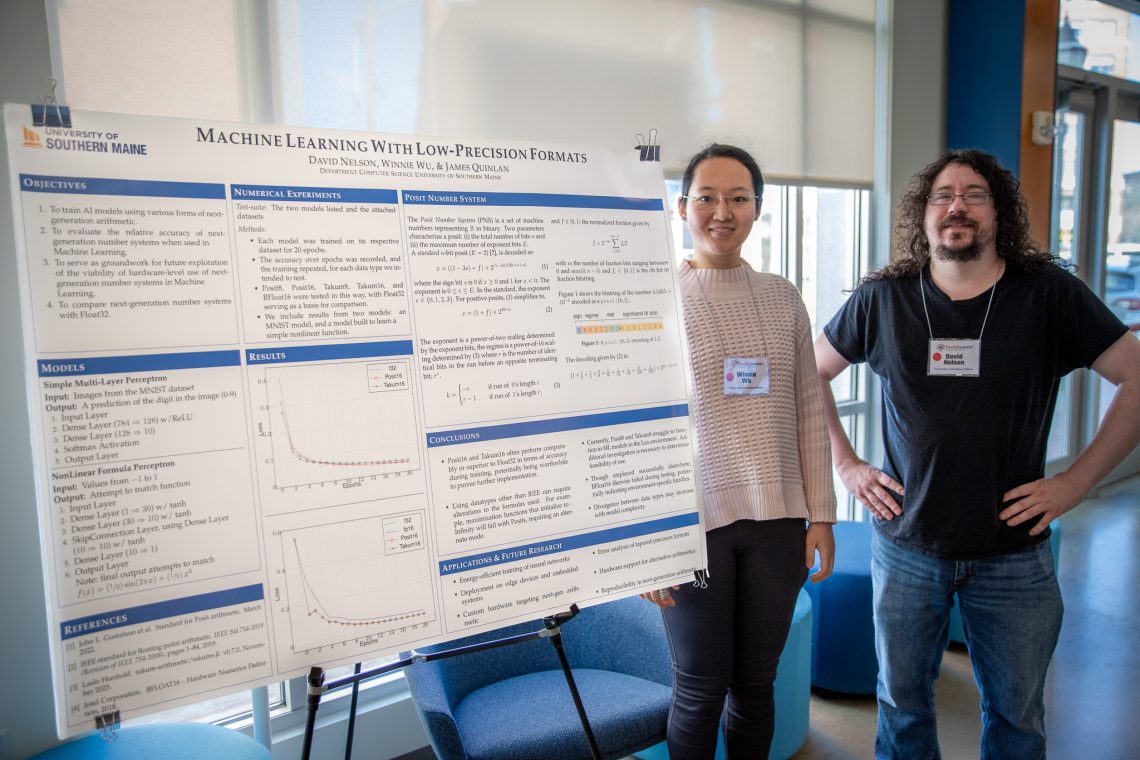
Nelson and fellow student Winnie Wu presented research on next-generation number systems for artificial intelligence computing, under the direction of James Quinlan, assistant professor in USM’s Department of Computer Science. Their project examined whether emerging number formats known as Posits and Takums could replace standard floating-point representations used in AI systems, potentially reducing the energy demands.
“When our professor first pitched the study, the idea that increased efficiency could potentially reduce the environmental costs of AI usage struck me as a worthwhile pursuit,” Nelson said.
Wu said the project pushed her beyond her comfort zone.
“I could not even fully understand what the project entailed at the beginning,” she said. “However, I have come to appreciate the opportunity to work with machine learning models. I enjoy the challenge of building various types of models to suit different datasets and testing needs.”
TechConnect grew out of conversations last fall between USM and UMaine faculty and was made possible through UMS TRANSFORMS, a multi-year, System-wide initiative supported by historic investment from the Harold Alfond Foundation to strengthen the capacity of Maine’s public universities to meet the state’s higher education, workforce, and economic development needs, including by promoting student success and pathways to careers.
“The overall purpose is for students to connect with industry, showcase their work, and have the opportunity to talk to people about future employment,” said Chris Maher, USM’s interim dean of the College of Science, Technology, and Health. “We hope participants make some networking connections and take away tips about what can help them to succeed in an internship or their future job.”
For Nelson, the event reinforced his future plans.
“In the last year or two, I’ve swung towards wanting to do more research in the future, and this has been a big part of that,” he said.