

Five members of the University of Southern Maine community attended the UArctic Congress 2026 in Tórshavn, Faroe Islands, from May 26 to 29, alongside nearly 1,400 researchers, policymakers, and institutional leaders from across the circumpolar north. The May gathering marked USM’s third consecutive UArctic Congress since joining the network in 2019.
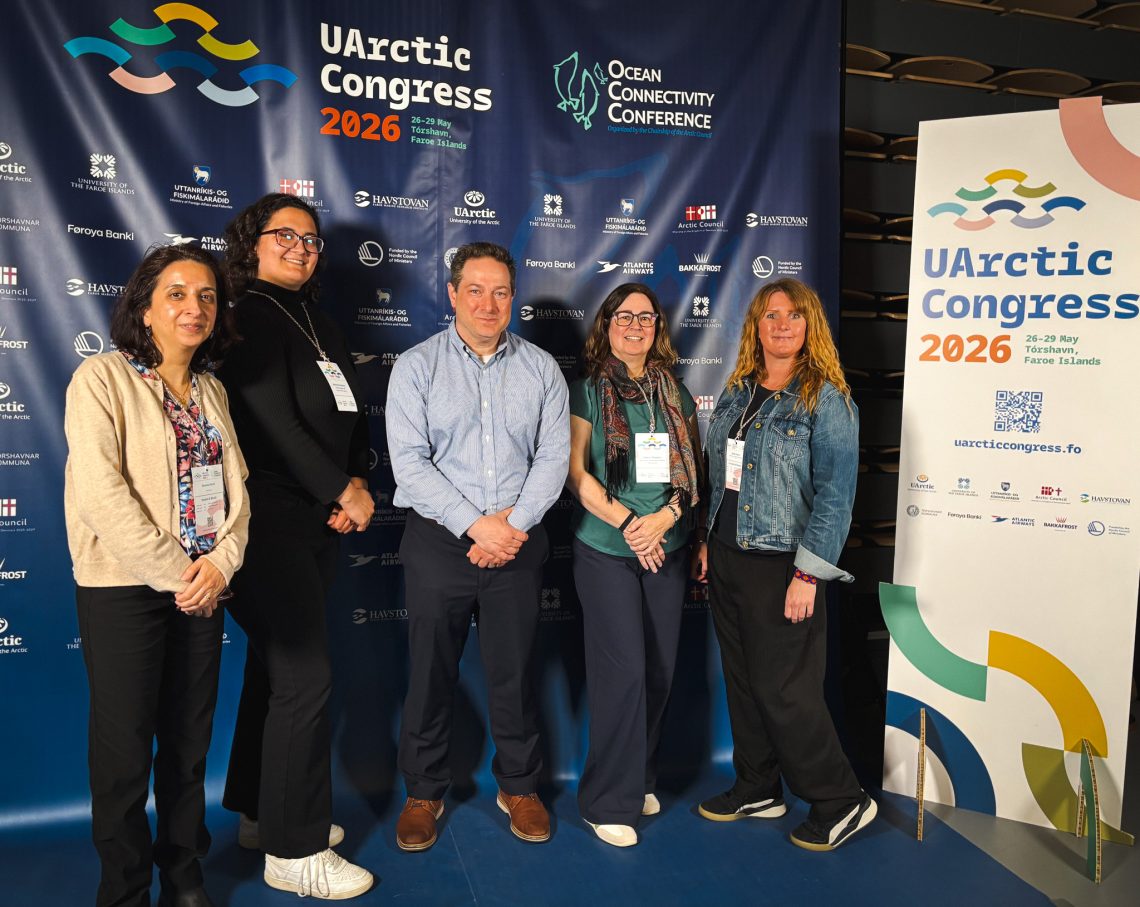
The UArctic Congress 2026
The UArctic Congress is a biennial event organized by the University of the Arctic — a network of more than 200 universities, colleges, and research institutes from around the world. The Congress brings together scientists, students, Indigenous representatives, and university leaders to advance knowledge and collaboration across the Arctic.
Hosted by the University of the Faroe Islands, the 2026 Congress focused on five major themes: sustainable economic development, oceans, climate change, biodiversity, and Indigenous peoples and northern communities. The program included hundreds of presentations, panel discussions, and poster exhibitions spread across all four days.
A distinguishing feature of this year’s gathering was the embedded Ocean Connectivity Conference, included as part of the Kingdom of Denmark’s chairship of the Arctic Council — the primary intergovernmental forum for Arctic nations. The conference examined how Arctic marine systems are being reshaped by environmental change and increased human activity, and what governance responses are needed to protect those ecosystems and the communities that depend on them.
For USM, whose work — particularly through the Maine North Atlantic Institute (MNAI) — has long engaged questions of ocean health, economic development, and community resilience in the North Atlantic, the Congress offered a direct opportunity to connect with institutions and researchers working on those same issues across the Arctic and beyond.
“As a member of UArctic, USM has a voice in shaping the priorities and future direction of one of the world’s leading networks focused on Arctic education and research,” said Tracey Meagher, MNAI project manager and a member of USM’s delegation.
USM at the table
USM’s five-person delegation reflected the breadth of the university’s engagement with UArctic, spanning faculty, administration, and graduate study. Ross Hickey, associate provost for research and director of the Maine Economic Improvement Fund (MEIF), represented USM at the UArctic Assembly — the network’s annual members’ meeting for institutional decision-making. Firooza Pavri, associate dean of the Muskie School of Public Service and professor of geography, and Tracey Meagher both presented at the Congress. Rounding out the group were Kelli Park, a doctoral student in USM’s Leadership program, and Katie Ramirez, a Muskie School graduate — both alumni of USM’s International Graduate Student Research Cohort (IGSRC) who came to Tórshavn to lead a session they had designed and proposed themselves.
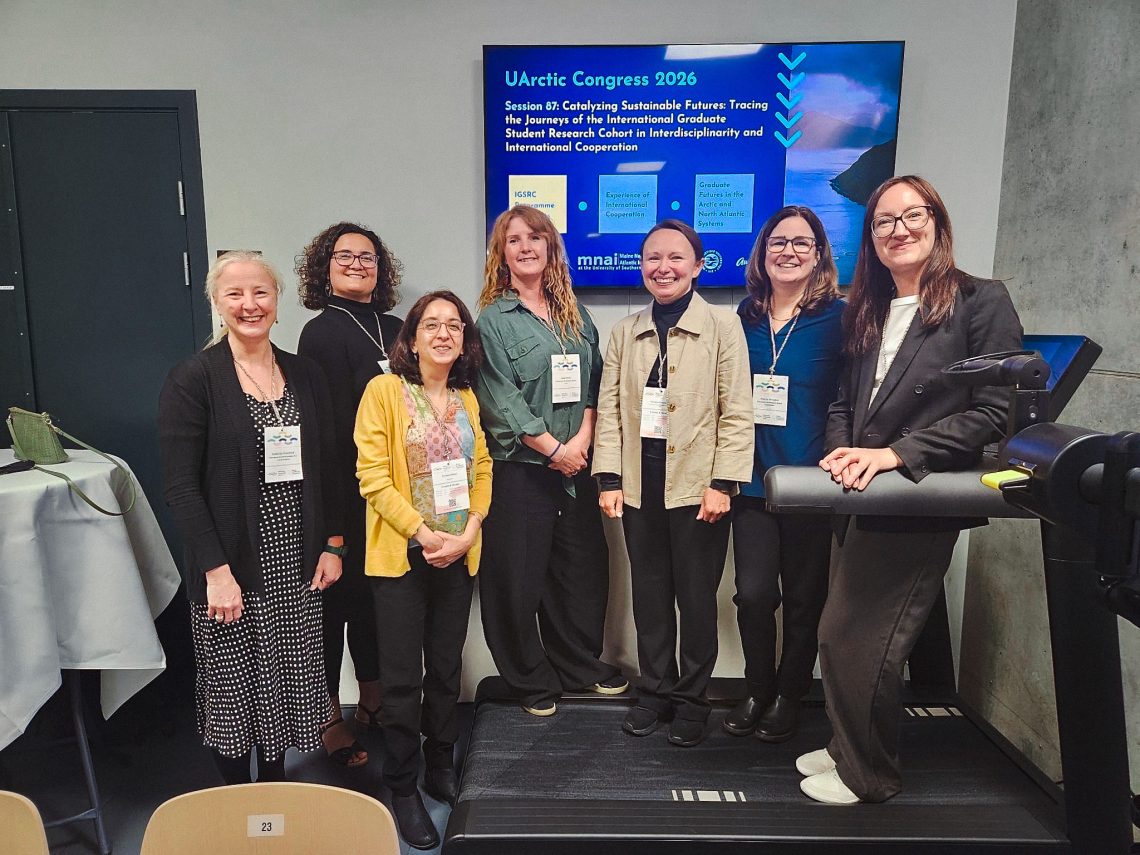
The IGSRC is a UArctic-funded program that brings together graduate students from universities in Maine and across the North Atlantic region to collaborate on year-long, cross-disciplinary research projects. Park and Ramirez both participated in the 2023 cohort and have continued developing the work that experience produced in the years since.
At the 2026 Congress, they presented that work in a session titled “Catalyzing Sustainable Futures: Tracing the Journeys of the International Graduate Student Research Cohort in Interdisciplinarity and International Cooperation.” The session gathered alumni from multiple cohort years to reflect on what the program had produced, examining how international, interdisciplinary collaboration among graduate students translates into real research outcomes and professional trajectories.
“Seeing IGSRC alumni lead a session on an issue they are passionate about felt like a true full-circle moment and evidence of the program’s success,” Meagher said.
A growing presence in the Arctic
USM’s attendance at the 2026 Congress reflects a relationship with UArctic that has grown steadily over the last seven years. In 2022, USM was among the co-hosts of the UArctic Assembly in Portland, Maine, welcoming member representatives from across the globe. Today, faculty are active in UArctic research networks, collaborating with scholars across the Arctic and North Atlantic on topics ranging from folklore and Indigenous knowledge to community health.
“Showing up, participating in person, and investing in these connections is so important,” Meagher said. “Our presence demonstrates USM’s commitment to Arctic and North Atlantic issues while creating opportunities for collaboration that can have a lasting impact long after the event concludes.”