
Most college programs ask students to pick a lane. The University of Southern Maine’s new Polymath Pathways program is built for those who have always been drawn to more than one — curious across disciplines and eager to pursue more.
Launching this fall, Polymath Pathways is a new undergraduate program at USM offering five dual-major degree tracks, each one structured, adviser-supported, and designed to be completed in four years at the cost of a single degree.
The premise is straightforward: Students who spend four years developing fluency in two distinct fields will graduate with broader knowledge and a more competitive edge in the job market. President Jacqueline Edmondson is one of the program’s most vocal champions.We spoke with her about what sparked her interest in polymathy and what she hopes the program will mean for USM students.
Q:
What sparked the idea for Polymath Pathways, and what were you hoping it would do for students?
A:
When I was new to the presidency here at USM, I held a retreat for the Cabinet members and deans. I asked them to read Alternative Universities: Speculative Design for Innovation in Higher Education by David Staley. My hope was to understand how USM’s leadership viewed the university and its future. The book sparked rich conversations about who we were and what we could become.
Polymathy was the idea that sparked the most conversation, so I started bringing it to the wider campus community — hosting a town hall and gathering faculty, staff, and academic leaders to think through what a polymathic curriculum could actually look like.
We weren’t necessarily thinking about students who were interested in double majors, but instead were thinking about how to best educate students for a future career and life as citizens in a democracy where the world is quickly changing and there are many unknowns. To us, Polymathy Pathways will work to ensure that students have the knowledge, skills, and commitments to meet that moment.

Q:
If you were a student today, which would you choose — Philosophy & Finance, History & GIS, Philosophy & Biology, English & Marketing, or Art & Psychology — and why?
A:
I don’t think it’s easy to choose! I’m intrigued by all of them because each has some element that is inherently interesting to me. But if I had to choose at this moment, I would select History & GIS, particularly after living here in Maine and experiencing our deep connections across the North Atlantic. There’s something compelling about understanding how people have inhabited and moved through this landscape, and what that history still means today.

Q:
What does this actually look like for students after graduation — in a job interview, on a resume, in a career?
A:
There is research supporting the idea that people who complete two undergraduate majors in seemingly unrelated fields are able to navigate changes in the employment landscape over the long term more easily than those with a single degree.
We deliberately couple the arts and humanities as one pillar of the polymathy pathway because we know they provide the durable skills — curiosity, creativity, critical thinking, communication, and ethical decision-making — that employers value across every career path.
Q:
Will this make graduation take longer or cost more than a traditional degree?
A:
Most Polymath Pathways are designed to be completed within 120 credits, with no extra time or additional tuition. A few pathways may require slightly more, so that could mean a course or two exta and some added per-credit costs. The key is starting in your first semester. The earlier you begin, the more room you have to plan — and our advisers will be with you every step of the way.
Q:
Beyond the two majors, what does the day-to-day experience actually look like for a Polymath student — the classes, the advising, the community?
A:
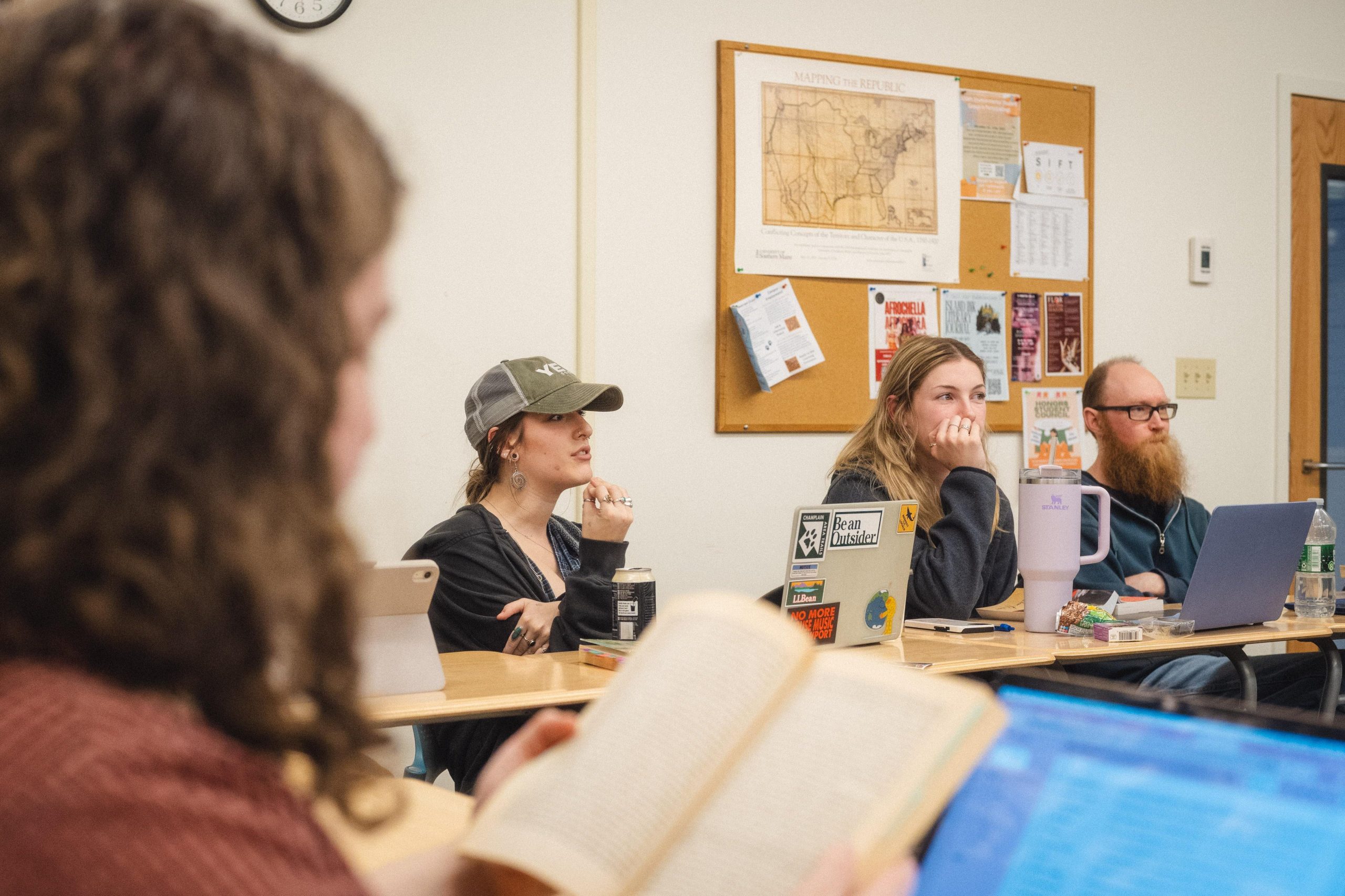
These pathways provide a new and exciting way for students to earn an undergraduate degree. What’s different is the community. Polymath students will be in classes with peers and faculty from different fields, bringing different perspectives to the same questions. I think that’s where a lot of the real learning happens.
Hear it from a self-proclaimed polymath

Nick Offerman
Good Hang with Amy Poehler