
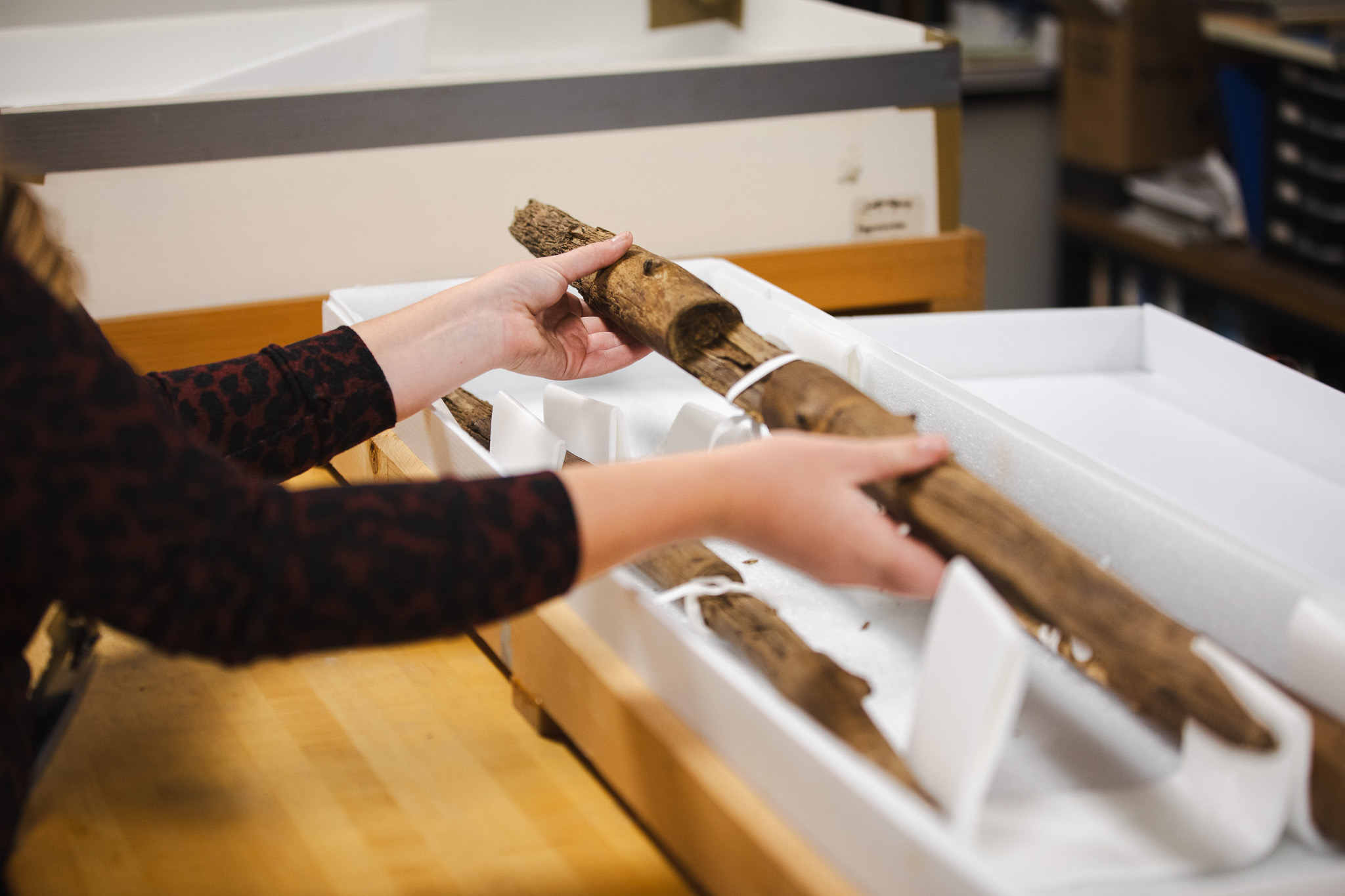
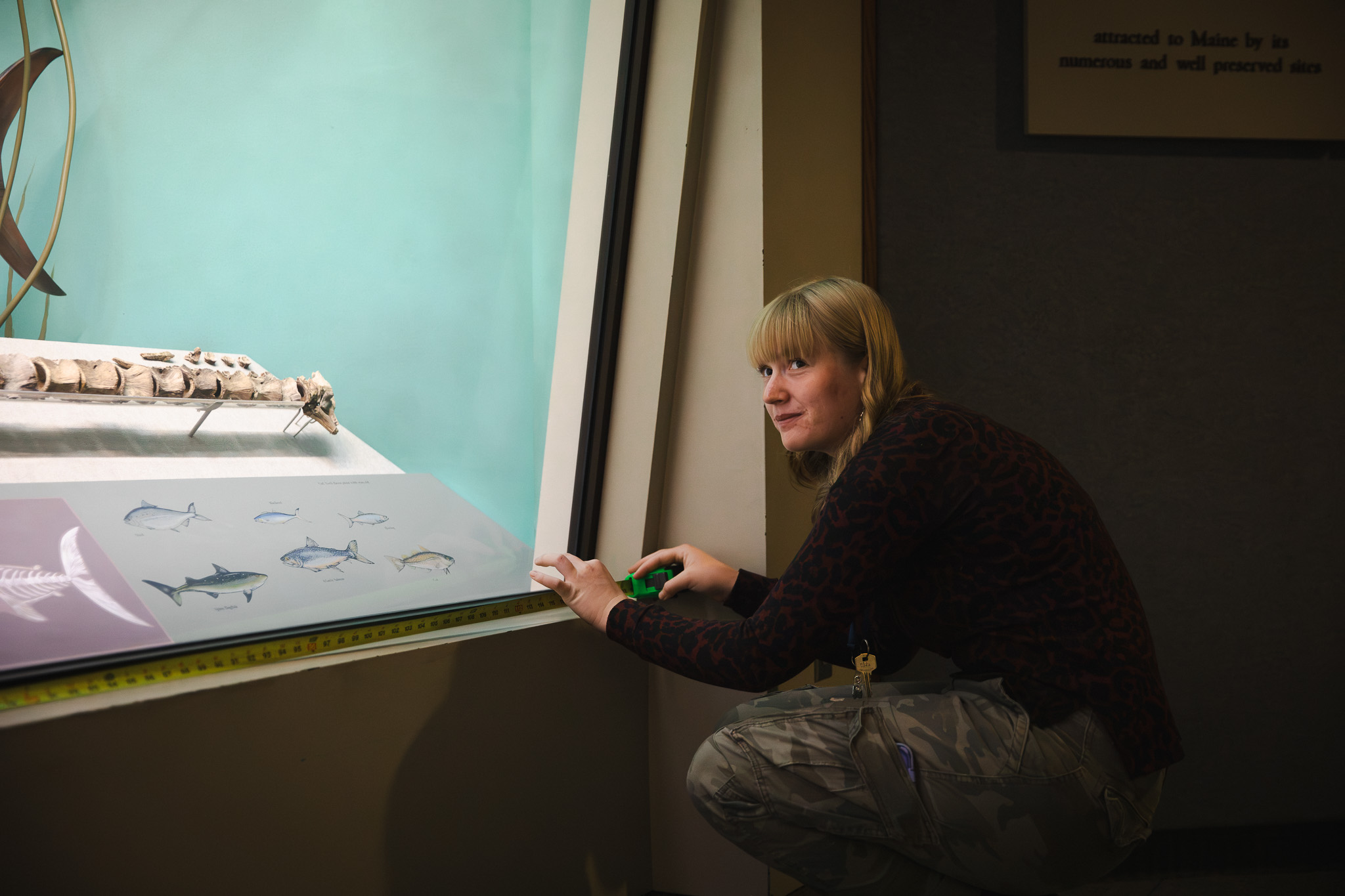
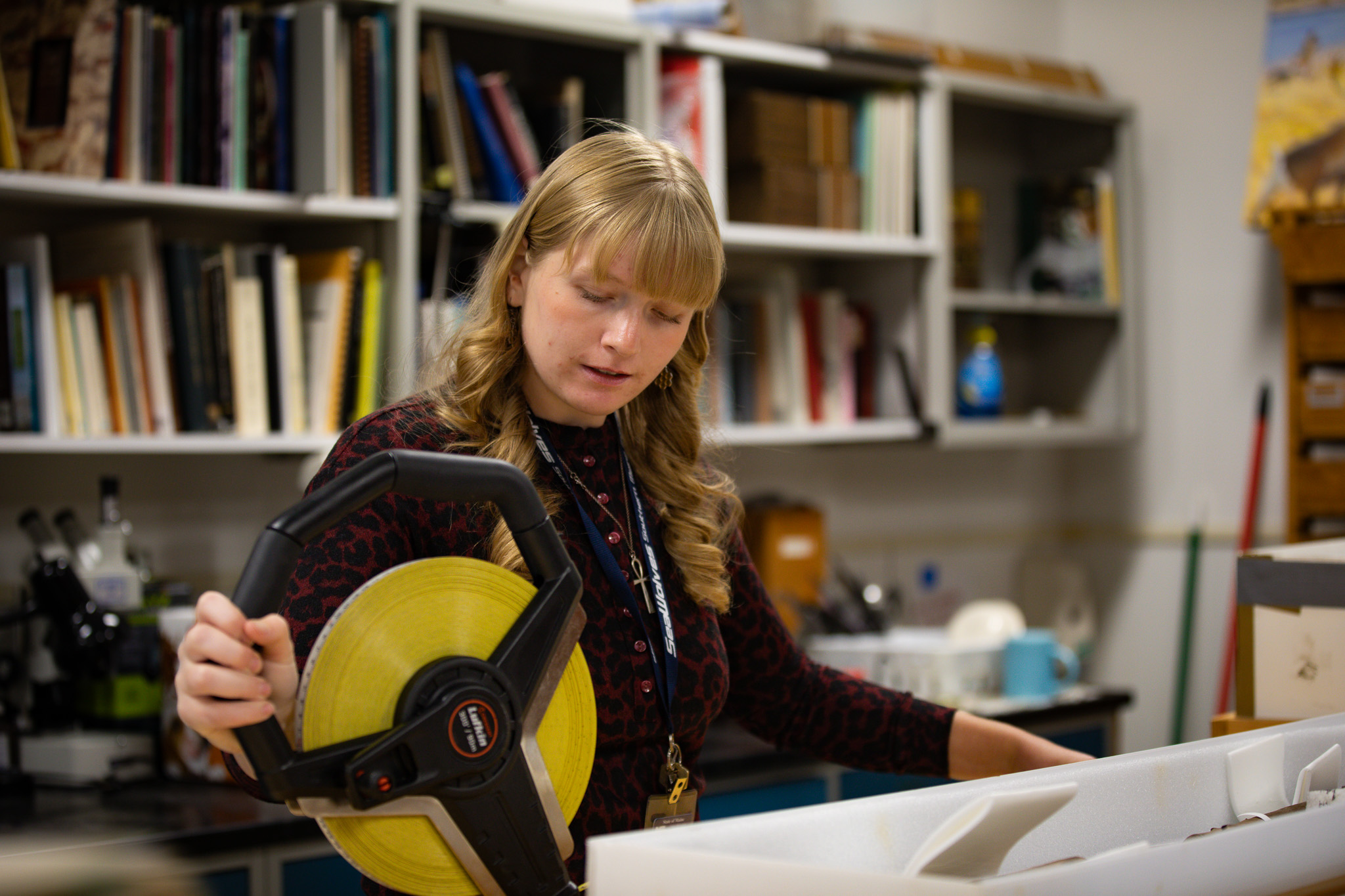
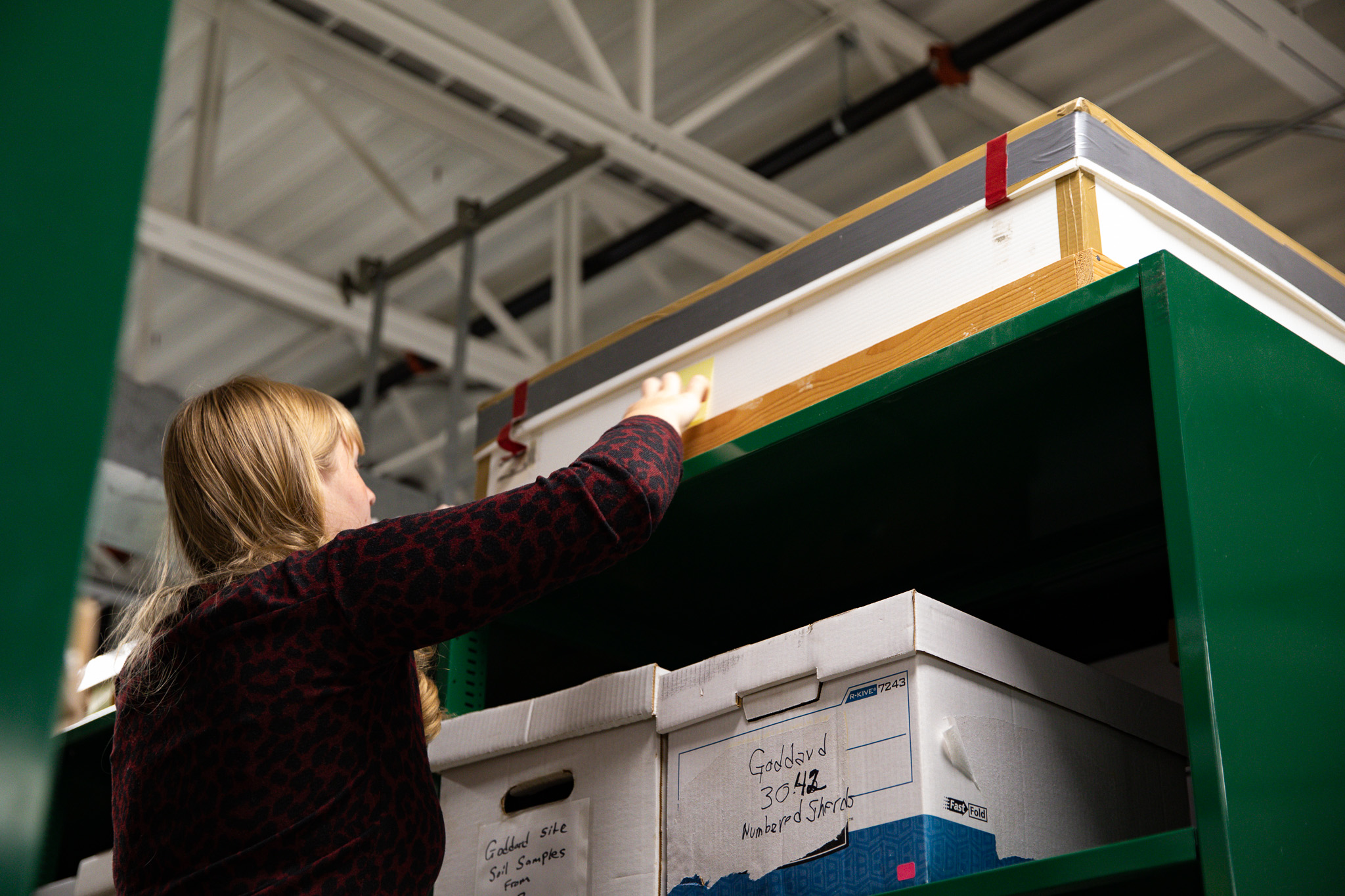
This summer, Camdyn Johnson spent her days in the halls of a museum under renovation, measuring 500-year-old fishing tools and combing through soil samples for clues about what people in Maine ate 12,000 years ago. The rising University of Southern Maine senior helped rebuild a case in the Maine State Museum’s next major archaeology exhibit, one plant, one berry, and one ancient wooden stake at a time.
Camdyn will graduate next spring with a degree in geography-anthropology, a concentration in cultural heritage management, and minors in biology and archaeology. She’s also a softball player heading into her last year on USM’s team. Somehow, she makes room for it all — and keeps saying yes to more.
How a childhood spent digging turned into a degree
Long before Camdyn set foot on USM’s campus, her backyard in Bath was already a dig site.
“I used to dig up historic pottery in my yard,” she said. “I was always digging holes, always collecting things that were historic, prehistoric, anything. I just have always loved artifacts.”
Becoming an archaeologist wasn’t just a passing idea, it was the plan — the whole way through. By the time she graduated from high school, Camdyn knew exactly what she wanted to study, and USM had the perfect set up: a geography-anthropology major and archaeology minor.
Regardless of her conviction, she still had her doubts.
“Coming to USM, I honestly questioned my choice of degree at first,” she said. “Am I going to make money? Am I going to be successful in archaeology?”
But the scholarships made the risk feel worth taking.
“I saw that I could go to USM for free and I was like, I might as well jump in and take this risk,” she said. “It’s always been my dream. Why not chase it?”
Finding her niche, one class at a time
Camdyn started her first semester at USM already declared — she just didn’t have a clear direction yet. Archaeology, she quickly learned, is a field of specialists. Most archaeologists have a very specific niche, and Camdyn was still on the lookout for her own.
She approached this the same way she’d once gone digging for pottery in her backyard: by picking up whatever caught her interest.
“I took African American archaeology, I took public archaeology, I took historical archaeology, I took Gulf of Maine archaeology,” she said. “I really just took any and all the archaeology classes I could — I had no idea what my niche was.”
During her sophomore year it all came together.
“I took a forensic anthropology class, and something about the study of human anatomy just clicked for me.”
Camdyn Johnson ’28
It’s what finally led her to her specific focus, bioarchaeology — working with skeletal remains to understand how people and animals once lived. She added a biology minor soon after, layering in anatomy, physiology, genetics and pathophysiology on top of her existing coursework.
Now that she had a clearer sense of direction, she could take on something bigger, and USM had just the right opportunity waiting for her.
Where a research program met a specialty
Camdyn didn’t have to wait until grad school to do real research. Through USM’s Undergraduate Research Opportunities Program (UROP), she spent much of her junior year working alongside Dr. Nicole Fournier, analyzing roughly 875 prehistoric teeth from a collection of Taíno remains found in Haiti. Together, they searched for signs of decay, wear patterns, and any other clues to the diet of a people who lived thousands of years earlier.
It was during this research that Camdyn narrowed her focus even further.
“I already knew I wanted to work with remains, and then I scored this project with the teeth looking at diet,” she said. “That’s really where I found my very specific niche of analyzing diet change over time.”
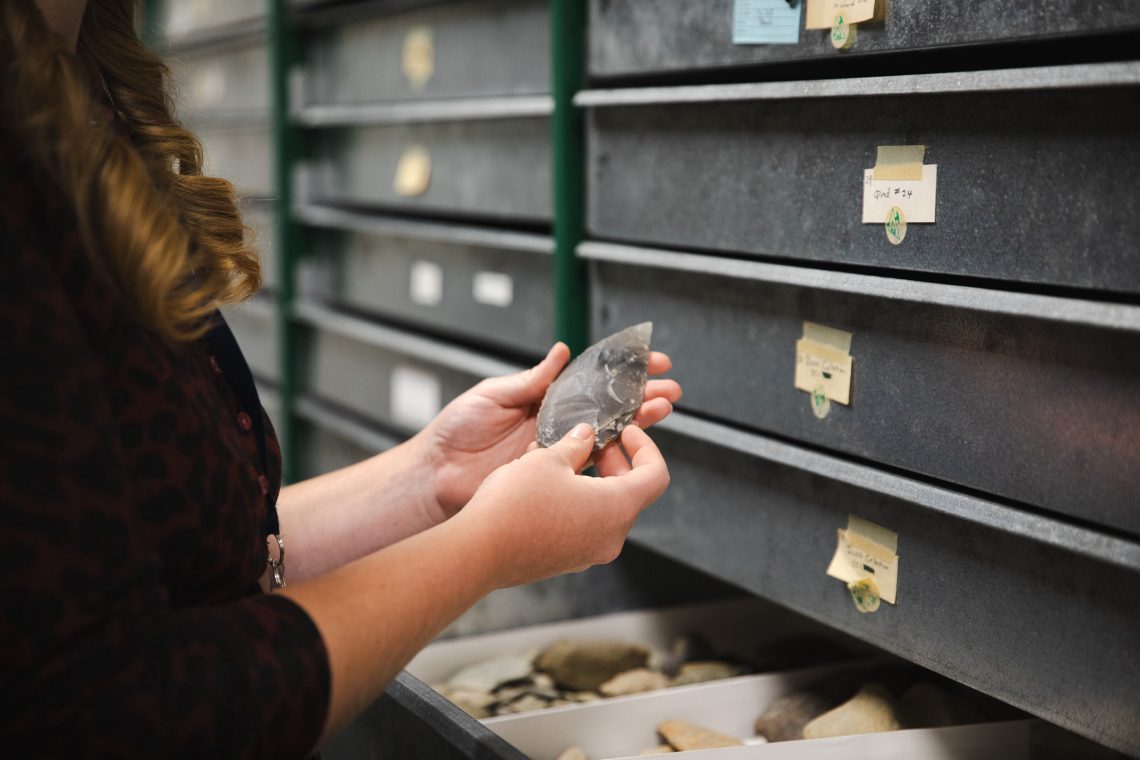
At the end of her UROP project, she presented her findings at USM’s Thinking Matters conference — the university’s annual student research showcase. That meant turning nearly a year of dental analysis, wear and decay data, and isotopic testing results into something the average person could actually follow.
“I had to get up there and present my research in front of everyone,” she said. “I had to learn to make a poster and present scientific information in a way that is understandable to people.”
It’s a skill that would come in handy again soon, once her research had a much larger audience.
The internship she built from scratch
What started as a broad interest in bioarchaeology had sharpened into something much more specific: diet. That kind of specialty doesn’t come with a lot of built-in opportunity — especially in a field as small as archaeology. So when it came time to look for an internship, Camdyn leaned on something she’d learned early: in archaeology, opportunity often comes down to who you know.
A conversation with professor emeritus Nathan Hamilton led to a phone call to Andrew Beaupre — the Maine State Museum’s curator of archaeological collections.
From there, an internship took shape, one built entirely around her, at a museum that didn’t even have a formal internship program before this.
“We constructed my internship around some of the work that needed to be done for the exhibit,” she said. “I told them I’m specifically interested in diet studies, so Andrew gave me three cases based around diet research.”
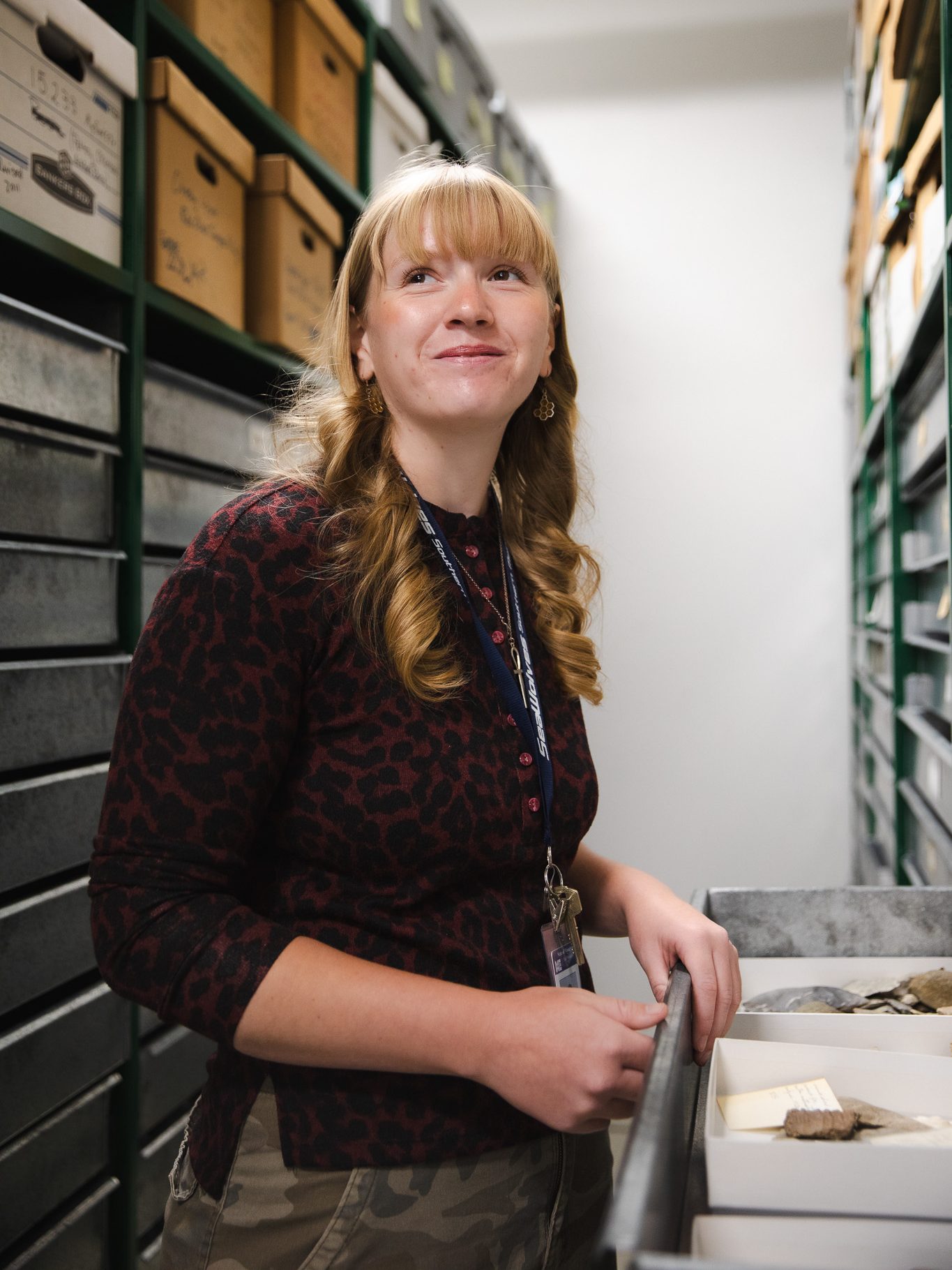
Camdyn started her internship that May, and by June, she was doing the kind of work most undergraduates only read about. Inside the museum’s collections building, she helped reimagine and reconstruct multiple display cases within the “12,000 Years in Maine” archaeology exhibit, still years from opening.
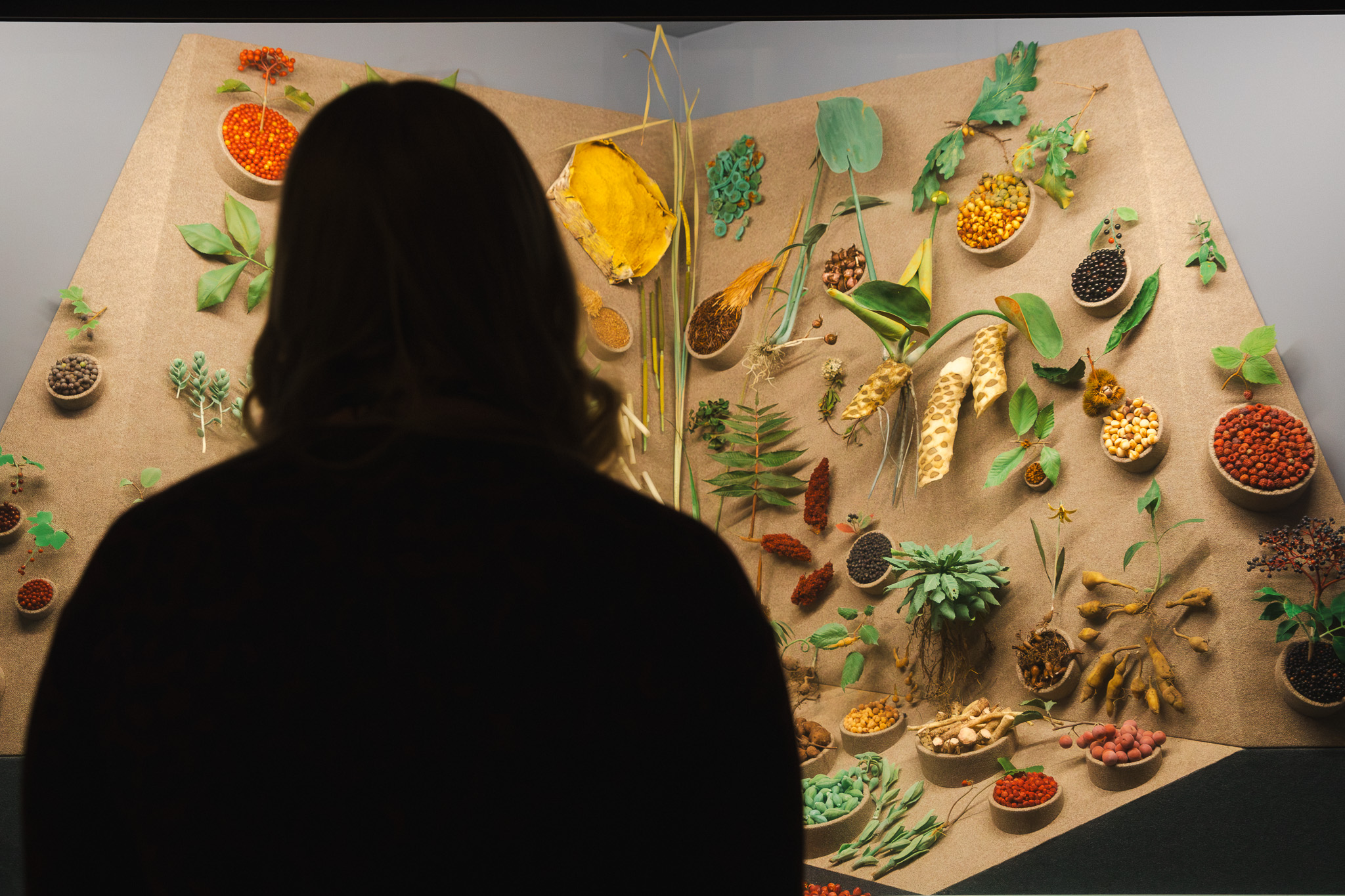
“One of the cases I’m redesigning is the paleoethnobotany case,” she said. “Paleoethnobotany is basically looking at plant remains to determine how people were interacting with their environment — so I’m doing a diet profile using paleoethnobotanical methods to reconstruct the case, to display what types of plants prehistoric peoples in Maine were using and eating.”
She also worked on a fishing case and a hunting case, each project circling back to the same research question, “What did people eat, and how did they get it?” It’s a narrow specialty, in a small field, in a small state, and Camdyn found the one internship that fit.
Beyond the artifacts: a different kind of discovery
Archaeology hasn’t been the only constant in Camdyn’s life. She’s been a softball player since she was eight years old, and this year, she’s heading into her last season on USM’s team.
“Softball has always been a huge part of my life and part of my identity,” she said. “I am a softball player.”
It wasn’t just something she did alongside everything else — sometimes it’s what made it all possible.
“Softball has always been a rock for me — when things are tough in school, or tough outside of softball, you go there and it all goes away,” she said. “You only have one thing to focus on: playing softball and having fun.”
Between her full course load, UROP, and a softball season, Camdyn’s spring semester didn’t have much room to spare.
“If I can manage practice every single day, on top of 18 credits, on top of a research project, on top of Thinking Matters, I think that I can really do anything,” she said.
This is the mindset Camdyn is approaching senior year with: say yes, figure out the rest later. She’s already applying to another UROP project and eyeing graduate school applications. Beyond that, her focus is on building connections.
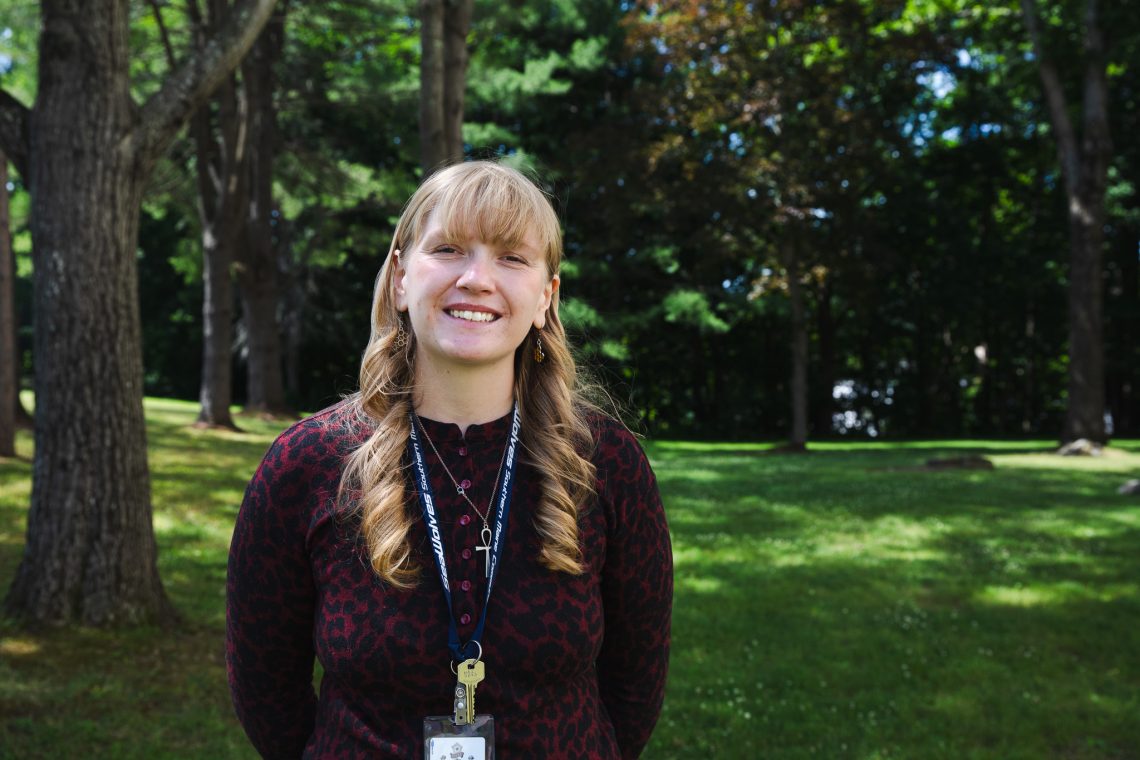
“My biggest goal for my senior year is to build the most amount of connections that I possibly can, which will help propel me further in my career,” she said.
Looking back at what got her this far, she doesn’t credit talent or luck, but the opportunities she embraced and her willingness to take them.
“I think the research opportunities at USM have really been a cornerstone for me,” she said. “Those outside-the-classroom opportunities are really what propelled me forward.”
More than anything she’s studied, Camdyn’s learned a lot about herself these past few years.
“Imposter syndrome has probably been my biggest opponent,” she said. “My advice: you’re always good enough, whether the opportunity presents itself to you or you’re the one seeking it out.”