

Registration opens. You pull up the course search at the University of Southern Maine, and there it is next to every class: in person, blended, online.
Those three words may seem simple, but they can shape everything from your daily schedule to how you learn, connect with classmates, and balance school with the rest of your life. .
Few people understand those options better than Cody Rohde. As a USM student, he took classes in all three formats, powered through online coursework on a laptop that crashed constantly, and took seven years to earn his undergraduate degree — a timeline he says is perfectly fine.
Today, Rohde is an academic advisor at USM, helping students navigate the same decisions he once faced. We sat down with him to talk about the differences between in-person, blended, and online courses — and how to choose the one that’s right for you.
Q:
Let’s start with the basics: What’s the difference between in-person, blended, and online classes?
A:
In person is exactly as it sounds. Those classes meet at certain times based on whatever the student selects. So if a student picks a course from 9:30 to 10:45 a.m. on campus, they’ll be expected to be in class at that time.
Online can get confusing, because there are different modes online. I get a lot of questions from students about the difference between an online course and an online live course. With online, a teacher posts information about the week and students meet deadlines throughout the week, but they can build their schedule how they want. Online live meets at specific times, entirely through Zoom.
Blended means the class has in-person meetings throughout the semester and uses the online piece as well. I took a class like that once. We met every other week in person, and the other weeks were online. That’s not how it works for every course. I’ve seen professors meet at the very beginning of the semester and then not meet again until November. It depends on how the professor wants the class to go.
One thing I note to students is that just because you’re not meeting in person doesn’t mean the professor isn’t available. Students get confused about that. “Oh, we’re not meeting until November. Can I still talk to my professor?” Of course. Professors make it known at the very jump of the semester. These are my office hours, email me any time, chat with me if you have questions. They’re always there to help.
Q:
What are the biggest benefits of in person and online courses?
A:
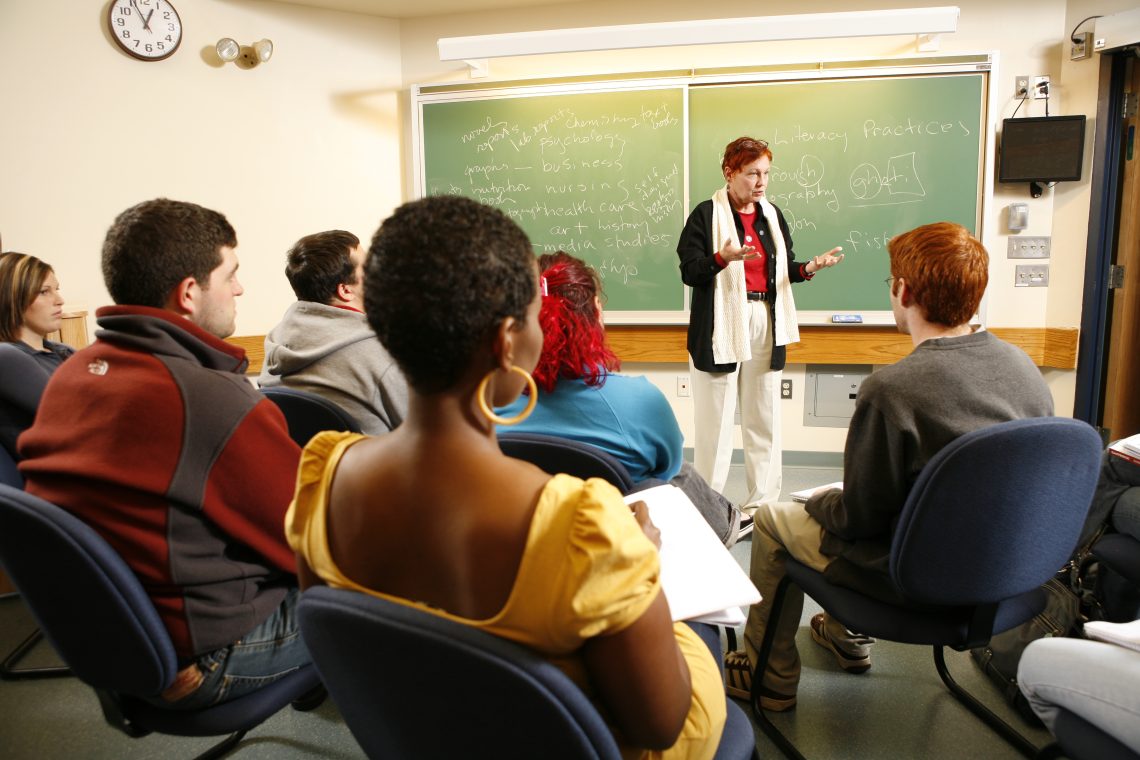
One of the biggest advantages of in-person classes is the opportunity to build connections. Every student takes an introductory course in their major, and for the ones who stay in that major, it’s the first of many where they’re seeing other students on the same path. Especially during your first year, those relationships can make a big difference.
When I came to USM, I didn’t know anybody. All of my friends went to other schools or stayed home. Through in-person classes, I met people I could study with and be comfortable with in the classes I took throughout my major.
In person also gives you access to discussions you’re not going to get online, whether that’s the professor getting to know students, having fun in class, or real in-depth conversation. A student told me recently, “I learn better in in-person classes. I’m able to focus and get more tailored help.”
The biggest benefit to online is the freedom to work around your own schedule. A lot of students in the majors I work with are athletes, so online means nothing conflicts with practice or study times. If they work a job, nothing conflicts with that either.
Q:
What does it take to be successful in an online course?
A:
If you don’t have a good internet connection or access to one, you probably shouldn’t take online classes. A working laptop is also advised. As an undergrad I had a really, really bad laptop. It crashed out all the time, and even though I preferred online classes, it made things difficult.
Good internet, good computer. And I don’t recommend taking online classes on your phone. A lot of students try to log on that way, and it makes things really difficult. It’s not the best way to learn and retain information.
Certain classes are just better in person, something like sign language, or sciences where there are lecture labs. An intro to communications course might be fun to take online, but if it’s going to require hands-on work, look at what’s available in both formats before you decide.
Q:
When should students talk with an advisor, and how do you help them determine which course format is the best fit?
A:
Students complete a form before meeting with us where they can indicate their preferences, but I like to talk through those choices because there’s often more to the story. We want to understand how they learn best, what environment helps them succeed, and whether they’re looking for the structure of an in-person class, the flexibility of an online course, or a mix of both.
If a student says they don’t like online classes, I’ll ask them to tell me more about that. Maybe they had a bad experience in the past, or maybe they’re just unsure what online learning looks like. Sometimes it’s not that they’re completely opposed to online courses. It’s about finding the right balance based on their schedule, goals, and learning style.
That’s really the purpose of our ACS meetings — our advising and course scheduling meetings. It’s an opportunity for us to get to know students: why they chose USM, what they’re interested in, how they study best, and what their goals are. From there, we can help them build a schedule and choose courses that set them up for success.
Students don’t need to have everything figured out before they come in. They can bring questions about possible majors, career goals, or even just areas they’re interested in, and we can help them explore their options and figure out the next step.

Q:
What should students do if the format they want isn’t available, or if they’re considering an accelerated course?
A:
I show every student a resource guide for their major. It covers program requirements, but it also lays out what classes to expect and when.
If we need to make adjustments based on what’s available, we can. There’s a lot of flexibility in how students fulfill their core requirements. Just because we couldn’t find a creative expression class this semester doesn’t mean we can’t next semester. If a student wants a certain class online but it’s only in person in the spring and online in the fall, we make a note of it and fill the schedule with something else they need right now.
Accelerated terms are their own consideration. Winter session falls between when fall ends and spring begins, so it’s only a month long, and those classes cover a semester’s worth of material in that time. The summer term runs May to August, and a class might be the whole stretch or one of two seven-week sessions. Professors make students aware before the class begins, and we tell them the same thing. You’re learning four months of material in less than half that time.
I took an accelerated language course, seven weeks for the first level, a one-week break, then seven more for the second. That was really fast. So it’s worth thinking about.
Q:
What’s your advice for students who are still figuring out what works best for them?
A:
College is a time when you’re figuring out who you are — not just what you want to do, but how you want to approach the journey of getting there. So if you prefer one way of learning over another, go for it, stick with that. And if you ever want to change it, that’s why advisors and professors are here.
Know that it’s okay to not know what you don’t know, and it’s okay to go at your own pace. Not everybody is going to graduate in four years. Everyone learns at their own pace.
Never be afraid to ask questions. The answer is always no if you never ask.
A student’s journey here at USM is theirs, and we’ll always try to set them up as best as we can for success, not just academically, but also personally.