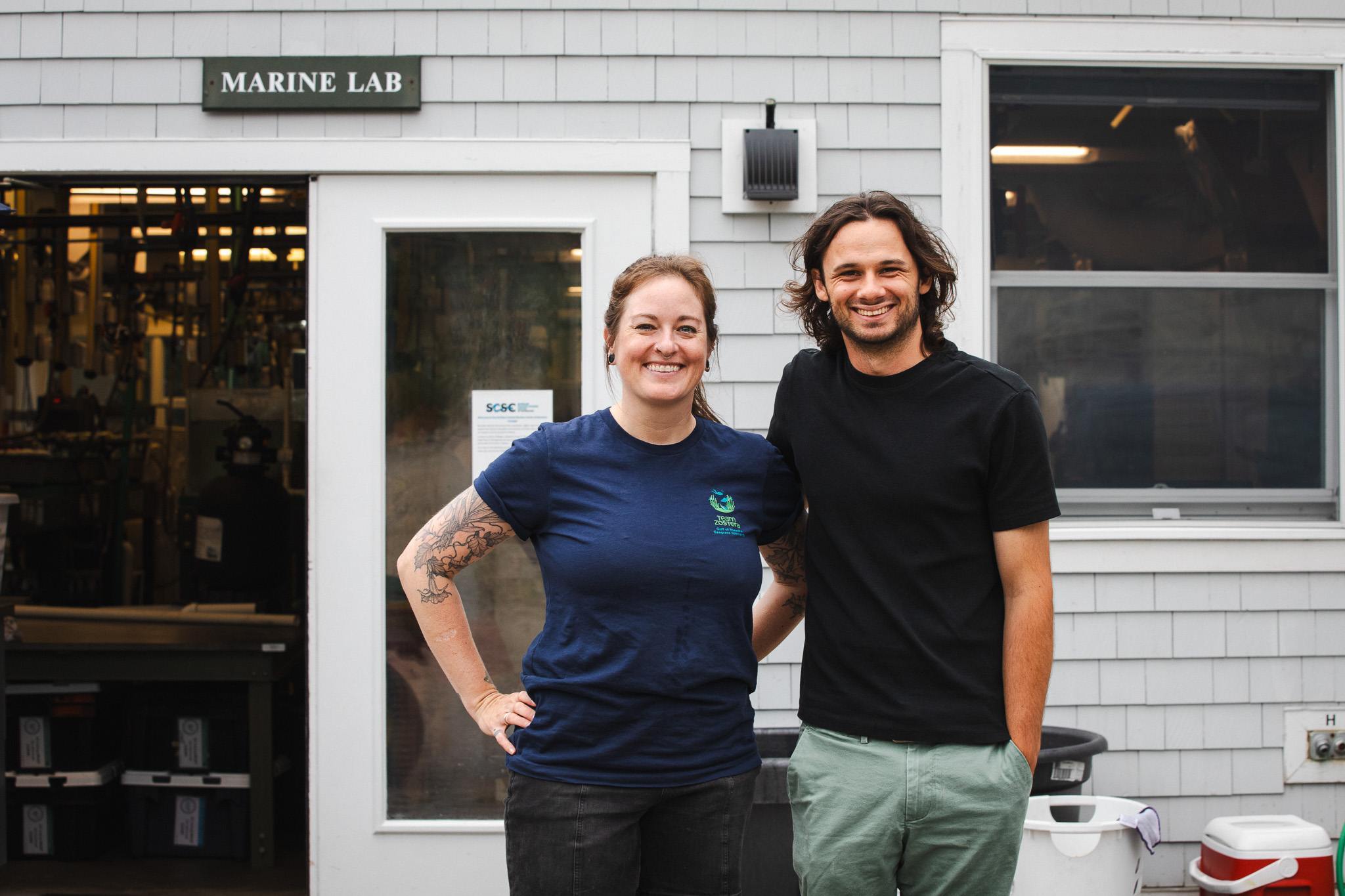

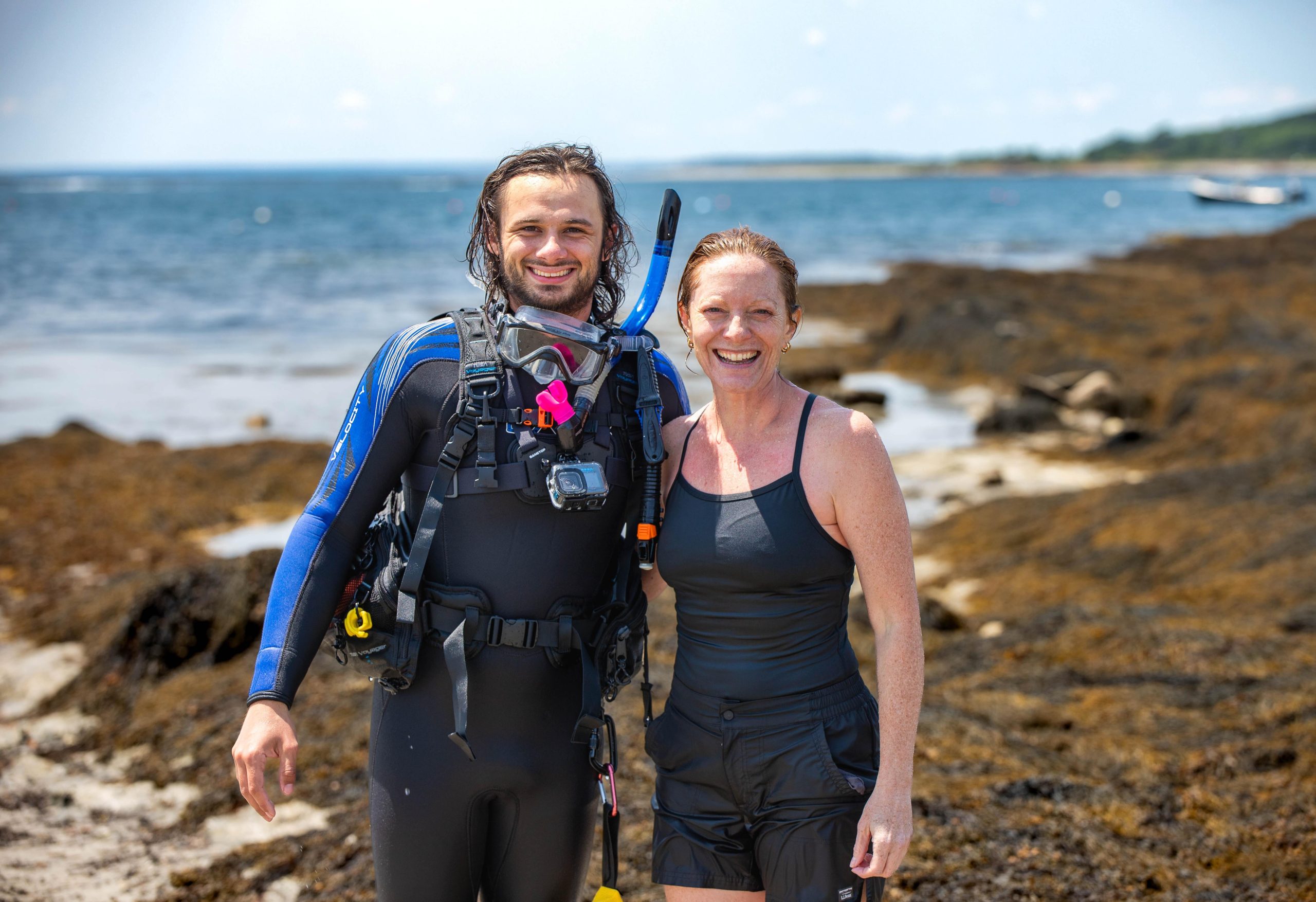
If you were visiting Kettle Cove at the right time this summer, you might have seen it: two heads bobbing above the waves, tanks and gear trailing behind them as they waded back to shore. What may have looked like two divers enjoying a morning swim, was actually a University of Southern Maine graduate student and alumna, each working on their own research, in the same stretch of water, toward the same goal: safeguarding the health of Casco Bay.
Luc Harrison is trying to figure out what an invasive shrimp is eating, and what that might mean for the ecosystem around it. Allison Fogg is trying to bring back the eelgrass meadows that were once abundant in these coastal waters. They didn’t start out working together. But this summer, a shared USM connection brought them to the same water, working side by side.
From Casco Bay to the Pacific — and back
Kettle Cove was a research site to Luc long before he ever thought of it that way. Growing up in Portland, he spent hours there as a kid, picking through tide pools for periwinkles and any other critters he could find. In 2019, he snapped a photo of a small, glassy shrimp for his scrapbook, not knowing what it was. He knows now — it’s Palaemon elegans, the invasive rock shrimp he’s spent the last year studying at USM.
Getting to USM took Luc to a couple of other coasts before he found his way back to Maine. The ocean was the one throughline the whole way. At 16, a high school trip to Bonaire got him his first scuba certification.
He went on to study marine science and biology at the University of Tampa, then spent a couple of years in Hawaii, working at an aquarium and considering graduate school. Eventually, he decided to come back to Portland, the place where he grew up.
That’s when Luc found himself in the lab of Dr. Rachel Lasley-Rasher — an associate professor of biology. Choosing that lab meant choosing USM, and a conversation with Allison, already years into her own work there, made it an easy decision. That’s also how the two of them first met.
“One of the things that had been kind of drilled into me, talking to so many people about this, was just to make sure you have the right advisor,” said Luc. “And Allison could not have been more positive about her experience with Rachel. So for me, that spoke wonders.”
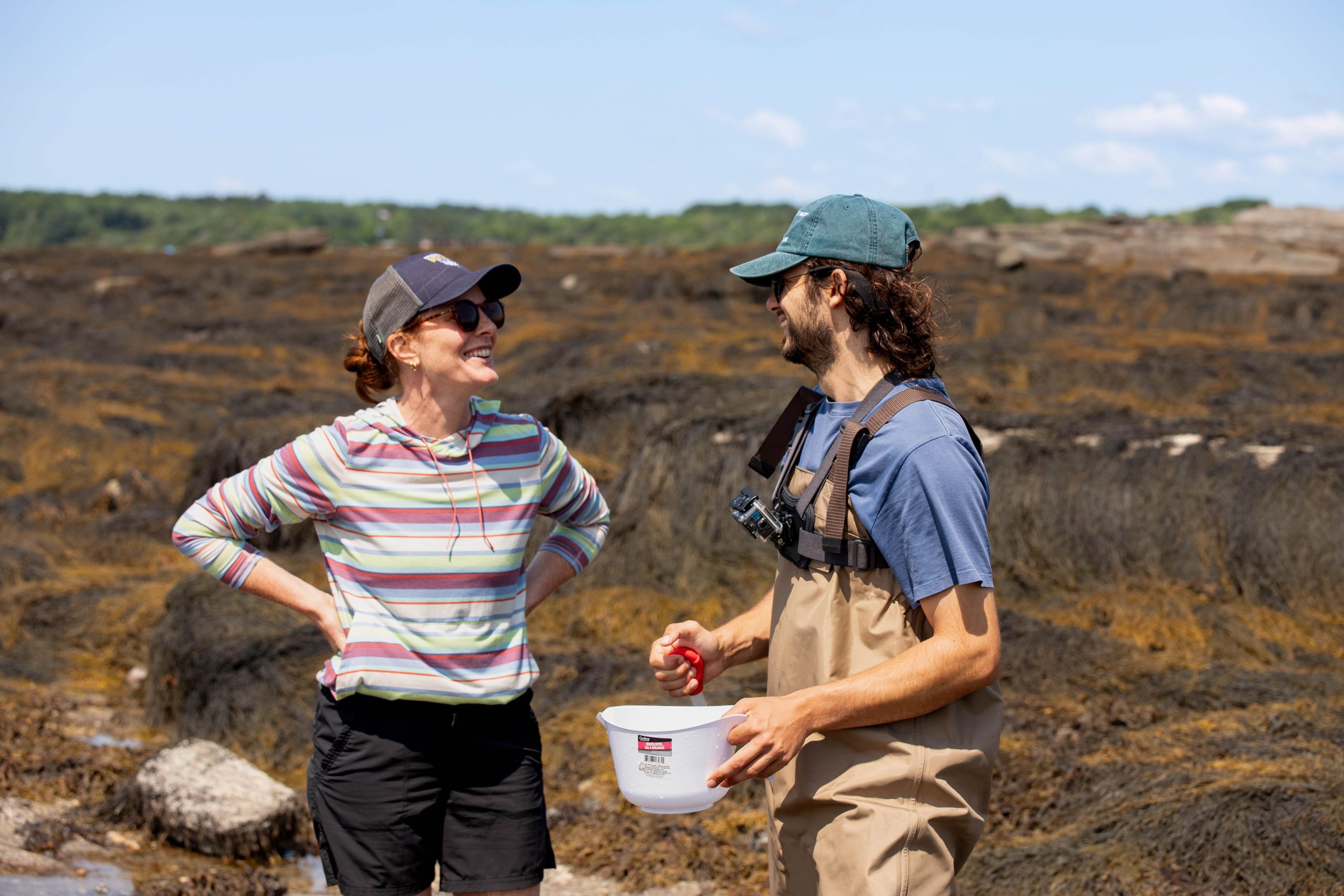
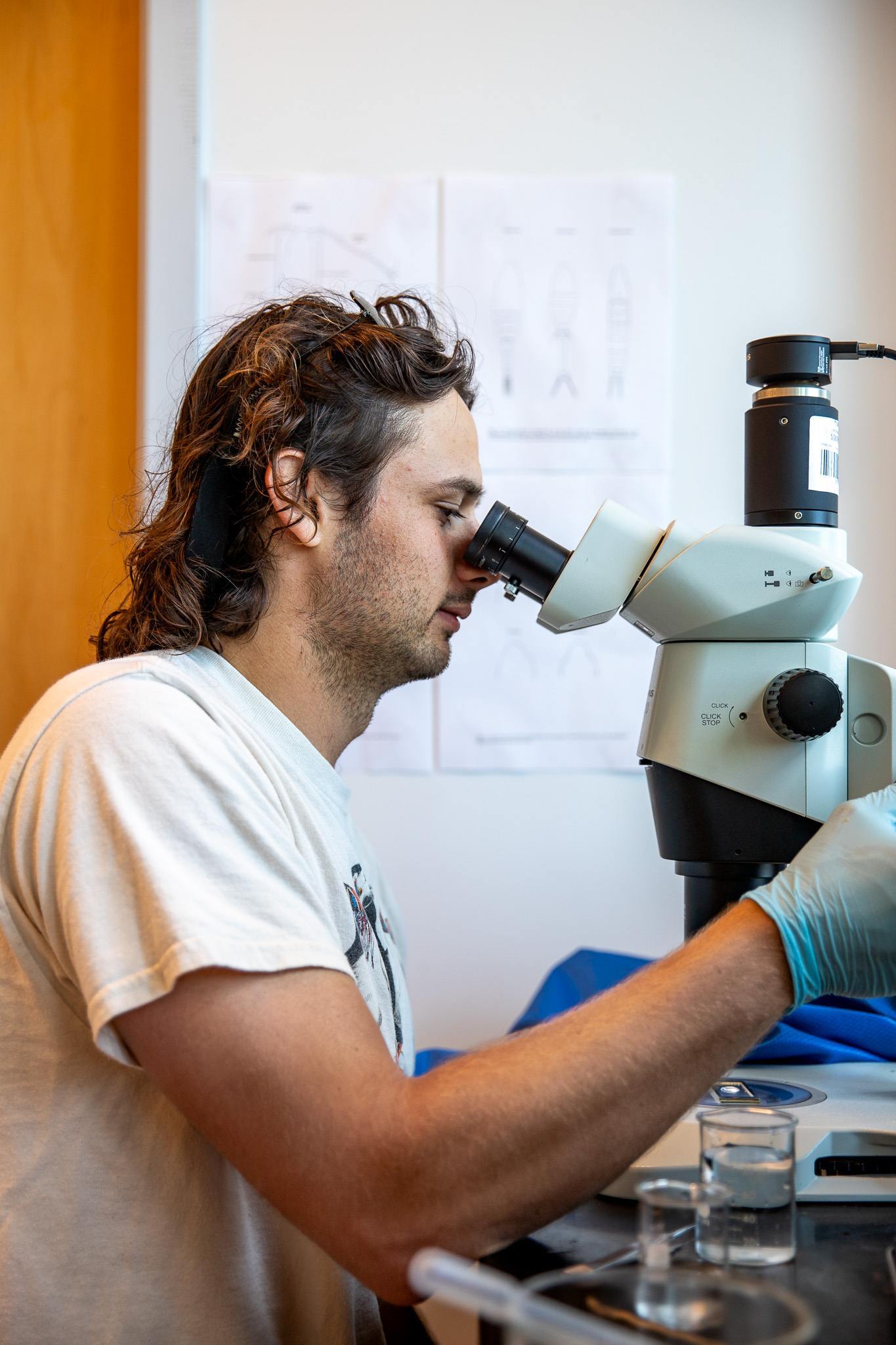
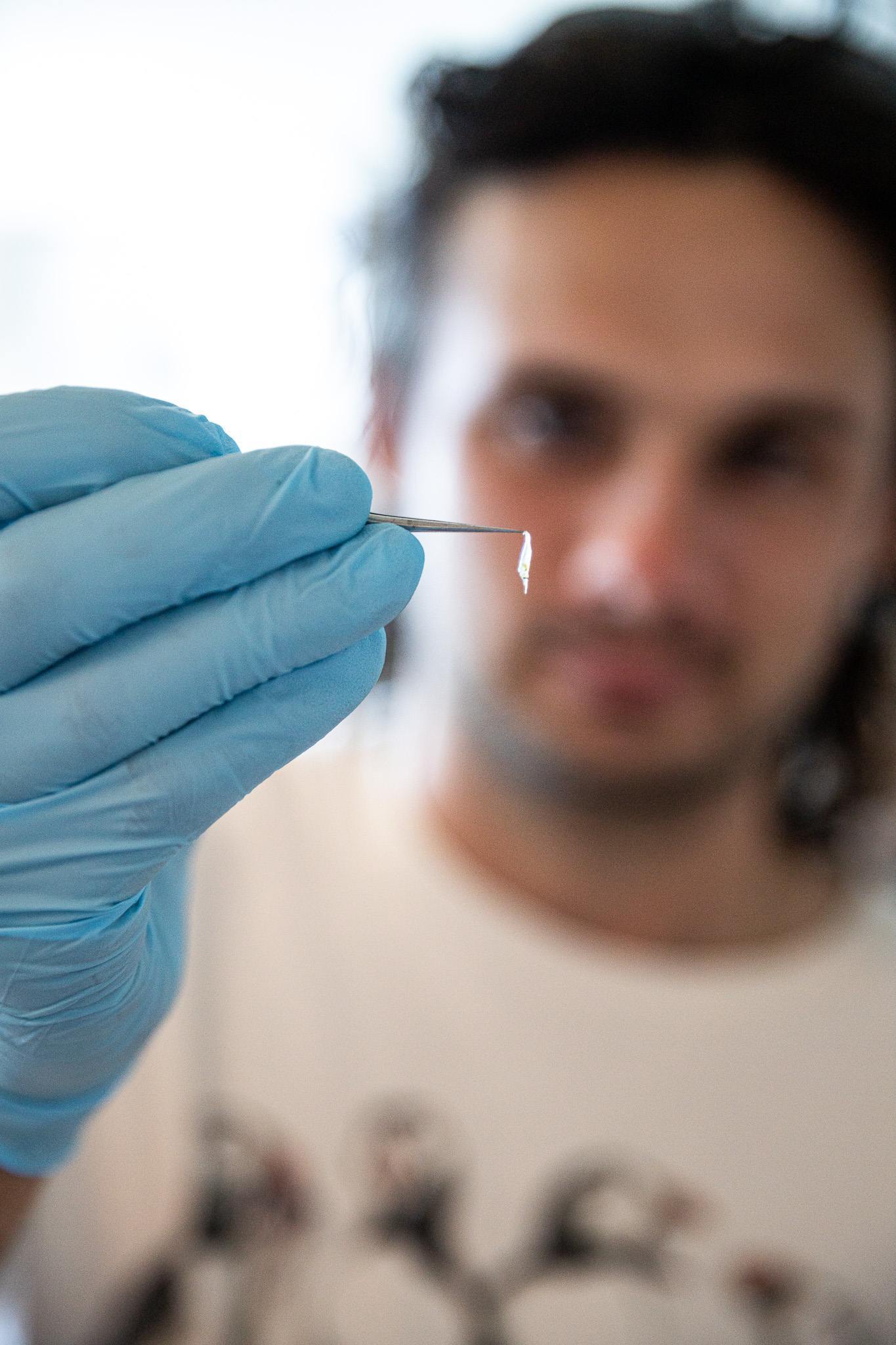
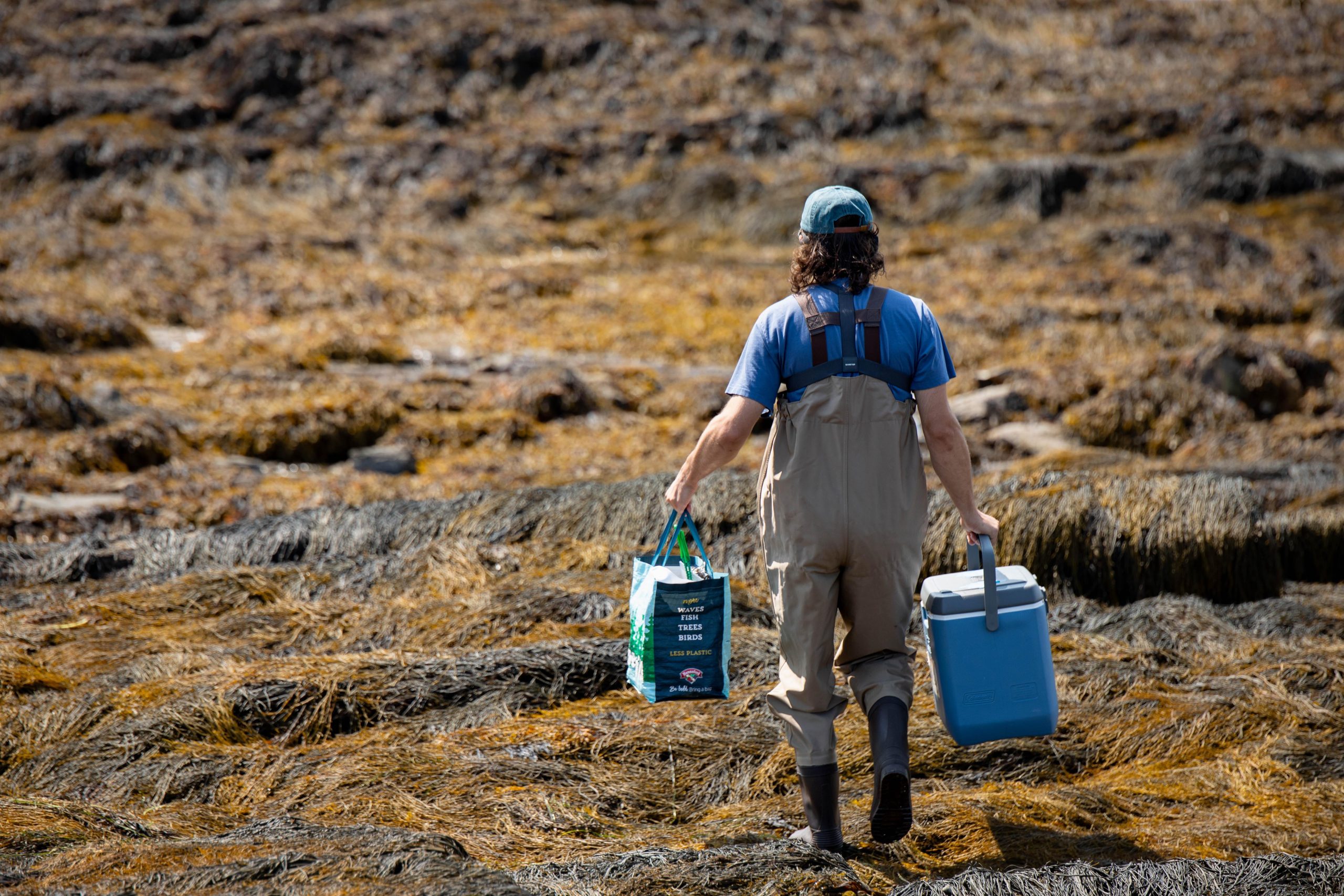
Luc’s research centers on the European rockpool shrimp, an invasive species first documented in New England in 2011 that has spread rapidly through southern Maine’s tide pools since. Little is known about how it fits into the ecosystem here, and that’s the gap his thesis is trying to close: what the shrimp eats, and what that might mean for the species and ecosystems around it.
Much of that research now happens in the same tide pools and coves Luc explored as a kid, curiosity still leading the way.
“It feels kind of like coming full circle,” said Luc. “It’s pretty amazing, getting to contribute to my community and help preserve and understand the ecosystem that has been my backyard for most of my life.”
The underwater gardener
Allison wasn’t necessarily looking for a career change when she boarded a boat off the coast of Mexico. She was just traveling, on yet another adventure. But when she dropped into the water and watched as a whale shark drifted by, close enough to touch, something in her shifted.
“I just swam next to them for like 30 minutes, and got back on the boat and just started crying because it was so beautiful,” said Allison.
At the time, she was 12 years into a nonprofit career working with animals, after finishing a bachelor’s degree in fine arts. But an old idea, one that went back to childhood, hadn’t gone anywhere: she’d always wanted to be a marine scientist.
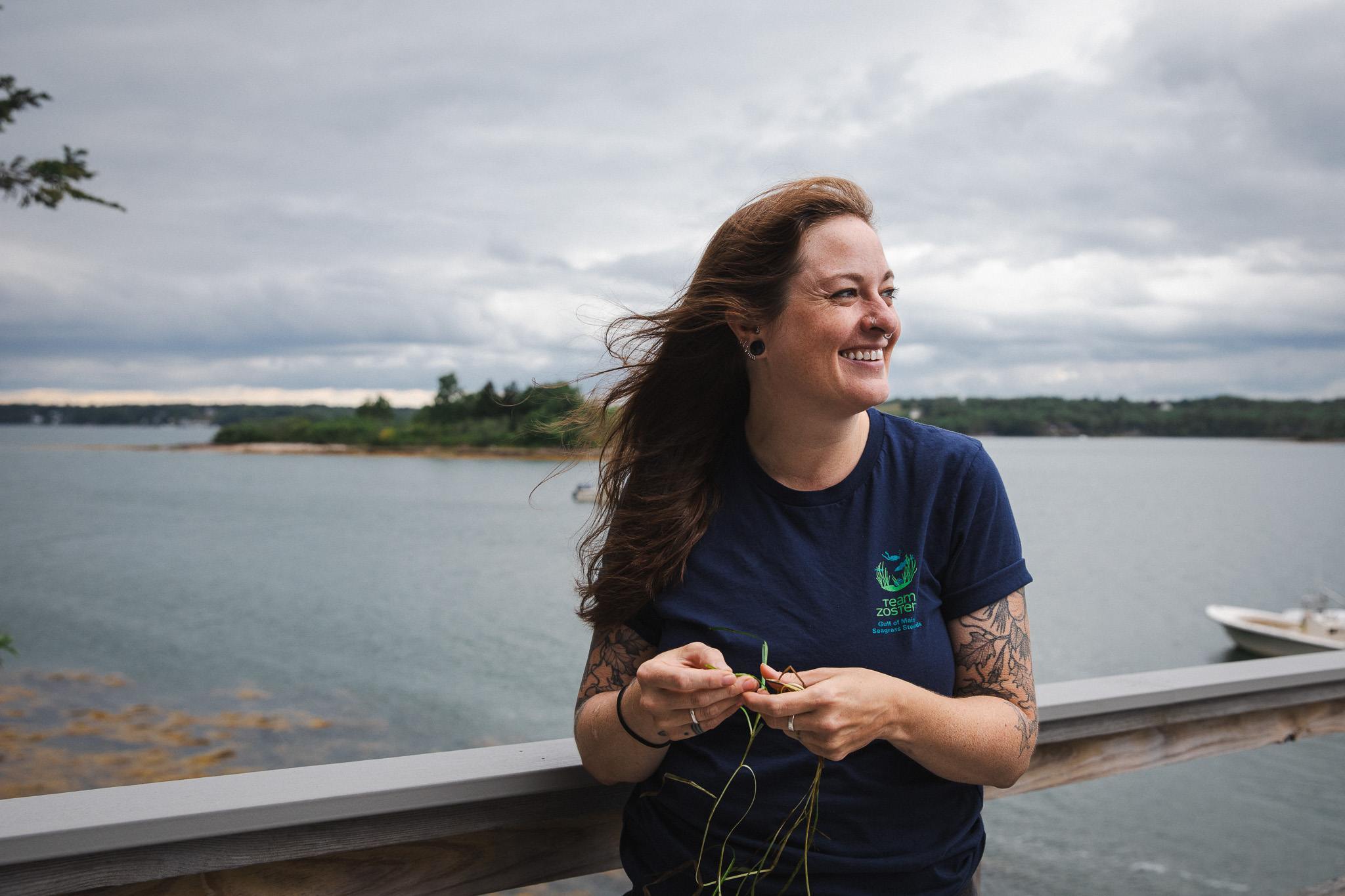
In her early 30s, Allison decided to go back to school, so she enrolled in Southern Maine Community College. A mentor at SMCC pointed her toward Dr. Rachel Lasley-Rasher’s lab at USM. Allison reached out, and just like that Lasley-Rasher became her advisor through a second bachelor’s degree in biology, and then a master’s.
“Rachel is just an absolutely amazing advisor,” said Allison. “She really pushed me to think independently and work independently, but I also always knew that I could rely on her for support.”
A scientific diving certification she’d needed to earn as a USM graduate student led her to a full-time job. Today, Allison is a scientist with COBALT (Collaborative for Bioregional Action Learning & Transformation) — a Portland-based nonprofit focused on ecological restoration — where she works on Team Zostera, restoring eelgrass meadows in Casco Bay.
“In simplest terms, I am an underwater gardener,” she said.
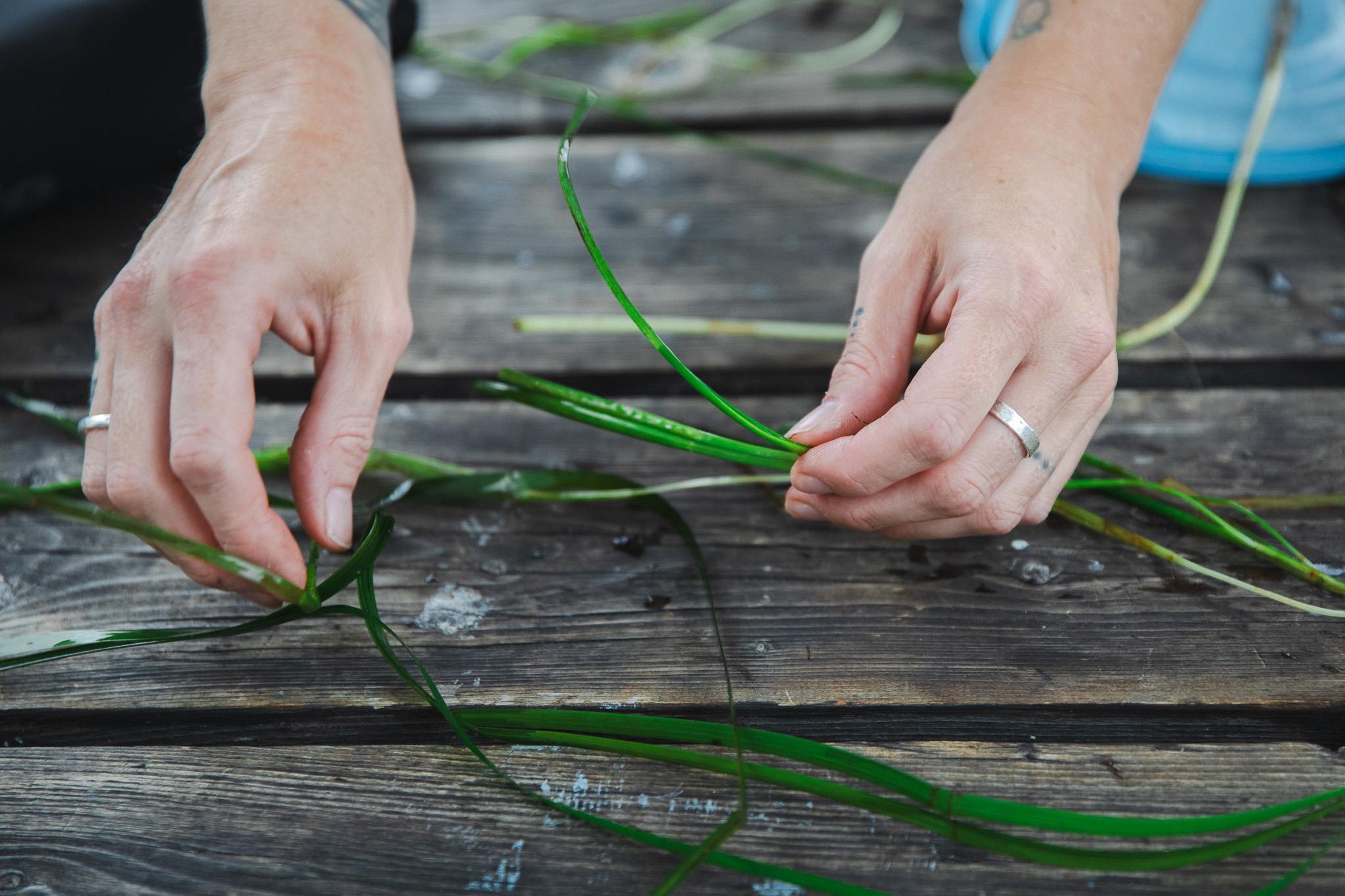
Ask her what that means in practice, and it comes down to two things: finding meadows that are still thriving, and identifying places nearby where new ones can take root. Most of it happens underwater, planting seeds gathered from healthy meadows into restoration sites — work that depends heavily on scuba diving.
“It’s a foundation species,” said Allison. “Here in Casco Bay, eelgrass is really important for stabilizing the sediment and absorbing wave action. It’s also a big carbon sink, and it’s an amazing nursery habitat for juvenile fish and crustaceans. Big fishing and lobstering industries rely on the animals that grow up in these meadows.”
Where the two projects meet
Luc and Allison had already crossed paths once, back when Luc was still deciding what program to pursue for graduate school. But it wasn’t until this year that their projects actually started to overlap, and the two of them went from acquaintances to dive partners — sharing gear, sites, and increasingly, each other’s data.
It happened almost by accident — Luc and Lasley-Rasher had started to see hints in Luc’s preliminary research that the shrimp might be interacting with eelgrass beds, not just tide pools. So they reached out to Allison, hoping she could point them toward the right sites. Partway through that conversation, Allison asked him a question that changed the summer: was he a diver?
“It just so happened that we were doing an onboarding for our scientific dive program with COBALT,” said Allison.
Scientific diving is its own course, distinct from a recreational open-water certification, and it’s what qualifies divers to collect data underwater for research organizations, government agencies, and universities all over the world. For Luc, it meant diving under COBALT’s program with Allison this summer, and carrying that credential into whatever comes after.
“I asked if he would be interested in working and volunteering with us doing eelgrass work,” said Allison. “That way we could dive together under the program, and I could help him with his fieldwork as well, because we have some crossover with our study sites.”
Luc signed on, and since the start of summer, the two of them have been diving together regularly, splitting time between Allison’s restoration sites and his own — many of which are the same.
“We both provide support for each other underwater,” said Allison. “So as he wants to go and collect some shrimp for his research, I’m there to help him operate the equipment underwater, be his buddy for general diving safety, and maybe look at some things under a microscope too.”
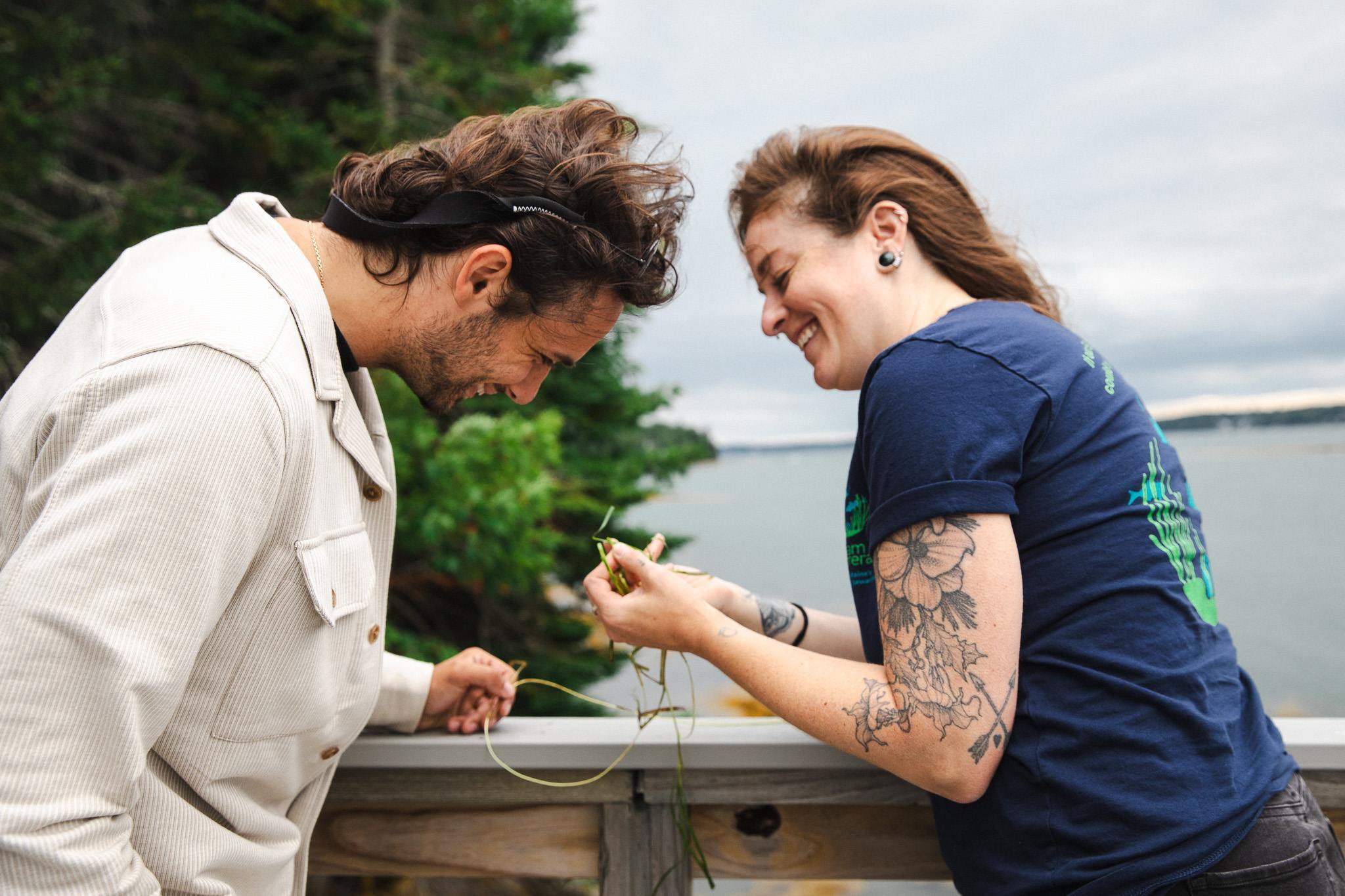
Luc returns the favor, diving with Allison and the COBALT team to collect reproductive eelgrass shoots, the source of the seeds they use for restoration.
“The eelgrass bed, and the stressors it’s facing, is where our work really starts to connect,” said Luc. “Could Palaemon elegans be another stressor for the eelgrass? That’s something I could potentially help Allison and COBALT understand.”
Whatever Luc’s data ends up showing, it could help shape how COBALT and other organizations approach ecological restoration in the Gulf of Maine going forward.
“Any sort of research adds to the wealth of knowledge for that area, and can go a long way to protecting it,” said Allison.
A tradition in the making
Science — especially marine science — thrives on this kind of collaboration. No single researcher, diver, or dataset tells the whole story of an ecosystem. It takes a community of people willing to share sites, gear, resources, and research to piece it together.
Luc and Allison are a clear example of what this kind of collaboration can look like. And at the center of it is a USM lab, and a professor — Dr. Rachel Lasley-Rasher — who has spent years encouraging students to chase their own questions and providing the connections to see them through.
What comes out of that lab isn’t just data. It’s students who leave understanding these ecosystems, and the species that depend on them, well enough to keep advocating for them long after they’ve left the classroom. Regardless of whether Luc and Allison’s collaboration continues past this summer, they hope it won’t be the last one to come out of that lab.
“Maybe we’ll rope in the next student in Rachel’s lab,” said Allison.
Luc laughed. “We can make it a tradition.”