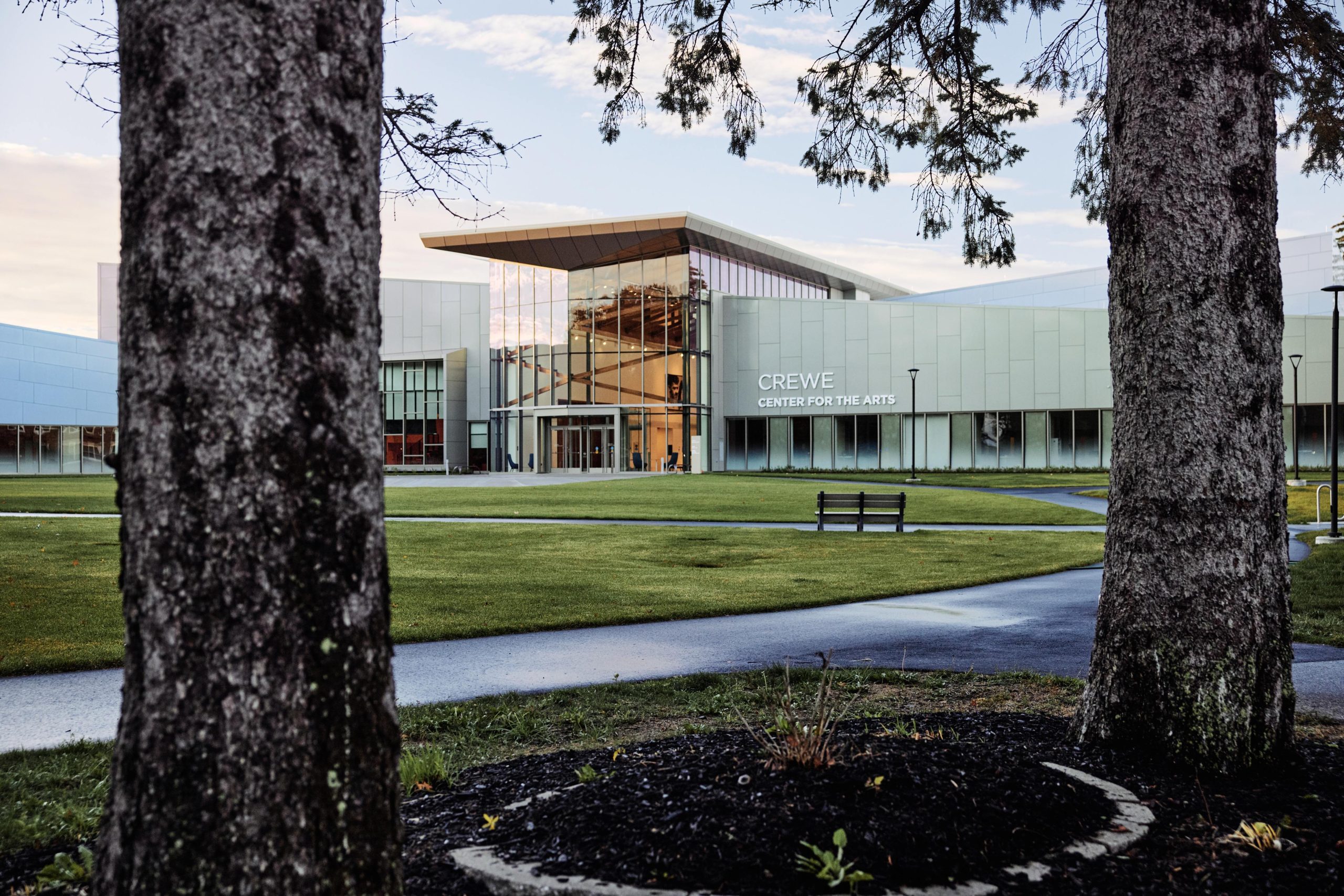

It’s been just over a year since the Crewe Center for the Arts officially opened its doors on the University of Southern Maine’s Portland campus. While students have been filling the practice rooms, performing on stage, and attending their classes, a lot has been happening behind the scenes to make it all possible. We sat down with Sam Kyzivat, director of operations for the Osher School of Music and the Crewe Center, to talk through the technology, the acoustics, and what it all means for the students working inside it.
Q:
Can you tell us a little bit about yourself and what you do here at USM?
A:
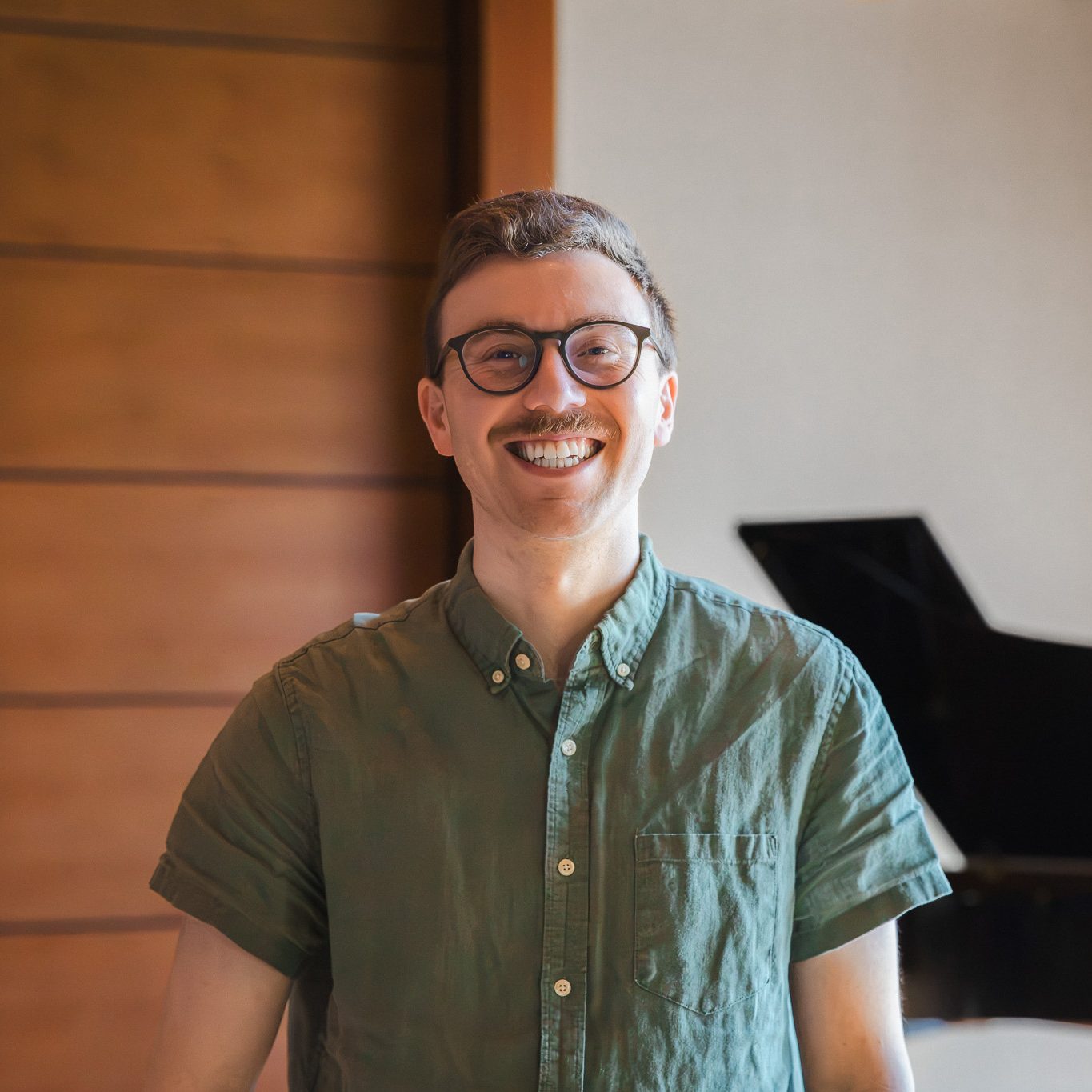
I’m Sam Kyzivat, director of operations for the Osher School of Music and the Crewe Center. I started in January of 2025 — so I’m about a year-and-a-half in — and I came in with a music composition background, having worked for different performing arts nonprofits in classical music festivals, operations, and production.
What made this role unique was the timing. My first six months were spent preparing for the school of music’s move from Gorham, while also coming on site here in Portland multiple times a week in a hard hat — talking with project managers, helping make decisions, being the voice for the school of music with the design team. With most buildings, you come in and don’t know what’s behind the walls. Here, I was in this space when the studs were there, seeing what goes where and what’s connected to what. I feel pretty intimately acquainted with the building.
Q:
What does it take to run a performing arts building like this day to day?
A:
During the semester, there’s a lot of student interaction — providing access to locked spaces, loaning out instruments, assigning lockers, talking through production details for upcoming recitals. And then there are the concerts themselves. I work a lot of them backstage, helping produce them — we have a great production team of work-study students who are awesome to work with. When we’re all on headset, pulling off a really complicated concert, and we do it successfully — it feels really good. It’s very project-oriented work. I also do some video editing for select concerts each semester, where we shoot high-quality recordings. But ultimately no two days look the same.
Q:
When a student performs or records here, what’s happening behind the scenes that they don’t see?
A:
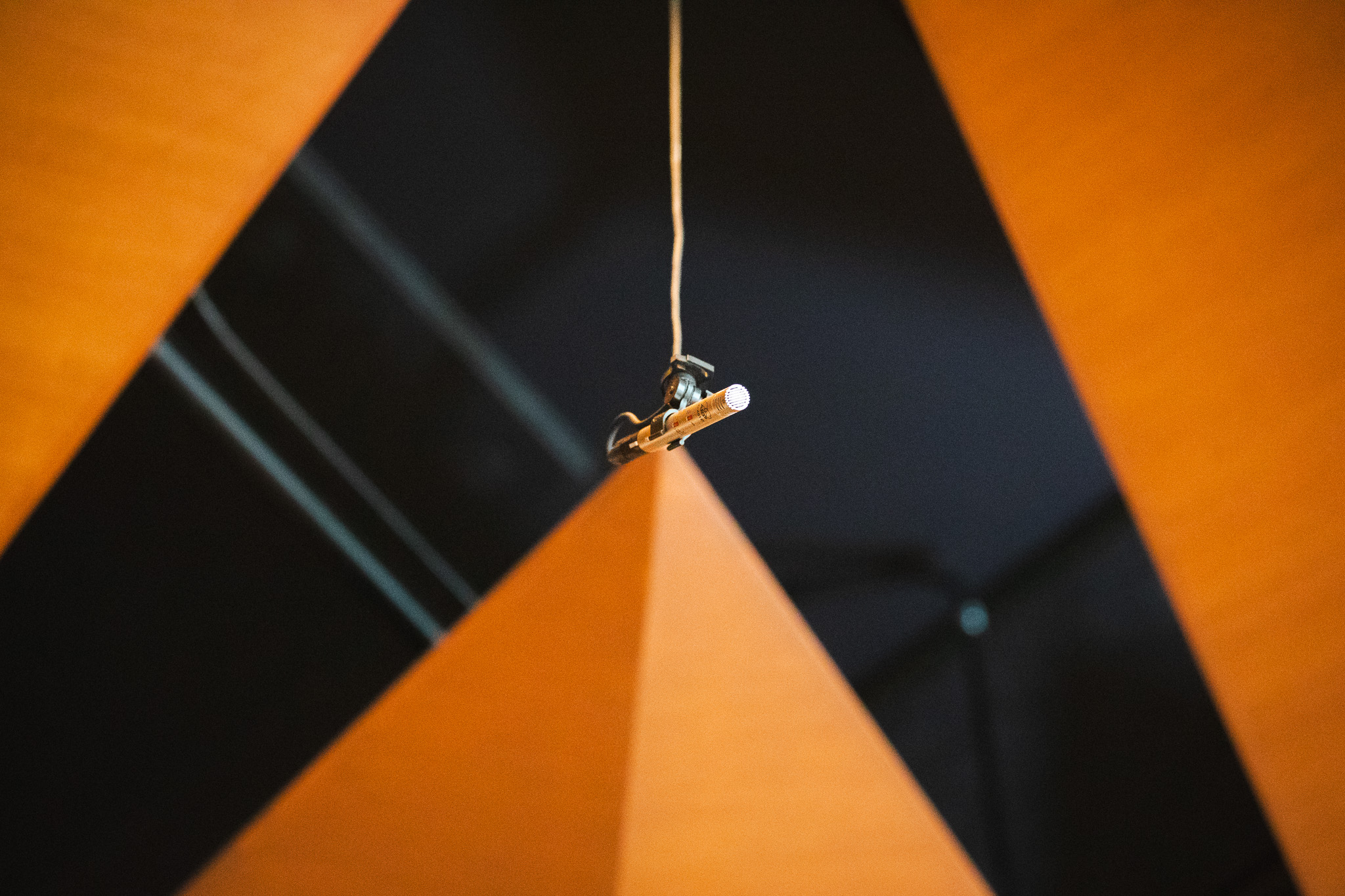
Take a faculty concert we did with composer Dan Sonnenberg — a very complex production with live looping, multiple instruments, and a full mic setup on stage. Our audio-video technical engineer was able to control every speaker level in the performance hall from a single iPad, while simultaneously recording the entire concert. No running back and forth, no separate systems — all of it happening at once, seamlessly.
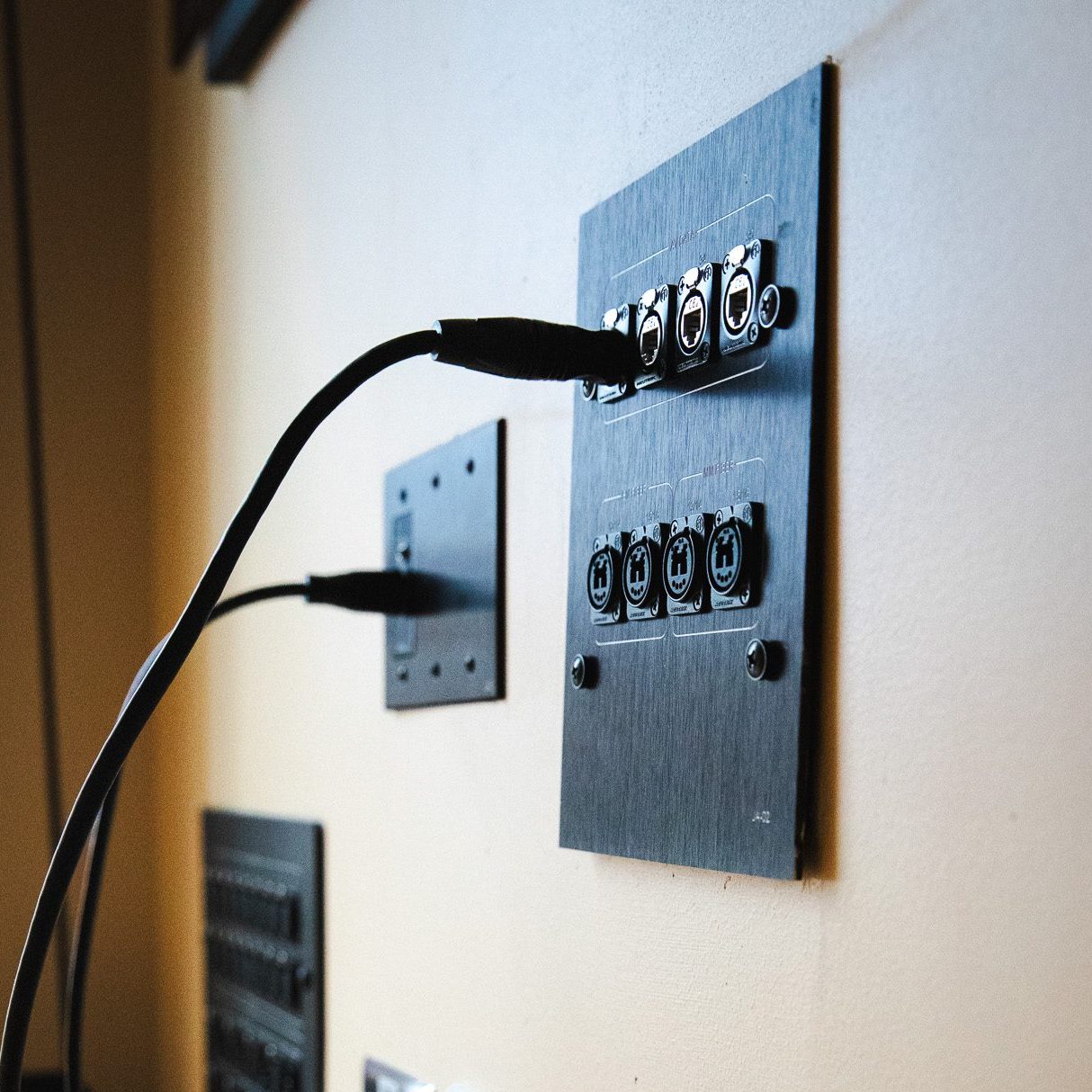
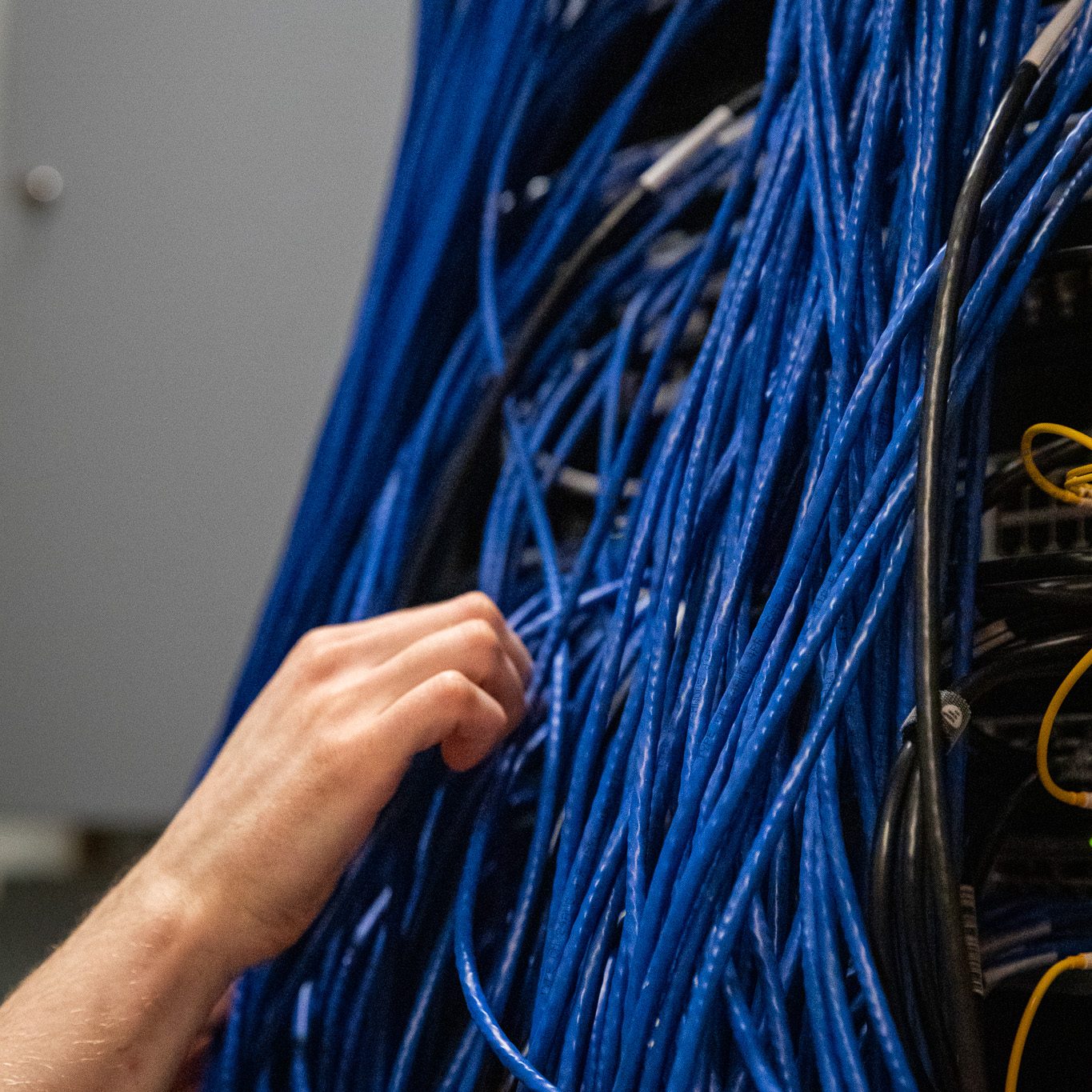
That’s all made possible by a technology called Dante. Think of it this way: traditionally, every microphone on a stage needs its own heavy copper cable running back to a control point. Dante replaces all of that with a single ethernet cable and can carry hundreds of audio channels at once. We can route sound anywhere in the building, record multiple spaces at the same time, and control everything from one device.
If it’s working well, students won’t know too much about it — it just makes everything seamless. A student might say, “I want to record my senior recital,” and we deliver them the end product. But it was only made possible because we have this technology running through the building.
Q:
What makes the acoustics in this building so different from a typical music building?
A:
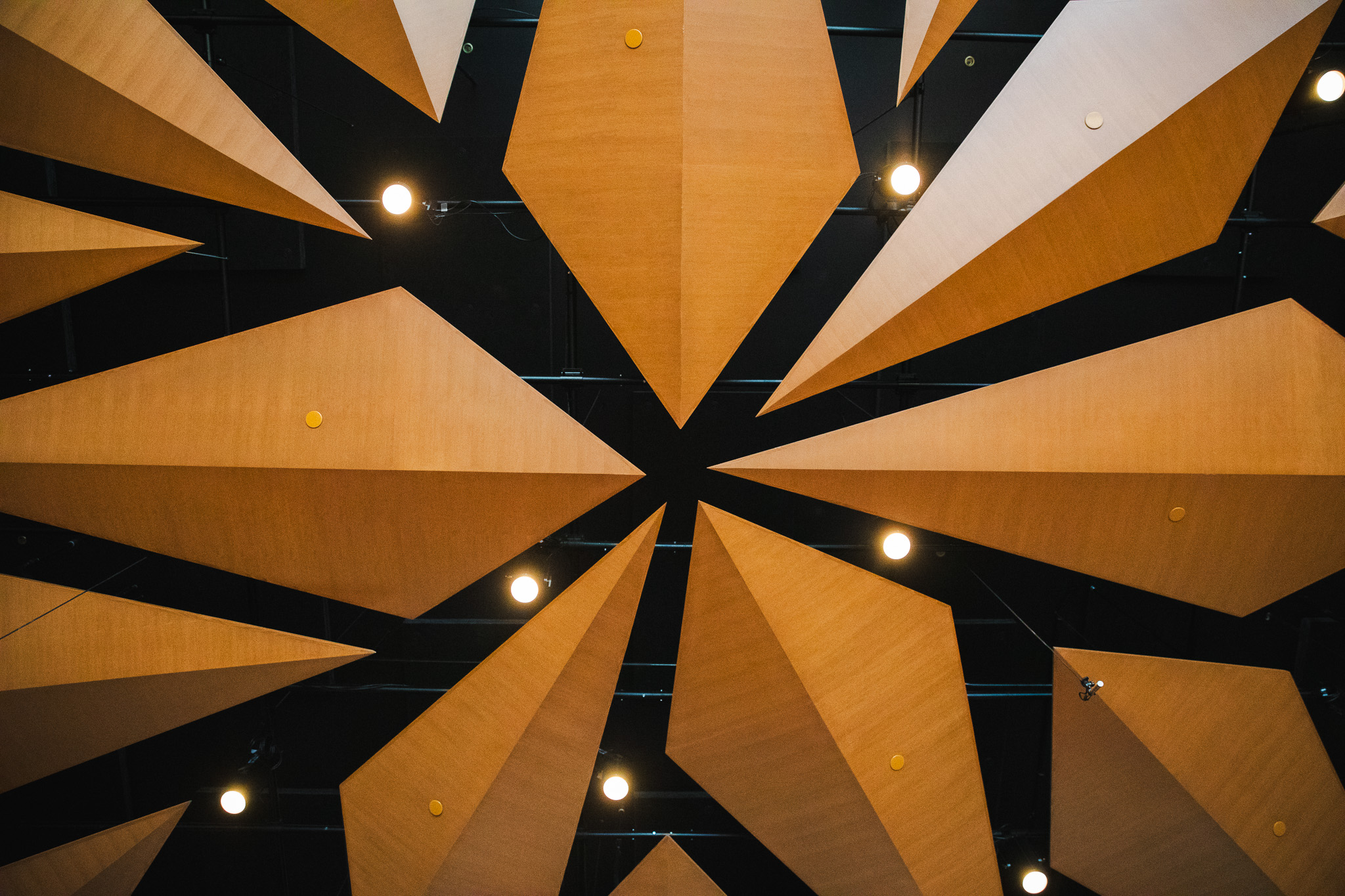
The performance hall is a good place to start. When you walk in, the first thing you notice are the ceiling reflectors — angled wooden panels hanging overhead that look almost like shattered glass. They help musicians hear each other on stage, blend the sound and send it out to the audience, and break up the air volume of the room. We had some professional musicians come in recently and they were marveling at how well they could hear each other across the stage.
Then there are the acoustic curtains. All of our large hall spaces have adjustable curtains that let us tune the room depending on what’s happening in it. For a jazz big band, you want a drier space — amplified instruments, drums, you don’t want too much reverb. Then a choir comes in, you open the curtains, and the room opens up, the sound blooms. The acoustician actually tuned the building during the first week of school — listened to different ensembles in each space and gave us presets. There are little colored tape marks on the curtains: this is what we’d recommend for a choir, for a string quartet, or for a jazz band.
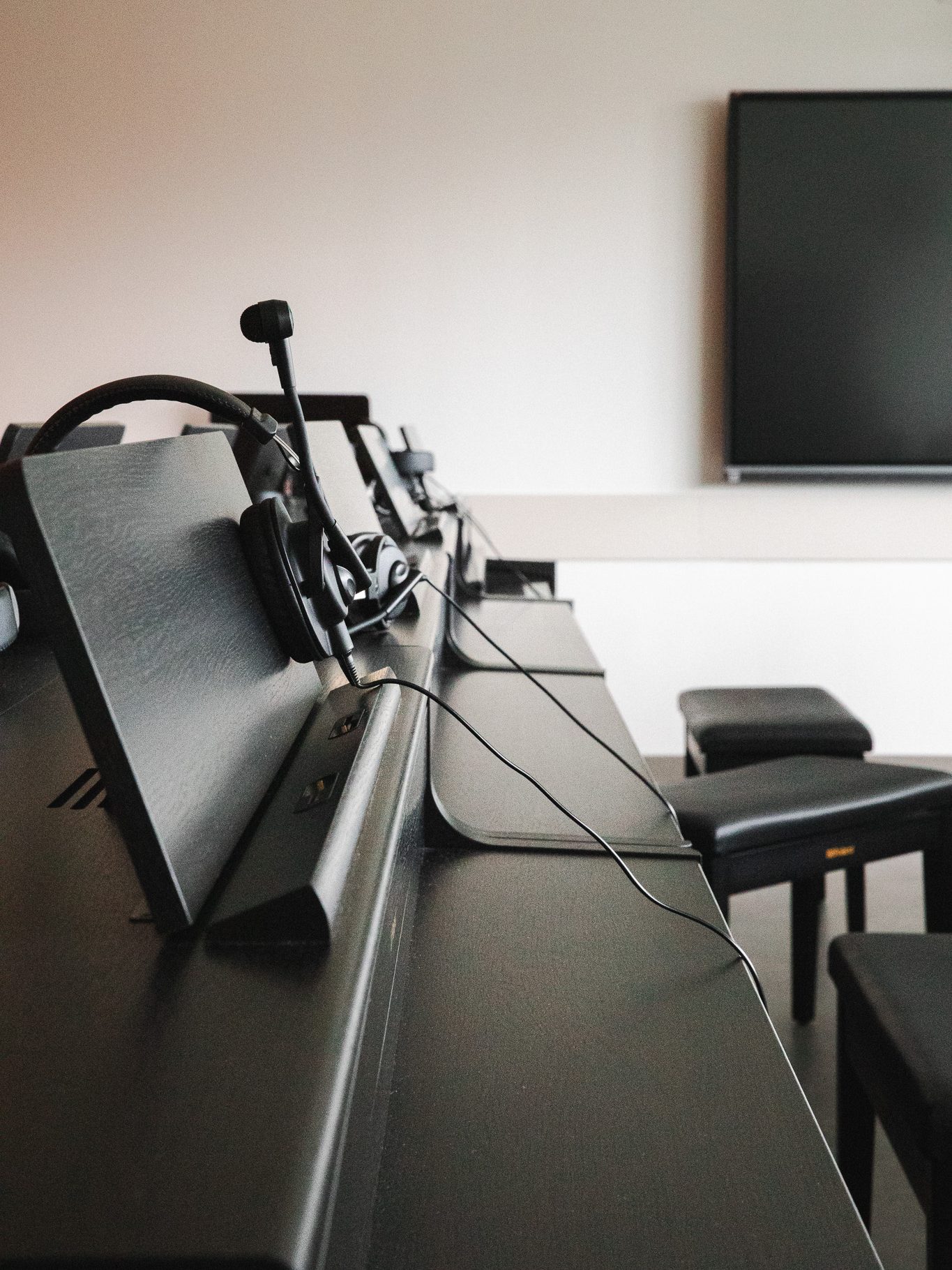
The practice rooms work on the same principle. The walls have multiple layers of drywall — effectively a room within a room. The doors are over 300 pounds, with rubberized edges that seal out sound. You won’t hear your neighbor practicing tuba while you’re trying to play a delicate piano passage. That said, there’s one intentional exception: the studios are designed to release just a little bit of sound out into the hallway. So when you walk through during the semester, you get a little taste of music from each room rather than walking through silence.
Q:
What does all of this mean for students who are actually studying here?
A:
Recording is a really important part of being a musician — you have to send off audition tapes, apply to festivals and competitions. We record about 95% of our productions each semester, spearheaded by Kevin Schinstock, our audio-video technical engineer, with support from our AV work-study students. Every concert gets recorded and we distribute it directly to students. They can post it on social media, use it for applications, whatever they need.
A big part of this is Friday recital class. Every Friday at 11, all our majors perform in front of their peers, and we treat it like a real concert. The production team shows up dressed in black, students get a soundcheck, time in the green room. It’s a lower-stakes environment to perform before you do your actual recital, and we record all of it and send it back to students so they can learn from it.
By the time a student graduates from USM, they have a really strong archive of themselves as a performer. That’s something they’re building week by week, concert by concert, the whole time they’re here.
Q:
What’s the most exciting thing this building has made possible that couldn’t happen before?
A:
Honestly, the one I’m most excited about we haven’t even tried yet. Because we have fiber cables running throughout the building, we can send audio and video at incredibly fast speeds — which means we could have a pit orchestra in one space and the singers performing in another. The singers would hear the orchestra through monitors and see a screen with the conductor, and the conductor would see what’s happening on stage. We don’t have a traditional pit under the stage, so this system is how we’d make that work.
Q:
What’s something about this building that would surprise most people?
A:
A few things come to mind. Every day when I drive to work, the building is a different color. It’s clad in a material called Alucobond that changes depending on how the light hits it — on a sunny day, a cloudy day, a rainy day, different times of day, it can range from gray to green to blue to a warm pink. We call it the mood ring of the building. It feels like a living, breathing organism.
And then there’s what I call my “voice of God” power. From the control room, I can page any space in the building — the green room, back-of-house, even the gallery. Before a Composers Ensemble concert recently, there were a ton of backpacks left out in the hall from soundcheck. I paged the green room: “Performers, doors open in five minutes — can you please come grab your backpacks?” Within seconds, people came running. It’s a small thing, but it’s a capability we never had before — and it never gets old.