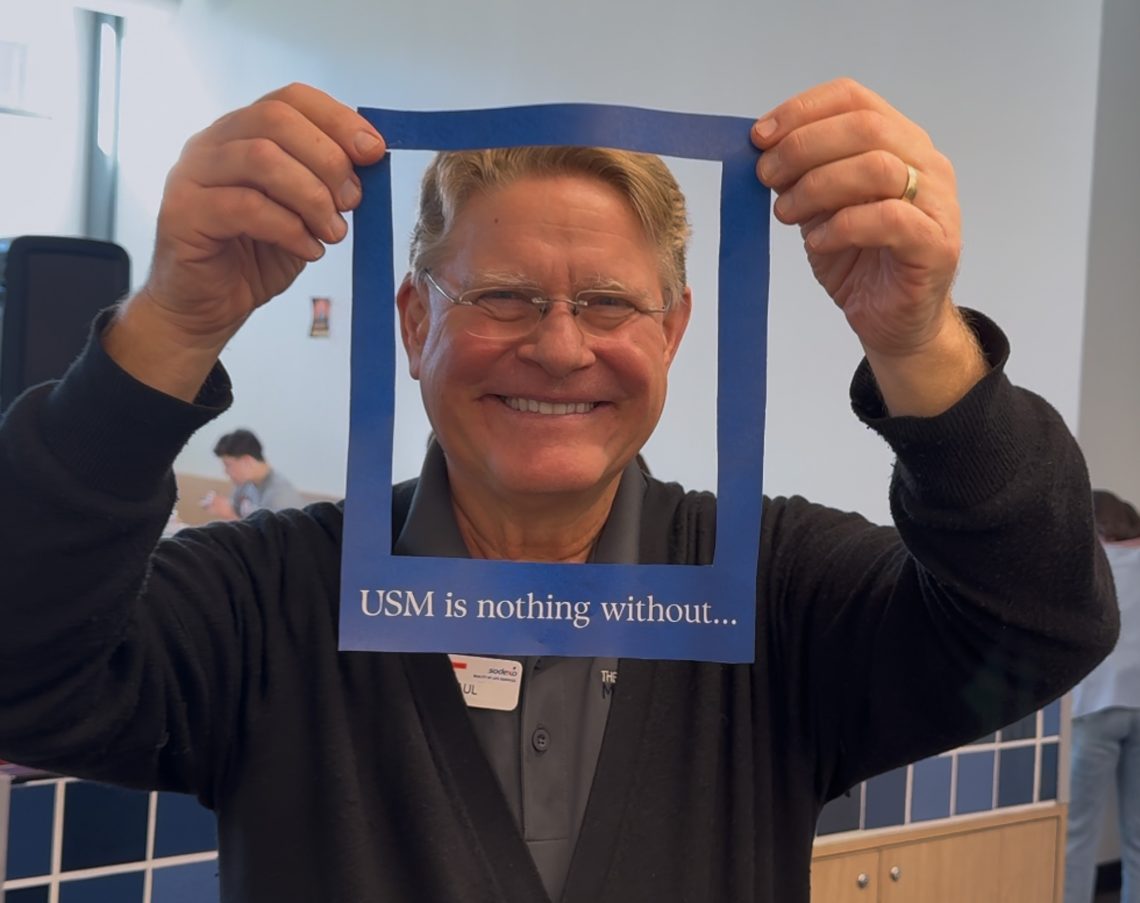
If you’re around the McGoldrick Center on the University of Southern Maine Portland campus for any length of time, you’ll see the blond-haired guy with a warm smile at the register. Chances are he knows your name, asks how your classes are going, and has your order figured out before you’ve even reached the front of the line. He’ll even pick up right away if something’s amiss.
That’s Paul Thiemens. After decades in corporate management, he took a cashier job at USM with Sodexo, the university’s dining partner, so he could spend more time around people. Now, he’s also a USM student working toward a doctorate in leadership.
Both his studies and his job focus on the same idea. Paul believes that when students feel known, they find their footing and an increased sense of community.
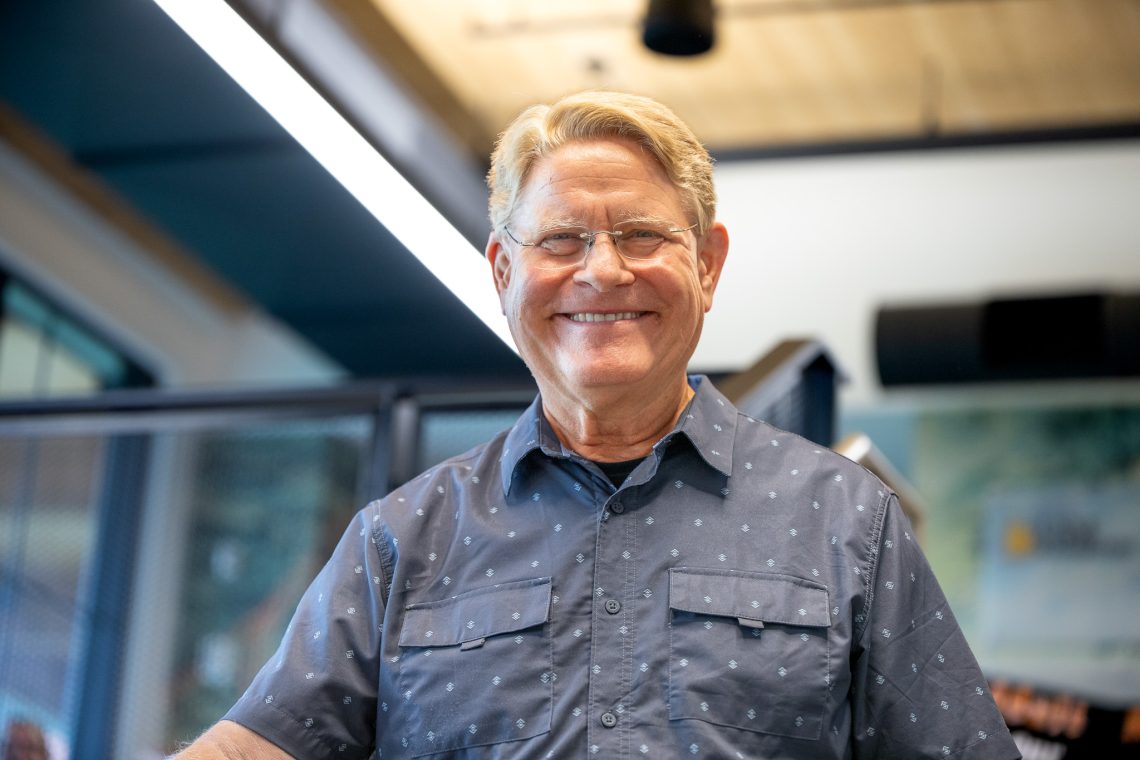
Why a corporate manager took an entry-level job at USM
After spending years in California, Paul and his wife moved back to Maine and settled in Gorham. He was also ready for a new line of work.
“I’ve been a manager for many years, and especially in large corporations, the higher you go up in management, the less contact you have with people,” he said.
So in 2019, when he saw an opening for a cashier on USM’s Portland campus, he applied.
“It occurred to me quickly that pretty much every student on this campus was going to come by here,” he said. “What an opportunity to get to know them.”
He said Sodexo shares USM’s service promise — student-focused every day — and has embodied this approach from the beginning.
How learning one student’s name started a friendship
Early in his time at USM, Paul met a student whose name he just couldn’t get right. After asking how to pronounce it and making a handful of attempts, he still struggled. Eventually, the student politely told him not to worry. He was sure Paul would never remember it.
“I thought, I’m going to remember this name,” Paul said. “So I wrote it down, and I practiced it.”
The next time the student came by, Paul greeted him by name.
“He looked at me and said, ‘You learned my name. You know my name,’” Paul recalled. “And he smiled at me.”
The next day, the student waved Paul over in the student center and introduced him to his friends. To this day, the two greet each other with a hug.
“Once I knew their name, it was an open door,” Paul said. “We’ve all heard our names since childhood, and it’s special. If you take the time to make a connection with somebody, everything else builds on it.”
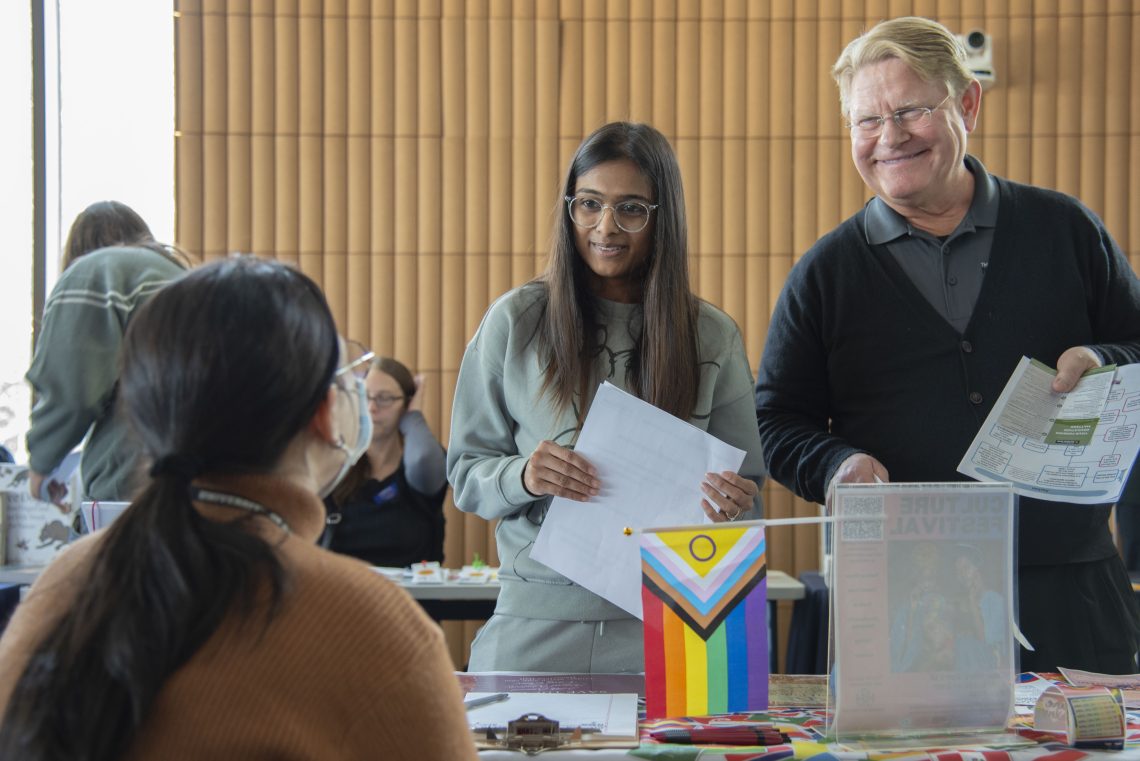
Recognizing when a student could use help
Rodney Mondor, USM’s dean of students, has seen a quieter side of Paul’s attention. More than once, Paul has stopped by Mondor’s office because he was concerned about a student who had just passed through.
“Going to eat is a vulnerable time. You’re hungry. Your filters are down, and you’re more likely to be yourself,” Mondor said.
Paul notices more than what happens at the register.
“Routines are key, particularly in college settings. If someone breaks that routine, he seems to pick it up,” Mondor said.
One afternoon, Paul saw Mondor picking up lunch and asked if he had a minute. He brought the dean into the dining area to meet a student who had confided in Paul earlier.
“He said, ‘This is Dean Mondor. He’s your resource, and I’m going to let you have a few minutes to talk about what you shared with me,’” Mondor said. “And he walked away so I could talk with the student.”
Mondor had someone like Paul in his own college years — a person in the student union whose office he would stop by just to sit on the couch and talk.
“If you think back on your college experience, who are those one or two people you would remember?” he said. “That’s who Paul is for many USM students.”
What Paul meant to one student since her first year at USM
Camille Alipalo, a graduate student in Leadership and Organizational Studies, remembers a moment when Paul made a gesture so kind, it left a lasting impression in her first year.
She met him at the cafe in Luther Bonney Hall and often stopped by to see him before class. That year was tough. She dances professionally with Portland Ballet, and a calf injury left her in a walking boot for part of it. Between the injury and a long Maine winter, she was worn down.
“I wasn’t quite myself. Paul noticed,” she said. “He always seemed to know exactly what to say to lift my spirits and help me keep going.”
One day, he surprised Camille and a friend with treats — an “everything is going to be okay” present.
“It was such a small gesture, but it meant so much to me at the time,” she said.
Years later, their friendship has lasted well beyond those cafe visits. They discovered they were in the same field of study and ended up taking several classes together. Paul and his wife, Bonnie, now attend Camille’s performances with Portland Ballet, and they never miss her in “The Nutcracker.”
“I think that’s what made USM feel like home for me,” she said. “It wasn’t necessarily the buildings or the classes, but the people who made me feel as if I belonged.”
Paul hopes every student finds that sense of belonging. It’s also at the heart of his studies.
Why Paul went back to school to study leadership
Paul’s path to leadership began with studying history. He came to USM with two history degrees from California State University, Long Beach. After campus reopened following the pandemic, his wife encouraged him to return to school. He chose leadership partly because his daughter Annelise had majored in it and loved it.
“I loved studying the past, but I was interested in the present and the future,” he said. “So I decided, why not? Get in the elevator, go up a few floors, and start taking classes.”
One of those early classes took him well beyond campus. In a presidential leadership class with USM President Jacqueline Edmondson, students were asked to study an issue in the local communities. Paul chose homelessness, which became the focus of his bachelor’s capstone.
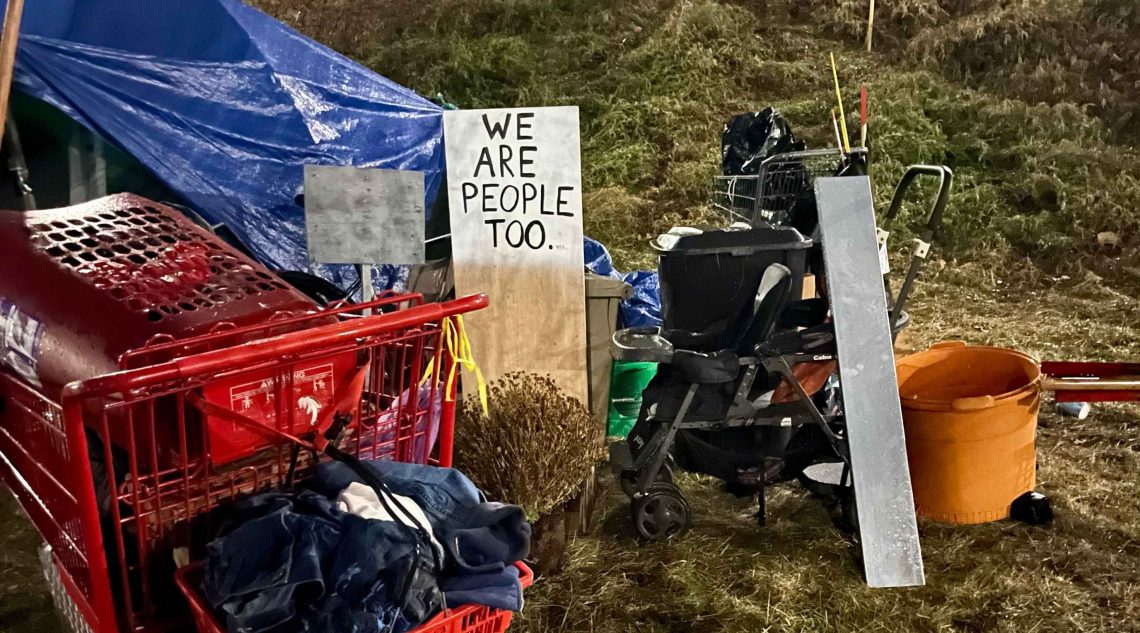
He didn’t want to just read about it, so he went out at night with a group that visits people living on the street. He still keeps a photo of one woman he met at an encampment.
“She made a little homemade sign that said, ‘We’re people too.’ I sat down and talked with her and found out her story,” he said. “I wasn’t handing them food. I just wanted to treat them as a human being.”
Paul gives a stranger on the sidewalk the same attention he gives a student on campus.
“You can’t help everybody, but you can help the person that’s right there,” he said.
Those classes accumulated to a bachelor’s degree in leadership, then a master’s, which he recently received at commencement. Now, he’s pursuing his doctorate.
Where Paul’s doctoral research is headed
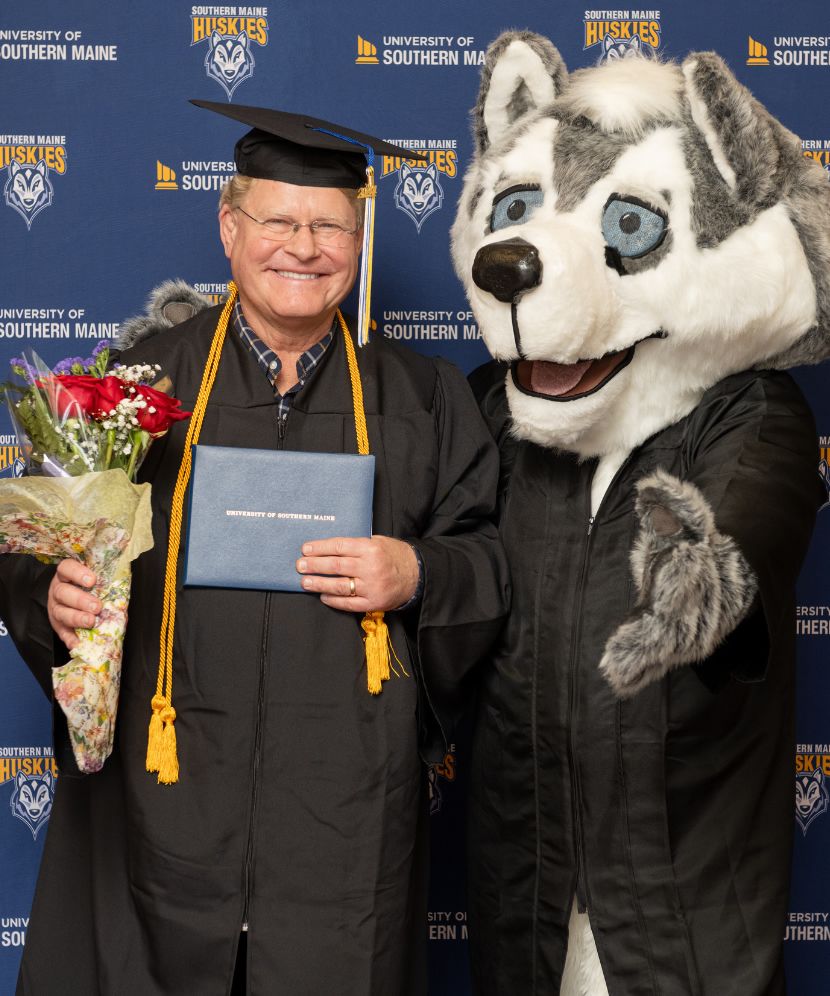
Paul’s love of history still informs how he thinks about leadership.
“I love biography, and I read about all kinds of leaders,” he said. “You find out about charismatic leaders before they were famous. And you find out that they were relationally connected with people. They were present. They learned to listen.”
Those biographies helped shape an idea Paul explored in his master’s thesis. He calls it Everyday Charisma.
It’s the influence people build in ordinary relationships. For Paul, that starts with authenticity and moral character. People come to trust you through the way you treat them over time.
Empathy and relational intelligence play a part, too. They help people notice when someone is struggling and find a way to offer hope.
For his doctorate, Paul plans to study how USM faculty build those kinds of connections with students. He wants to understand what those connections mean for students’ sense of belonging.
“Making a personal connection is valuable in and of itself,” he said. “It doesn’t always have to lead to something, but to someone it could mean a whole lot.”
He’s already experienced that in his own life. Paul volunteers at commencement so he can watch students he knows graduate, and many of them tell him the same thing.
“They’ve told me that I made a difference,” he said. “I was the first person to talk with them. I was the first person who knew their name.”
Paul’s advice for students at USM
“You don’t have to figure everything out right away. You don’t even have to figure out your major right away,” he said. “Take it one class at a time, and ask for help.”
He feels the same way about his own future. He isn’t sure yet where the doctorate will lead, but that doesn’t worry him.
“I have found that if I do what I think I’m supposed to do now, later on, I find out why,” he said. “A door opens before me. I go around the bend, and all of a sudden there’s something new.”