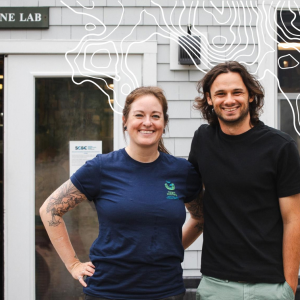

If you’ve walked past the MIST Lab on the fifth floor of the Science Building and wondered what goes on in there, you’re not alone. The Maker Innovation Studio, better known as the MIST Lab, has been part of the University of Southern Maine’s Portland campus for more than six years, but still remains one of the best-kept secrets on campus.
We sat down with Lab Manager Maya Twombly, who’s been part of the space since its very first class, to find out what’s actually inside, who it’s for, and why more students should know about it.
Q:
What is the MIST Lab and what’s your role there?
A:
My name is Maya Twombly, and I’m the manager of the MIST Lab, which stands for Maker Innovation Studio. I came up through this space before I started running it. I was a student in the very first class held here in 2019, back when Dr. So Young Han, the lab’s founder, was still getting everything off the ground. As part of that class, she asked us to think about what the space should be called. We had to really think about what we were doing here — what the space was for, and who it was meant to serve. Someone landed on “makers,” because at the end of the day, that’s what we are. Dr. Han always pushed words like “prototype,” and “innovate.” And “studio” felt right for the kind of space she was building. The name came together from those conversations, from that very first group of students.
The MIST Lab is a makerspace: a shared creative space where people come to build, design, and bring ideas to life using tools and equipment that most people don’t have access to on their own. We’ve been here almost seven years now.
Q:
What kinds of equipment and technology would someone find in the MIST Lab?
A:
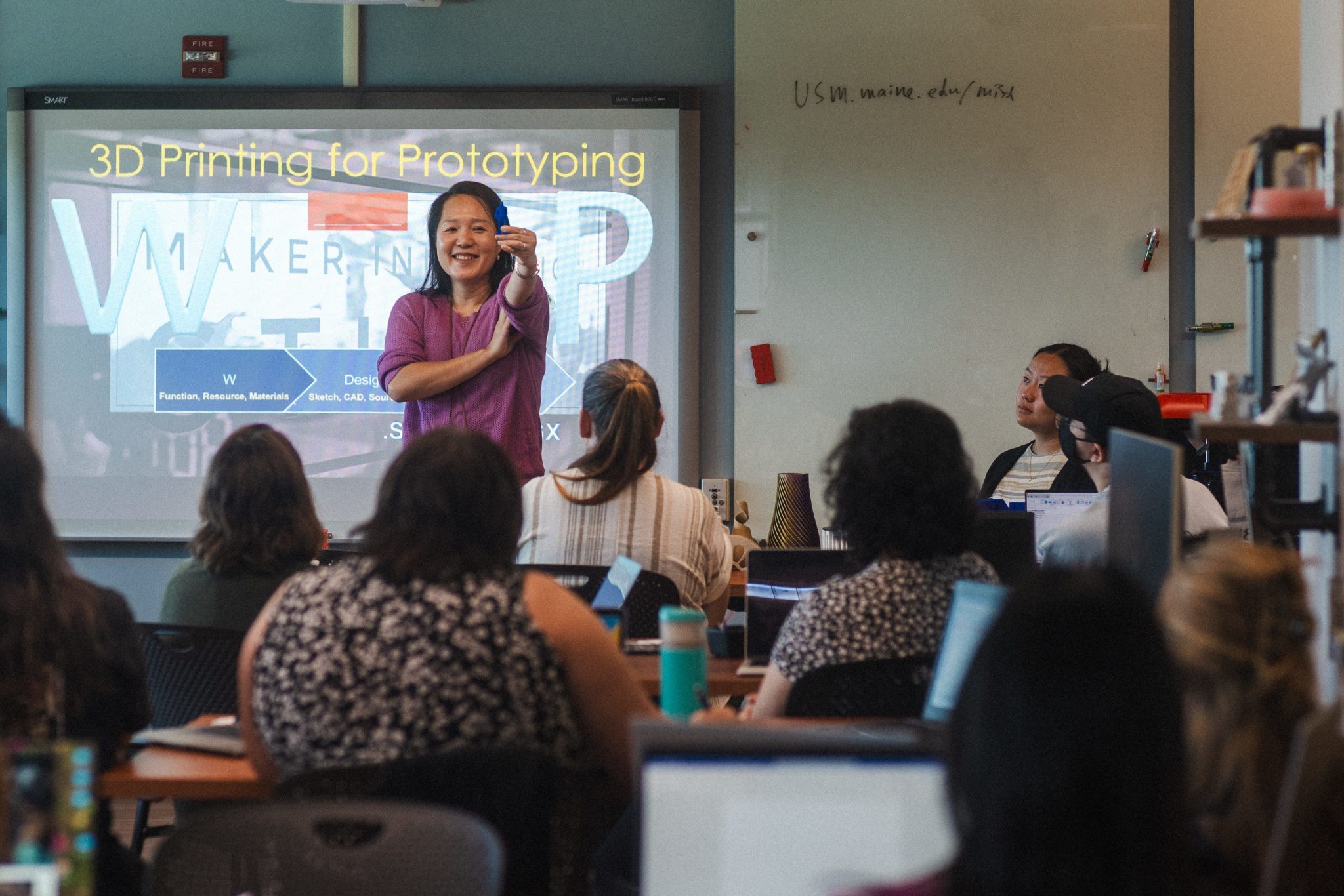
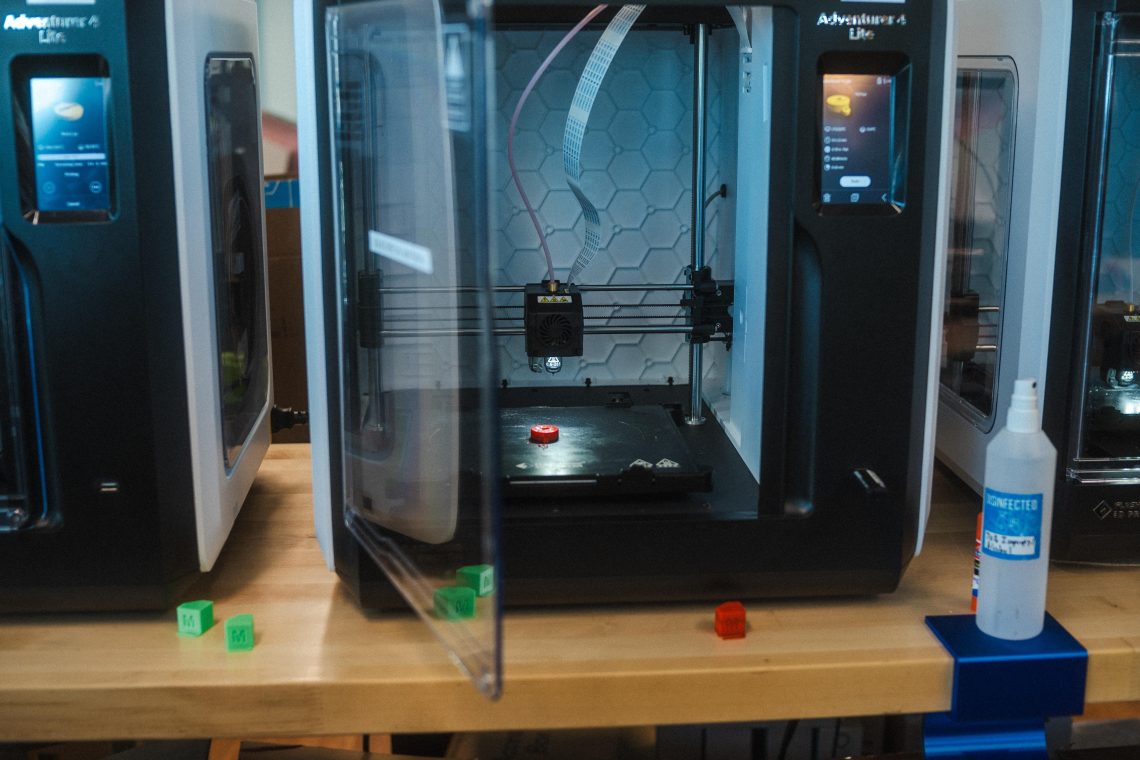
A lot more than most people would expect. The heart of the lab is our 3D printers. We have everything from beginner-level machines to high-end Bambu Lab printers, which are faster, more precise, and can print in multiple colors at once. Once you’ve used one of those, it’s hard to go back. We also have an Artec Spider 3D scanner capable of capturing incredibly fine detail — fine enough to actually scan a person. There’s even a 3D printed version of me floating around the lab.
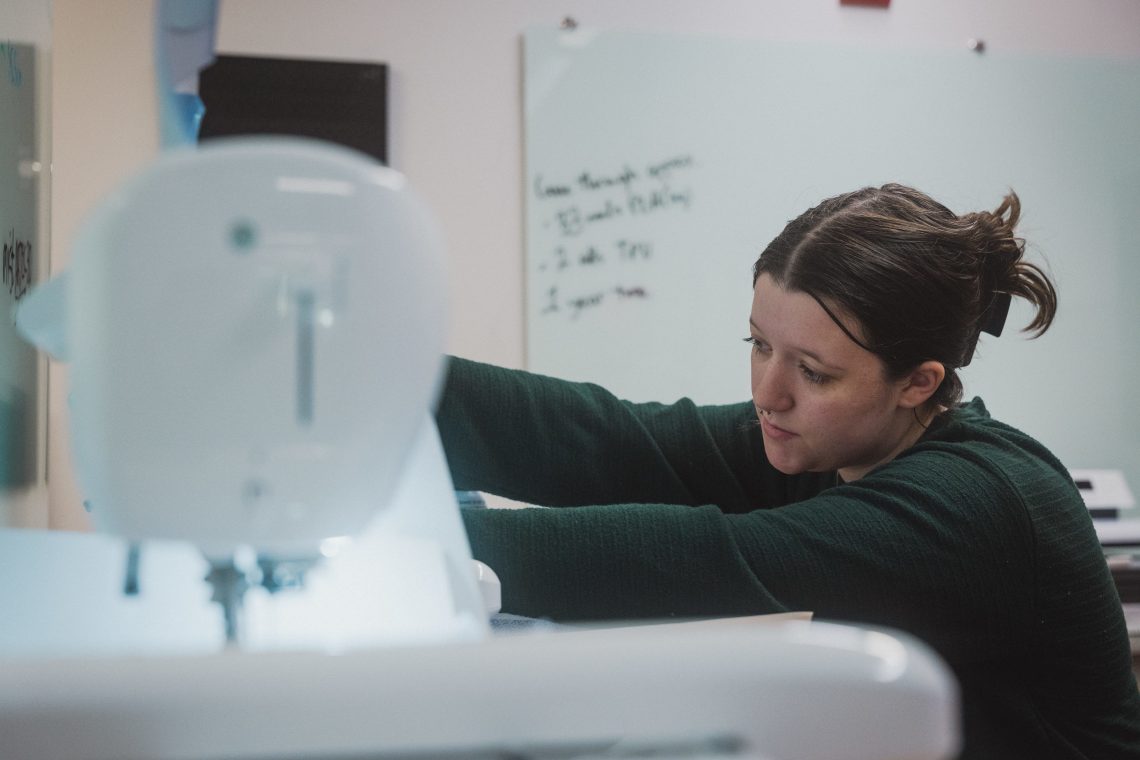
For cutting and engraving, there’s a Glowforge laser cutter that works on wood, acrylic, and draft board — and can even etch metal surfaces with the right prep. Then there’s a UV printer for printing on mugs, signage, and other materials; sewing and embroidery machines; a vinyl cutter; and a heat press.
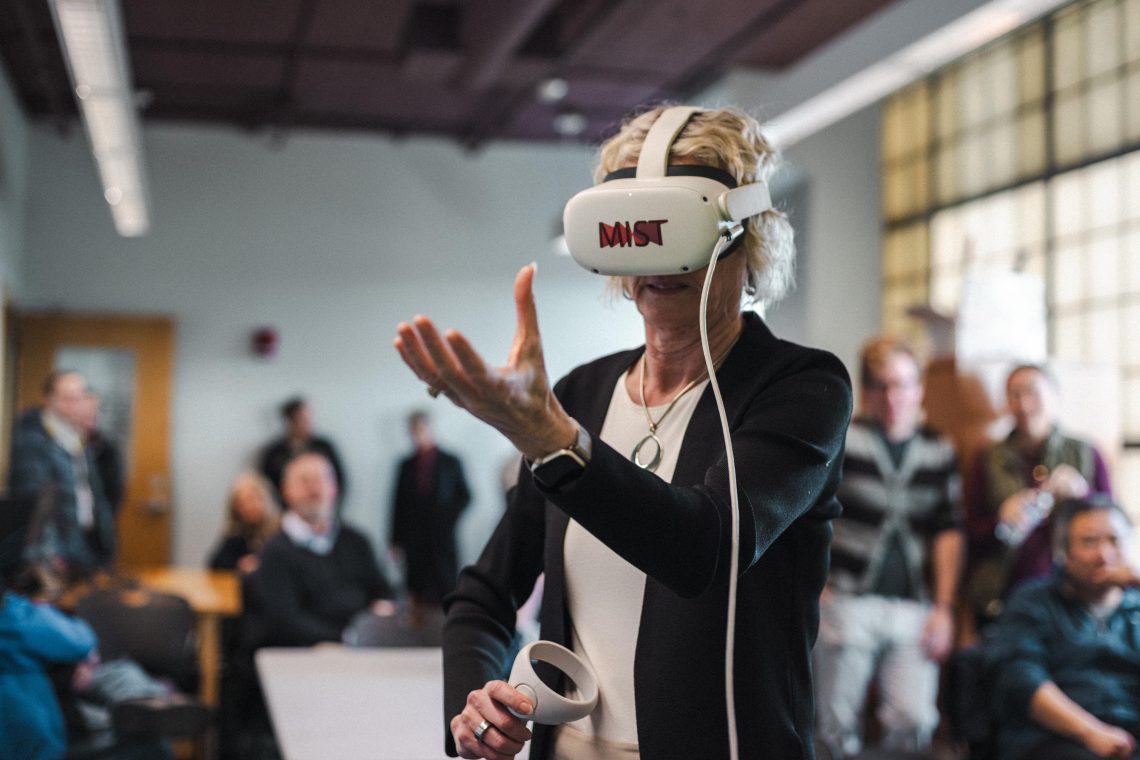
And then there’s VR. My two coworkers run that side of things out of our library location, where they’ve built out a full computing setup with headsets. It’s been used for everything from classroom projects to community partnerships. It’s really exciting to see how people are using the technology.
Q:
Who is the MIST Lab for, and what does it cost to use?
A:
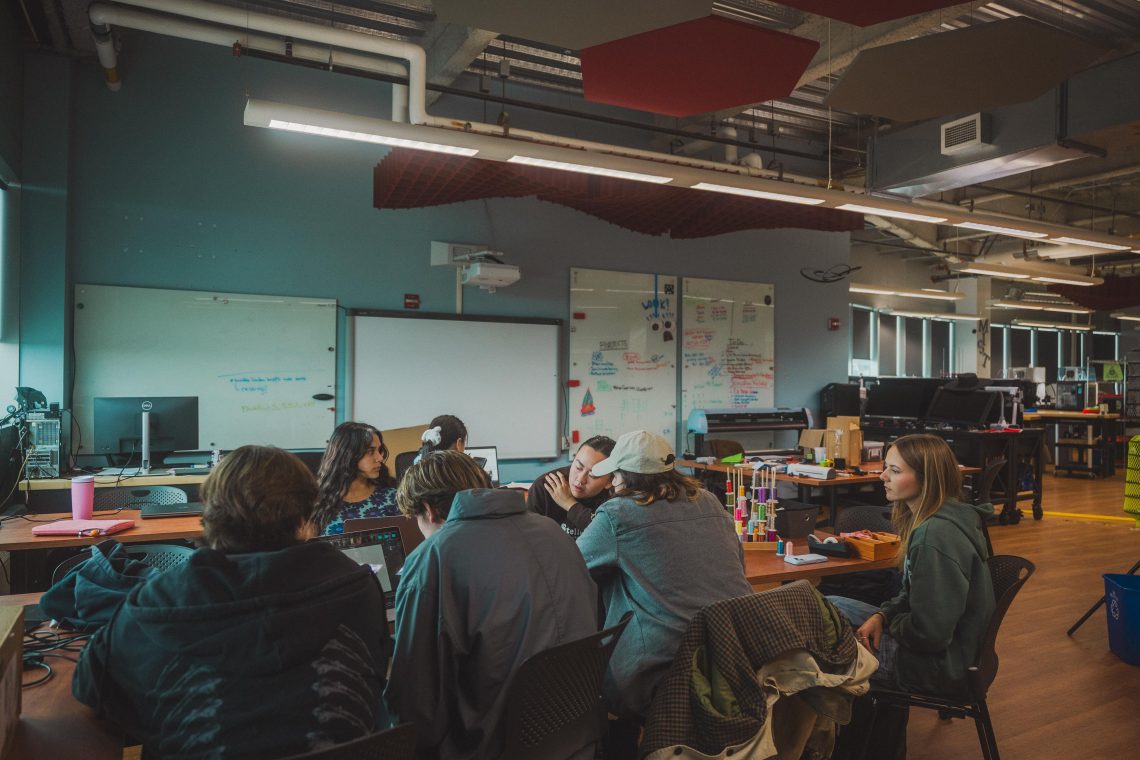
Anyone. Students, faculty, staff, and community members are all welcome — no experience required, and no specific major or background needed. If you have a creative itch you’ve been wanting to scratch, that’s enough of a reason to walk in.
As for cost, it’s basically free. For smaller projects, we’re not going to charge you anything, especially if there’s a learning component involved. For larger projects that use more materials, we might ask you to reimburse what you use, like dropping off a couple of reels of filament when you’re done. If it’s something bigger, like a large batch order, that’s a conversation we’d have upfront. The one thing to keep in mind is that we don’t stock clothing or fabric on site, so if you’re coming in to use the embroidery machine or heat press, you’ll want to bring your own materials. But nobody’s handing us a $20 bill at the door to get in.
Q:
If a student walked in tomorrow with an idea but no clue where to start, what would that look like?
A:
Honestly, just come on in! We’re here Monday through Friday, 9 to 4, and there’s almost always someone around who can sit down with you and talk through what you’re trying to make and what machine might get you there. We’ll ask you about your idea, help you figure out what tools make sense, and walk you through the basics — whether that’s a quick 30-minute intro right then and there, or scheduling something to come back for. We’re not going to hand you a machine and wish you luck. The whole point is that you learn something while you’re here, and we’re genuinely happy to be part of that process. Even if what you need isn’t something we can help with directly, we can point you toward resources and other spaces that might.
If you want to be a little more prepared, there’s a project application on our website where you can put your idea in writing. That makes it easier for us to think through what you need before you even walk in, but it’s not required. You can show up with nothing but an idea and we’ll figure it out together. And if the door’s closed, we actually installed a doorbell, so ring it and someone will be out within a few minutes.
Q:
What do people often get wrong about the lab?
A:
That it’s not for them. For a long time, the lab was a little more gatekept — doors closed, people peering through the windows at the machines, not sure if they were allowed in. And I think that kind of stuck. A lot of people are intimidated by what they see in here. They assume that because they don’t know how to use the equipment, they’re not welcome to come in and learn. Or that because they’re not a STEM major — not studying science, tech, engineering, or math — it’s not a space they belong in.
That couldn’t be further from the truth. Rarely is anyone turned away. The doors are open, and we’re actively trying to get the word out. You really don’t need to know anything walking in. You just need to show up.
Q:
What’s the coolest or most unexpected thing someone has made here?
A:
There’s no shortage of answers to that one. A game design class came in and 3D printed their actual board game components: custom boards, play pieces, and laser-engraved lids. We’ve also scanned and replicated Wabanaki artifacts for Portland Public Schools so kids across the city could actually handle replicas of the real thing. We’ve printed Maine animal skulls for the planetarium.The range is pretty wild.
But honestly? The thing that gets the most daily use in this lab is a doorstop. Made in the very first class in 2019, it’s been propping our door open every single day for six years. Simple, useful, completely unglamorous. That’s kind of the whole point though — you really can make just about anything.
Q:
What do you wish more people would bring through the door?
A:
The fun, random stuff. Earlier today someone came in wanting to embroider a baby blanket they’d quilted for their nephew. They’d first come to make a vinyl Harley-Davidson logo for their dad, found their way back, and now they’re a regular. Those side quests are some of my favorite days in here.
We get a lot of class projects and prototyping work, which I love too.There’s something really satisfying about the process of making something, testing it, adjusting, and making it again. But I want more students to know that you don’t have to have a capstone project or a reason tied to a grade to walk in. If you’ve got an idea — however small, however random — that’s enough.