

Upcoming Events
Mathematics & Statistics Colloquium
Past Events
Mathematics & Statistics Colloquium
Monday, October 5, 2026 12:30pm-1:30pm in Michael E. Dubyak Center (Portland Campus)
Dr. Elahe Khalili Samani on positive intermediate Ricci curvature

Positive intermediate Ricci curvature on cohomogeneity one manifolds
“In this talk, we will first give some background on curvature and symmetry through familiar examples. Then we will introduce the notion of positive intermediate Ricci curvature and discuss the existence of metrics satisfying this curvature condition on manifolds with a large amount of symmetry. We will present obstructions for several families of manifolds, as well as an example where we establish the existence of a metric with positive intermediate Ricci curvature.
This is joint work with Lawrence Mouille.”
Tuesday, April 14, 2026 1:30 pm-2:30pm in 209 Luther Bonney Hall (Portland Campus)
Dr. James Dibble on distortion from spheres into Euclidean spaces

Distortion from spheres into Euclidean spaces
“The distortion of a function between two geometric spaces is one way of quantifying how much the function changes the distances between points. It will be shown in this talk that it’s possible to give a lower bound for the distortion of any function from a round sphere into Euclidean space of the same dimension. Along the way, we’ll discuss the geometry of simplices, which are triangles and their higher-dimensional generalizations, and some classical results in fixed-point theory and topology, including the famous theorem of Borsuk-Ulam.”
Tuesday, March 10, 2026 1:30 pm-2:30pm in 209 Luther Bonney Hall (Portland Campus)
Dr. Muhammad El-Taha on Discrete-Time Queues

Classification of Discrete-Time Queues
“In this talk, we classify discrete-time queues with scheduling rules and observation epochs into classes and use this classification to address an unresolved issue that Little’s law does not apply for all these systems. We discuss the consequences of this classification on systems’ characteristics.”
Tuesday, February 17, 2026 1:30pm-2:30pm in 209 Luther Bonney Hall (Portland Campus)
Dr. Ashanthi Maxworth on Generative AI in Teaching
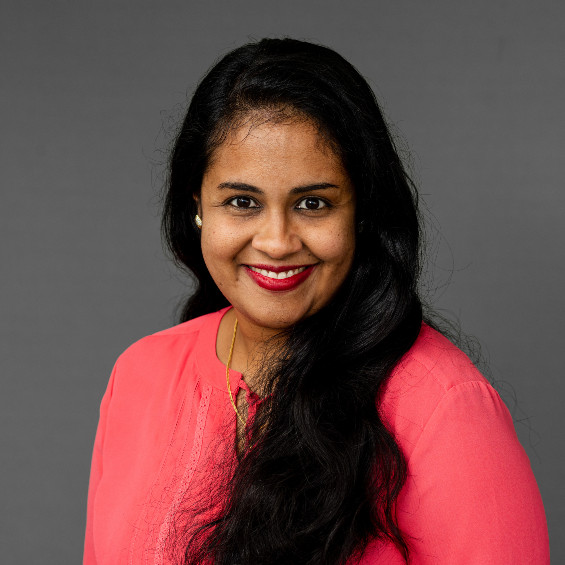
Controlled experimentation with generative AI in engineering education
“In the era of generative AI, educators are struggling to identify the ways and means of integrating it into classrooms. Although some educators strictly oppose the use of AI in the classroom, the majority are trying to incorporate it since we can no longer pretend that it does not exist. In this presentation, I present how I incorporate generative AI in my classes.
I teach a senior course on communication theory. This course is based on signal processing and probability theory. In this course, one assignment is based on AI. In this assignment, students are asked to choose two questions they did poorly on in their in-class paper-based exam. Then they work with a generative AI platform such as ChatGPT to arrive at the correct answer. In other words, in this assignment, ChatGPT is their study-buddy. Then they submit a video presentation explaining what they did and what ChatGPT (or the generative AI partner) did. In this assignment, I tell them clearly, “As a human peer, this AI student is also learning. Hence, it will make mistakes.” In this assignment, they get credit for the process of explaining how they arrived at the answer and not whether they arrived at the correct answer or not.
In the feedback collected from the students after this assignment, many students indicated the advantage of using an artificial buddy instead of a human buddy was that the artificial buddy was very knowledgeable, hence, they did not have to “carry” the buddy. The drawback was that the artificial buddy was so eager to arrive at the answer without going step by step; hence, the learning experience was slightly difficult. Overall, they found the assignment was different from an ordinary assignment, and they enjoyed the process. In the next iterations of this course, I would like them to present live in class instead of submitting a video presentation.”
March 11, 2025 1:10pm-2:30pm in 503 Luther Bonney Hall (Portland Campus)
Dr. Minghui Liu on Homotopy Braid Groups

On Homotopy Braid Groups
“Two geometric braids with the same endpoints are called homotopic if one can be deformed into the other by homotopies of the braid strings that fix the endpoints, where the different strings do not intersect but a string may cross over itself. Thus, homotopy braid groups are quotient groups of the regular braid groups. In this talk, we will introduce the motivation and history behind homotopy braid groups. We will explore some recent developments in the field and examine algebraic structures such as reduced free groups and quasi-trivial quandles, as well as their connections to homotopy braid groups.”
November 19, 2024 1:15pm-2:45pm in 410 Luther Bonney Hall (Portland Campus)
Dr. James Dibble on Spaces Without Conjugate Points
The Algebraic Structure of Spaces Without Conjugate Points
“Length spaces with no conjugate points are those in whose universal covers a form of Euclid’s first postulate holds, i.e., two distinct points determine a unique line. There has been a long history of studying the algebraic topology of such spaces, as well as that of a closely related family of spaces, those without focal points. This history will be sketched, concluding with the result that, in the compact case, every solvable subgroup of the fundamental group must be the fundamental group of a flat space.”
November 12, 2024 1:15pm-2:45pm in 410 Luther Bonney Hall (Portland Campus)
Dr. James Quinlan on Posit Arithmetic
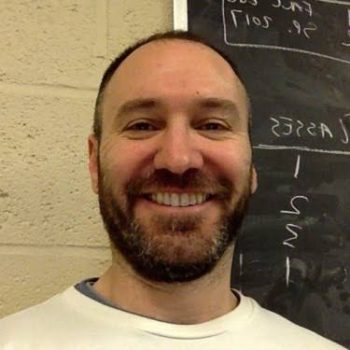
Low-Precision Iterative Refinement with Posit Arithmetic
“Next-generation arithmetic is increasingly expected to address issues with power and performance in computing. Both high-performance computing (HPC) and artificial intelligence (AI) fields are exploring nontraditional floating-point representations and arithmetic. Low-precision formats such as IEEE’s half-precision (fp16) and Google’s brain float (bfloat16) can run at least twice the speed and require only a fraction of the storage. Such features, desirable for deep learning models, are also crucial in model simulation. Manufacturers, including Intel and NVIDIA, are customizing hardware to support these alternate formats. Recently, hardware for the posit number system has also been introduced.
The focus of this talk is to discuss a low precision format in approximating the solution of a general linear system of equations Ax = b where A is a nonsingular square matrix of size n. Such systems are encountered in many scientific and industrial applications and are one of the most frequently occurring problems in computing.”